Introduction
The story of Noah and the Ark is one of the most enduring narratives from the Bible, found in the Book of Genesis. It tells of a righteous man named Noah who was chosen by God to preserve humanity and animal life from a catastrophic flood meant to cleanse the earth of its corruption. This tale has been the subject of theological discussions, literary works, and even modern cinematic adaptations. In this article, we will delve into various aspects of Noah’s story, addressing questions such as:
- Did Noah build the Ark by himself?
- How old was Noah when he built the Ark?
- How many years ago did Noah build the Ark?
We will also explore how different Bible translations depict the timeline of the Ark’s construction and examine the nuances that arise from these variations.
The Story of Noah and the Ark
Background: A World in Corruption
In Genesis chapters 6 to 9, the Bible describes a world that had become exceedingly wicked. Humanity’s thoughts and actions were continuously evil, and violence filled the earth.
“The LORD saw how great the wickedness of the human race had become on the earth, and that every inclination of the thoughts of the human heart was only evil all the time.” (Genesis 6:5, NIV)
God decided to cleanse the earth through a great flood but chose Noah, a righteous man, to survive and preserve life.
Noah’s Righteousness
Noah is introduced as a man who found favor in the eyes of God.
“Noah was a righteous man, blameless among the people of his time, and he walked faithfully with God.” (Genesis 6:9, NIV)
His righteousness set him apart in a corrupt world, making him the chosen vessel for God’s plan to restart humanity.
The Divine Command
God instructed Noah to build an ark to save himself, his family, and pairs of every kind of animal.
“So God said to Noah, ‘I am going to put an end to all people… So make yourself an ark of cypress wood; make rooms in it and coat it with pitch inside and out.'” (Genesis 6:13-14, NIV)
Did Noah Build the Ark by Himself?
The Task at Hand
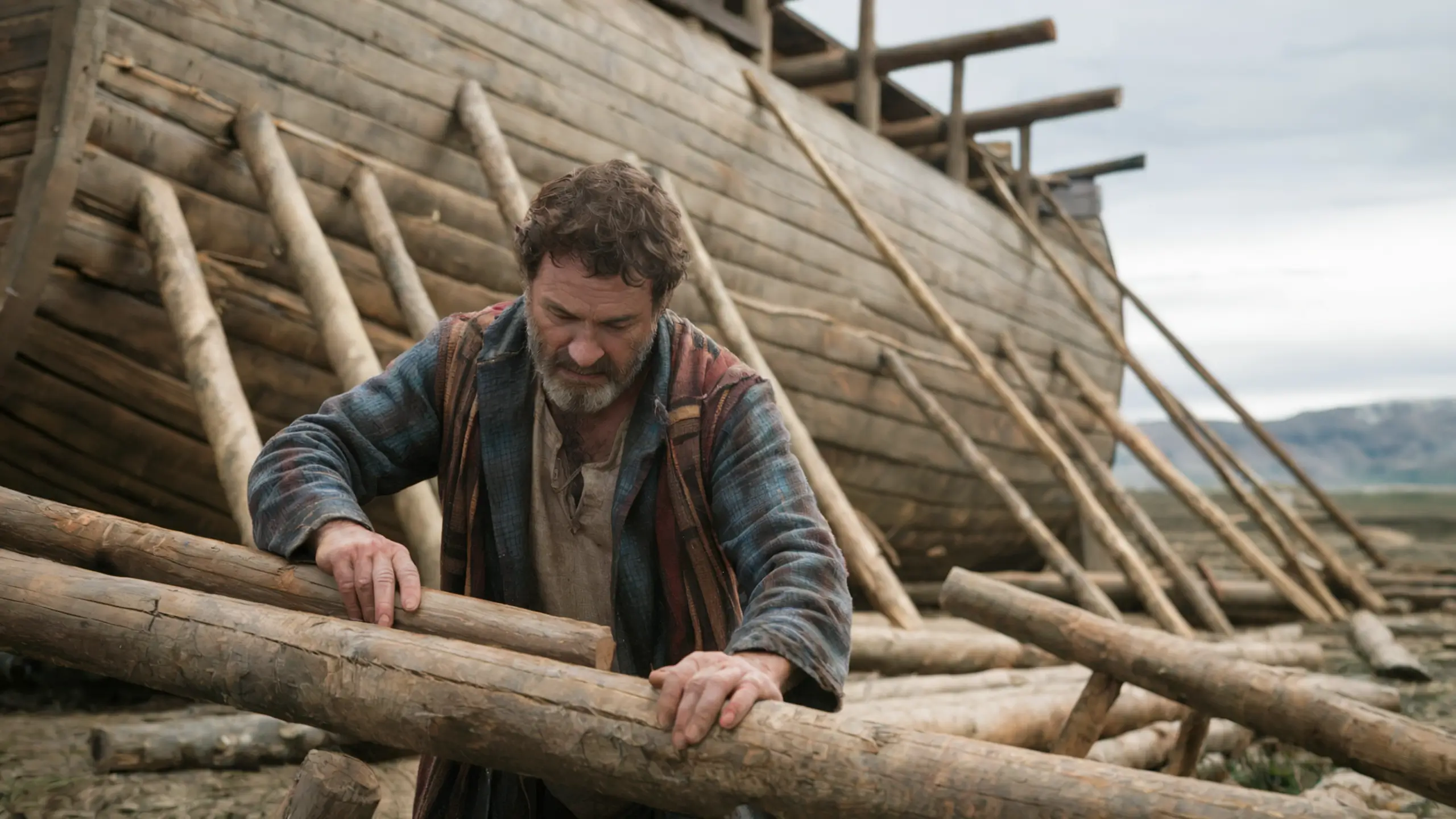
Constructing the ark was an enormous undertaking. The dimensions given in the Bible are colossal:
- Length: 300 cubits (~450 feet or ~137 meters)
- Width: 50 cubits (~75 feet or ~23 meters)
- Height: 30 cubits (~45 feet or ~14 meters)
Assistance from His Family
While the Bible does not explicitly state who helped Noah build the ark, it is reasonable to infer that his immediate family assisted him.
- Shem, Ham, and Japheth: Noah’s sons were likely adults at the time and could have contributed significantly.
- Wives: The mention of Noah’s wife and his sons’ wives suggests they were part of his household and may have provided support.
Possible Hired Labor or Community Involvement
Some traditions and extra-biblical texts, like the apocryphal Book of Enoch, suggest that Noah might have hired laborers or that others in the community were involved, even if they did not believe in the impending flood. However, this is speculative and not confirmed in the canonical scriptures.
Divine Assistance
Given the monumental scale of the project and the limited manpower, some scholars propose that divine intervention could have played a role in aiding Noah.
“By faith Noah, when warned about things not yet seen, in holy fear built an ark to save his family.” (Hebrews 11:7, NIV)
This passage emphasizes Noah’s faith, which could imply that God’s guidance and perhaps supernatural assistance were factors in the successful completion of the ark.
How Old Was Noah When He Built the Ark?
Noah’s Age in the Bible
- Age at the Birth of His Sons:“After Noah was 500 years old, he became the father of Shem, Ham, and Japheth.” (Genesis 5:32, NIV)
- Age at the Onset of the Flood:“Noah was six hundred years old when the floodwaters came on the earth.” (Genesis 7:6, NIV)
Calculating Noah’s Age During Construction
Given that Noah was 500 years old when his sons were born and 600 when the flood began, the maximum time frame for building the ark would be 100 years.
Implications
- Maximum Construction Period: 100 years
- Minimum Construction Period: Undefined but could be shorter depending on the ages of his sons when they started helping.
Noah’s Longevity
The extended lifespans in the pre-flood era are a topic of much debate and interpretation.
- Lifespan of 950 Years:“Noah lived a total of 950 years, and then he died.” (Genesis 9:29, NIV)
- Purpose of Longevity: Some theologians suggest that these long lifespans allowed for the population growth and the accomplishment of significant tasks, such as building the ark.
How Many Years Ago Did Noah Build the Ark?
Chronological Debates
Determining the exact number of years since Noah built the ark is challenging due to differences in biblical chronologies, genealogies, and interpretations.
Biblical Chronology
- Ussher’s Chronology: Archbishop James Ussher calculated the date of the flood to be around 2348 BCE.
- Alternative Calculations: Other scholars have proposed dates ranging from 3300 BCE to 2100 BCE.
Modern Perspectives
- Symbolic Interpretation: Some modern theologians view the flood narrative as symbolic or allegorical, making exact dating less relevant.
- Historical and Archaeological Evidence: Attempts to correlate the flood with historical events (like local floods in Mesopotamia) have not yielded definitive results.
Approximate Timeframe
Assuming Ussher’s chronology for simplicity:
- Current Year: 2023 CE
- Date of Flood (Ussher): 2348 BCE
- Years Since the Flood: Approximately 4,371 years
Different Bible Translations and the Timeline of the Ark’s Construction
Variations in Translations
Different Bible translations may phrase passages differently, but most agree on the key numerical details.
- Genesis 6:3 (The 120 Years):
- NIV: *”Then the LORD said, ‘My Spirit will not contend with humans forever, for they are mortal; their days will be a hundred and twenty years.'”
- KJV: “And the LORD said, My spirit shall not always strive with man, for that he also is flesh: yet his days shall be an hundred and twenty years.”
Interpretations of the 120 Years
- Lifespan Limitation: Some interpret this as God limiting human lifespan to 120 years.
- Grace Period Before the Flood: Others see it as a countdown to the flood, giving humanity 120 years to repent.
Impact on Construction Timeline
If the 120 years refer to a grace period before the flood, it could imply that Noah had up to 120 years to build the ark.
Other Considerations
The Role of Faith and Obedience
Noah’s story emphasizes unwavering faith and obedience to God’s commands.
“Noah did everything just as God commanded him.” (Genesis 6:22, NIV)
Preaching to Others
According to 2 Peter 2:5, Noah was “a preacher of righteousness,” suggesting he warned others about the impending judgment.
- Balancing Act: Building the ark while preaching could have impacted the construction timeline.
The Ark’s Specifications
- Materials: Gopher wood (exact type unknown)
- Design: Three decks, rooms, a roof with an opening, sealed with pitch inside and out.
Symbolism and Lessons
- Judgment and Mercy: The flood represents God’s judgment, while the ark symbolizes salvation.
- Covenant with Noah: After the flood, God establishes a covenant, promising never to destroy the earth by flood again, symbolized by the rainbow.
“I have set my rainbow in the clouds, and it will be the sign of the covenant between me and the earth.” (Genesis 9:13, NIV)
Conclusion
The story of Noah and the Ark is rich with themes of faith, obedience, judgment, and salvation. While the exact details regarding the construction timeline of the ark are not explicitly stated, careful analysis of biblical texts provides insights.
- Did Noah build the Ark by himself? Likely not entirely; his sons and possibly others may have assisted.
- How old was Noah when he built the Ark? He was between 500 and 600 years old.
- How many years ago did Noah build the Ark? Approximately 4,371 years ago, based on traditional chronologies.
Different Bible translations offer slight variations in wording but generally agree on the narrative’s key elements. The differences in interpretations primarily arise from how scholars understand specific passages, such as the 120 years mentioned in Genesis 6:3.
Ultimately, the story serves as a timeless reminder of the importance of righteousness and faithfulness. Noah’s dedication to God’s command, despite the challenges and skepticism he may have faced, continues to inspire believers around the world.