Palm Sunday marks the beginning of Holy Week in the Christian liturgical calendar, observed on the Sunday before Easter. It commemorates Jesus Christ’s triumphal entry into Jerusalem—an event recounted in all four Gospels—when crowds welcomed him by waving palm branches and spreading cloaks along his path. Traditions include the blessing and distribution of palms, processions that reenact the Gospel narrative, and the crafting of palm crosses. Since Easter’s date varies each year according to a lunar-based ecclesiastical calculation (the computus), the date of Palm Sunday shifts annually. Below is an overview of its significance, history, and practice, followed by a table listing the date of Palm Sunday for each of the next 30 years.
What Is Palm Sunday?
Palm Sunday, also called Passion Sunday in some traditions, is the moveable feast celebrated on the Sunday preceding Easter. It inaugurates Holy Week, the final week of Lent, and emphasizes both the joyous welcome of Jesus as Messiah and the somber anticipation of his Passion.
Biblical Account
According to the Gospels (Matthew 21:1–11; Mark 11:1–10; Luke 19:29–44; John 12:12–19), Jesus instructed his disciples to procure a donkey for his entry into Jerusalem. Crowds greeted him by laying garments and palm branches on the road, crying out “Hosanna,” a Hebrew expression of praise that came to signify a plea for salvation. This event fulfilled Zechariah’s prophecy of a king arriving “gentle and riding on a donkey.”
Liturgical Observance
- Blessing of Palms: Churches begin the service by blessing palm fronds or substitute branches, recalling the crowd’s welcome of Christ.
- Processions: Many congregations hold outdoor or aisle processions, carrying palms as a symbolic reenactment of the entry.
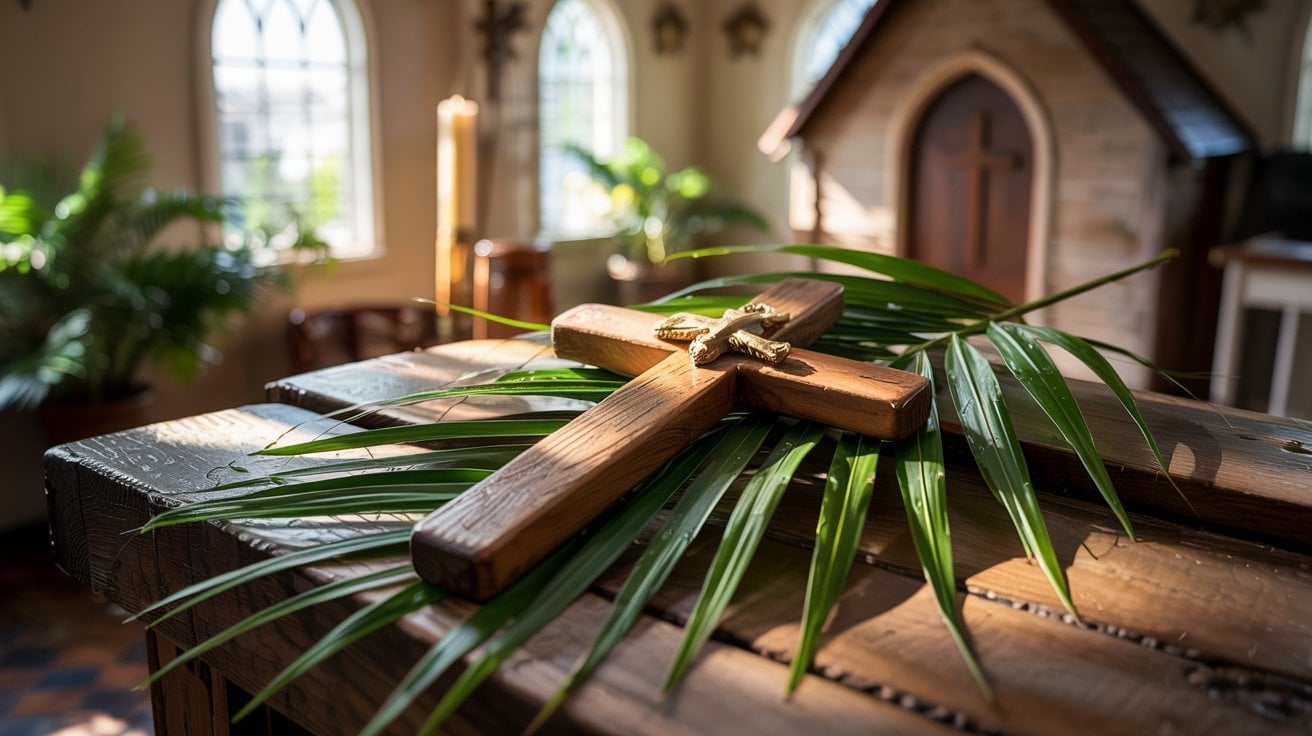
- Palm Crosses and Keepsakes: Parishioners often weave palms into crosses or other shapes, which they take home as sacramentals until they are burned to produce the ashes for the next year’s Ash Wednesday.
Historical Origins
The first detailed description of Palm Sunday worship comes from the 4th-century pilgrim Egeria, who documented a Jerusalem liturgy complete with palm processions and Gospel readings. Early Christians adopted the Near Eastern custom of waving palms—a symbol of victory and peace—to honor Jesus as the triumphant yet humble king.
Celebrations Around the World
- Holy Land Pilgrimage: In Jerusalem, thousands of pilgrims process from the Mount of Olives into the Old City, carrying palm fronds and olive branches.
- Local Substitutes: Where palms are unavailable, churches use branches of olive, box, spruce, or other native trees.
- Eastern vs. Western Rites: While Western churches typically begin Holy Week with Palm Sunday, Eastern Orthodox traditions incorporate it into the broader liturgical observance without initiating a separate Passion focus until later in the week.
Upcoming Palm Sunday Dates (2025–2054)
| Year | Palm Sunday |
|---|---|
| 2025 | April 13, 2025 |
| 2026 | March 29, 2026 |
| 2027 | March 21, 2027 |
| 2028 | April 09, 2028 |
| 2029 | March 25, 2029 |
| 2030 | April 14, 2030 |
| 2031 | April 06, 2031 |
| 2032 | March 21, 2032 |
| 2033 | April 10, 2033 |
| 2034 | April 02, 2034 |
| 2035 | March 18, 2035 |
| 2036 | April 06, 2036 |
| 2037 | March 29, 2037 |
| 2038 | April 18, 2038 |
| 2039 | April 03, 2039 |
| 2040 | March 25, 2040 |
| 2041 | April 14, 2041 |
| 2042 | March 30, 2042 |
| 2043 | March 22, 2043 |
| 2044 | April 10, 2044 |
| 2045 | April 02, 2045 |
| 2046 | March 18, 2046 |
| 2047 | April 07, 2047 |
| 2048 | March 29, 2048 |
| 2049 | April 11, 2049 |
| 2050 | April 03, 2050 |
| 2051 | March 26, 2051 |
| 2052 | April 14, 2052 |
| 2053 | March 30, 2053 |
| 2054 | March 22, 2054 |
When was Palm Sunday first celebrated?
The earliest evidence for celebrating Palm Sunday dates back to the eighth century.
Why do we use palm branches on Palm Sunday?
Palms symbolized victory in ancient times. The Gospels describe people waving and laying palm branches as Jesus entered Jerusalem. The Church uses palms liturgically during Holy Week to commemorate Jesus’ triumphant entry and his passion.
What kind of palms are used for Palm Sunday? Where do they come from?
While palm harvesters operate globally, a specific type called cabbage palmetto, grown in Florida, supplies a large portion of the palms used in U.S. parishes.
Where is Palm Sunday found in the Bible?
Accounts of Palm Sunday are found in all four Gospels: Matthew 21:1–11, Mark 11:1–11, Luke 19:28–44, and John 12:12–19.
Who celebrates Palm Sunday?
Palm Sunday is celebrated by Catholic, Orthodox, and Protestant Christian communities.
Is Palm Sunday a holy day of obligation in the Catholic Church?
Yes. As all Sundays are considered holy days of obligation in the Catholic Church, Palm Sunday falls under this requirement.
How do you make a cross out of palms?
Instructions for making a cross from palm branches are available, often demonstrated in videos.
Can you eat meat on Palm Sunday?
Yes, meat consumption is permitted on Palm Sunday. Sundays during Lent are celebrations of the Resurrection. Lenten rules for abstaining from meat typically apply to Fridays, while fasting applies on Ash Wednesday and Good Friday.
Are Palm Sunday and Passion Sunday the same?
Yes, the terms can be used interchangeably. “Palm Sunday” refers to the palms used during Jesus’ entry into Jerusalem, while “Passion Sunday” refers to the reading of the Gospel narrative of Jesus’ passion during the Mass.
What is the link between Palm Sunday and Ash Wednesday?
The palms blessed and distributed on Palm Sunday are collected and burned the following year to create the ashes used on Ash Wednesday.
What are the Palm Sunday colors?
The liturgical color for Palm Sunday is red, symbolizing the Lord’s passion.
How long is Palm Sunday Mass?
Palm Sunday Mass is typically longer than a regular Sunday Mass, often exceeding an hour. Many services begin with a procession symbolizing the crowd meeting Jesus, and the Gospel reading includes the full Passion narrative, involving participation from the congregation.
Can you say ‘Happy Palm Sunday’?
Yes, it is appropriate to wish someone a “Happy Palm Sunday.”