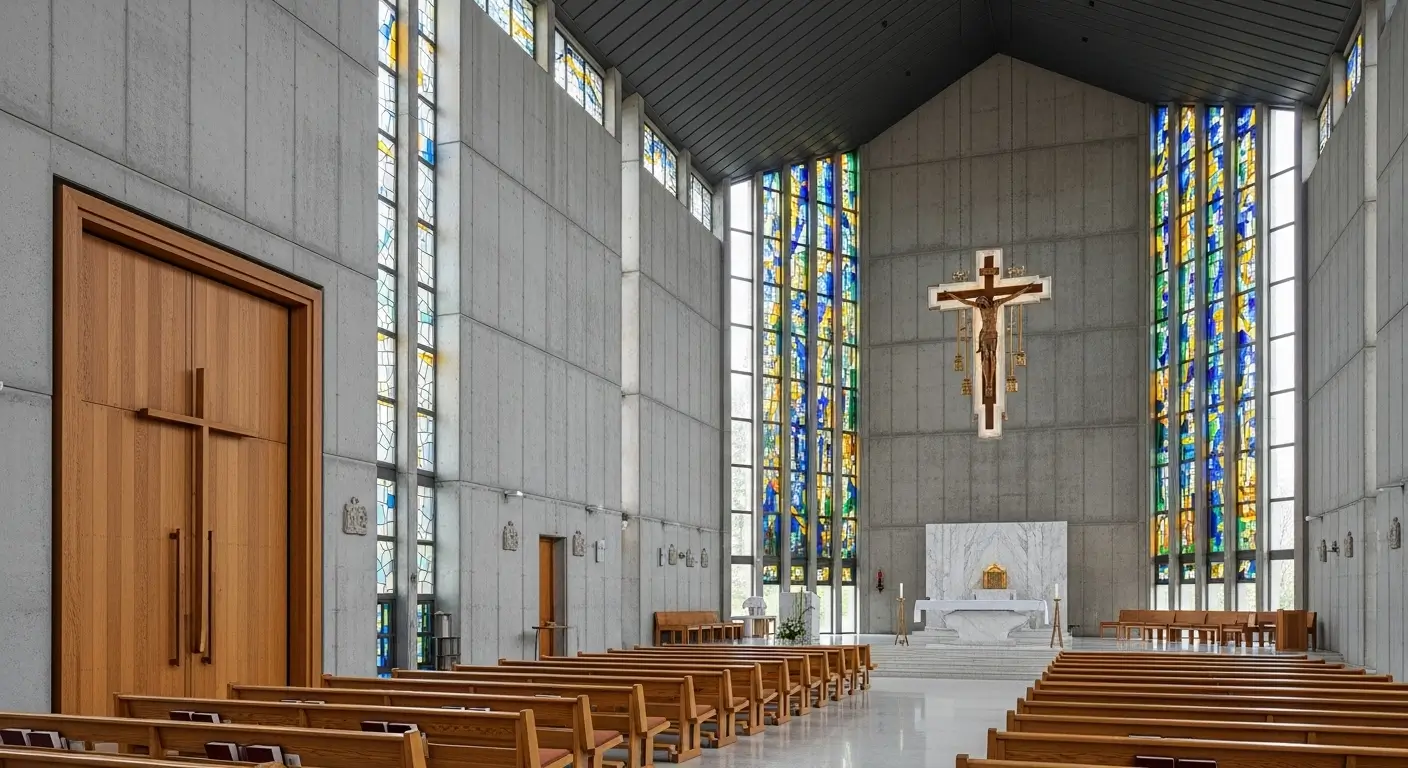
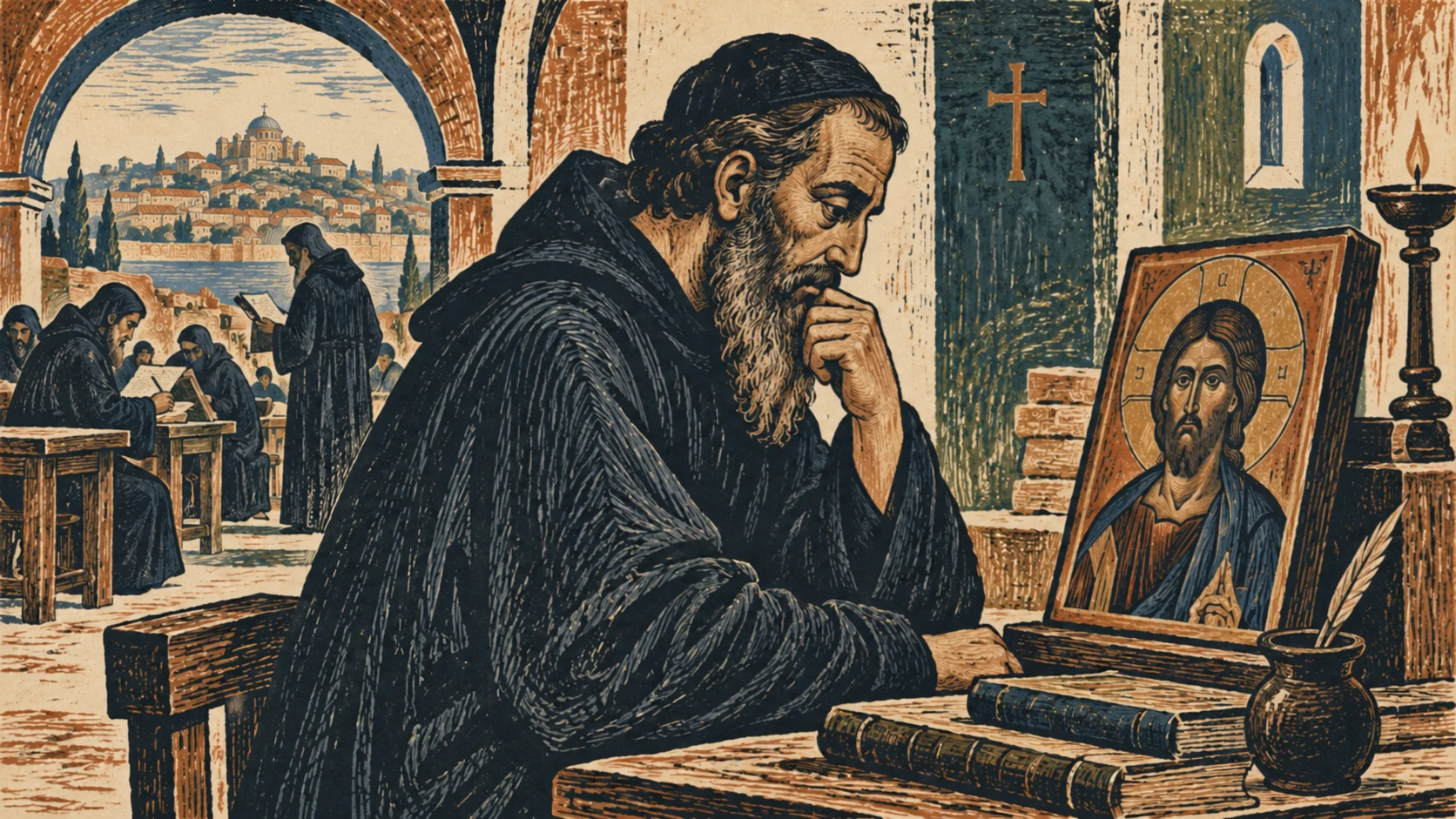
Why does a Catholic home keep a crucifix on the wall? Why do churches fill their windows with biblical scenes? St. Theodore the Studite lived during a conflict over sacred images, and his defense of them helps explain why Christian art can be more than decoration.
A monk in a time of controversy
Theodore lived from about 759 to 826 in the Byzantine world. He became associated with the monastery of Stoudios in Constantinople and worked for the renewal of monastic life. His opposition to iconoclasm, the rejection and destruction of sacred images, brought persecution and exile. He also emphasized the shared prayer, work, and responsibilities of a religious community. Benedict XVI’s account of Theodore connects his defense of images with the Christian belief that the Son of God truly became human.
An image can direct attention
Think about a photograph of someone you love. The paper or screen matters because it points beyond itself to a person. Sacred art works differently in important ways, but that everyday experience can begin a conversation about how a material object helps focus attention.
In Christian prayer, an image of Christ can recall the Gospel and invite a response to him. An image of a saint can prompt gratitude for a life of faith. The object is not a rival to God. It serves a relationship that reaches beyond the object.
Choose one image and look slowly
- Identify the subject. If you are unsure, look for a title or ask someone knowledgeable.
- Notice the composition: gestures, objects, colors, and the direction of the figures’ attention.
- Connect the image to a biblical passage or a reliable account of the saint.
- Ask what response it invites: thanksgiving, repentance, courage, or concern for another person.
- Close with a brief prayer in your own words.
You do not need to know every symbol before beginning. Curiosity can be part of prayer. If an interpretation sounds elaborate or claims hidden meanings for every detail, check whether the artist or a reliable source actually supports it.
Making a prayer corner at home
Choose a place you will see regularly. One image and a clear surface are enough. A small Bible or prayer book can sit nearby. If young children are involved, make the arrangement sturdy and accessible.
Let the image connect with a practice. Pause there before leaving the house, pray for a person whose photograph is nearby, or read a short Gospel passage once a week. A meaningful habit can grow around a modest object.
Beauty and responsibility
Theodore’s story also invites care for the people who make, maintain, and explain sacred art. Thank a parish volunteer who cares for the church. Learn the story of a window you have passed for years. Treat a devotional object with respect while remembering the person toward whom it directs your attention.