
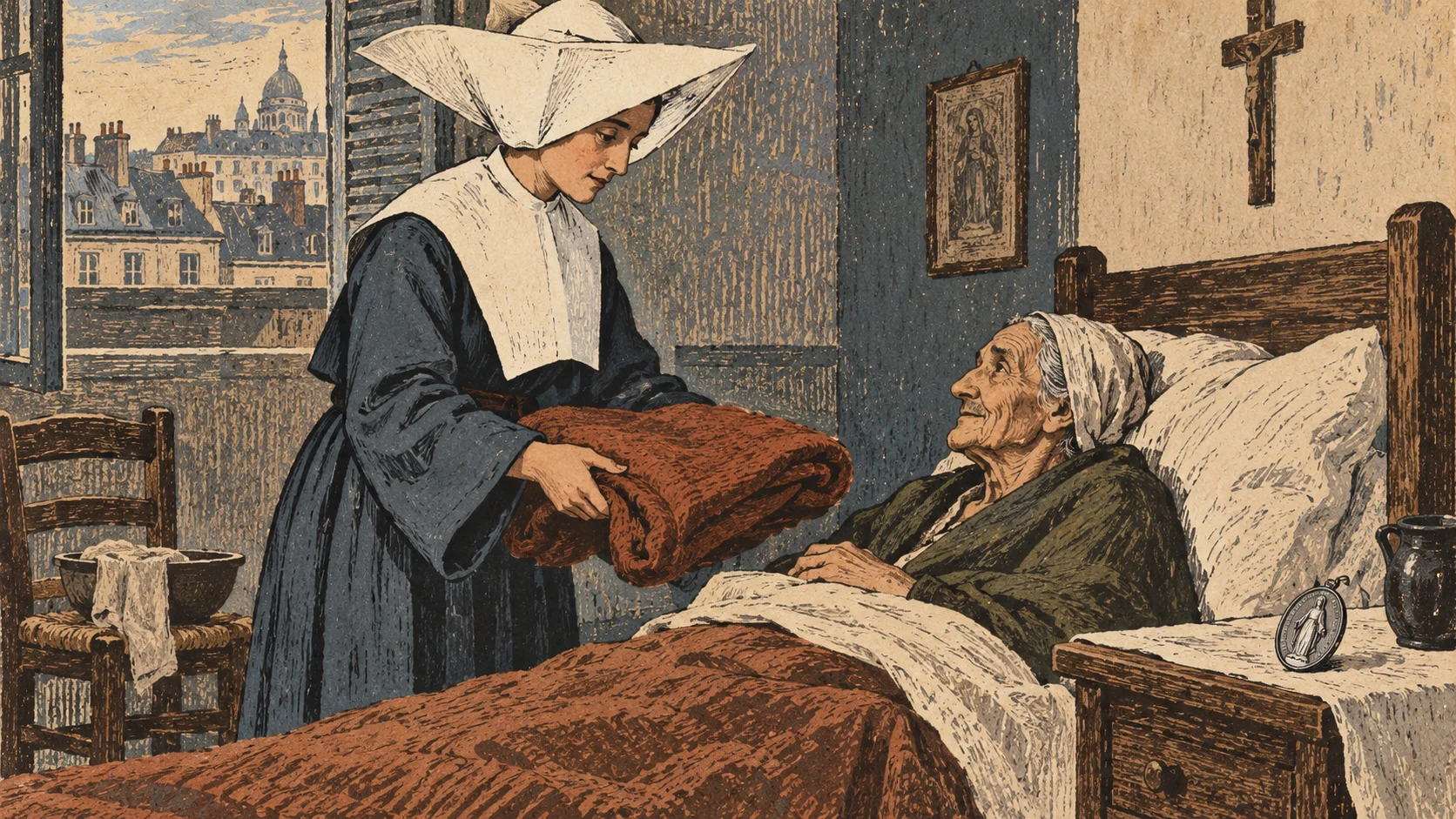
The Miraculous Medal is small enough to disappear beneath a shirt collar. The life of St. Catherine Labouré, whose reported apparitions are associated with it, was also largely hidden from public attention. Her story joins a familiar Catholic devotion to decades of ordinary care.
The sister behind the medal
Catherine Labouré was a French Daughter of Charity. In 1830, while a novice in Paris, she reported apparitions of the Virgin Mary that led to the making of the medal. After her formation, she served at the hospice of Enghien in Reuilly, working in domestic tasks and caring for elderly residents. She died in 1876. The chapel at Rue du Bac recounts both her reported visions and her daily service.
Let the object lead to prayer
A medal can be a reminder to turn toward God during an ordinary day. When you notice it, pause briefly. Pray for someone you will meet, ask for patience with a difficult task, or give thanks for a kindness received.
Do not judge a person’s faith by whether they wear a particular devotional object. A family may have several meaningful customs, and different people may respond to different reminders. Explain the practice without turning it into a competition.
Learning the design before buying another medal
Spend time with a reliable explanation of the medal’s imagery. Ask where the design comes from and what its symbols direct attention toward. If a product listing makes an extravagant guarantee about protection or success, seek guidance from a trusted parish source rather than treating the advertisement as religious instruction.
For children, keep the explanation concrete: this is an object that helps us remember Mary and pray. Let them ask questions. A short, honest answer is more useful than an elaborate explanation they cannot follow.
The hospice years matter
It is easy for an extraordinary spiritual story to overshadow the rest of a person’s life. Catherine’s years of service deserve attention in their own right. Washing, preparing food, and accompanying an older person are tasks whose importance does not depend on public recognition.
Choose one person whose daily care has become almost invisible to others. Ask what would help. Perhaps you can arrange a visit, take on an errand, or simply listen without hurrying the conversation toward your own news.
A small practice for this week
- Choose a devotional reminder you already have.
- Connect it with one short prayer intention.
- Choose one practical act of care related to that intention.
- At week’s end, notice whether the reminder helped you become more attentive.
These are suggestions for readers today, not quotations from Catherine. Her life gives us a reason to keep prayer and service close together. The medal may be the part of her story most people recognize; the person beside us may be where that story becomes a practical invitation.