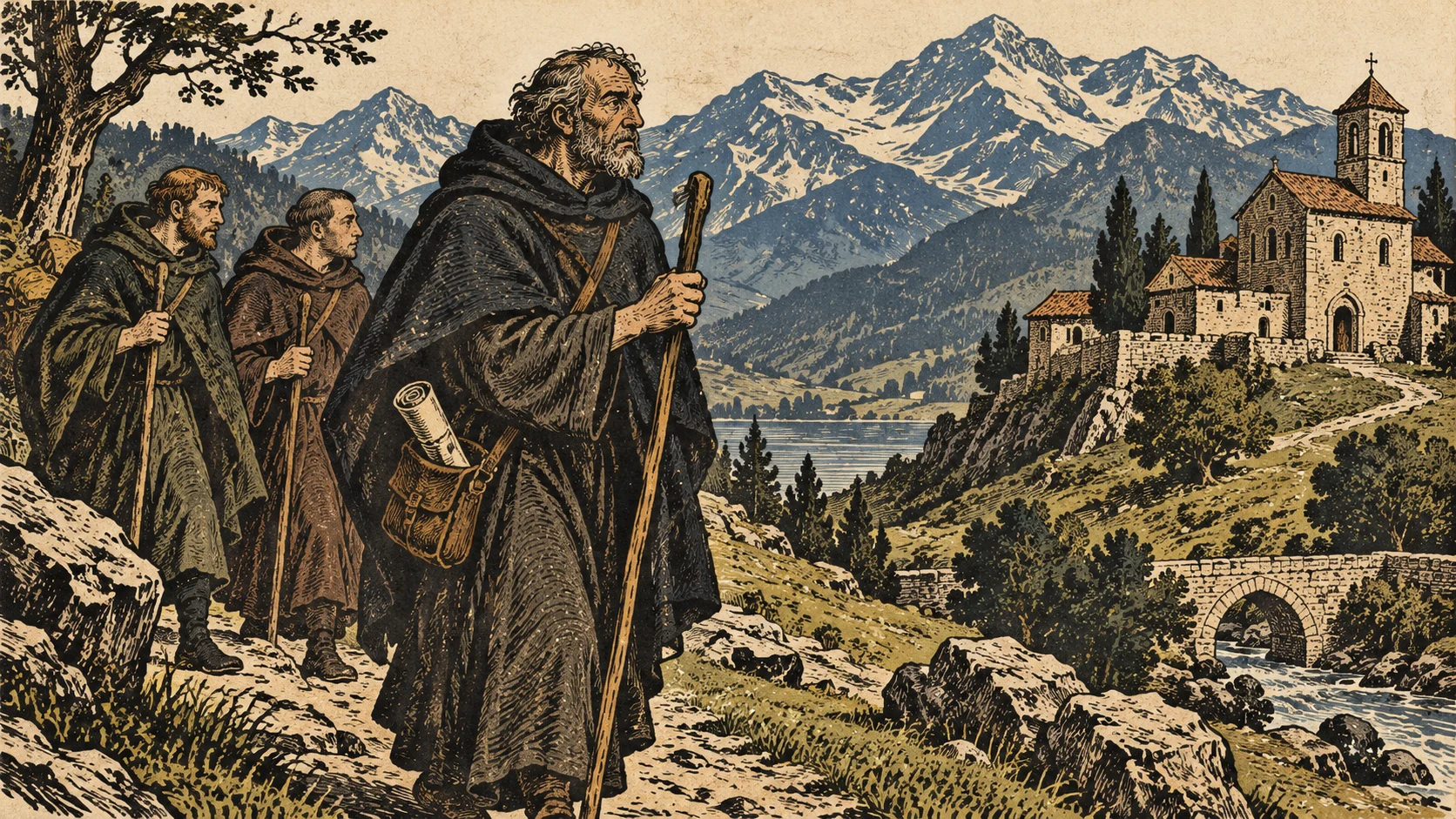
A rule of life can sound restrictive until a week slips away without time for what matters. St. Columban carried a demanding monastic vision from Ireland into continental Europe. His story invites a modern question: what habits help our commitments survive a change of place or circumstance?
An Irish monk on the road
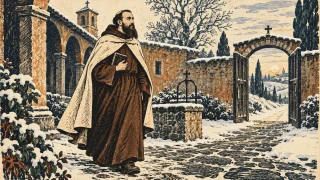
Columban was born in Ireland around 543 and formed in monastic life before traveling with companions to the European continent. He founded communities including Luxeuil and, later, Bobbio in Italy. His writings included monastic rules and letters. Conflict with rulers and church authorities marked parts of his journey. He died in 615, and his feast is November 23. Benedict XVI describes his travels and writings, including the historical distance between his severe discipline and modern expectations.
Choose a rhythm suited to your actual life
A household does not need to copy an early medieval monastery. Begin with the responsibilities already present: work, school, care, rest, and worship. Then ask where prayer and service can fit without making promises that depend on an imaginary version of your schedule.
Write three small commitments. For example: a brief morning prayer, a plan for Sunday Mass, and one regular act of help. Include when each will happen. “Pray more” is harder to carry out than “Pray for two minutes before opening the laptop.”
Make the plan portable
Travel, visitors, illness, or a new job can interrupt a routine. Decide on a smaller version before the interruption arrives. A long reading practice might become one Gospel paragraph. A family prayer time might become a brief prayer before bed.
The purpose is continuity with room for real life. If a practice repeatedly fails, examine its size and timing before deciding that you lack commitment.
A weekly review in four questions
- What helped me make room for God this week?
- Which responsibility needed more attention than I expected?
- Was my plan fair to the people who share my life?
- What one adjustment would make next week more realistic?
Keep the review brief and honest. If you live with others, ask for their perspective. A routine that feels spiritually productive to one person may quietly transfer extra work to someone else.
Learn from history without copying every practice
Columban’s world included forms of discipline that should be understood in their historical setting. Admiration for his dedication does not require reproducing them. Read his life with attention to both its conviction and its complexity.
Choose one practice for the coming week and place it where you will see it. A useful rule of life gives a commitment somewhere to live. Its success is measured partly by whether it helps you pray faithfully and treat the people around you with greater care.