Christ the King falls on Sunday, November 22, 2026, the final Sunday before Advent begins. Its full title is the Solemnity of Our Lord Jesus Christ, King of the Universe. The feast asks Christians to consider what kind of authority belongs to Jesus, and what changes when we take that claim seriously.
Why the Church celebrates Christ as King
Pope Pius XI instituted the feast in 1925 through the encyclical Quas Primas. Its place in the contemporary calendar closes the Sunday cycle of the liturgical year before a new Advent begins. The U.S. bishops’ 2026 calendar confirms this year’s date.
The word “king” can bring images of luxury, force, or personal prestige. Christian reflection must return to the life of Jesus rather than simply importing those images. His care for the vulnerable, his teaching, and his self-giving challenge the ways we usually measure importance.
Start with a question about ordinary power
Most people do not govern nations, but many have some power over another person’s day. A supervisor chooses a schedule. A parent decides how to respond to a mistake. A volunteer coordinator determines who gets heard. A person with an audience chooses which story to repeat.
Ask where your own authority appears this week. Then ask who carries the cost when you use it carelessly. That question makes the feast practical without reducing it to a lesson in being agreeable.
Three household conversations
What makes someone worth following? Invite each person to name a quality rather than a celebrity or political figure. Discuss the difference between attracting attention and deserving trust.
When is serving difficult? Talk about an ordinary situation: sharing a task, listening to a younger sibling, or correcting a mistake. Let adults answer honestly too.
Who is easy to overlook? Consider the people whose work makes the household, school, or parish run. Choose one concrete way to recognize their dignity and share the work fairly.
Keep the conversation short enough that children can participate. No one needs to produce a polished religious answer. A thoughtful example from the week is a good beginning.
A small examination of responsibility
Before the day ends, review one recent decision. Did you explain it clearly? Did the people affected have a chance to speak? Did you use your position to avoid work that someone else then had to carry?
If a correction is needed, make it specific. Apologize for the actual action, adjust the arrangement, or return to a conversation you cut short. Religious reflection becomes credible when it changes how responsibility is exercised.
A prayer before Advent
This original prayer can close a household conversation: Lord Jesus, teach us to recognize your authority in truth and love. Help us use the responsibilities entrusted to us with fairness, courage, and care. Prepare our hearts to welcome you as Advent begins. Amen.
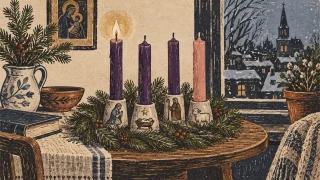
You might then look ahead to Advent’s four Sundays and choose one modest practice. The transition between the feasts can become a pause: what has this year taught us, and what needs our attention now?
Keep the feast larger than a slogan
Christ the King is easily turned into a phrase people attach to their own preferences. A better approach is to allow the feast to question us. Does our speech reflect the dignity of those we criticize? Are our loyalties ordered toward God? Are people safer and more respected because we have responsibility?
Those questions do not exhaust the meaning of the solemnity. They offer a place to begin living it before the first Advent candle is lit.