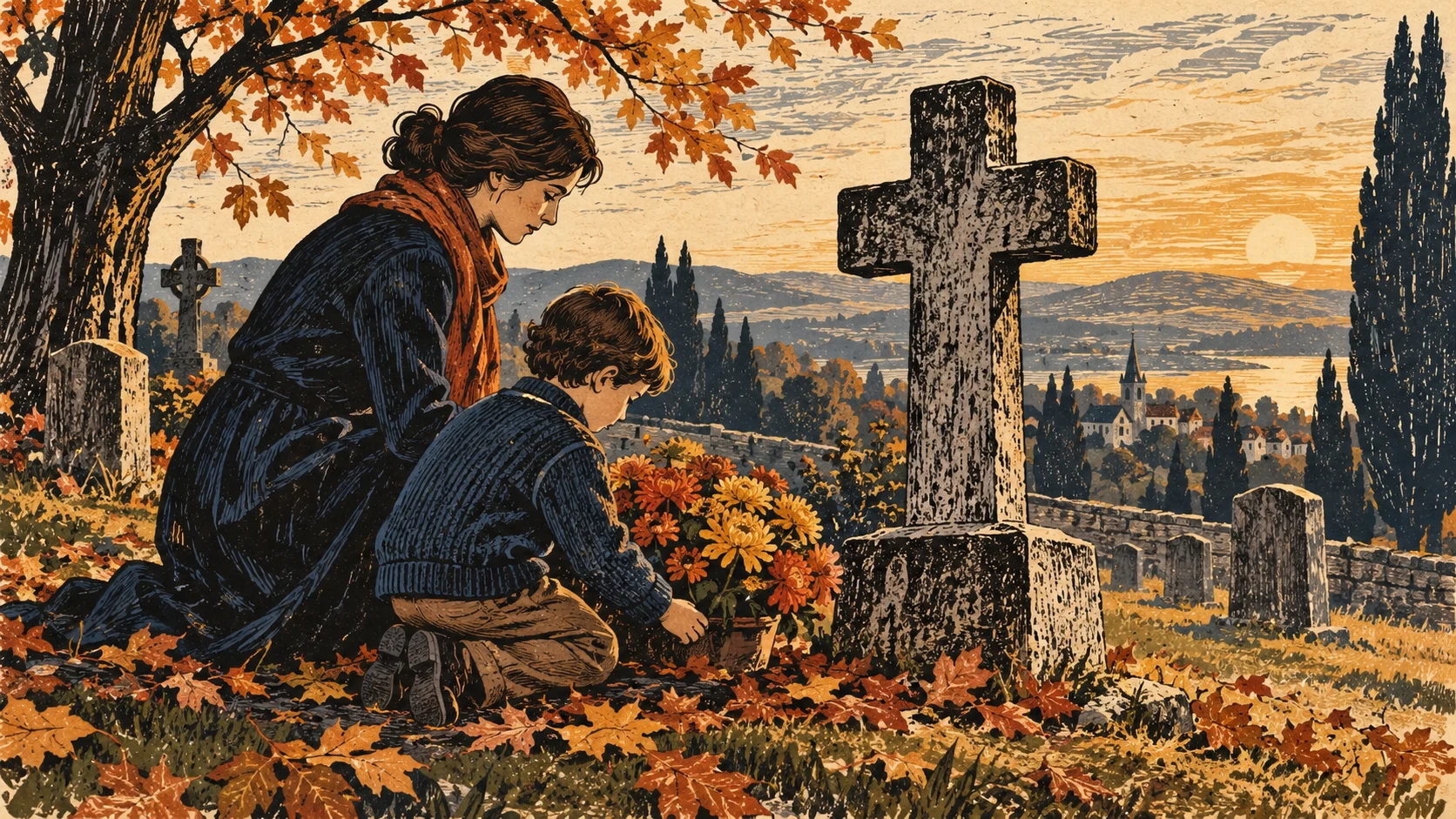
A cemetery visit on All Souls Day can be simple: arrive, remember someone by name, pray, and leave with care. You do not need a long service or perfect words. On Monday, November 2, 2026, a short visit can help a family make room for grief and Christian hope together.
Before you leave
Check the cemetery’s opening hours and rules for flowers, decorations, and grave care. Locate the section and plot number beforehand if possible. If someone in your group has limited mobility, ask about parking and the condition of paths. A little preparation can keep the visit from becoming an anxious search.
Bring water, weather-appropriate clothing, and any prayer you want to use on paper or your phone. Fresh flowers are optional. Ask before cleaning a marker; old stone can be damaged by products or scrubbing. Do not assume that a cemetery permits candles or items left at graves.
A ten-minute order for the visit
- Pause when you arrive. Let everyone settle before beginning. Silence is a meaningful part of the visit.
- Say the person’s name. Share a short memory if people want to. No one has to speak.
- Read a brief Scripture passage. John 11:25–26 or Psalm 23 can give a starting point; read from your own Bible.
- Pray for the person who died and those who mourn. Use a familiar prayer or your own words.
- Leave the grave and surroundings tidy. Take belongings and any rubbish with you, respecting nearby mourners.
The USCCB’s prayers for death and dying include prayers specifically for use at a graveside. You can open that page before leaving home and choose one prayer without trying to use every option.
A short original prayer
God of mercy, we entrust the people we love to you. Receive our remembrance, comfort those who grieve, and teach us to care for one another while we are together. Through Christ our Lord. Amen.
This is an original prayer for this guide, not an official liturgical text. If you prefer an established Church prayer, use the bishops’ resource linked above.
When children come along
Tell children in advance what they will see and why you are going. Use clear, gentle language about death rather than phrases that might confuse it with sleeping or going away. Allow questions, including practical ones. A child may notice dates, flowers, or the shape of a stone before understanding the adults’ sadness.
Give them one optional task, such as holding flowers or choosing a memory to share. Keep the visit short enough for their age and needs. A restless child has not spoiled the prayer. If strong feelings arise, pause and give attention to the person rather than finishing a planned script.
If the grave is far away or there is no accessible grave
You can pray at home, attend Mass, or visit a local cemetery respectfully without pretending it is the same as being at a loved one’s burial place. Set out a photograph, name the person, and use the same short order of prayer. A small remembrance table at home can hold a photograph, a cross, and a written list of names for prayer.
Families also carry complicated relationships and losses that are difficult to explain. It is possible to entrust someone to God’s mercy without making every memory sound happy or resolved.
After the visit
Leave some space in the day. A quiet meal, a phone call to another relative, or a walk may fit better than rushing immediately to the next commitment. All Souls remembrance is not a test of how intensely someone feels. It is a small, deliberate act of prayer and love, held within the Church’s hope in the resurrection.