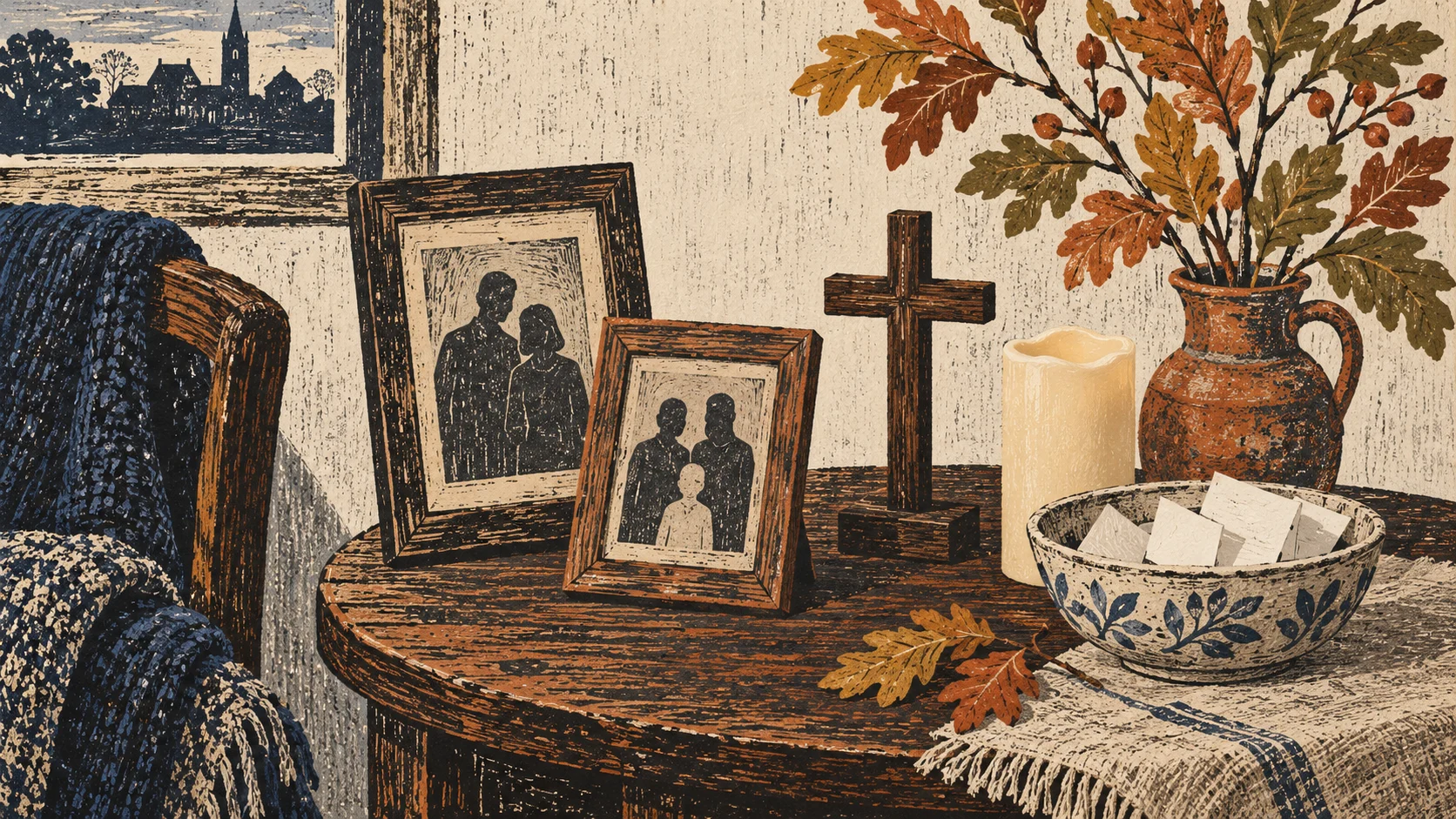
A November remembrance table gives prayer for loved ones who have died a visible place in the home. It can be as small as a photograph and a cross on a shelf. Think of it as an optional family practice that helps you remember and pray, with enough simplicity that it can belong to an ordinary week.
Begin with one small space
Choose a shelf, side table, or corner that will not interrupt the household’s daily use of a room. Add a cross or another familiar Christian image, a photograph, and a small card with names. A battery candle can provide gentle light without an open flame. Flowers or an autumn branch are optional.
You do not need matching frames or a new set of decorations. If displaying photographs feels too painful, use a handwritten name or a blank card held privately in a Bible. Ask household members before including images or details they may consider personal.
What the table is for
Catholic remembrance includes prayer for the dead and care for those who mourn. The table serves those purposes; it is not a way to contact the dead or a claim that a person is present in an object. The Church’s guidance on bereavement and funerals places remembrance within prayer, hope, and respectful care for the deceased.
This particular arrangement is a suggested home devotion, not a required Catholic ritual. It also should not be presented as a substitute for, or a generic version of, the distinct cultural traditions that different families already practice.
A rhythm that takes two minutes
Choose a moment that already gathers the household: after supper, before leaving for school, or at the end of the day. Make the Sign of the Cross, say one or more names, and pray briefly. A familiar prayer is enough. Some evenings you may simply keep a moment of silence.
Try this original prayer if words are difficult: Merciful God, hold in your care those we remember tonight. Help us to give thanks for love received, to speak honestly about our sorrow, and to notice those who need companionship. Amen.
Keep the practice optional for guests and household members who do not share the same faith. They may prefer to stand quietly or remember someone privately.
Make room for different kinds of memory
One person may want to tell stories; another may need silence. Someone may remember a loving relationship, while someone else carries unresolved hurt. Do not require a round of happy memories or ask a child to explain feelings in front of a group.
A bowl of folded name slips can include people beyond the immediate family: a former teacher, a parishioner, or someone whose death received little public notice. Keep private information private, especially if visitors will see the table.
Connect remembrance with care
Once during the month, let the table prompt an act of attention to someone living with grief. Send a brief message that does not require an answer, offer a specific meal, or remember an anniversary. Avoid assuming that the person wants advice or a large gathering.
You might also arrange a short cemetery visit, ask your parish about Mass intentions, or join a parish memorial service. Confirm local details directly, since November schedules differ.
When November ends
There is no required day to dismantle the table. Keep a photograph in place, move the names into a prayer book, or put the items away gently. Ending the display does not end remembrance.
The value of the practice is the attention it makes possible. If it becomes a source of pressure, simplify it. A single name spoken before God can carry more meaning than a carefully styled display that no one feels able to approach.