
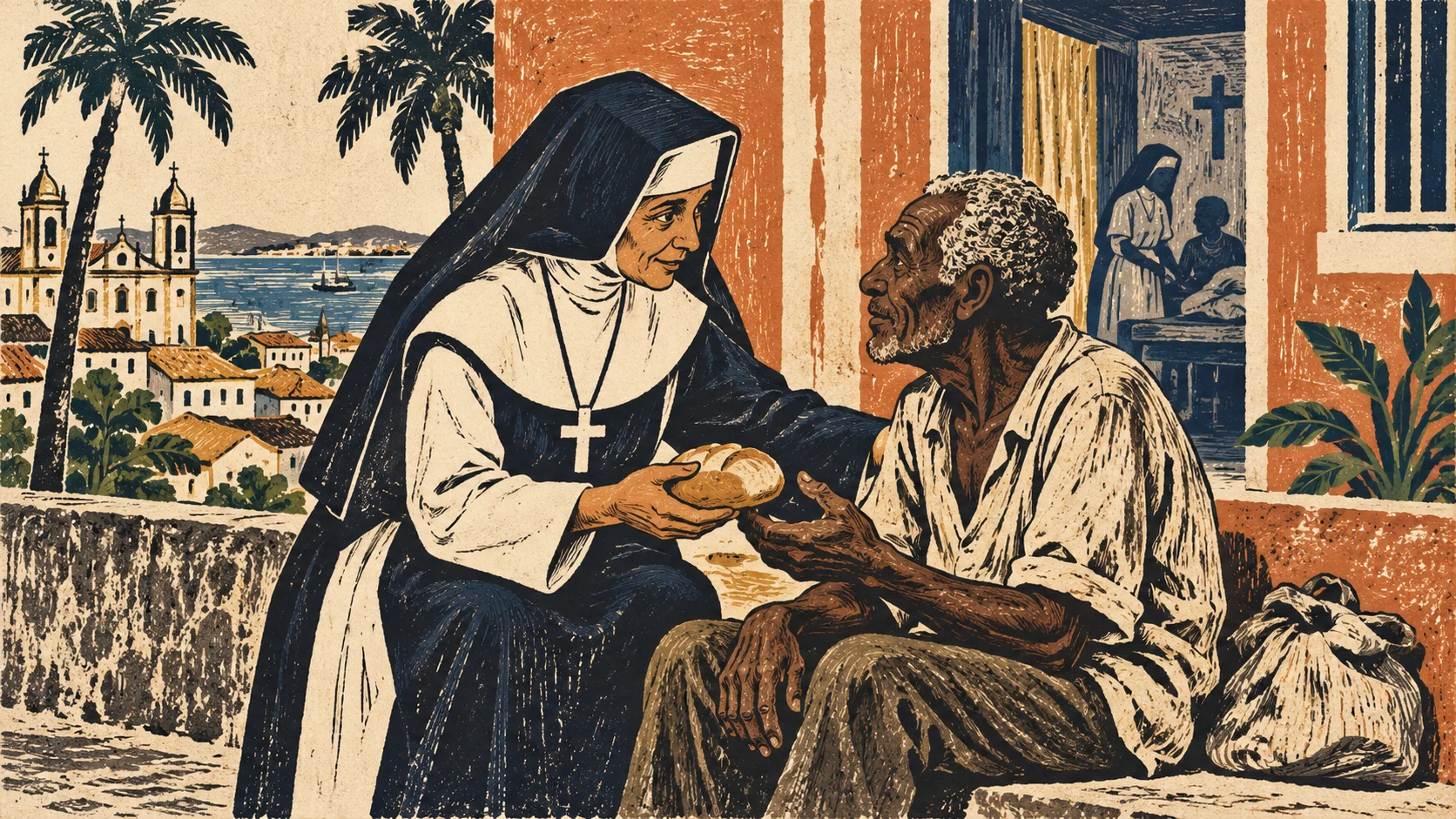
A large work of mercy often begins with an awkwardly small question: where can this person sleep tonight, and who will help? St. Dulce Lopes Pontes spent her life responding to people whose needs could not wait for ideal conditions. Her story invites generosity with practical staying power.
The Brazilian sister behind a growing work of care
Born Maria Rita in Salvador, Brazil, in 1914, Dulce became a religious sister and served people living in poverty. Her efforts grew to include health care and other forms of assistance. A makeshift shelter in a convent’s former henhouse became a memorable part of the story of the hospital work associated with her. She died in 1992 and was canonized in 2019. Vatican News describes her life and the development of her charitable work.
Begin with the actual need
It is tempting to organize the kind of help we enjoy giving. The better beginning is a conversation with people who understand the need. A shelter may have plenty of blankets but need transportation. A food pantry may need shelf-stable protein more than another collection of holiday sweets.
Ask a local organization for one concrete task that your household or parish group can complete well. Clarify the quantity, delivery date, and point of contact. That information turns goodwill into something a busy staff member can use.
Small does not have to mean temporary
A modest commitment repeated over time can become dependable. Consider providing one requested item each month, covering a regular volunteer shift, or helping a ministry maintain an accurate list of available services. Choose a scale that fits your real circumstances.
Before promising, consider the less exciting part: who will drive, answer the email, store the supplies, or cover the task when someone is away? These details can determine whether a project remains helpful after the initial enthusiasm fades.
Three ways a parish group can learn from the story
- Start with listening. Invite a local service organization to explain its work and the gaps it sees.
- Make one clear commitment. Put the task, frequency, and responsible person in writing.
- Review without defensiveness. After a month, ask whether the help was useful and what should change.
Protect the privacy of people receiving assistance. A project can be accountable without publishing their faces, names, or personal histories. Share the work accomplished rather than a story someone felt pressured to tell.
When you cannot do more
There are seasons when caregiving, illness, money, or employment leaves little room for another commitment. Do not promise what you cannot provide. You may be able to pass along accurate information, thank someone doing the work, or pray for a person by name.
Dulce’s life can inspire the question “What is possible here?” without making every reader responsible for building a hospital. Begin with one person, one useful action, and a willingness to remain attentive after the first encounter.
For another example of charity expressed through ordinary tasks, read the life of St. Martin de Porres.