
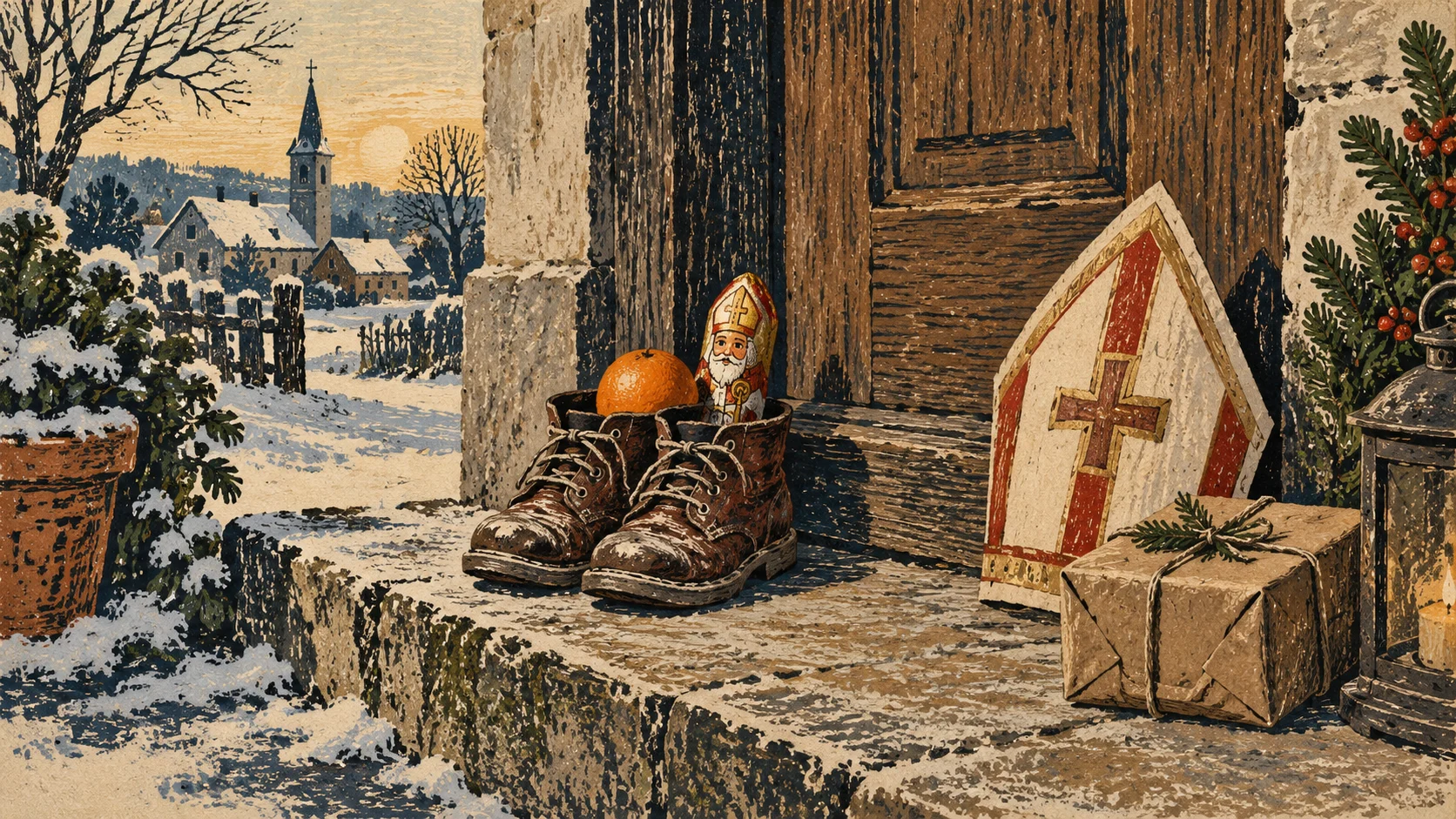
A shoe by the door, an orange, and one small gift can be enough for St. Nicholas Day. The custom is especially useful when it helps children connect receiving with giving. It does not need to become a second Christmas morning or another test of whether a family has done December properly.
When do you put out the shoes?
St. Nicholas’s traditional feast day is December 6. Families who keep the shoe custom commonly set shoes out on the evening of December 5 and find small gifts the next morning. In 2026, December 6 is a Sunday in Advent; the household custom can still be observed while Sunday Mass follows the Advent liturgy.
Nicholas was a bishop of Myra, in what is now Turkey. Stories of his generosity helped shape gift-giving customs in different countries. The Vatican News biography describes both the saint and the later tradition of leaving shoes or stockings for gifts. Many details of his life come through later accounts, so introduce the familiar stories as traditions rather than treating every detail as equally documented.
What to put in the shoes
- An orange or clementine, if suitable for the child.
- A small wrapped treat that fits the family’s food needs.
- A bookmark or short note naming something you appreciate about the child.
- A simple card about St. Nicholas.
- A clue to a shared activity, such as making a gift for a neighbor.
Keep food wrapped and use age-appropriate items. Very young children do not need small coins, hard sweets, or other choking hazards. The gift can sit beside the shoe in a clean bag instead of inside it.
Add an outward-looking part
Before December 5, ask each child to help choose one act of generosity. This might mean making a card for someone who lives alone, helping prepare a meal, or selecting an item a local pantry has specifically requested. Set a budget first so the practice stays manageable.
Explain that generosity does not require a photograph or public thanks. If you give through a parish or charity, respect the privacy of the people receiving help. Avoid describing them in ways that make children feel superior or turn another person’s difficulty into a holiday lesson.
A short conversation for the morning
After the shoes are discovered, tell one brief story about Nicholas’s reputation for helping people in need. Then ask, “What makes a gift thoughtful?” Children may mention the size of the present at first. Help them notice attention: knowing what someone needs, remembering a preference, or giving time.
You can close with this original prayer: Lord, thank you for the gifts we receive and the people who care for us. Help us notice where we can be generous today, with kindness and without needing praise. Amen.
Keep the custom flexible
Families differ in how they connect St. Nicholas with Santa Claus. Explain your household’s approach honestly and avoid asking children to correct other families. A custom can be joyful without becoming a debate at school or a measure of someone else’s faith.
If the date is missed, choose another evening for a small act of giving. If money is tight, a handwritten note and shared time are enough. If a child dislikes surprises, explain exactly what will happen beforehand.
Let a small tradition stay small
December already contains many invitations to buy and perform. St. Nicholas Day can offer a quieter rhythm: receive with gratitude, give with attention, and remember a saint whose name became associated with generosity. For the surrounding weeks, our Advent calendar can help place this custom within the larger season.