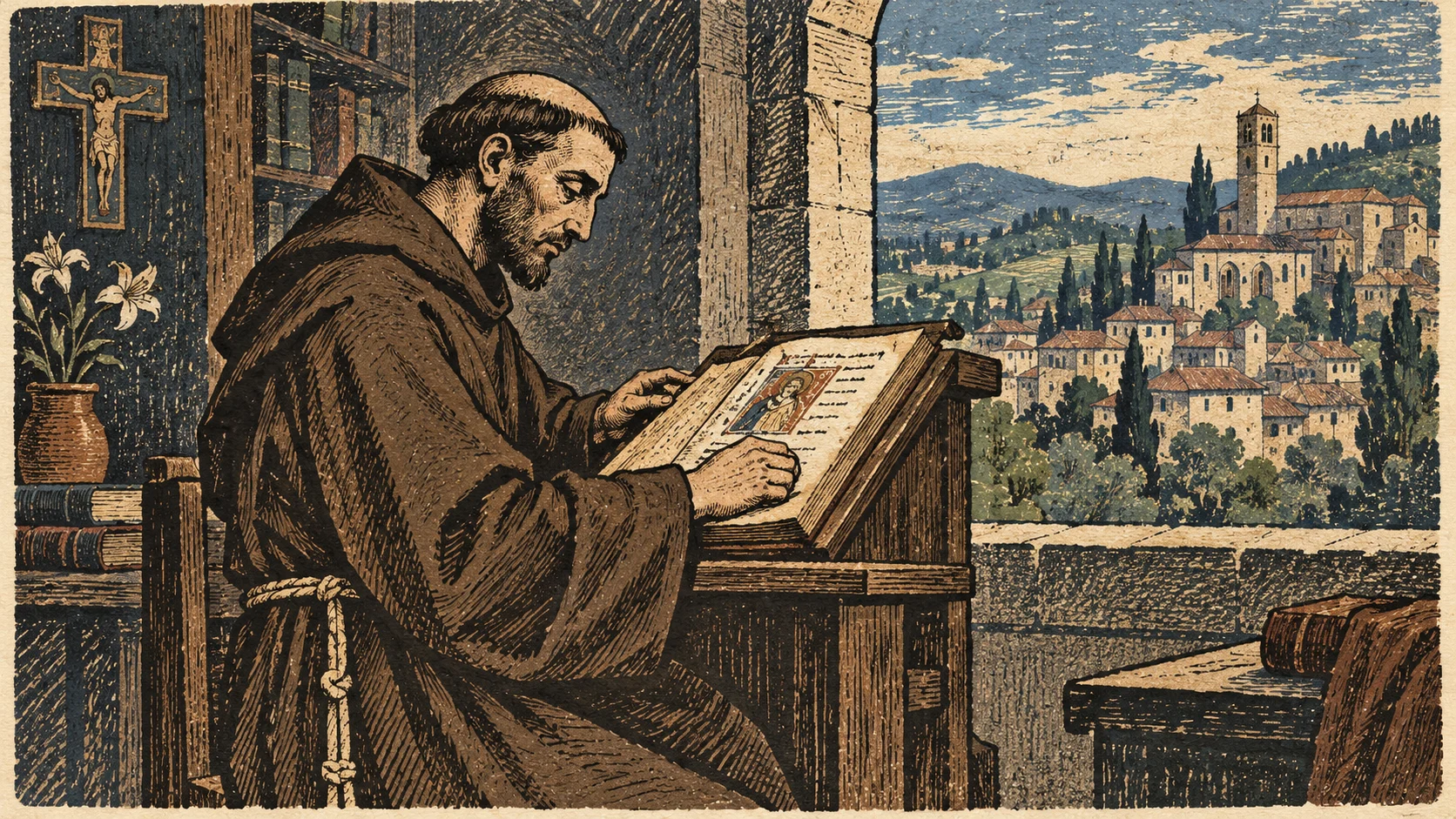
A public voice carries responsibility. St. James of the Marches spent much of his fifteenth-century life preaching, studying, and traveling. Reading about him offers an opportunity to admire dedication while asking careful questions about the historical world in which that dedication took shape.
A Franciscan preacher in a complicated century
James came from Monteprandone in the Italian Marches and became a Franciscan friar. He was associated with the Observant reform and with other prominent Franciscan preachers of his period. His ministry took him across Italy and beyond; he died in Naples in 1476. His public work also belonged to a world of religious conflict, crusading, and inquisitorial activity. The Commission on the Franciscan Intellectual-Spiritual Tradition introduces his life and setting.
Read a saint’s life with historical honesty
A biography can acknowledge both a person’s religious commitment and the difficult features of the surrounding society. It should not turn every action associated with a saint into a model for imitation. Nor should it replace historical study with a quick verdict based on a single dramatic detail.
Ask what the sources actually say. Which events are well documented? Which claims appear only in later devotional accounts? What would you need to understand before discussing a conflict responsibly? These questions make a saint’s life more substantial, not less interesting.
Preparing to speak about faith
Most readers will never preach to a town square. They may teach a class, answer a child’s question, or write an announcement. Preparation still matters. Choose a small topic, read a reliable source, and decide what the listener needs to understand first.
- Define unfamiliar words before relying on them.
- Distinguish Church teaching from your personal illustration.
- Check the source of quotations before attributing them.
- Leave room to say, “I need to look that up.”
If you use a story, be clear whether it is historical, traditional, or an example you have invented to explain an idea. A memorable illustration should not become accidental misinformation.
Study as an act of care
Taking time to prepare tells the listener that their understanding matters. It also makes correction easier. When someone points out an error, return to the source and revise the explanation rather than defending a sentence simply because you already said it.
A parish group can practice this by choosing one common question each month and preparing a short, sourced answer together. Keep the notes available so the work can benefit the next volunteer.
A useful question after reading James
What responsibility comes with the influence I already have? It may be the responsibility to study more carefully, speak more clearly, or correct an unfair impression. James’s public vocation gives that question a historical setting; our answer belongs in the conversations entrusted to us now.