In the vast tapestry of Catholic saints, few figures stand as prominently and uniquely as St. John the Baptist. More than just a prophet, he was the voice crying out in the wilderness, the chosen forerunner of Jesus Christ, whose life and ministry formed a pivotal bridge between the Old and New Testaments. His story is one of divine purpose, unwavering conviction, and profound humility, offering a powerful blueprint for faith even in our modern world. From his miraculous birth to his courageous martyrdom, John the Baptist’s journey illuminates the path of repentance, preparation, and selfless devotion to God’s will, inviting us to reflect on how we too can make straight the way of the Lord in our own lives.
Quick Facts
| Attribute | Details |
|---|---|
| Birth | Circa 1st century BC, Ain Karim (near Jerusalem), Judea |
| Death | Circa 30–33 AD, Machaerus, Perea (modern-day Jordan) |
| Feast Day | June 24 (Nativity of St. John the Baptist), August 29 (Martyrdom of St. John the Baptist) |
| Patronage | Jordan, Puerto Rico, Quebec, Knights Hospitaller, many cities and dioceses, baptism, converts, printers, farriers, tailors, lambs, spiritual healing |
| Canonized | Venerated as a saint since the earliest days of Christianity (pre-dates formal canonization processes) |
Historical Context & Early Life
To understand St. John the Baptist, we must first immerse ourselves in the tumultuous world into which he was born. The land of Judea, though once a mighty kingdom, was in the 1st century BC a Roman province, chafing under foreign rule. The Jewish people, with their deep-rooted monotheistic faith, longed for a Messiah, a divinely appointed leader who would deliver them from oppression and restore Israel’s glory. There were various interpretations of what this Messiah would be like—a political liberator, a spiritual teacher, or a powerful king—and fervent anticipation filled the air.
It was into this expectant yet subjugated world that John was conceived. His parents, Zechariah, a priest of the Temple, and Elizabeth, a descendant of Aaron, were both advanced in years and childless, a source of sorrow and perceived shame in their culture. Yet, they were described as “righteous in the sight of God, observing all the Lord’s commands and decrees blamelessly” (Luke 1:6). Their story begins with a miraculous intervention: while Zechariah was performing his priestly duties in the Temple, the Archangel Gabriel appeared to him, announcing that Elizabeth would bear a son, who was to be named John. This son, Gabriel proclaimed, would “be great in the sight of the Lord” and “go on before the Lord, in the spirit and power of Elijah, to turn the hearts of the parents to their children and the disobedient to the wisdom of the righteous—to make ready a people prepared for the Lord” (Luke 1:15-17).
Zechariah, overwhelmed with doubt, was struck mute until the prophecy was fulfilled. Six months later, John’s cousin, Mary, the mother of Jesus, visited Elizabeth. At Mary’s greeting, John, still in his mother’s womb, “leaped for joy,” a profound moment often interpreted as his recognition of the Messiah’s presence. This prenatal encounter highlights John’s unique destiny from the very beginning. When John was born, Zechariah’s speech returned, and he prophesied about his son’s role as the “prophet of the Most High” who would “prepare the way for the Lord” (Luke 1:76-77). From his earliest days, John was marked by divine purpose, set apart to fulfill an extraordinary mission.
Calling & Key Milestones
The Prophecy and Miraculous Birth
John’s very existence was a testament to God’s faithfulness and a sign of things to come. The angel Gabriel’s announcement to Zechariah was a direct echo of Old Testament prophecies concerning a messenger who would prepare the way for the Lord (Malachi 3:1). His birth, to elderly parents, mirrored other miraculous births in biblical history, such as Isaac, Samuel, and Samson, signifying a special divine calling. This miraculous beginning set him apart from the outset, signaling that his life would be dedicated to God’s unique plan. He was filled with the Holy Spirit from birth, a rare distinction even among prophets, equipping him for his demanding future.
Life in the Desert
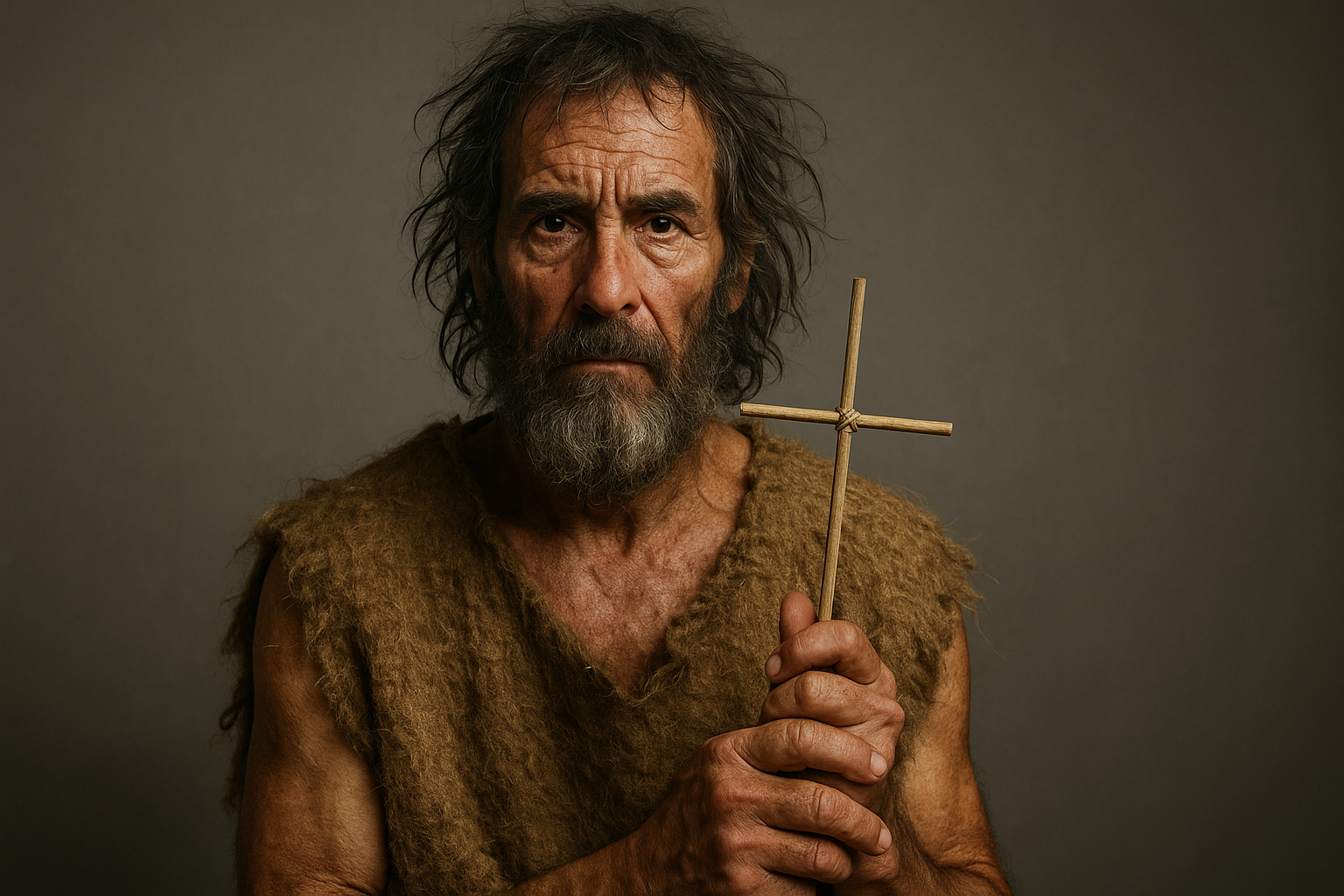
As he grew, John embraced a lifestyle of austere asceticism, withdrawing from the comforts of society to live in the rugged Judean wilderness. His diet consisted of locusts and wild honey, and he wore clothing made of camel’s hair with a leather belt—a stark image reminiscent of the prophet Elijah (2 Kings 1:8). This period in the desert was not merely a physical retreat but a spiritual crucible, a time of profound prayer, fasting, and communion with God. It was here that he cultivated the spiritual strength, clarity of purpose, and unyielding conviction that would define his public ministry. His solitude reflected a deep spiritual preparation, free from the distractions and compromises of the world, allowing him to listen intently to the voice of God.
Preaching and Baptism at the Jordan
Around 27-28 AD, “the word of God came to John son of Zechariah in the wilderness” (Luke 3:2), signaling the beginning of his public ministry. He emerged from the desert, proclaiming a message of repentance and baptism for the forgiveness of sins. His charismatic presence and fiery preaching drew vast crowds from Jerusalem and the surrounding regions to the Jordan River. John’s baptism was not a sacrament in the Christian sense, but a symbolic act of turning away from sin and committing to a new life. He challenged people from all walks of life—tax collectors, soldiers, and everyday citizens—to demonstrate their repentance through tangible acts of justice and charity. John consistently pointed beyond himself, telling his followers, “I baptize you with water, but one who is more powerful than I will come, the straps of whose sandals I am not worthy to untie. He will baptize you with the Holy Spirit and fire” (Luke 3:16). This humility reached its pinnacle when Jesus Himself came to be baptized by John. Though John initially protested, feeling unworthy to baptize his Lord, Jesus insisted, stating, “Let it be so now; it is proper for us to do this to fulfill all righteousness” (Matthew 3:15). This pivotal moment marked the inauguration of Jesus’ public ministry and the divine affirmation of John’s prophetic role.
Confronting Herod and Martyrdom
John’s fearless devotion to truth and righteousness ultimately led to his tragic end. He publicly denounced King Herod Antipas, who had unlawfully married Herodias, his brother Philip’s wife. John’s moral courage to speak truth to power infuriated Herodias, who sought his death. Herod, though troubled, initially protected John, recognizing him as a righteous and holy man. However, during a birthday feast for Herod, Herodias’s daughter Salome danced, pleasing Herod so greatly that he swore to give her whatever she wished. Prompted by her mother, Salome requested John the Baptist’s head on a platter. Despite his reluctance and regret, Herod felt bound by his oath and had John beheaded in prison. John’s martyrdom, chronicled in the Gospels, sealed his legacy as a prophet who remained faithful to God’s word, even unto death, refusing to compromise the truth for personal safety or political expediency.
Spiritual Legacy & Theological Themes
St. John the Baptist’s spiritual legacy is immense, profoundly influencing Christian theology, liturgy, and devotion. He stands as a unique figure, straddling the Old and New Covenants, serving as the bridge that connects the ancient prophecies with their ultimate fulfillment in Christ.
One of his core virtues was his unwavering humility. His famous declaration, “He must increase, but I must decrease” (John 3:30), encapsulates the essence of his mission. John perfectly understood his role: not to draw attention to himself, but to redirect all focus to Jesus. This radical self-effacement is a powerful lesson for all believers, reminding us that true greatness in God’s eyes often lies in stepping aside so that Christ can shine through.
Another central theme of John’s ministry was repentance. He preached a message of turning away from sin and preparing one’s heart for the coming of the Messiah. This wasn’t merely about feeling sorry for wrongdoings but about a complete change of mind and direction, a transformation that should be evidenced by a transformed life. This call to repentance remains a fundamental pillar of Catholic teaching, particularly emphasized during Advent and Lent, preparing us to encounter Christ anew.
John is revered as the “Forerunner” or “Precursor” of Christ. His entire life was dedicated to “making straight the way of the Lord.” This theme resonates deeply in Advent, where the Church echoes John’s call to spiritual preparation for Christ’s coming—both at Christmas and at the end of time. His wilderness ministry, simple lifestyle, and prophetic voice are constant reminders of the need to simplify our lives, cast off distractions, and focus on the spiritual journey.
His influence on Christian liturgy is significant. He is the only saint, besides Mary, whose birth is celebrated as a solemnity (June 24), a testament to his unique importance in salvation history. His martyrdom (August 29) is also commemorated. In art, he is frequently depicted baptizing Jesus, highlighting his role in initiating Christ’s public ministry and foreshadowing the sacrament of Baptism. He is seen as a model for all who seek to serve God by faithfully proclaiming His truth, even when it is uncomfortable or dangerous. His life provides a powerful example of prophetic courage, selflessness, and total surrender to God’s divine plan.
Devotion Today
Devotion to St. John the Baptist remains vibrant and widespread across the Catholic world. His unique position as the one who prepared the way for Christ, and his dramatic life story, have ensured his enduring popularity. Many churches, cathedrals, and basilicas bear his name, including the Archbasilica of St. John Lateran in Rome, the “Mother and Head of All Churches of the City and the World,” a testament to his profound significance.
The Solemnity of the Nativity of St. John the Baptist on June 24 is a major feast day, often celebrated with bonfires, special masses, and folk traditions, especially in European countries like Spain, Portugal, and France, as well as in Quebec, Canada, where he is the patron saint. These celebrations often incorporate ancient midsummer traditions, Christianized to honor the birth of the saint who heralded the Light of the World.
Pilgrimage sites associated with St. John the Baptist include Ain Karim, near Jerusalem, traditionally believed to be his birthplace, where the Church of St. John the Baptist marks the spot. The site of Machaerus in modern-day Jordan is also a place of historical significance, believed to be the fortress where he was imprisoned and martyred. Throughout the Holy Land, various sites related to his ministry along the Jordan River are visited by pilgrims seeking to connect with the land where he preached and baptized.
He is a popular patron saint for numerous causes, reflecting different aspects of his life. He is invoked by those seeking spiritual healing, by converts to the faith, by printers (due to his role as the “voice”), and by those working with lambs (a symbol associated with him, referring to Christ as the Lamb of God). His steadfastness in proclaiming the truth also makes him a patron for those who must speak courageously in the face of opposition.
Reflections for Modern Readers
St. John the Baptist, though living two millennia ago, offers profound and actionable lessons for us today. His life is a powerful invitation to examine our own priorities and commitment to God.
- Embrace Humility: John’s mantra, “He must increase, but I must decrease,” is a counter-cultural message in an age that often prioritizes self-promotion. For us, this means shifting our focus from personal glory to serving God and others. In practical terms, this could be celebrating someone else’s achievement instead of seeking credit, or giving our time and talents to a cause greater than ourselves without expecting recognition. When we step back, we allow God’s grace to work more powerfully through us.
- Cultivate a Spirit of Repentance: John’s call to “prepare the way of the Lord” is not just for ancient Judea but for every generation. It means regularly examining our conscience, acknowledging our sins, and striving to live more virtuously. In a world that often downplays sin, John reminds us of its seriousness and the liberating power of turning back to God. This could involve making a sincere confession, forgiving someone who has wronged us, or actively seeking to change a detrimental habit.
- Speak Truth with Courage: John fearlessly confronted King Herod, speaking out against injustice regardless of the consequences. In our own lives, we are often called to speak truth, whether in personal relationships, professional settings, or public discourse. This doesn’t mean being aggressive, but standing firm in our convictions, defending the vulnerable, and advocating for what is right, even when it’s unpopular or difficult. For example, it might mean challenging a discriminatory remark among friends or speaking up against a dishonest practice at work.
- Simplify and Focus: John’s wilderness lifestyle was extreme, but it highlights the importance of detaching from worldly distractions to focus on what truly matters. In our hyper-connected, consumer-driven society, we can easily lose sight of our spiritual path. Taking time for solitude, prayer, and reflection—perhaps by limiting screen time, simplifying our possessions, or dedicating specific periods to prayer—can help us hear God’s voice more clearly and prepare our hearts for His presence.
In art and jewelry, St. John the Baptist is depicted with several powerful symbols:
- Camel Hair Garment and Leather Belt: This symbolizes his ascetic life in the wilderness, his detachment from worldly comforts, and his role as a prophet in the spirit of Elijah. It signifies a life dedicated to God, unburdened by material possessions.
- A Staff or Reed Cross: Often depicted as a simple wooden staff topped with a cross, this represents his role as a herald of Christ and his preaching in the wilderness. It’s a symbol of his mission to “make straight the way of the Lord.”
- The Lamb (or pointing to a Lamb): This is perhaps his most iconic symbol, referring to his proclamation, “Behold, the Lamb of God, who takes away the sin of the world” (John 1:29). It signifies his role in identifying Jesus as the Paschal Lamb, the ultimate sacrifice for humanity’s sins.
- A Shell (or holding a shell pouring water): This directly refers to his act of baptizing people in the Jordan River, including Jesus himself. It symbolizes the cleansing power of repentance and the foreshadowing of Christian Baptism.
- His Head on a Platter: This somber depiction serves as a powerful reminder of his martyrdom, his courageous stand for truth, and his ultimate sacrifice for his faith. It represents the cost of discipleship and the unwavering commitment to God’s will.
Timeline Summary
- Circa 1st Century BC: Archangel Gabriel appears to Zechariah, prophesying the birth of John.
- Circa 1st Century BC: John is miraculously conceived by Elizabeth, an elderly woman.
- Circa 1st Century BC: John leaps in Elizabeth’s womb during Mary’s visitation.
- Circa 1st Century BC: John is born in Ain Karim; Zechariah’s speech is restored, and he prophesies about his son.
- Childhood/Adolescence: John grows up in the wilderness, preparing for his ministry.
- Circa 27-28 AD: John begins his public ministry in the Jordan region, preaching repentance and baptism.
- Circa 27-28 AD: Jesus comes to John to be baptized in the Jordan River.
- Circa 29-30 AD: John confronts King Herod Antipas over his unlawful marriage to Herodias.
- Circa 29-30 AD: John is imprisoned by Herod Antipas.
- Circa 30-33 AD: John is martyred by beheading at the request of Salome and Herodias.
Scripture for Reflection
St. John the Baptist’s life is deeply embedded in the Gospels, offering rich passages for reflection:
- Luke 1:5-25 (The Birth of John the Baptist Foretold): This passage describes the miraculous prophecy of John’s birth to Zechariah, highlighting God’s direct intervention and John’s divine calling from conception. It invites us to consider how God prepares individuals for unique missions and how faith can overcome doubt.
- John 1:29 (John Points to the Lamb of God): “The next day John saw Jesus coming toward him and said, ‘Look, the Lamb of God, who takes away the sin of the world!'” This powerful declaration encapsulates John’s entire mission—to identify Jesus as the Messiah, the ultimate sacrifice. It encourages us to look beyond ourselves and direct others to Christ, recognizing Him as the source of salvation.
- Mark 1:1-8 (The Preaching of John the Baptist): “The beginning of the good news about Jesus the Messiah, the Son of God, as it is written in Isaiah the prophet: ‘I will send my messenger ahead of you, who will prepare your way’—’a voice of one calling in the wilderness, “Prepare the way for the Lord, make straight paths for him.”‘ And so John the Baptist appeared in the wilderness, preaching a baptism of repentance for the forgiveness of sins.” This passage vividly portrays John as the fulfillment of prophecy, the voice calling for repentance, and the one preparing hearts for Christ’s arrival. It prompts us to ask how we are preparing our own hearts for the Lord in our daily lives.
Prayers to St. John the Baptist
One of the most common prayers invoking St. John the Baptist reflects on his role as the Forerunner and his call to repentance:
Prayer to Saint John the Baptist
O Glorious Saint John the Baptist, greatest prophet among those born of women, though you were sanctified in your mother’s womb and led a most innocent life, you still went into the desert to practice severe mortification and penance. Obtain for us of your divine Master the grace to detach our hearts from earthly pleasures and to do penance for our sins. Amen.
O Holy Saint John, Precursor of the Lord, you were a burning and shining lamp, sent to prepare the way for Christ. Help us, by your intercession, to shine with the light of faith and to guide others to the Savior. Grant us the courage to speak truth with conviction and to live lives that point always to Jesus, the Lamb of God. We ask this through Christ our Lord. Amen.