In the vast tapestry of Catholic saints, some figures shine with a gentle, accessible light, while others mystify and challenge our understanding with their extraordinary lives. St. Christina the Astonishing undeniably belongs to the latter category. Living in 12th and 13th-century Belgium, her story reads less like a traditional saint’s biography and more like a medieval mystical drama, filled with inexplicable phenomena, profound spiritual insights, and an unwavering commitment to God. This article will delve into the remarkable life of Christina, exploring the historical backdrop of her astonishing experiences, her unique spiritual legacy, and how her radical devotion can still inspire and challenge believers in our modern world.
Quick Facts
| Attribute | Detail |
|---|---|
| Birth | c. 1150 |
| Death | c. 1224 |
| Feast Day | July 24 |
| Patronage | Mentally ill people, those with nervous disorders, impossible cases, exiles |
| Canonized | Ancient veneration, recognized in the Roman Martyrology |
Historical Context & Early Life
St. Christina the Astonishing lived during a vibrant, yet often tumultuous, period in European history—the High Middle Ages. Born around 1150 in the town of Brustem, near Sint-Truiden in what is now modern-day Belgium, her life unfolded against a backdrop of burgeoning intellectual activity, the rise of mendicant orders like the Franciscans and Dominicans, and intense lay piety. The Church was a central pillar of society, shaping daily life, law, and culture, and belief in the supernatural was widespread and deeply integrated into the worldview of the era.
Flanders, her home region, was a prosperous and densely populated area, known for its thriving textile industry and strategic trade routes. This economic vibrancy, however, often existed alongside stark social inequalities and the ever-present realities of poverty, disease, and early death. For many, life was short and often brutal, making the promise of heaven and the fear of hell deeply resonant.
Christina herself came from humble beginnings. Orphaned at a young age, she was left with little formal education or material wealth. Her early life was unremarkable, typical of a peasant girl in her time. She worked as a shepherdess, a common occupation that often afforded solitude and closeness to nature, perhaps inadvertently preparing her for the intense interior life that would later define her. There is nothing in her initial years to suggest the extraordinary path she would take; she was, by all accounts, a simple, unassuming young woman. This makes the dramatic turn her life took even more “astonishing” and compelling.
Calling & Key Milestones
Christina’s true calling began not with a quiet prayer or a gentle prompting, but with a dramatic event that defied ordinary explanation and launched her into a life of profound mysticism and extreme penance. Her story, primarily recorded by Thomas of Cantimpré, a Dominican friar who knew her personally, is full of details that push the boundaries of belief, even for devout Christians, earning her the moniker “the Astonishing.”
The First “Death” and Return
The pivotal moment in Christina’s life occurred when she was about 21 years old. She suffered a severe seizure and was presumed dead. Her body was prepared for burial, and her funeral Mass was underway. As the priest was offering the sign of peace, Christina, to the shock and terror of everyone present, suddenly rose from her open coffin, levitating to the rafters of the church. The stunned congregation, believing her to be a ghost, fled in fear. She later explained to the priest and others that she had indeed died and experienced the afterlife.
According to her account, she had been taken to purgatory, hell, and heaven. She described witnessing the suffering of souls in purgatory and hell, and the glory of the blessed in heaven. When offered the choice to remain in heavenly bliss, she reportedly declined, asking God if she could return to life on earth to pray and suffer for the souls she had seen in purgatory. She wanted to ease their pains and prevent others from falling into hell. This radical act of charity and self-sacrifice became the driving force behind the rest of her life.
A Life of Penance and Astonishing Feats
Upon her return to life, Christina’s behavior became radically different and often bewildering to those around her. Driven by an intense desire to atone for sins and to intercede for the dead, she embraced a life of extreme asceticism and voluntary penance. She would often throw herself into ovens, jump into freezing rivers, and allow herself to be scourged, claiming she felt no pain in these instances, or that the pain was bearable because she was spiritually united with Christ’s suffering. She lived in constant physical discomfort, viewing it as a small price to pay for the souls in purgatory.
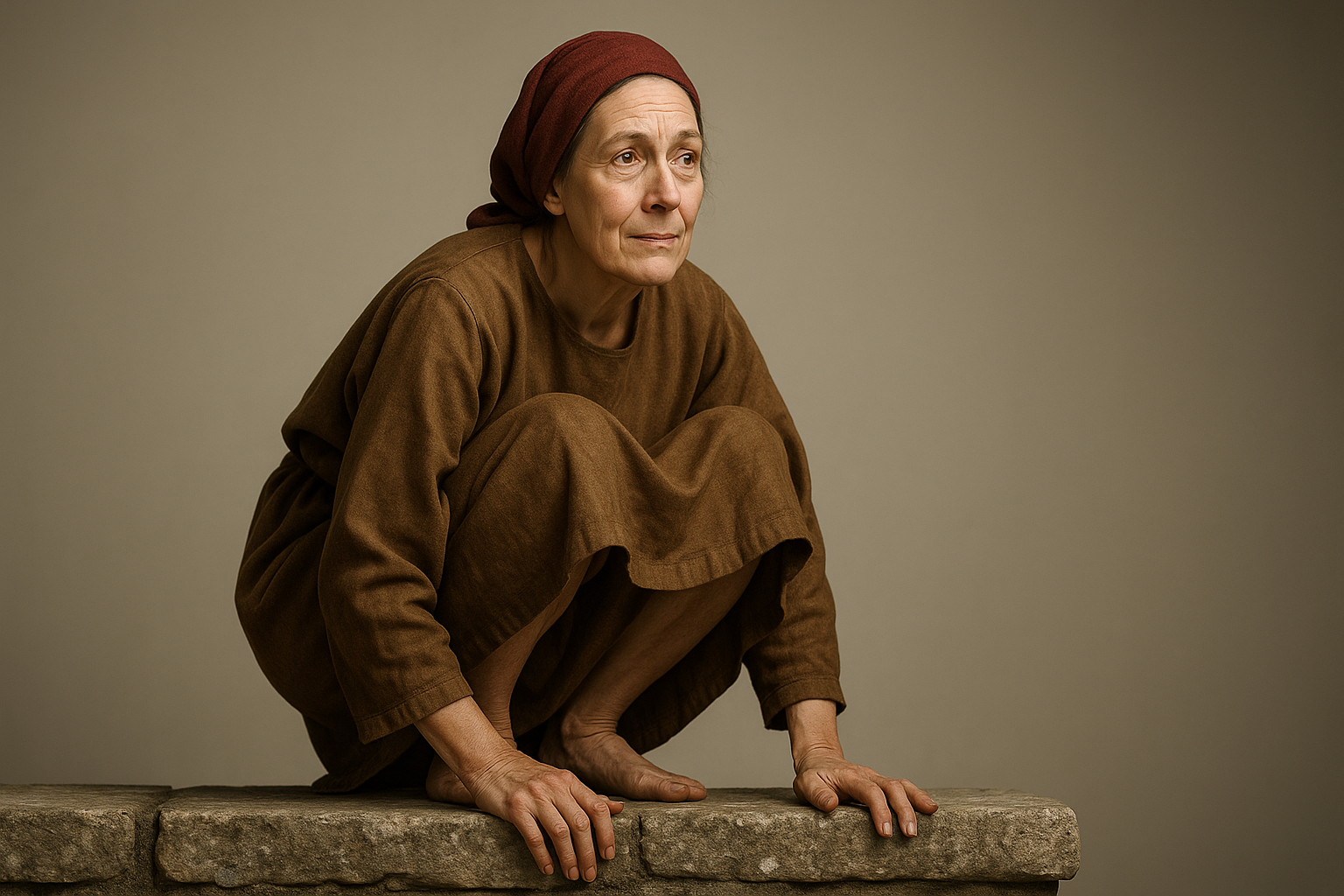
Her actions were frequently perceived as bizarre or even demonic by her contemporaries. She would often flee human society, seeking solitude in remote places, living in trees, or perching atop walls and towers like a bird, a habit that became one of her enduring symbols. She would roll in thorns, walk barefoot over ice, and wear rags, enduring intense cold and hunger. Accounts also describe her performing incredible feats, such as detecting the presence of sin, discerning spirits, and even miraculously escaping from confinement when people tried to restrain her for her own safety or out of fear.
Guidance from Holy Men
Despite her unconventional and often disturbing behavior, Christina found advocates and confessors among respected Church figures. The most notable among them was Jacques de Vitry, a prominent theologian and later Bishop of Acre, who became her spiritual director and biographer. He was initially skeptical of her, but after observing her for some time, he became convinced of her genuine sanctity and the divine origin of her experiences. He noted her profound humility, her deep compassion for others, and her unwavering faith, which stood in stark contrast to her erratic exterior. De Vitry’s writings helped validate her and protected her from being condemned as a heretic or madwoman, though she continued to face suspicion and misunderstanding throughout her life.
Seeking Solitude and Serving Others
As Christina aged, her more extreme acts of public penance reportedly lessened, and she became more settled. She eventually lived in the convent of Saint Catherine in Sint-Truiden, where she continued her life of prayer and intercession, albeit in a more regulated environment. Even there, her unique spiritual gifts continued, with her often going into ecstasies and offering spiritual guidance to those who sought her out. Her focus remained steadfast: interceding for the dead, converting sinners, and suffering in union with Christ. Her life demonstrated a relentless pursuit of God’s will, no matter how unusual or difficult the path.
Spiritual Legacy & Theological Themes
St. Christina the Astonishing’s spiritual legacy is as unique as her life. She is a powerful, albeit sometimes unsettling, witness to several core Catholic virtues and theological themes, particularly those related to suffering, intercession, and the reality of the afterlife.
The central virtue Christina exemplified was an extraordinary **charity** and **compassion** for the suffering souls in purgatory. Her entire post-resurrection life was dedicated to their liberation, a radical self-sacrifice rooted in the love of Christ. This aligns profoundly with the Catholic teaching on the Communion of Saints, where the living, the dead in purgatory, and the saints in heaven are interconnected through Christ, able to pray for and help one another. Her example underscores the power and importance of intercessory prayer, especially for those who have died and are undergoing purification.
Her life was also a vivid, though extreme, demonstration of **penance** and **detachment from worldly comforts**. She embraced suffering joyfully, seeing it as a means to unite herself more closely with Christ’s Passion and to make satisfaction for sins. While her physical austerities are not presented as a model for all believers, her underlying spirit of mortification and her willingness to abandon all earthly attachments for a higher spiritual good resonate deeply with Gospel calls to take up one’s cross and follow Jesus. Her repeated “miraculous” escapes from physical harm were often interpreted as God’s acceptance of her suffering and His protection of her in her divine mission.
Christina’s narrative profoundly emphasizes the reality of the **four last things**: Death, Judgment, Heaven, and Hell. Her firsthand account of the afterlife, however interpreted, served as a stark reminder to medieval Christians of eternal consequences and the urgent need for repentance and prayer. Her life was a living sermon on the importance of living a holy life and the efficacy of prayers for the dead, reinforcing doctrines that were central to medieval Catholic piety.
Finally, Christina’s story highlights the mystery of God’s grace and the diverse ways He calls individuals. Her unusual experiences, though often misunderstood, were ultimately recognized by the Church as manifestations of divine grace, showing that God’s ways are not always our ways. Her life is a testament to the belief that sanctity can blossom even in the most unconventional forms, and that the Holy Spirit works in ways that can be truly astonishing.
Devotion Today
Compared to more widely known saints, devotion to St. Christina the Astonishing is not as widespread globally, but she retains a significant place within Catholic tradition, particularly in her native Belgium and among certain groups. Her feast day is observed annually on July 24th, and she remains listed in the Roman Martyrology, the official catalog of saints and blesseds recognized by the Catholic Church.
Her primary shrine is located in the Church of Saint Trudo in Sint-Truiden, Belgium, where her relics are venerated. This church was historically associated with her and continues to be a place where pilgrims, particularly those seeking intercession for the mentally ill or for “impossible cases,” may visit. While not a major pilgrimage site like Lourdes or Fatima, it serves as a local focal point for devotion.
For those who encounter her story, St. Christina often becomes a powerful intercessor for specific intentions. Given the bewildering and sometimes disturbing nature of her physical and mental states, she is invoked as a patron saint for people suffering from mental illness, nervous disorders, and psychological distress. Her patronage extends to those who feel themselves to be outsiders or exiles, echoing her own solitary and misunderstood existence. In a world increasingly aware of mental health challenges, her patronage offers comfort and a sense of understanding to those who feel isolated in their struggles, suggesting that even profound mental anguish can be offered to God for a higher purpose.
Her story is also kept alive through books, online resources, and occasionally through homilies and catechesis, reminding believers of the extraordinary breadth of spiritual experiences within the Church and the profound reality of God’s mercy and the afterlife.
Reflections for Modern Readers
St. Christina the Astonishing’s life, while rooted in a distant and different historical context, offers several profound and actionable takeaways for modern readers. Her radical witness can challenge our assumptions about faith, suffering, and what it means to truly follow Christ.
-
Empathy for the Suffering: Christina’s life was defined by her immense compassion for souls in purgatory. For us, this translates into a powerful call to empathy for all who suffer, especially those we cannot see or whose pain is hidden. This includes the marginalized, the forgotten, and indeed, those who have died. In our fast-paced world, taking time to pray for the dead, visiting the lonely, or advocating for the vulnerable, are real-world ways to live out Christina’s empathy. For example, volunteering at a hospice or simply offering a prayer for someone in pain, even if you don’t know them, embodies her spirit.
-
The Power of Intercessory Prayer: Her return to life solely to intercede for others is a powerful testament to the Catholic belief in the Communion of Saints and the efficacy of prayer. Christina reminds us that our prayers have profound spiritual weight, not just for the living but also for the dead. We can follow her example by regularly praying for departed loved ones, for souls in purgatory, and for those who have no one to pray for them. Imagine taking a few moments each day to specifically pray for someone who has passed away, particularly those who died suddenly or without much spiritual preparation.
-
Detachment from Worldly Comforts: Christina’s extreme penances and her chosen life of discomfort highlight a core Christian principle: detachment from material possessions and earthly pleasures. While her methods were unique, the lesson remains: true spiritual freedom comes from not being enslaved by material comforts or worldly anxieties. In a consumer-driven society, this could mean simplifying our lives, practicing intentional giving, or finding contentment in less, rather than always seeking more. Think about giving up a luxury item you don’t truly need and donating the money to a charity, as a small act of detachment.
-
Acceptance of Suffering for a Greater Good: Christina embraced suffering not as an evil to be avoided, but as a path to purification and a means of uniting with Christ for the salvation of others. While we are not called to seek out suffering, we can learn from her the spiritual discipline of accepting unavoidable difficulties with patience and offering them up for a greater spiritual intention. This transforms personal hardship into redemptive suffering. When facing a challenging illness or a personal setback, offering that discomfort for the intentions of others, or for the Church, can bring profound meaning to the experience.
-
God’s Unique Call for Each Individual: Christina’s astonishing and often bewildering path reminds us that God’s grace works in diverse and mysterious ways. Not everyone is called to an “astonishing” life like hers, but everyone is called to holiness in their own unique way. Her story encourages us to discern God’s particular will for our lives, even if it seems unconventional to others. It fosters an openness to the Holy Spirit and a willingness to step outside comfort zones when called to do so. Perhaps you feel a quiet prompting to start a new ministry or to pursue a unique form of service that feels “outside the box”—Christina’s story can be an encouragement to trust that divine inspiration.
In art and jewelry, St. Christina is often depicted with several symbolic elements. She might be shown with **birds** or perched high in a **tree** or on a **wall**, referencing her habit of seeking solitude in high places and fleeing human contact. These symbols represent her detachment from the world and her longing for heaven, as well as her almost ethereal nature after her “resurrection.” Sometimes she is seen with a **skull** or other memento mori, symbolizing her intense meditation on death and the afterlife, and her desire to pray for the dead. Less commonly, she might be shown with **instruments of penance** or even **fire**, alluding to her extreme austerities and her willingness to suffer for souls in purgatory. These symbols invite contemplation on detachment, the reality of the afterlife, and the power of sacrificial love.
Timeline Summary
- c. 1150: Born in Brustem, near Sint-Truiden, Belgium. Orphaned at a young age, lives a simple life as a shepherdess.
- c. 1171: At around 21 years old, suffers a severe seizure and is presumed dead.
- c. 1171: During her own funeral Mass, she miraculously rises from her coffin, levitating to the church rafters.
- c. 1171 onwards: Explains her experience of purgatory, hell, and heaven, and her choice to return to life to pray for souls.
- c. 1171 – c. 1220: Embarks on a life of extreme penance, self-imposed suffering, and solitary existence, often living in trees or high places.
- Late 12th/Early 13th Century: Her unique spiritual experiences attract the attention of local clergy and eventually Jacques de Vitry, who becomes her spiritual director and biographer.
- Early 13th Century: Becomes more settled in her later years, residing in the convent of Saint Catherine in Sint-Truiden.
- c. 1224: Dies, reportedly having received the Last Rites.
- Post-mortem: Veneration as a saint begins, with her inclusion in martyrologies.
Scripture for Reflection
St. Christina the Astonishing’s life, characterized by profound suffering and intercession for others, resonates with several key scriptural themes:
Colossians 1:24: “Now I rejoice in my sufferings for your sake, and in my flesh I am filling up what is lacking in the afflictions of Christ on behalf of his body, which is the church.”
This passage perfectly encapsulates Christina’s mission. She chose to return to a life of suffering, explicitly stating her desire to atone for sins and pray for souls. Her willingness to endure hardship and physical discomfort was a direct participation in Christ’s redemptive suffering, “filling up what is lacking” not because Christ’s sacrifice was insufficient, but because our suffering united with His can be a powerful means of grace for others.
1 Peter 4:8: “Above all, let your love for one another be intense, because love covers a multitude of sins.”
Christina’s decision to return from heaven was an extraordinary act of love for her neighbor, specifically for the souls she saw suffering in purgatory and for those on earth heading towards perdition. Her entire life became an outpouring of intense charity, believing that her penance and prayers could “cover” sins and bring relief to the suffering.
Hebrews 12:1-2: “Therefore, since we are surrounded by so great a cloud of witnesses, let us rid ourselves of every burden and sin that clings to us and persevere in running the race that lies before us while keeping our eyes fixed on Jesus, the leader and perfecter of faith.”
Christina is indeed one of this “cloud of witnesses,” whose radical life encourages us to persevere in faith. Her experiences of the afterlife gave her an unparalleled focus on eternal realities, helping her “rid herself of every burden and sin” and fix her eyes firmly on Jesus. Her willingness to endure earthly hardship highlights the fleeting nature of this world and the eternal importance of our spiritual journey.
Prayers to St. Christina the Astonishing
While there are no widely promulgated official novenas or highly popular prayers specifically to St. Christina the Astonishing, the following prayer reflects her unique charism and seeks her intercession for the intentions she held dear:
Prayer to St. Christina the Astonishing
O glorious St. Christina the Astonishing, whose life was a testament to extraordinary love and sacrifice, you chose to return from the threshold of heaven to labor for the salvation of souls. With profound compassion, you embraced a life of penance and intercession for those in purgatory and for sinners on earth. We humbly ask for your powerful intercession.
Astonishing saint, you knew the depths of human suffering and the mysteries of divine grace. Be a comfort and guide to all who suffer from mental anguish, nervous disorders, or feel lost and isolated. Help us to endure our trials with patience, offering them in union with Christ’s Passion for the greater good of souls.
Inspire us, we pray, to grow in charity and detachment from worldly things. Teach us the power of prayer for the living and the dead, and strengthen our faith in the Communion of Saints. May your radical example ignite within us a fervent desire to serve God wholeheartedly and to live lives dedicated to eternal realities.
St. Christina, you who are a patron of impossible cases, pray for us in our most desperate needs, and lead us ever closer to the Sacred Heart of Jesus, that one day we may share in the eternal bliss you glimpsed in heaven. Amen.