In the vast tapestry of Catholic saints, some figures shine with a unique brilliance, inspiring devotion and miracles even when their historical records are shrouded in the mists of time. St. Philomena is one such captivating figure, a youthful martyr whose story emerged not from ancient texts, but dramatically from the depths of Rome’s catacombs in the early 19th century. Her discovery ignited a fervent devotion that spread rapidly across the globe, leading to countless attributed miracles and capturing the hearts of popes, saints, and ordinary faithful alike. This article will delve into the remarkable journey of St. Philomena, exploring her powerful story of faith and purity, the fascinating historical context of her discovery, her profound spiritual legacy, and how her courageous witness continues to resonate with believers in the modern world.
Quick Facts
| Category | Details |
|---|---|
| Birth | Circa early 4th century AD (approx. 290-305 AD) |
| Death | Circa 304-305 AD (Martyrdom by beheading) |
| Feast Day | August 11 (traditional) |
| Patronage | Infants, babies, lost causes, forgotten causes, purity, desperate situations, living rosary, vocations, children of Mary |
| Canonized | Approved for public veneration by Pope Gregory XVI (1837) |
Historical Context & Early Life
To understand the powerful story of St. Philomena, we must first transport ourselves to the tumultuous world of the early Roman Empire, specifically the early 4th century AD. This was a period marked by intense persecution of Christians, particularly during the reign of Emperor Diocletian. For centuries, followers of Christ had faced suspicion, prejudice, and brutal violence simply for adhering to their faith, refusing to worship the Roman gods or the deified emperor. Christians were often forced to practice their religion in secret, gathering in hidden homes or the vast underground burial networks known as catacombs, which also served as sacred places of rest for their deceased loved ones, especially martyrs.
It was into this volatile world that Philomena was born. Though specific written records from her immediate time are scarce – a common challenge when studying early Christian martyrs – tradition, later revelations, and the circumstances of her relics’ discovery paint a compelling picture. She is believed to have been born to a Greek king and queen of Corfù (or a region called Magnana), who were pagans and childless. In their desperate longing for a child, they sought the advice of a Christian physician from Rome. This physician, witnessing their anguish, gently suggested they convert to Christianity and pray to the Christian God. Moved by hope, the royal couple embraced the faith, and soon after, Philomena was born, a miraculous answer to their prayers. They named her Philomena, meaning “Daughter of Light” or “Beloved,” a fitting name for a child whose life would so profoundly illuminate the path of faith.
From a very young age, Philomena was raised in the Christian faith, nurtured in a household that had witnessed God’s direct intervention. Even as a young girl, perhaps around the age of 11, she felt a profound calling to dedicate her life entirely to Jesus Christ. She made a private vow of virginity to God, a solemn promise to remain pure and devoted to Him alone. This decision, made in the purity of her youth, would become the cornerstone of her courageous witness and the ultimate source of her strength in the trials that lay ahead.
Calling & Key Milestones
Philomena’s life took a dramatic turn when, around the age of 13, her father traveled to Rome to appeal for peace with Emperor Diocletian. To secure the peace, the Emperor, captivated by Philomena’s beauty and noble bearing, demanded her hand in marriage. This proposal presented a profound crisis for Philomena. She steadfastly refused, explaining her vow of virginity to Christ. Her parents, desperate to avoid the Emperor’s wrath and preserve their kingdom, pleaded with her to reconsider, but Philomena’s resolve was unwavering. Her “calling” was not to a throne, but to Christ alone.
Unwavering Faith and Torture
Her refusal infuriated Diocletian, who viewed it not only as a personal insult but also as an act of defiance against his imperial authority and the Roman gods. He tried persuasion, lavish promises, and threats, but Philomena remained resolute, declaring, “My God is Jesus Christ, and to Him I have consecrated my virginity. Your power is nothing compared to His.” Enraged, Diocletian had her imprisoned and subjected to a series of horrific tortures, each designed to break her spirit and force her to renounce her Christian faith and her vow.
Miraculous Deliverances
The accounts of Philomena’s martyrdom are filled with extraordinary interventions, demonstrating God’s protective hand over His faithful servant:
- The Scourging: She was first scourged mercilessly, a brutal whipping that left her bruised and bleeding, seemingly at the brink of death. However, in her cell, she experienced a profound vision of the Blessed Virgin Mary, who comforted her and healed her wounds completely. The next morning, to the astonishment of her tormentors, Philomena appeared perfectly well, radiating peace.
- The Drowning: Undeterred, Diocletian ordered her to be drowned in the Tiber River with an anchor tied around her neck. Yet, as she was cast into the water, two angels appeared, severed the rope, and gently carried her back to shore, unharmed, to the amazement of the crowd. Many witnesses to this miracle converted to Christianity on the spot, further enraging the Emperor.
- The Arrows: The Emperor then commanded that she be shot with arrows. The archers fired their volleys, but the arrows miraculously turned back upon them, injuring several. A second attempt saw the arrows become soft and harmless, falling away from her body.
Despite these undeniable displays of divine protection, Diocletian’s heart remained hardened. Finally, recognizing that he could not break her spirit or force her to deny Christ, he gave the ultimate command.
Martyrdom and Discovery of Relics
On August 10th, Philomena was beheaded, thus completing her earthly journey and earning the crown of martyrdom. Her pure soul ascended to heaven, joining the chorus of martyrs who had offered their lives as the ultimate witness to their faith. Her body was reverently buried in the Catacombs of Priscilla, a sacred Christian burial ground on the Via Salaria in Rome.
For centuries, her resting place remained unknown, but God had a plan for her to inspire future generations. On May 24, 1802, during archaeological excavations in the Catacombs of Priscilla, a tomb was discovered sealed with three terracotta tiles. Upon examination, the tiles bore painted symbols: an anchor, three arrows, a palm branch, and a lily, all classic symbols of martyrdom, hope, and purity. Crucially, they also bore the fragmented inscription “LUMENA PAX TECUM FI,” which when properly arranged read “PAX TECUM FILUMENA” – “Peace be with you, Philomena.” Within the tomb lay the skeleton of a young girl, estimated to be between 13 and 15 years old, and a small glass vial containing dried blood, a traditional sign of a martyr’s tomb. The relics were identified as those of St. Philomena, the “Daughter of Light,” who had waited patiently in silence for centuries to share her story with the world.
The Miracles of Mugnano and St. John Vianney
The relics were initially placed in the treasury of sacred relics in Rome. In 1805, they were translated to Mugnano del Cardinale, a small town near Naples, Italy, to the church of Our Lady of Grace, at the request of a local priest, Don Francesco di Lucia. It was here that a torrent of miracles began to occur, quickly transforming St. Philomena from an obscure catacomb saint into a universally beloved intercessor.
One of the most significant miracles involved Blessed Pauline Jaricot, the foundress of the Society for the Propagation of the Faith and the Living Rosary Association. In 1833, suffering from a severe, incurable heart disease, Pauline traveled to Mugnano, near death, to seek St. Philomena’s intercession. While praying at the saint’s shrine, she experienced a complete and instantaneous healing. This miracle was so undeniable that Pope Gregory XVI, personally witnessed Pauline’s dramatic recovery, approved the public veneration of St. Philomena, granting permission for her Feast Day and Mass. This act, while not a formal “canonization” in the modern sense (which typically requires a longer process of investigation and two miracles post-mortem), was a profound recognition of her sanctity and the validity of her cult by the highest authority in the Church.
Perhaps her most famous devotee was St. John Vianney, the Curé of Ars, a humble parish priest who became one of the greatest saints in Church history. St. John Vianney had an extraordinary devotion to St. Philomena, referring to her affectionately as his “dear little saint” and “the great saint.” He attributed numerous cures, conversions, and even miraculous events in his parish to her powerful intercession. He often directed the faithful to pray to her, saying, “Go to Philomena, she has never refused me anything.” His fervent devotion profoundly shaped the widespread recognition and love for St. Philomena, solidifying her place in the hearts of millions.
Spiritual Legacy & Theological Themes
The life and legacy of St. Philomena, though historically reconstructed from various sources, offer profound spiritual lessons and exemplify core Catholic theological themes that resonate deeply with Scripture and Church teaching.
Core Virtues Exemplified
- Purity and Chastity: At the heart of St. Philomena’s story is her unwavering commitment to purity, expressed through her vow of virginity for Christ. This virtue reflects the biblical call to keep oneself unspotted from the world (James 1:27) and to present one’s body as a living sacrifice, holy and acceptable to God (Romans 12:1). Her choice to prefer spiritual union with Christ over worldly marriage and power aligns with Jesus’ teaching on those who make themselves eunuchs for the sake of the kingdom of heaven (Matthew 19:12).
- Fortitude and Courage: Philomena faced immense pressure, torture, and the threat of death, yet she never wavered in her faith. Her fortitude, a cardinal virtue, showcases heroic courage in the face of persecution. This mirrors the early Christians who, empowered by the Holy Spirit, endured suffering rather than deny Christ, becoming witnesses (the literal meaning of “martyr”) to His truth and power.
- Unwavering Faith: Her steadfast belief in God’s protection and eventual triumph, even when facing death, is a testament to profound faith. She trusted that God would sustain her, and indeed, He did through miraculous interventions, confirming the Scriptural promise that God will not let us be tempted beyond our strength (1 Corinthians 10:13) and that those who endure to the end will be saved (Matthew 24:13).
- Humility: Despite her royal lineage and potential for worldly power, Philomena chose the humble path of a virgin consecrated to God, preferring the spiritual kingdom over an earthly one. Her willingness to suffer for Christ, rather than embrace earthly glory, speaks volumes about her humility and detachment from worldly accolades.
Lasting Influence
St. Philomena’s influence, particularly after the discovery of her relics, has been substantial, primarily in the realm of popular devotion and an inspiration for various apostolates:
- Devotion and Intercession: Her reputation as a powerful intercessor, especially for “lost causes” and desperate situations, grew rapidly. The countless attributed miracles solidified her role as a beloved saint whom the faithful could confidently approach. This aligns with the Catholic teaching on the communion of saints, where those in heaven pray for those on earth.
- Inspiration for Purity: For young people, especially, St. Philomena became a powerful patroness of purity and chastity, offering an example of radical commitment to these virtues in a world that often challenged them.
- The Living Rosary: Her connection to Blessed Pauline Jaricot made her a patroness of the Living Rosary, an initiative that united thousands in prayer, spreading devotion to the Rosary and supporting missionary efforts.
- Art and Literature: St. Philomena has been depicted in countless works of art, her symbols (anchor, arrows, palm, lily) becoming instantly recognizable. Her story has been retold in numerous books and devotional materials, keeping her legacy alive.
While theological discussions surrounding the historical certainty of her life have occurred (a common phenomenon for many early saints with sparse contemporary records), the Church has always affirmed the validity of the public veneration given to her, recognizing the profound spiritual fruits and miracles associated with her intercession. The theological emphasis remains on her virtues and the powerful witness of her martyrdom, which continues to inspire imitation of Christ.
Devotion Today
Despite the passage of centuries and some historical debates, devotion to St. Philomena remains remarkably strong and widespread in the Catholic Church today. She continues to be a source of hope and solace for countless faithful around the world, proving that a life dedicated to Christ, even one shrouded in ancient mystery, can powerfully touch modern hearts.
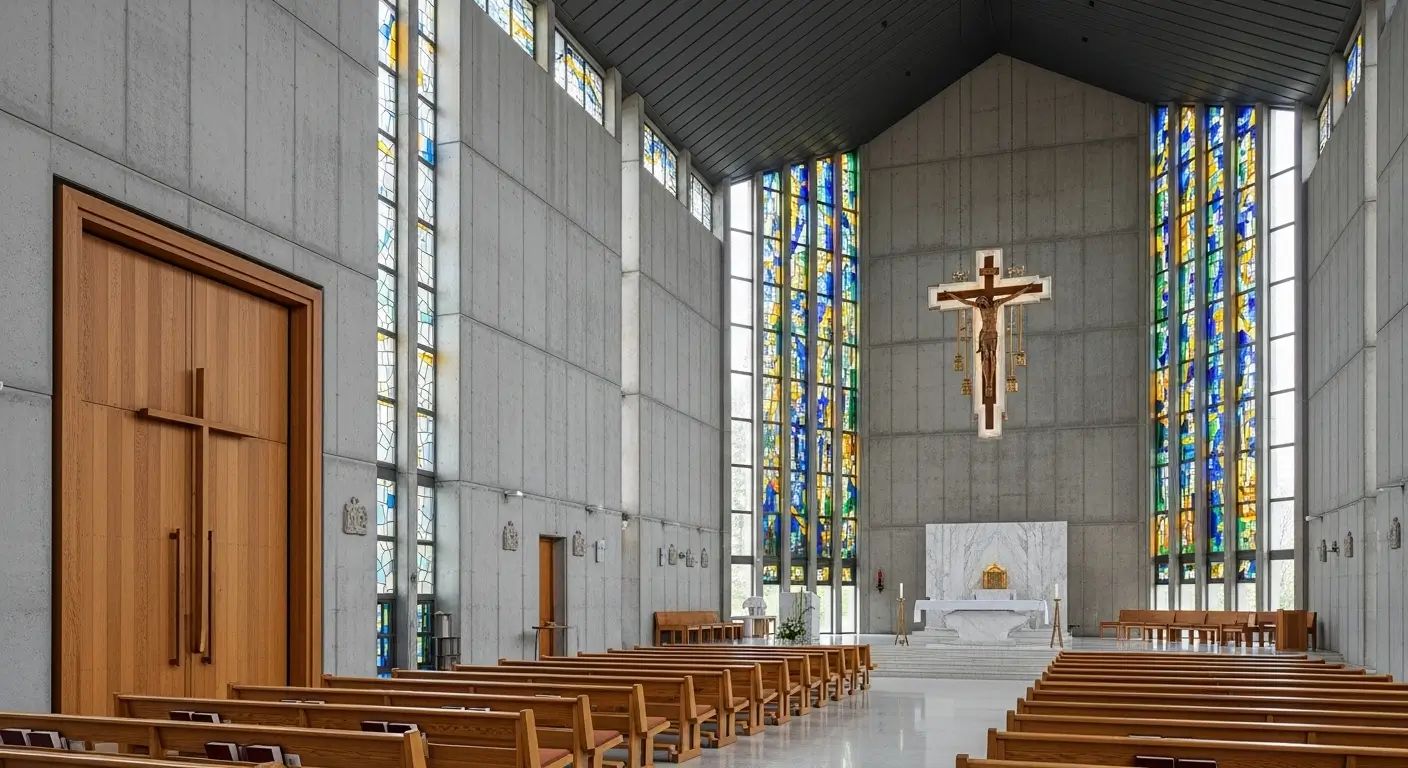
The primary center of devotion to St. Philomena is the Shrine of St. Philomena in Mugnano del Cardinale, Italy. This church, officially known as the Sanctuary of St. Philomena, is where her sacred relics have been preserved since 1805. It attracts pilgrims from every continent who come to venerate her, seek her intercession, and pray before her tomb. The shrine houses not only her bodily relics but also numerous ex-votos (offerings made in gratitude for favors received), testifying to the miracles attributed to her.
Pilgrimages to Mugnano are an ongoing tradition, especially around her traditional feast day of August 11th. Many faithful travel there, often in groups or individually, to participate in Masses, novenas, and devotional practices. The local community in Mugnano holds annual celebrations that include solemn processions, liturgical services, and cultural events honoring their beloved patroness.
Beyond Italy, St. Philomena is venerated in churches and chapels across the globe. Many parishes have altars dedicated to her, often adorned with statues depicting her with her traditional symbols. Devotional societies, often called “Archconfraternities” or “Confraternities of St. Philomena,” exist in various countries, promoting her devotion through prayer, literature, and good works. These groups often organize novenas, special Masses, and communal prayers for her intercession.
The practice of praying novenas (nine days of prayer) to St. Philomena is particularly popular, especially among those facing difficult or seemingly hopeless situations, aligning with her patronage of “lost causes.” Many individuals report receiving extraordinary graces and answers to prayers through her intercession, reinforcing her reputation as a powerful heavenly advocate. Her image and story are also commonly found in Catholic homes, schools, and hospitals, reminding believers of her youthful courage and unwavering faith.
Reflections for Modern Readers
St. Philomena, a young martyr from the dawn of Christianity, offers timeless lessons that are profoundly relevant to challenges and aspirations of individuals in the 21st century. Her story is a vibrant call to courage, purity, and unwavering trust in God.
Actionable Takeaways for Life Today:
- Courage in Conviction: Philomena stood firm in her faith and her vow to Christ, even when it meant facing extreme persecution and death. In today’s world, we may not face physical martyrdom, but we often encounter social pressure, ridicule, or professional consequences for upholding our Christian values. Philomena reminds us to stand strong in our convictions, speak truth with charity, and not compromise our principles for popularity or worldly gain. Example: A high school student, inspired by Philomena, might choose to respectfully defend their pro-life views in a classroom discussion or abstain from participating in trends that compromise their moral standards, even if it means being misunderstood by peers.
- Purity of Heart and Intention: Her dedication to virginity for Christ highlights the beauty and power of purity, not just physically, but also in our thoughts, desires, and intentions. In a culture saturated with fleeting pleasures and instant gratification, St. Philomena calls us to seek purity of heart, prioritizing spiritual well-being over worldly allurements and dedicating our deepest affections to God. Example: A young adult might choose to filter their media consumption, cultivate chaste friendships, or practice modesty in dress, not out of fear, but out of a desire to honor God with their body and soul and to preserve the sacredness of human relationships.
- Trust in Divine Providence: Despite facing seemingly insurmountable odds and brutal tortures, Philomena never lost faith in God’s ability to protect and sustain her. Her miraculous deliverances underscore the truth that God is always with us, even in our darkest hours. This teaches us to place our complete trust in God’s plan, believing that He will provide strength, comfort, and a path forward, even when circumstances seem hopeless. Example: Someone facing a severe illness or unexpected job loss, rather than succumbing to despair, can draw strength from Philomena’s trust, continually praying and seeking God’s will, knowing He will provide for their needs in His own time and way.
- The Power of Prayer and Intercession: The miracles attributed to St. Philomena, especially through the devotion of St. John Vianney and Blessed Pauline Jaricot, highlight the powerful reality of the communion of saints. We are not alone; we have friends in heaven who intercede for us. Philomena encourages us to turn to the saints, and especially to God, with humble and persistent prayer, knowing that our petitions are heard and often answered in miraculous ways. Example: When confronted with a “lost cause” – perhaps a family member far from the faith, a seemingly impossible financial burden, or a chronic problem – we can invoke St. Philomena’s intercession, joining our prayers with hers in heaven, trusting in God’s boundless mercy.
Symbols and Representations:
In art and jewelry, St. Philomena is often depicted with specific symbols that tell her story and represent her virtues:
- Palm Branch: This is the universal symbol of martyrdom in Christian art. It signifies that the individual died as a witness to their faith, triumphing over persecution.
- Anchor: The anchor is a multifaceted symbol for St. Philomena. It represents hope, steadfastness in faith, and specifically recalls one of her attempted tortures, where she was tied to an anchor and thrown into the Tiber River, only to be miraculously saved.
- Arrows: These symbolize her tortures, specifically the attempts to shoot her with arrows. Their appearance in art often recalls the miraculous way the arrows either turned back on her executioners or became harmless.
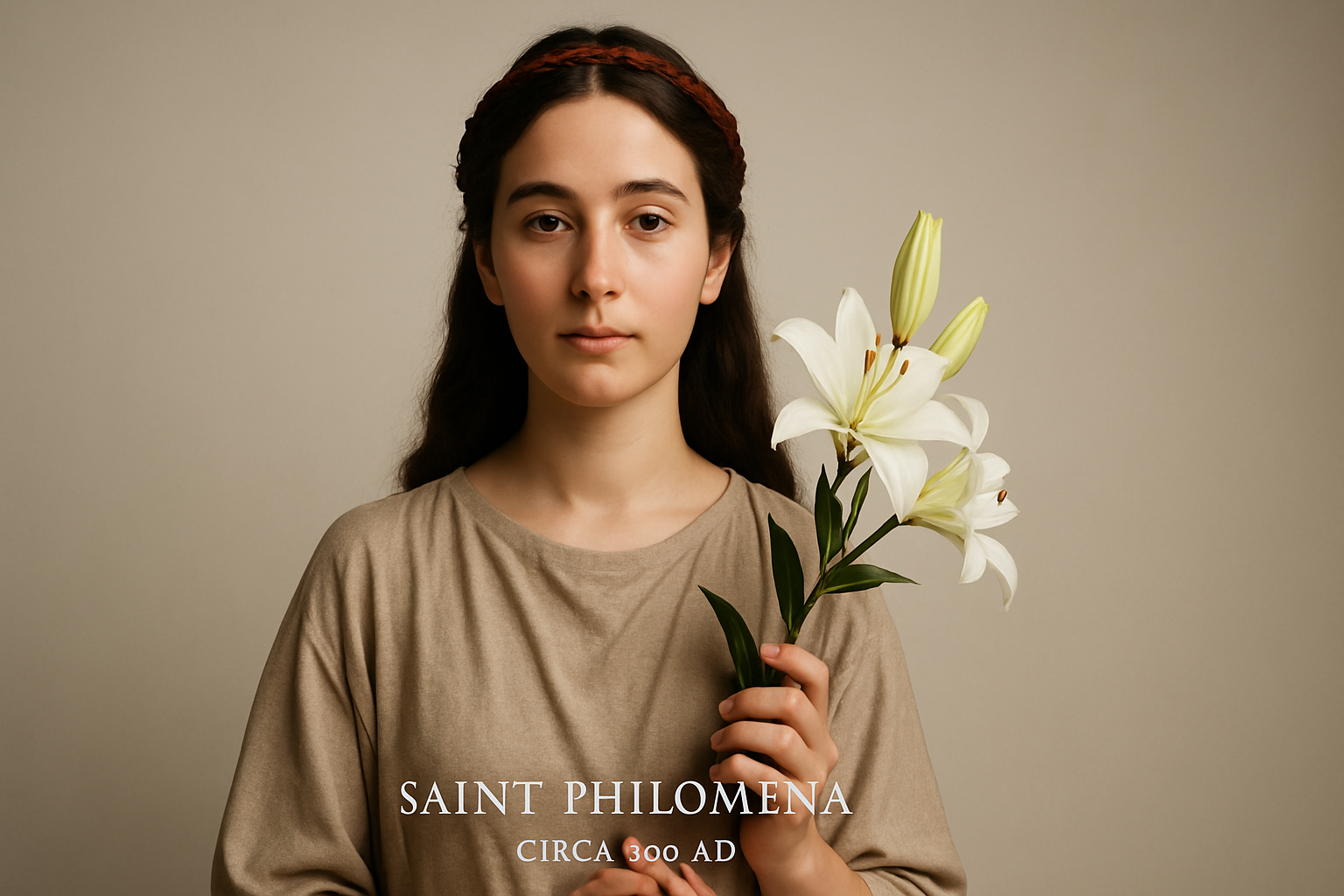
- Lily: The lily is a classic symbol of purity and virginity. For St. Philomena, it powerfully represents her vow of virginity to Christ and her dedication to a chaste life.
- Crown: Often depicted with a crown on her head, this symbolizes her royal lineage as a princess and, more importantly, the heavenly crown of glory that she received as a martyr for Christ.
Timeline Summary
- Circa 290-305 AD: Born to a Greek pagan king and queen who convert to Christianity, dedicating herself to Christ through a vow of virginity.
- Circa 304-305 AD: Faces persecution and torture by Emperor Diocletian for refusing marriage and denying Christ. Endures scourging, drowning with an anchor, and being shot with arrows, all with miraculous divine intervention. Finally martyred by beheading.
- May 24, 1802: Her relics are discovered in the Catacombs of Priscilla in Rome, identified by tiles inscribed “PAX TECUM FILUMENA” and symbols of martyrdom.
- 1805: Relics are translated from Rome to Mugnano del Cardinale, Italy, where they are enshrined in the Church of Our Lady of Grace.
- 1833: Blessed Pauline Jaricot is miraculously cured of a severe illness through St. Philomena’s intercession, an event witnessed by Pope Gregory XVI.
- 1837: Pope Gregory XVI formally approves the public veneration of St. Philomena, allowing her Feast Day and Mass, solidifying her place in the Church’s liturgical calendar.
- 1849: St. John Vianney, the Curé of Ars, begins his profound and influential devotion to St. Philomena, attributing numerous miracles in his parish to her intercession.
- 1850s-Present: Devotion to St. Philomena continues to spread globally, with countless faithful seeking her powerful intercession for various needs.
Scripture for Reflection
The life of St. Philomena beautifully echoes several profound truths found in Sacred Scripture, particularly regarding dedication to Christ, courage in persecution, and the reward of the faithful.
- 1 Corinthians 6:19-20: “Or do you not know that your body is a temple of the Holy Spirit within you, whom you have from God? You are not your own, for you were bought with a price. So glorify God in your body.” This passage resonates deeply with Philomena’s commitment to purity and her consecration of her entire being to Christ. She understood that her body was not her own to offer to an earthly king, but a sacred dwelling place for God, to be glorified through a life of virtue and sacrificial love.
- Matthew 10:28: “And do not fear those who kill the body but cannot kill the soul. Rather fear him who can destroy both soul and body in hell.” This powerful teaching of Jesus perfectly encapsulates St. Philomena’s unwavering courage. Despite facing the ultimate threat of physical death at the hands of Emperor Diocletian, she held no fear, knowing that her soul belonged to God and that true death was separation from Him. Her fortitude serves as a vivid illustration of this Gospel truth.
- Revelation 7:14: “They are the ones who have come out of the great tribulation; they have washed their robes and made them white in the blood of the Lamb.” This vision from the Book of Revelation describes the multitude of martyrs who have triumphed through suffering and are now glorified in heaven. St. Philomena, having endured the “great tribulation” of Roman persecution and shed her blood for Christ, stands among this glorious company, her purity and sacrifice recognized and rewarded by God.
Prayers to St. Philomena
Through the centuries, countless faithful have turned to St. Philomena in prayer, seeking her powerful intercession. Here is a common prayer to this beloved saint:
Prayer to St. Philomena for Intercession
O glorious Virgin and Martyr, Saint Philomena, who for the love of Jesus didst resist the most alluring temptations, and didst bravely suffer the most cruel tortures, vouchsafe to intercede for me with the Divine Spouse of thy soul, that I may be strengthened by His grace to overcome all the assaults of the world, the flesh, and the devil, and to preserve the purity of my heart, my body, and my soul. Obtain for me also, O powerful Protectress, the particular intention for which I humbly invoke thy aid at this moment (mention your intention). I confidently hope, through thy merits, prayers, and powerful intercession, to obtain this grace from God, and to glorify Him with thee in heaven for all eternity. Amen.
Another Popular Invocation:
Hail, O holy St. Philomena, whom I acknowledge, after Mary, as my advocate with God. Glorious Virgin and Martyr, pray for me! Amen.