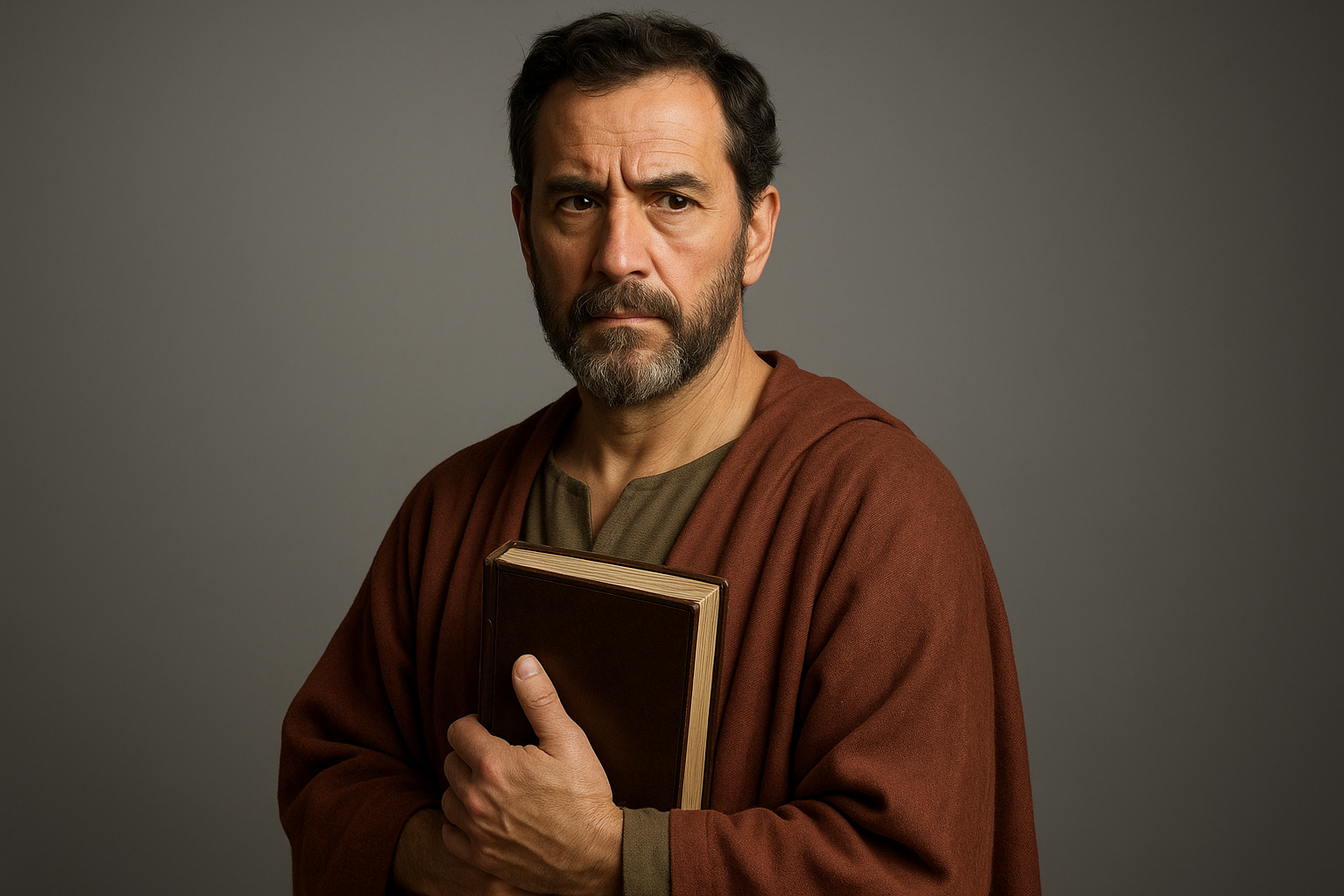
In the vibrant tapestry of early Christianity, few figures shine as brightly as St. Mark the Evangelist. Often recognized by the majestic symbol of a winged lion, Mark is more than just a name in the Bible; he is a pivotal bridge between the eyewitness accounts of Jesus’ life and the written Gospels that continue to nourish faith today. His journey, marked by both eager discipleship and moments of human frailty, offers profound lessons on perseverance, the power of reconciliation, and the urgent call to share the Good News. This article will explore his fascinating life, from his humble beginnings in Jerusalem to his foundational role in the Church of Alexandria, examining his enduring spiritual legacy, the profound impact of his Gospel, and how his story continues to inspire believers in the modern world.
Quick Facts
| Fact | Detail |
|---|---|
| Birth | Believed to be in Cyrene or Jerusalem, early 1st century AD |
| Death | Alexandria, Egypt, c. 68 AD (martyred) |
| Feast Day | April 25 |
| Patronage | Notaries, lawyers, scribes, opticians, prisoners, Venice, Egypt, Alexandria |
| Canonized | Pre-Congregation (Apostolic Age) |
Historical Context & Early Life
To understand St. Mark, we must first immerse ourselves in the tumultuous world of the 1st century AD, a time of profound change and spiritual ferment. The Roman Empire held sway over the Mediterranean, bringing a complex blend of order and oppression. In Judea, Roman rule coexisted uneasily with Jewish religious traditions, creating a volatile environment ripe for both Messianic fervor and political rebellion. It was against this backdrop that Jesus of Nazareth lived, taught, was crucified, and resurrected, setting in motion the most transformative movement in human history: the birth of the Christian Church.
Mark, whose full name was John Mark (Acts 12:12), was likely born into a Jewish family, possibly in Cyrene (North Africa) or, more probably, in Jerusalem itself. His family seems to have been of some means, as his mother, Mary, owned a house in Jerusalem that became a significant gathering place for early Christians. This house is traditionally believed to be the location of the Last Supper and where the apostles gathered after Jesus’ ascension, receiving the Holy Spirit on Pentecost. Such a connection would place Mark directly in the heart of the nascent Church, exposed to the apostles’ preaching and the burgeoning community from a very young age.
Growing up in Jerusalem, Mark would have witnessed firsthand the profound excitement and challenges faced by the followers of Christ. He would have known Peter, James, and John, perhaps even heard the Apostle Paul preach. His family’s home serving as a crucial hub for these early believers means Mark was likely steeped in the oral traditions and stories about Jesus that circulated among the apostles. This direct exposure to the very foundations of Christian faith would prove instrumental in his later calling.
Calling & Key Milestones
First Missionary Journey and Early Departure
Mark’s recorded involvement in Christian ministry begins around the mid-40s AD. He is mentioned in the Acts of the Apostles as a companion to his cousin, Barnabas, and the Apostle Paul on their first missionary journey. This was a crucial mission, designed to spread the Gospel beyond Judea to the Gentiles in Cyprus and Asia Minor. Mark served as their “helper” or “attendant” (Acts 13:5), likely assisting with practical matters, preaching, and perhaps recording sermons. However, in Pamphylia, for reasons not fully explained in Scripture, Mark departed from them and returned to Jerusalem (Acts 13:13). This early departure would have significant repercussions.
The Disagreement and Reconciliation with Paul
When Paul and Barnabas planned a second missionary journey, Barnabas wanted to bring Mark along again. Paul, however, strongly objected, citing Mark’s previous abandonment (Acts 15:37-38). This led to a sharp disagreement, so intense that Paul and Barnabas parted ways. Barnabas took Mark and sailed to Cyprus, while Paul chose Silas and continued his mission. This incident highlights the very human struggles even among saintly figures, yet it also underscores a key aspect of Mark’s story: the potential for redemption and second chances. Later epistles reveal that Paul eventually reconciled with Mark, referring to him as “my fellow worker” (Philemon 1:24) and even requesting his presence, stating, “Get Mark and bring him with you, for he is helpful to me in the ministry” (2 Timothy 4:11). This powerful testimony speaks volumes about Mark’s growth and renewed commitment.
Peter’s Interpreter and the Gospel of Mark
Tradition strongly links Mark to St. Peter. Early Church fathers like Papias of Hierapolis state that Mark served as Peter’s “interpreter” and wrote down Peter’s teachings, composing what we now know as the Gospel of Mark. Peter, a Galilean fisherman, likely spoke Aramaic, while Mark, more educated, could translate Peter’s sermons and narratives into Greek for a wider audience in Rome. This makes Mark’s Gospel unique; it is often considered the closest we have to Peter’s firsthand account of Jesus’ life and ministry. It is the shortest of the Gospels, known for its fast-paced narrative, vivid descriptions, and emphasis on Jesus’ actions and power.
Evangelizing Egypt and Martyrdom
After his time with Peter, tradition holds that Mark traveled to Egypt, becoming the first to preach the Gospel in Alexandria, a vibrant intellectual and cultural hub of the Roman Empire. Here, he is credited with founding the Church of Alexandria, which would grow into one of the most important centers of early Christianity, giving rise to the Coptic Orthodox Church. His mission was highly successful, drawing many converts. However, his success also aroused the anger of pagan priests, who saw their influence diminishing. According to tradition, on Easter Sunday, c. 68 AD, Mark was seized while celebrating the Divine Liturgy. He was dragged through the streets, enduring severe torture, and eventually died, becoming a martyr for his faith. His relics were later translated to Venice, where he is revered as the city’s patron saint.
Spiritual Legacy & Theological Themes
St. Mark’s spiritual legacy is primarily enshrined in his Gospel, a powerful and concise account that shaped the early Church’s understanding of Jesus. Mark presents Jesus not just as the Messiah, but as the suffering Servant, fulfilling the prophecies of Isaiah. His Gospel emphasizes the “Messianic Secret,” where Jesus often tells people not to reveal his identity, perhaps highlighting the need for a deeper, spiritual understanding of who he is, beyond political expectations.
The core virtues exemplified by Mark include perseverance, despite his initial stumble on the missionary journey, and humility, as he faithfully recorded Peter’s teachings rather than presenting his own interpretations. His life demonstrates the importance of reconciliation and second chances, as seen in his eventual restoration to Paul’s good graces. Mark’s Gospel is a call to urgent discipleship, presenting Jesus’ teachings and miracles with a sense of immediate action (“immediately” is a characteristic word in Mark). This aligns perfectly with the scriptural call to “make disciples of all nations” (Matthew 28:19).
His lasting influence on liturgy is profound, as his Gospel provides a foundational narrative for the life of Christ, read and reflected upon in countless Masses and services. In art, he is almost universally depicted with a winged lion, a symbol drawn from the prophet Ezekiel and the book of Revelation, representing the “voice crying in the wilderness” (Mark 1:3), the resurrection, and the kingly power of Christ. The lion also symbolizes the courage and strength required to spread the Gospel. The establishment of the Coptic Church in Egypt stands as a monumental testament to his missionary zeal and organizational skills, shaping the spiritual landscape of a significant portion of the Christian world for millennia.
Devotion Today
Devotion to St. Mark the Evangelist remains vibrant across the globe, particularly in two significant regions: Venice, Italy, and Egypt. In Venice, St. Mark is the revered patron saint, and his magnificent basilica, St. Mark’s Basilica, stands as a crowning jewel of Venetian architecture. Legend has it that in the 9th century, Venetian merchants daringly smuggled Mark’s relics from Alexandria to Venice, where they have been housed and venerated ever since. The basilica is a major pilgrimage site, drawing millions annually to marvel at its Byzantine mosaics and to honor the evangelist whose symbol, the winged lion, is ubiquitous throughout the city, adorning flags, buildings, and statues.
In Egypt, St. Mark is regarded as the founder of the Coptic Orthodox Church, one of the oldest Christian denominations. He is the first in the unbroken line of Popes of Alexandria and Patriarchs of the See of Saint Mark. The Coptic Church holds him in immense veneration, celebrating his feast day with great solemnity. Numerous churches and monasteries are dedicated to him across Egypt, and his spiritual legacy is woven into the very fabric of Coptic Christian identity. Annual celebrations, particularly around his feast day on April 25, involve special liturgies, processions, and reflections on his life and mission. His influence is a living tradition, shaping the spirituality and heritage of millions of Coptic Christians worldwide.
Beyond these primary centers, devotion to St. Mark extends to many Catholic and Orthodox communities. He is invoked by those in legal professions (notaries, lawyers) and writers (scribes) due to his role as an evangelist and recorder of the Gospel. His story of perseverance also offers hope and inspiration to those facing challenges or seeking a fresh start in their faith journey.
Reflections for Modern Readers
St. Mark’s life, though lived nearly two millennia ago, offers timeless lessons for us today. His journey is a powerful reminder that saints are not born perfect, but are formed through their responses to God’s grace, even amidst human weakness.
- Embrace Second Chances: Mark’s initial departure from Paul and Barnabas’s missionary journey could have been the end of his ministry. Yet, through reconciliation and renewed commitment, he became indispensable. For us, this means forgiving ourselves and others for past mistakes, believing in the power of redemption, and always being open to God’s call to start anew. Perhaps you’ve felt you failed at a task or relationship; Mark’s story encourages you to persevere, knowing that setbacks don’t define your ultimate journey.
- The Power of Witness: Mark faithfully recorded Peter’s preaching, giving us the vibrant Gospel that bears his name. This teaches us the importance of listening to and preserving the stories of faith that have shaped us. Whether it’s sharing your own testimony, writing down your spiritual insights, or simply passing on family faith traditions, you contribute to the ongoing witness of Christ in the world.
- Urgency in Spreading the Good News: Mark’s Gospel is characterized by its fast pace and the recurring use of “immediately,” reflecting the urgency of Jesus’ mission. In a world hungry for hope and truth, Mark reminds us that the Gospel is not just for Sunday mornings but is meant to be lived and shared in our daily lives. This could mean a kind word to a colleague, an act of service in your community, or speaking up for justice.
- Faithful Service, Not Grandstanding: Mark was an “attendant” and an “interpreter,” roles that, while crucial, are not always front and center. His legacy is one of faithful service, making sure the message of Christ was heard and understood. This virtue calls us to value every role in God’s kingdom, no matter how small it may seem, and to serve with humility and dedication, knowing that all good work contributes to God’s glory.
In art and jewelry, St. Mark is most famously represented by the Winged Lion. This powerful image, drawn from the visions of the prophets Ezekiel and Daniel (and alluded to in Revelation), symbolizes several aspects of Mark’s Gospel: the divine majesty of Christ, the power and resurrection of Jesus, and the “voice crying out in the wilderness” – the urgent and strong proclamation of the Gospel. It can also represent courage in the face of persecution. He is often depicted holding a book or scroll, representing his authorship of the Gospel, or a pen, emphasizing his role as an evangelist and scribe. These symbols remind us of his enduring contributions to our faith and his fearless dedication to Christ.
Timeline Summary
- Early 1st Century AD: Born (possibly in Cyrene or Jerusalem) into a Jewish family. His mother, Mary, hosts early Christians in her Jerusalem home.
- c. 44 AD: Mentioned in Acts 12:12, present at his mother’s house when Peter miraculously escapes prison.
- c. 46–48 AD: Accompanies Paul and Barnabas on their First Missionary Journey as their “helper” (Acts 13:5).
- c. 47 AD: Departs from Paul and Barnabas in Pamphylia and returns to Jerusalem (Acts 13:13).
- c. 49 AD: Paul and Barnabas have a “sharp disagreement” over bringing Mark on the Second Missionary Journey, leading them to part ways (Acts 15:36-40). Barnabas takes Mark to Cyprus.
- c. 50s–60s AD: Becomes a close associate and “interpreter” for St. Peter in Rome, recording Peter’s eyewitness accounts of Jesus’ life.
- c. 58–62 AD: Writes the Gospel of Mark, likely drawing on Peter’s teachings, possibly in Rome.
- c. 60–67 AD: Travels to Egypt, founding the Church of Alexandria, and serves as its first bishop.
- c. 62 AD: Paul, imprisoned, requests Mark’s presence, indicating a full reconciliation (“Get Mark and bring him with you, for he is helpful to me in the ministry,” 2 Timothy 4:11).
- c. 68 AD: Martyred in Alexandria, Egypt, on Easter Sunday, after being dragged through the streets by a mob.
- 828 AD: Venetian merchants translate his relics from Alexandria to Venice.
Scripture for Reflection
St. Mark’s life and work are beautifully illuminated by several passages from Scripture:
Acts 15:37-39 (NRSVCE):
“Barnabas wanted to take with them John called Mark. But Paul thought it best not to take with them one who had withdrawn from them in Pamphylia and had not accompanied them in the work. The disagreement became so sharp that they parted company; Barnabas took Mark with him and sailed away to Cyprus.”
This passage highlights the human tension and initial failure in Mark’s journey. It sets the stage for his growth and the later theme of reconciliation. It reminds us that even key figures in the early Church faced personal conflicts.
2 Timothy 4:11 (NRSVCE):
“Only Luke is with me. Get Mark and bring him with you, for he is helpful to me in the ministry.”
This verse offers a powerful testament to Mark’s transformation and reconciliation with Paul. It shows that Mark had not only returned to ministry but had become genuinely valuable to Paul. It’s a beacon of hope for anyone who has faltered and seeks to return to God’s service.
Mark 1:1-4 (NRSVCE):
“The beginning of the good news of Jesus Christ, the Son of God. As it is written in the prophet Isaiah, ‘See, I am sending my messenger ahead of you, who will prepare your way; the voice of one crying out in the wilderness: ‘Prepare the way of the Lord, make his paths straight.” John the baptizer appeared in the wilderness, proclaiming a baptism of repentance for the forgiveness of sins.”
This is the opening of Mark’s Gospel, a concise and immediate start that sets the tone for his entire narrative. It reflects Mark’s focus on the urgency of the Gospel message and Jesus’ identity as the Son of God. It connects directly to the symbol of the lion, often associated with the voice crying in the wilderness.
Prayers to St. Mark the Evangelist
Here is a traditional prayer to St. Mark the Evangelist:
Prayer to St. Mark
O Glorious Saint Mark,
who, through the grace of God,
became a powerful evangelist and a faithful companion to the apostles,
we humbly implore your intercession.
You who recorded the swift and powerful actions of our Lord Jesus Christ,
and proclaimed Him as the Suffering Servant and the Son of God,
inspire us to witness to Christ with courage and conviction.
May your perseverance, despite your early departure from ministry,
encourage us never to give up on God’s call,
and to embrace second chances with renewed dedication.
As you founded the Church in Alexandria,
and spread the Gospel to distant lands,
pray for missionaries and all who proclaim the Good News,
that they may do so with zeal and effectiveness.
Protect us, O holy Evangelist,
from all spiritual and temporal dangers,
and guide us in the path of truth and holiness.
Help us, by your prayers,
to understand and live the Gospel you so faithfully wrote,
that we may come to share in the eternal joy
of our Lord Jesus Christ,
who lives and reigns forever and ever.
Amen.