In the vibrant tapestry of early Christianity, few figures shine as brightly or speak as powerfully across the centuries as St. John Chrysostom. Dubbed “Chrysostom” – the “golden-mouthed” – for his unparalleled eloquence, this fourth-century bishop and Doctor of the Church remains a towering intellect and a fiery voice for truth and justice. From his formative years in ancient Antioch to his tumultuous tenure as Archbishop of Constantinople and his eventual exile, John’s life was a testament to unwavering faith, profound scriptural insight, and a courageous commitment to challenging the powerful on behalf of the poor. This article will explore his remarkable journey, delve into his enduring spiritual legacy, and uncover how his wisdom continues to illuminate the path for modern believers.
Quick Facts
| Category | Detail |
|---|---|
| Birth | c. 347 AD, Antioch, Syria (modern-day Turkey) |
| Death | September 14, 407 AD, Comana Pontica, Pontus (modern-day Turkey) |
| Feast Day | September 13 (Roman Catholic Church), November 13 (Eastern Orthodox and Eastern Catholic Churches) |
| Patronage | Orators, preachers, Constantinople, epileptics |
| Canonized | By popular acclamation and consistent veneration throughout history. Declared a Doctor of the Church in 1568 by Pope Pius V. |
Historical Context & Early Life
To truly appreciate the life and impact of St. John Chrysostom, we must first understand the world he inhabited. Born around 347 AD in Antioch, a major city in the Roman province of Syria, John lived during a pivotal era for Christianity. The Roman Empire, though still vast, was undergoing profound transformations. Emperor Constantine the Great had legalized Christianity in the early 4th century, and by John’s time, it was rapidly becoming the dominant religion. However, this rise in status brought new challenges. The Church, once persecuted, now grappled with internal theological disputes – most notably Arianism, which questioned the divinity of Christ – and the temptations of wealth and power that came with imperial favor. The lines between Church and state were blurring, often to the detriment of spiritual integrity.
Antioch itself was a bustling metropolis, a crossroads of cultures and ideas, home to a large and diverse Christian community. It was a center of learning, famous for its schools of rhetoric, a skill that would profoundly shape John’s future. John’s family background was noble and well-to-do. His father, Secundus, was a high-ranking military officer, but he died shortly after John’s birth, leaving his young wife Anthusa a widow at just 20 years old. Anthusa was a woman of extraordinary piety and strength, choosing not to remarry but dedicating herself entirely to raising her two children, John and an older sister. She provided John with an excellent education, ensuring he studied under the most renowned pagan rhetorician of the time, Libanius, who reportedly said that John would have been his successor “if the Christians had not stolen him from us.”
This classical education, deeply steeped in Greek language, philosophy, and oratory, equipped John with the very tools he would later use to articulate Christian truth with unparalleled clarity and persuasiveness. Yet, his mother’s profound Christian faith provided the spiritual bedrock. He was baptized in his early twenties and, after a brief stint as a lawyer, felt an undeniable pull towards a deeper spiritual life. The worldly pursuits of the city seemed hollow compared to the eternal truths of the Gospel. This inner conviction, nurtured by his mother’s example and his own spiritual awakening, set him on a path that would transform him from a gifted student into one of the Church’s most celebrated saints.
Calling & Key Milestones
Monastic Life and Asceticism
Around 370 AD, after the death of his beloved mother, John made a decisive move, embracing a monastic lifestyle. He initially lived as an ascetic within his own home, withdrawing from worldly distractions while still in Antioch. This period of intense prayer, study, and self-denial deepened his spiritual discipline and allowed him to immerse himself in the Scriptures. He then spent several years in the desert outside Antioch, living first with an old Syrian hermit and later in complete solitude for two years. This rigorous asceticism, though it took a toll on his health, forged in him a profound spiritual resilience and a deep understanding of human weakness and divine grace. It was here that he likely began to write, including his influential treatise On the Priesthood, which reflects his deep respect for the sacred office and its immense responsibilities. His time in the desert was not merely an escape from the world but a powerful preparation, honing his spiritual senses and sharpening his focus on God’s word, which would fuel his future ministry.
Priesthood in Antioch: The “Golden-Mouthed” Preacher
Returning to Antioch due to failing health, John was ordained a deacon in 381 AD and then a priest in 386 AD by Bishop Flavian. It was during his twelve years as a priest in Antioch that his extraordinary gift for preaching truly blossomed. Every Sunday, and often during the week, John stood before the faithful, delivering sermons that captivated, challenged, and transformed his listeners. His homilies were not academic exercises but vibrant, practical explanations of Scripture, applied directly to the everyday lives of his congregation. He possessed a unique ability to make complex theological truths accessible and compelling, earning him the moniker “Chrysostom,” meaning “golden-mouthed” in Greek. His sermons often tackled social injustices head-on, chastising the wealthy for their extravagance and neglect of the poor, and urging all Christians to live lives of genuine charity and humility. He preached against gluttony, materialism, and gossip, and championed Christian education and family values. His fame as a preacher spread far and wide, drawing people from all walks of life to hear his powerful words.
Archbishop of Constantinople: Reformer and Challenger of Power
In 398 AD, without his knowledge or consent, John was chosen to be the Patriarch (Archbishop) of Constantinople, the capital of the Eastern Roman Empire. His appointment was orchestrated by the imperial court, likely recognizing his immense popularity and persuasive abilities. This was a dramatic shift from his relatively quiet life in Antioch. As Archbishop of Constantinople, John quickly initiated sweeping reforms. He found a lavish and corrupt imperial court and a clergy that had grown complacent and worldly. He reduced episcopal expenses, sold expensive church furnishings to fund hospitals and care for the poor, and demanded higher moral standards from his priests. He himself lived a life of rigorous simplicity, eating sparingly and often refusing invitations to imperial banquets, which further endeared him to the common people but alienated the powerful elite.
His uncompromising preaching continued in Constantinople, now aimed at the highest echelons of society, including the Empress Eudoxia herself. He criticized her love for luxury, her extravagant clothing, and her perceived manipulation of imperial power, especially in her dealings with the wealthy and powerful. John saw these moral failings not just as personal sins but as betrayals of the Christian ideal, undermining the very fabric of society and the Church’s witness. His fearless condemnation of injustice, coupled with his genuine compassion for the poor, made him a hero to many but an enemy to a powerful few, including members of the imperial court and disgruntled clergy.
Exile and Death: Unwavering Faith
John’s outspoken criticisms inevitably led to conflict. Empress Eudoxia and her allies, including other bishops who resented John’s reforms and authority, conspired against him. In 403 AD, a synod known as the “Synod of the Oak,” convened by his enemies and presided over by Theophilus, Patriarch of Alexandria, falsely condemned John on numerous charges, leading to his first exile. Though he was briefly recalled due to popular demand and an earthquake interpreted as divine displeasure, the truce was short-lived. His continued condemnation of what he perceived as un-Christian behavior by the Empress led to his second and final exile in 404 AD.
Despite the immense suffering and hardship of his exiles – being moved from place to place, often on foot, in harsh conditions – John never wavered in his faith or his commitment to his flock. He continued to write letters of encouragement, offering spiritual guidance and maintaining contact with his supporters. His journey ended on September 14, 407 AD, in Comana Pontica, a remote location in modern-day Turkey, where he died from exhaustion and ill-treatment. His final words were reportedly, “Glory be to God for all things!” Even in death, his life remained a powerful testament to fortitude and trust in divine providence.
Spiritual Legacy & Theological Themes
St. John Chrysostom’s spiritual legacy is immense, touching countless aspects of Christian life and thought. He exemplified core virtues that resonate deeply with Scripture and Catholic teaching, offering a model for all believers.
Eloquence and the Power of the Word: John’s most famous attribute, his “golden mouth,” wasn’t just about beautiful language; it was about proclaiming God’s truth with clarity, conviction, and an unwavering commitment to making the Scriptures comprehensible. He believed that the Word of God was a living, active force, capable of transforming hearts and minds. His homilies are masterclasses in biblical exegesis, where he meticulously unpacks passages, explains their historical context, and then applies them directly to the moral and spiritual challenges of his audience. He often employed allegory and vivid imagery, but always grounded in a literal understanding of the text, emphasizing the practical implications of faith.
Courage and Social Justice: Few saints have so fearlessly confronted injustice and corruption. John’s courage in speaking truth to power, whether it was the wealthy elite of Antioch or the Empress of Constantinople, is a hallmark of his ministry. He consistently championed the poor, the widowed, and the marginalized, viewing their suffering as a direct challenge to the conscience of the Christian community. His theology of charity wasn’t abstract; it was a demand for concrete action, urging the rich to see Christ in the poor and to redistribute their wealth. He argued that riches were meant to be shared, not hoarded, and that neglecting the needy was a grave sin. This aligns perfectly with scriptural calls for justice (e.g., Amos, Isaiah) and Jesus’s teachings on caring for “the least of these” (Matthew 25).
Asceticism and Humility: Despite his intellectual brilliance and public prominence, John maintained a deep personal commitment to asceticism and humility, cultivated during his monastic years. He lived simply, eschewing luxuries, and always emphasized that true Christian living involved detachment from worldly possessions and a focus on spiritual growth. This personal example lent immense credibility to his calls for reform and his criticisms of extravagance.
His lasting influence on the Church is profound:
- Liturgy: Perhaps his most significant liturgical legacy is the Divine Liturgy of St. John Chrysostom, which is the most widely celebrated Eucharistic liturgy in the Eastern Orthodox and Eastern Catholic Churches. While not entirely composed by him, it reflects his theological spirit, his emphasis on profound reverence, and the spiritual nourishment derived from the Eucharist.
- Preaching and Homiletics: His nearly 700 extant sermons and homilies are a treasure trove of spiritual wisdom, offering models of effective preaching and biblical interpretation that continue to inspire and instruct. He is considered one of the greatest patristic preachers, whose sermons reveal a deep love for Scripture and a keen understanding of the human condition.
- Social Teaching: John Chrysostom is considered an early and powerful voice for Christian social justice. His fervent pleas for the poor and his condemnation of economic inequality continue to resonate, influencing Catholic social teaching through the centuries.
- Patristic Theology: He is recognized as one of the Four Great Doctors of the Eastern Church (alongside Basil the Great, Gregory of Nazianzus, and Athanasius), and a Doctor of the Universal Church. His writings on various theological topics, particularly on the Incarnation, the Eucharist, and moral theology, remain foundational.
Devotion Today
St. John Chrysostom continues to be deeply revered across the Christian world, particularly in the Eastern Orthodox and Eastern Catholic Churches, where his influence is felt perhaps most strongly. His feast day is celebrated on different dates depending on the tradition, but his presence in the liturgical life of these Churches is undeniable.
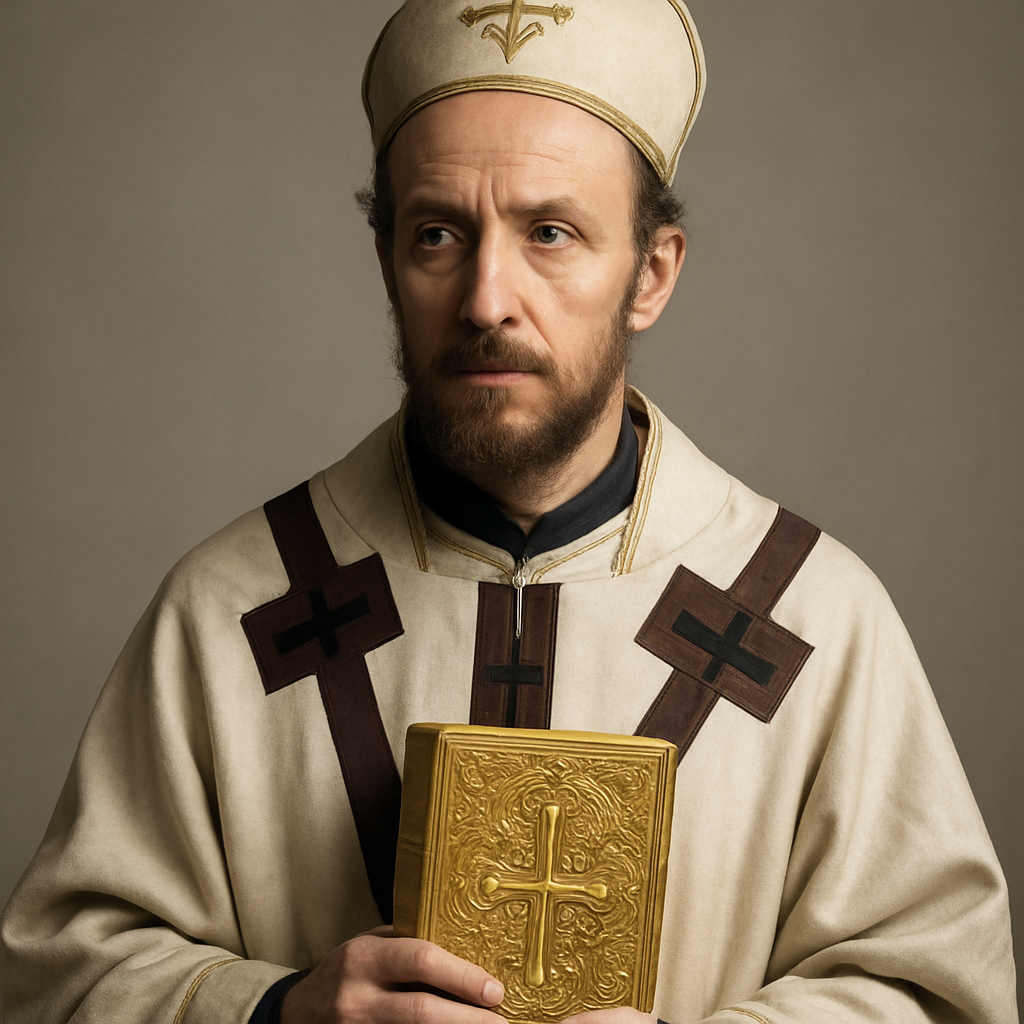
In the Eastern Churches, the Divine Liturgy of St. John Chrysostom is celebrated regularly, often multiple times a week. This liturgy, with its beautiful prayers and rich symbolism, serves as a constant reminder of his theological depth and his contribution to Christian worship. Icons depicting him are ubiquitous, often showing him in bishop’s vestments, holding a Gospel book or a scroll, symbolizing his role as a preacher and teacher of the Word.
Numerous churches, monasteries, and educational institutions bear his name around the globe, from grand cathedrals to small parish churches. Pilgrimages are not typically associated with a specific shrine to St. John Chrysostom in the same way as, say, Santiago de Compostela for St. James. However, his relics are venerated in various locations, including the Cathedral of St. George in Istanbul (Ecumenical Patriarchate of Constantinople) and St. Peter’s Basilica in Rome, drawing pilgrims and veneration from the faithful. The scholarly study of his works continues unabated, with patristic scholars meticulously analyzing his homilies, commentaries, and treatises, ensuring his theological insights remain vibrant and relevant.
For Catholics, he is honored as a Doctor of the Church, celebrated for his profound contributions to theology and his exemplary life. His writings are frequently cited in theological discussions, and he serves as a model for priests and deacons, particularly those called to preach and teach. Annual celebrations on his feast day often include special readings from his homilies, reminding the faithful of his enduring spiritual message.
Reflections for Modern Readers
St. John Chrysostom’s life, though lived centuries ago, offers timeless lessons for modern believers navigating the complexities of the 21st century. His “golden mouth” speaks not only of eloquence but also of the power of integrity and conviction.
- Speak Truth with Courage: John Chrysostom fearlessly challenged corruption and injustice, even when it meant confronting emperors and empresses. For us, this means having the courage to speak out against societal wrongs, ethical compromises in the workplace, or even unhealthy patterns within our own communities and families. It’s about standing for what is right, even when it’s unpopular or comes with a cost. For example, a young professional might feel pressure to falsify data to meet a deadline; John Chrysostom’s example encourages them to uphold ethical standards, even if it means confronting a superior.
- Prioritize the Poor and Marginalized: John constantly reminded his wealthy congregations that their riches were meant to serve the needy. In an age of immense wealth disparity, his call to charity, generosity, and advocating for the vulnerable is more urgent than ever. This isn’t just about giving money; it’s about seeing the dignity of every person, volunteering time, supporting just policies, and challenging systems that perpetuate poverty. A family deciding how to allocate their annual budget could be inspired by John to dedicate a significant portion to charitable giving or supporting local outreach programs, rather than solely on personal luxuries.
- Embrace the Power of God’s Word: John’s preaching was rooted in a deep love and meticulous study of Scripture. He showed how the Bible is not just an ancient text but a living guide for daily life. Modern Christians can emulate this by committing to regular Scripture reading, study, and reflection, allowing God’s Word to shape their thoughts, decisions, and character. Instead of just passively listening to a sermon, actively engaging with the Bible through daily readings or small group studies can transform one’s spiritual life, much like John transformed his listeners.
- Live a Life of Integrity and Simplicity: John lived what he preached, choosing a life of personal austerity even as an archbishop. His example challenges us to examine our own relationship with materialism and consumption. It calls us to live with integrity, where our actions align with our words, and to find contentment not in possessions but in spiritual richness and selfless service. In a consumer-driven society, making conscious choices to reduce waste, prioritize experiences over possessions, or live within one’s means are practical ways to embody this lesson.
Common symbols and representations of St. John Chrysostom in art and jewelry often reflect his defining characteristics and ministry:
- A Book or Scroll: This is perhaps his most common symbol, representing his profound knowledge of Scripture, his prolific writings, and his role as a preacher and teacher. It signifies the divine word he so eloquently proclaimed.
- Bishop’s Vestments: He is frequently depicted wearing the elaborate liturgical garments of an Eastern Christian bishop, including an omophorion (a broad band worn over the shoulders) and a mitre, emphasizing his episcopal office and authority.
- A Bee or a Beehive: Less common but significant, these symbols allude to the “sweetness” and “honeyed” nature of his sermons, reflecting his “golden-mouthed” epithet. Bees also symbolize diligence and wisdom.
- A Pen or Quill: Sometimes, he is shown holding a writing implement, underscoring his extensive theological writings and commentaries.
- A Hand Raised in Blessing or Teaching: This pose emphasizes his role as a spiritual father, instructing and blessing his flock.
Timeline Summary
- c. 347 AD: Born in Antioch, Syria, to a noble family.
- c. 370 AD: Begins a monastic life, initially at home, then in the desert.
- 381 AD: Ordained a deacon by Bishop Meletius of Antioch.
- 386 AD: Ordained a priest by Bishop Flavian of Antioch; begins his acclaimed preaching ministry, earning the nickname “Chrysostom.”
- 398 AD: Consecrated Archbishop of Constantinople against his will, due to imperial decree.
- 398-403 AD: Implements reforms in the Church and challenges the luxurious lifestyle of the imperial court and wealthy citizens.
- 403 AD: The “Synod of the Oak,” orchestrated by his enemies, condemns him, leading to his first exile. He is briefly recalled due to public outcry.
- 404 AD: Exiled again by Empress Eudoxia for his continued criticisms.
- September 14, 407 AD: Dies in exile at Comana Pontica, Pontus, due to harsh conditions.
- 438 AD: His relics are transferred to Constantinople by Emperor Theodosius II, his nephew, and honorably reinterred.
- 1568 AD: Declared a Doctor of the Church by Pope Pius V.
Scripture for Reflection
St. John Chrysostom’s life and teachings resonate with several powerful scriptural passages that underscore his core virtues and message. These passages invite us to reflect on his legacy and apply his wisdom to our own spiritual journeys.
Matthew 25:40: “And the King will say, ‘I tell you the truth, when you did it to one of the least of these my brothers and sisters, you were doing it to me!'”
This verse directly reflects John Chrysostom’s passionate advocacy for the poor and marginalized. He constantly reminded his flock that true worship and love for God are demonstrated through tangible acts of charity towards those in need. He saw Christ’s presence in the suffering, urging Christians to active compassion as a path to salvation.
Acts 5:29: “But Peter and the apostles replied, ‘We must obey God rather than any human authority.'”
This powerful statement from the Apostles encapsulates John’s unwavering courage in confronting imperial power and societal injustice. He placed obedience to God’s commandments and the truth of the Gospel above deference to worldly authority, even when it cost him dearly, leading to his exile and death. It speaks to his conviction that divine law trumps human decrees when they conflict with faith and morality.
James 1:22: “But don’t just listen to God’s word. You must do what it says. Otherwise, you are only fooling yourselves.”
This passage echoes John’s consistent call for practical Christianity. His homilies were never merely intellectual exercises; he always pushed his listeners beyond mere hearing of the Word to active living of its commands. He emphasized that faith without works is dead, and true spiritual transformation requires putting Christ’s teachings into daily practice, especially in acts of charity and justice.
Prayers to St. John Chrysostom
In the Eastern Christian tradition, the following prayer is commonly recited to St. John Chrysostom, often as a troparion:
Troparion of St. John Chrysostom (Tone 8)
Grace shining forth from thy mouth like a beacon,
did enlighten the universe, and did cast down the darkness of error;
it revealed to the world the treasures of sobriety;
O Father John Chrysostom, intercede with Christ our God
to save our souls.
Another popular prayer often recited:
O holy Father John, teacher of repentance and golden-mouthed orator,
thou didst shine forth as a brilliant beacon for the Church of Christ.
Thou didst teach us to honor the poor and to renounce the allure of worldly treasures.
By thy fervent prayers and unceasing struggles,
thou didst glorify God and didst bravely confront injustice.
Intercede for us, O wise Chrysostom, that we may be granted the grace to imitate thy virtues,
to speak truth with love, to defend the vulnerable, and to live lives worthy of the Gospel.
May thy golden words continue to inspire us, and thy courageous spirit strengthen us,
that we may, with thee, offer glory to God, Father, Son, and Holy Spirit.
Amen.