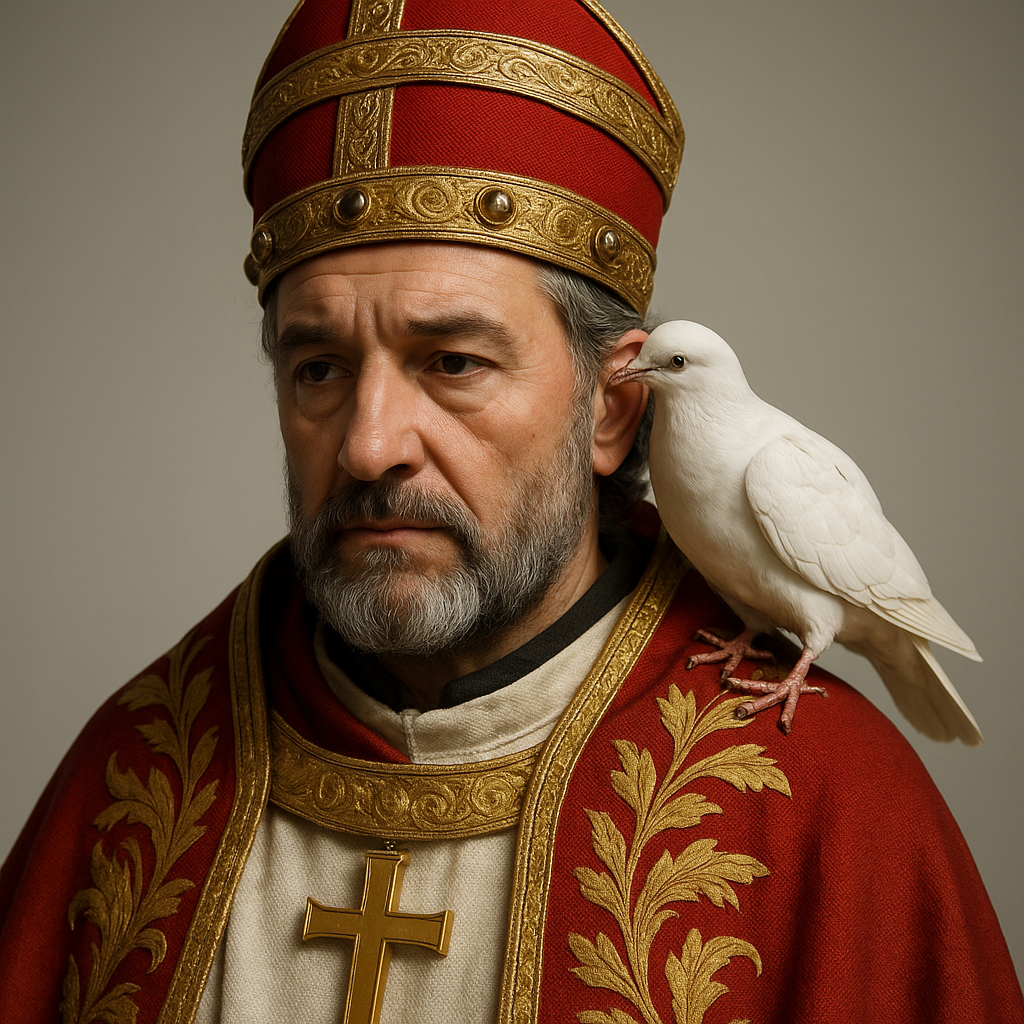
In the annals of Church history, few figures shine as brightly or cast as long a shadow as St. Gregory the Great. Born into privilege but driven by an unshakeable faith, this remarkable man rose from a Roman prefect to a reluctant pope, forever shaping the spiritual, administrative, and liturgical landscape of Western Christianity. His life, a tapestry woven with threads of deep contemplation, fervent evangelism, and profound compassion, offers timeless lessons for believers today. Join us as we explore the journey of St. Gregory, from his noble Roman roots to his pivotal role as one of the most influential popes, examining his early life, monumental achievements, enduring spiritual legacy, and why his example continues to inspire devotion in the modern world.
Quick Facts
| Category | Detail |
|---|---|
| Birth | Around 540 AD, Rome, Italy |
| Death | March 12, 604 AD, Rome, Italy |
| Feast Day | September 3 (Western Church), March 12 (Eastern Church) |
| Patronage | Musicians, singers, students, teachers, popes, England |
| Canonized | Immediately after his death (acknowledged as a saint due to his holy life and pontificate) |
Historical Context & Early Life
St. Gregory the Great was born into a world teetering on the brink of profound transformation. The mid-6th century was a tumultuous time in Italy. The mighty Roman Empire, once the undisputed master of the Western world, had officially fallen in 476 AD, leaving a power vacuum and a chaotic landscape. Italy, in particular, was ravaged by successive invasions by Goths, Vandals, and Lombards, leading to widespread destruction, famine, and plague. Cities like Rome, once bustling centers of imperial power, were shadows of their former selves, depopulated and suffering.
Amidst this societal upheaval, the Church, particularly the Bishop of Rome (the Pope), began to emerge as a crucial stabilizing force. With secular authorities often absent or ineffective, the Church stepped in to provide not only spiritual guidance but also essential civil administration, charity, and defense. This was the world that shaped young Gregory.
Gregory came from an incredibly prominent and pious Roman aristocratic family, the Anicii, which had already given the Church two popes: St. Felix III (his great-great-grandfather) and Agapetus I. His parents, Gordianus and Silvia (who is also revered as a saint), instilled in him a deep love for God and a commitment to public service. He received an excellent classical education, typical of a young man of his social standing, excelling in law, rhetoric, and public administration. This rigorous training prepared him not for the priesthood, but for a career in the imperial bureaucracy.
Indeed, Gregory’s early career saw him rise swiftly through the ranks. By 573 AD, he held the prestigious and powerful position of Prefect of Rome, essentially the city’s chief magistrate. In this role, he was responsible for justice, finance, public works, and civil order. He demonstrated exceptional administrative skills and a profound sense of duty, serving the city with integrity and efficiency during a challenging era. However, even amidst the demands of public life, Gregory felt a growing spiritual yearning, a call to a deeper devotion that would ultimately redirect the course of his life.
Calling & Key Milestones
From Roman Prefect to Monk
Despite his worldly success and comfortable life, St. Gregory felt a profound longing for God that worldly power could not satisfy. Around 574 AD, he dramatically renounced his prestigious secular career. He converted his ancestral palace on the Caelian Hill into a monastery dedicated to St. Andrew (now San Gregorio al Celio) and founded six other monasteries on his family estates in Sicily. He embraced monastic life with fervor, distributing his considerable wealth to the poor and dedicating himself to prayer, study, and severe asceticism. This period of intense spiritual formation was crucial, grounding him in humility and a deep understanding of Benedictine spirituality, which would influence his entire pontificate. He sought solitude and contemplation, but God had other plans for him.
Papal Envoy in Constantinople
Gregory’s monastic retreat was short-lived. Around 579 AD, Pope Pelagius II, recognizing Gregory’s intelligence, administrative acumen, and diplomatic skills, ordained him a deacon and sent him as his apocrisiarius (papal ambassador) to the imperial court in Constantinople. For six years, Gregory represented the Pope’s interests, engaging in complex theological and political discussions with the Eastern Emperor and the Patriarch. This experience provided him with invaluable insights into the intricacies of Church politics, the theological differences between East and West, and the realities of imperial power. Though he yearned for his monastic cell, his time in Constantinople honed his diplomatic abilities and broadened his perspective on the universal Church.
Reluctant Pope
Upon his return to Rome around 585 AD, Gregory resumed his role as abbot of St. Andrew’s monastery. However, tragedy struck Rome in 590 AD with a devastating outbreak of plague, which claimed the life of Pope Pelagius II. The clergy and people of Rome, witnessing Gregory’s leadership during the crisis and remembering his past service, unanimously elected him as the new Pope. Gregory was horrified by the prospect, feeling utterly unworthy and overwhelmed by the immense responsibilities. He famously tried to flee Rome to avoid consecration, even hiding in a basket, but he was apprehended and brought back. He finally submitted to the divine will, seeing it as God’s unmistakable call, and was consecrated Bishop of Rome on September 3, 590 AD. His reluctance underscores his profound humility, a virtue that would define his papacy.
Reforming the Church
As Pope, Gregory I (Pope Gregory the Great) immediately faced monumental challenges. Rome was in ruins, its people starving, and the city threatened by the Lombards. Gregory took on the immense task of governing not just the Church, but effectively the city and much of Italy. He reorganized the vast papal estates, the Patrimonium Petri, into a highly efficient administrative and charitable organization, ensuring a steady supply of food for the starving populace. He negotiated peace treaties with the Lombards when the imperial government was unable to, effectively protecting Rome. He reformed clerical discipline, combated simony (the selling of Church offices), and tirelessly worked to uphold moral standards among the clergy and laity. His practical leadership was instrumental in laying the groundwork for the temporal power of the papacy.
Mission to England
One of St. Gregory’s most enduring legacies is his deep passion for evangelization. He is famously said to have been inspired to send missionaries to the Angles (English) after seeing Anglo-Saxon slave boys in the Roman marketplace, remarking, “Non Angli, sed angeli” (Not Angles, but angels). In 596 AD, he dispatched St. Augustine of Canterbury and a group of monks to evangelize the Anglo-Saxons in England. This mission was incredibly successful, leading to the conversion of King Ethelbert of Kent and the gradual re-Christianization of England. Gregory remained personally involved, sending letters of instruction and encouragement to Augustine, demonstrating his meticulous pastoral care and strategic vision for the growth of the Church.
Liturgical Reforms
St. Gregory the Great is widely credited with significant reforms and standardization of the Roman Liturgy. While the chant system we now call “Gregorian Chant” developed over centuries, Gregory’s role in its organization, compilation, and promotion was so pivotal that it rightly bears his name. He standardized the texts and rites of the Mass, ensuring uniformity across the Western Church, and established a schola cantorum (choir school) in Rome to train clergy in proper liturgical singing. His efforts helped to solidify the Roman Rite, making it a powerful and consistent expression of Catholic worship.
Pastoral Care and Writings
Beyond his administrative and evangelistic endeavors, St. Gregory was a prolific writer and an exemplary pastor. His most famous work, the Regula Pastoralis (Pastoral Rule), became a foundational text for bishops and priests throughout the Middle Ages, outlining the duties and virtues of a good shepherd. It emphasizes the need for a pastor to balance contemplation with action, to adapt their preaching to the needs of the congregation, and to live a life of humility and service. His numerous homilies, commentaries on Scripture (especially Job and Ezekiel), and over 800 surviving letters reveal his profound theological insights, practical wisdom, and tender pastoral heart. He consistently emphasized humility, mercy, and the importance of prayer.
Spiritual Legacy & Theological Themes
St. Gregory the Great exemplified a host of core virtues that deeply resonate with Scripture and Catholic teaching. Above all, his life was a testament to humility. Despite his brilliance and power, he consistently saw himself as a “servant of the servants of God” (Servus Servorum Dei), a title he adopted and one still used by popes today. This humility aligns perfectly with Christ’s teaching: “Whoever wishes to be great among you will be your servant” (Matthew 20:26).
His deep sense of pastoral care and service to the poor and vulnerable was another hallmark. He believed that true spiritual authority flowed from compassion and practical assistance to those in need. He organized vast relief efforts, fed the hungry, and protected the defenseless, embodying the Scriptural call to “love your neighbor as yourself” (Mark 12:31). His concern for the spiritual well-being of his flock was paramount, evident in his constant preaching and guidance.
Gregory was also a tireless champion of evangelization, particularly through his mission to England. He understood the universal call to spread the Gospel, believing it was the Church’s duty to bring Christ’s light to all nations. This missionary zeal reflects Christ’s Great Commission: “Go therefore and make disciples of all nations” (Matthew 28:19).
His lasting influence on the Church is immeasurable. His liturgical reforms, particularly in standardizing the Roman Rite and fostering Gregorian chant, laid the foundation for Western worship for centuries. He is one of the four great Latin Doctors of the Church, alongside Saints Ambrose, Augustine, and Jerome, a title recognizing his profound theological contributions. His writings, especially the Pastoral Rule, shaped the ideal of the episcopal office, guiding generations of bishops. Furthermore, his administrative genius in managing the papal estates and providing civil governance in a time of collapse significantly contributed to the emergence of the papacy as a leading temporal power, safeguarding civilization in the West.
Devotion Today
St. Gregory the Great continues to be a revered figure in the Catholic Church and beyond. His feast day, September 3rd in the Western Church, is observed with solemnity, remembering his immense contributions. Numerous churches, schools, and institutions worldwide are named in his honor, serving as ongoing testaments to his legacy. The Gregorian University in Rome, one of the world’s leading pontifical universities, bears his name, continuing his intellectual tradition.
Pilgrimages often include a visit to the Basilica of San Gregorio al Celio in Rome, built on the site of his family home and monastery. Here, visitors can reflect on the place where he lived as a monk and where he was called to serve the universal Church. Musicians and liturgical scholars, in particular, hold a special devotion to St. Gregory, recognizing his pivotal role in the development of sacred music and the Roman liturgy. He remains a patron saint of musicians, singers, students, and teachers, inspiring them to pursue excellence in their craft and to use their talents for the glory of God.
Reflections for Modern Readers
St. Gregory the Great’s life offers profound lessons that are remarkably relevant for us in the 21st century:
- Embrace Humility in Leadership: Gregory, despite his immense power, viewed himself as the “servant of the servants of God.” In a world that often glorifies self-promotion and ambition, Gregory reminds us that true leadership is about selfless service. Think of a CEO who actively volunteers in the community, or a manager who always gives credit to their team – that’s Gregory’s spirit in action, showing that influence comes from lifting others up, not from dominating them.
- Balance Contemplation and Action: Gregory moved between the quiet solitude of the monastery and the intense demands of the papacy. He understood the need for a deep spiritual life to fuel effective action in the world. For us, this means finding time for prayer, reflection, or quiet hobbies amidst our busy schedules, recognizing that spiritual nourishment strengthens our ability to face daily challenges with grace and purpose.
- Resourcefulness in Crisis: Faced with plague, famine, and barbarian invasions, Gregory didn’t despair. He used his administrative skills to feed the hungry, negotiate peace, and rebuild society. When we encounter crises in our lives or communities – a natural disaster, a sudden job loss, or a difficult family situation – Gregory’s example encourages us to be resourceful, practical, and to seek solutions with faith and determination, trusting that God works through our efforts.
- The Power of Evangelization and Outreach: Gregory’s missionary zeal for the English people reminds us of the importance of sharing our faith and reaching out to others with Christ’s love. This isn’t just about formal missions; it’s about how we live our lives, how we treat strangers, and how we articulate our beliefs with kindness and clarity. It’s the welcoming of a new neighbor, the patient explanation of faith to a curious friend, or simply living a life that reflects Gospel values.
In art and jewelry, St. Gregory the Great is commonly depicted with several meaningful symbols:
- A Dove: Often shown perched on his shoulder or whispering in his ear, this symbol represents the Holy Spirit inspiring him. It specifically refers to the legend that the Holy Spirit guided his writing, particularly his homilies and, famously, the Gregorian chants.
- A Papal Tiara or Triple Crown: This signifies his role as Pope and his spiritual authority.
- A Book or Scroll: This symbolizes his prolific writings, especially his Pastoral Rule and his commentaries on Scripture. It highlights his intellectual legacy and his status as a Doctor of the Church.
- A Model of a Church or Cathedral: Sometimes he is shown holding a small model, representing his role in building up the Church, both spiritually and structurally, through his reforms and missionary efforts.
Timeline Summary
- c. 540 AD: Born in Rome to a wealthy and pious senatorial family.
- c. 573 AD: Serves as Prefect of Rome, the city’s highest civil official.
- c. 574 AD: Renounces his secular career, converts his family palace into St. Andrew’s monastery, and embraces monastic life.
- 579-585 AD: Serves as apocrisiarius (papal ambassador) to the imperial court in Constantinople.
- 585 AD: Returns to Rome and resumes role as abbot of St. Andrew’s.
- 590 AD: Elected Pope by popular acclamation after the death of Pope Pelagius II; initially resists but eventually accepts, becoming Pope Gregory I.
- 590-604 AD: Pontificate marked by significant administrative, pastoral, liturgical, and evangelistic achievements.
- 596 AD: Sends St. Augustine of Canterbury and Benedictine monks on a mission to evangelize the Anglo-Saxons in England.
- c. 597 AD: Publishes his influential work, the Regula Pastoralis (Pastoral Rule).
- 604 AD: Dies on March 12th in Rome.
Scripture for Reflection
St. Gregory the Great’s life perfectly embodies several biblical themes. Here are a few passages that illuminate his key virtues:
On Humility and Service:
“But Jesus called them to Himself and said to them, ‘You know that those who are regarded as rulers of the Gentiles lord it over them, and their great ones exercise authority over them. But it shall not be so among you. Instead, whoever wishes to become great among you must be your servant, and whoever wishes to be first among you must be slave of all. For the Son of Man himself did not come to be served but to serve, and to give his life as a ransom for many.'”
(Mark 10:42-45)
Connection: Gregory, who famously adopted the title “Servant of the Servants of God,” lived out this Gospel call to humble service. He rejected worldly power for the sake of God’s kingdom and prioritized the spiritual and physical needs of his flock above his own comfort, even as the highest authority in the Church.
On the Good Shepherd:
“I am the good shepherd. The good shepherd lays down his life for the sheep. The hired hand, who is not the shepherd and does not own the sheep, sees the wolf coming and leaves the sheep and flees, and the wolf snatches them and scatters them. The hired hand flees because he is a hired hand and cares nothing for the sheep. I am the good shepherd; I know my own and my own know me, just as the Father knows me and I know the Father; and I lay down my life for the sheep.”
(John 10:11-15)
Connection: Gregory’s Pastoral Rule is essentially an extended meditation on the duties of the good shepherd. He tirelessly cared for his flock, both spiritual and physical, defending Rome from invaders, feeding the poor, and guiding souls, just as a good shepherd protects and nourishes his sheep.
Prayers to St. Gregory the Great
A Prayer to St. Gregory the Great
O God, who for the salvation of souls didst provide blessed Gregory as a true shepherd to your flock and to guide your Church, grant, we beseech you, that by his intercession we may ever be filled with your grace, and by our lives give glory to your name. Through our Lord Jesus Christ, your Son, who lives and reigns with you in the unity of the Holy Spirit, God, forever and ever. Amen.