In the sweeping tapestry of early medieval England, amidst the echoes of newly converted kingdoms and the rising tide of monastic scholarship, stands a figure of monumental intellect and profound piety: St. Bede the Venerable. Often hailed as the “Father of English History,” Bede was far more than a chronicler; he was a monk, a theologian, a scientist, and an educator whose rigorous scholarship and spiritual depth illuminated the minds and hearts of his age. This article will explore his early life and the vibrant historical context he inhabited, delve into his remarkable calling and the key milestones of his prolific career, and unpack the enduring spiritual and theological legacy that continues to inspire. We will also examine how devotion to St. Bede thrives today, offering timeless reflections for modern readers seeking wisdom, diligence, and a deeper connection between faith and learning, culminating with a timeline of his life and prayers for intercession.
Quick Facts
| Category | Detail |
|---|---|
| Birth | c. 673, Wearmouth (modern-day Sunderland, England) |
| Death | May 25, 735, Jarrow (modern-day South Tyneside, England) |
| Feast Day | May 25 |
| Patronage | Historians, scholars, writers, schoolchildren, educators |
| Canonized | Informally venerated since his death; declared a Doctor of the Church in 1899 by Pope Leo XIII |
Historical Context & Early Life
To truly appreciate St. Bede the Venerable, we must first transport ourselves to Anglo-Saxon England, a land undergoing profound transformation in the 7th and 8th centuries. Christianity, introduced earlier by Roman missionaries like St. Augustine of Canterbury in 597 and by Celtic monks from Ireland and Scotland, was gradually taking root across the various Anglo-Saxon kingdoms. This period was characterized by political fragmentation, with powerful kings vying for supremacy, yet it also saw a remarkable flowering of monastic culture. Monasteries became not only centers of prayer and spiritual life but also bastions of learning, literacy, and cultural preservation, safeguarding ancient texts and fostering new intellectual pursuits.
The twin monasteries of Monkwearmouth and Jarrow, located in the Kingdom of Northumbria (one of the dominant Anglo-Saxon kingdoms), were at the forefront of this intellectual renaissance. Founded by Benedict Biscop, these monasteries were exceptional in their commitment to learning and their extensive libraries, filled with books and art brought from Rome and other European centers. It was into this vibrant and intellectually stimulating environment that Bede entered at the tender age of seven. While details about his immediate family are scarce, it is clear that his parents entrusted him to the care of the monastery, a common practice at the time, offering their son for a life dedicated to God.
From his earliest days, Bede was immersed in a rigorous monastic routine of prayer, study, and manual labor. He received an excellent education, learning Latin, Greek, and Hebrew, alongside theology, Scripture, history, astronomy, and arithmetic. Under the guidance of skilled teachers, Bede developed an insatiable curiosity and an unparalleled diligence for learning. This formative period, spent entirely within the monastic enclosure of Monkwearmouth and Jarrow, shaped him into the scholar and saint he would become, instilling in him a deep love for God’s word and a commitment to using his intellect in service of the Church.
Calling & Key Milestones
Monastic Life and Education
Bede’s calling was intrinsically tied to his monastic vows. At the age of nineteen, he was ordained a deacon, and at thirty, a priest. These ordinations marked his full commitment to the priestly and monastic life, allowing him to administer sacraments and further dedicate himself to teaching and writing. Throughout his life, Bede rarely left the monastery. This seemingly secluded existence, however, was far from isolating; it provided the stability and resources necessary for his prodigious scholarly output. He diligently followed the Benedictine Rule, balancing prayer, study, teaching, and manual work. His daily rhythm of divine office, scriptural study, and meticulous writing established him as a model of the monastic scholar, demonstrating how intellectual pursuits could be deeply integrated with spiritual devotion.
A Prolific Writer and Scholar
Bede’s intellectual curiosity knew few bounds. He became a master of Latin, the lingua franca of scholarship and the Church, and was proficient in Greek and some Hebrew. His scholarly output was immense and diverse, covering almost every branch of knowledge available in his time. He wrote commentaries on nearly every book of the Bible, using the patristic tradition to explain Scripture in ways accessible to his fellow monks and clergy. These commentaries were not just academic exercises; they were spiritual reflections aimed at deepening understanding and fostering holiness.
Beyond theology, Bede authored works on grammar, rhetoric, and poetry, helping to refine the use of Latin in England. He also delved into scientific subjects, particularly computation (known as *computus*), which was crucial for calculating the date of Easter—a hotly debated topic in the early English Church, eventually settled at the Synod of Whitby. His treatise *De temporum ratione* (On the Reckoning of Time) not only provided a definitive method for calculating Easter but also introduced the concept of dating events “Anno Domini” (in the year of the Lord), which is still used today as AD/BC, becoming a cornerstone of Western chronology.
“Father of English History”
While his biblical commentaries and scientific treatises were significant, St. Bede’s most enduring and famous work is undoubtedly the Historia Ecclesiastica Gentis Anglorum, or the Ecclesiastical History of the English People. Completed in 731, just a few years before his death, this masterpiece earned him the title “Father of English History.” The History meticulously chronicles the spread of Christianity in England from Caesar’s invasion in 55 BC up to Bede’s own time. What makes this work extraordinary is Bede’s commitment to historical accuracy and his innovative approach to research.
He diligently collected information from various sources: papal letters, monastic archives, oral testimonies, and earlier historical accounts. He often cited his sources, a revolutionary practice for his era. Bede presented a coherent narrative that not only recorded political events but also, crucially, illuminated the spiritual journey of the English people—their conversion, their struggles, and their growth in faith. His aim was clear: to demonstrate God’s providence in the history of England, to inspire faith, and to provide examples of virtue and holiness. The Ecclesiastical History is not merely a chronicle; it is a spiritual narrative, showcasing how faith shaped a nation.
Venerable Title
The title “Venerable” was bestowed upon Bede even during his lifetime and certainly immediately after his death, long before formal canonization processes were established. It signified immense respect for his piety, humility, and profound learning. It was a recognition that Bede was a holy man, whose wisdom and holiness were recognized by his contemporaries. The title ‘Venerable’ highlights his moral authority and the esteem in which he was held, pointing to a life lived in exemplary devotion to God and dedication to truth.
Spiritual Legacy & Theological Themes
St. Bede the Venerable’s spiritual legacy is as profound as his intellectual one. He exemplified a powerful synergy between faith and reason, demonstrating that rigorous scholarship could be a profound act of worship. At the heart of his theology was a deep love for Scripture, which he saw not just as a historical record but as the living Word of God, meant to nourish the soul and guide one’s life. His biblical commentaries sought to uncover the spiritual meaning of the text, emphasizing its relevance for personal holiness and the life of the Church.
One of Bede’s core virtues was diligence. His tireless work ethic, his meticulous attention to detail in his research, and his commitment to presenting truth accurately were all expressions of his spiritual discipline. This diligence aligns perfectly with Catholic teaching on stewardship—using one’s gifts and talents fully for the glory of God. For Bede, scholarship was not an end in itself but a means to understand God’s creation, His plan for humanity, and the unfolding of salvation history.
Another prominent virtue was humility. Despite his vast knowledge and international renown, Bede remained a humble monk, always identifying himself as “Bede, servant of Christ and priest.” He never sought personal glory but rather desired to serve the Church and enlighten his readers. This humility echoes the words of Christ, “Whoever wishes to be great among you must be your servant” (Matthew 20:26). His life demonstrated that true wisdom is accompanied by a humble heart, recognizing that all knowledge ultimately comes from God.
Bede’s lasting influence on the Church is immeasurable. His Ecclesiastical History became a foundational text for understanding the early English Church, shaping the very identity of England as a Christian nation. His historical method, characterized by critical evaluation of sources and a narrative style, set a standard for future historians. His work also helped standardize the dating system used across the Western world, linking all history to the Incarnation of Christ. Furthermore, his efforts to promote literacy and learning within the monasteries ensured the preservation of classical knowledge during a time when much of Europe was in upheaval, making him a crucial bridge between the ancient world and the Carolingian Renaissance that would follow.
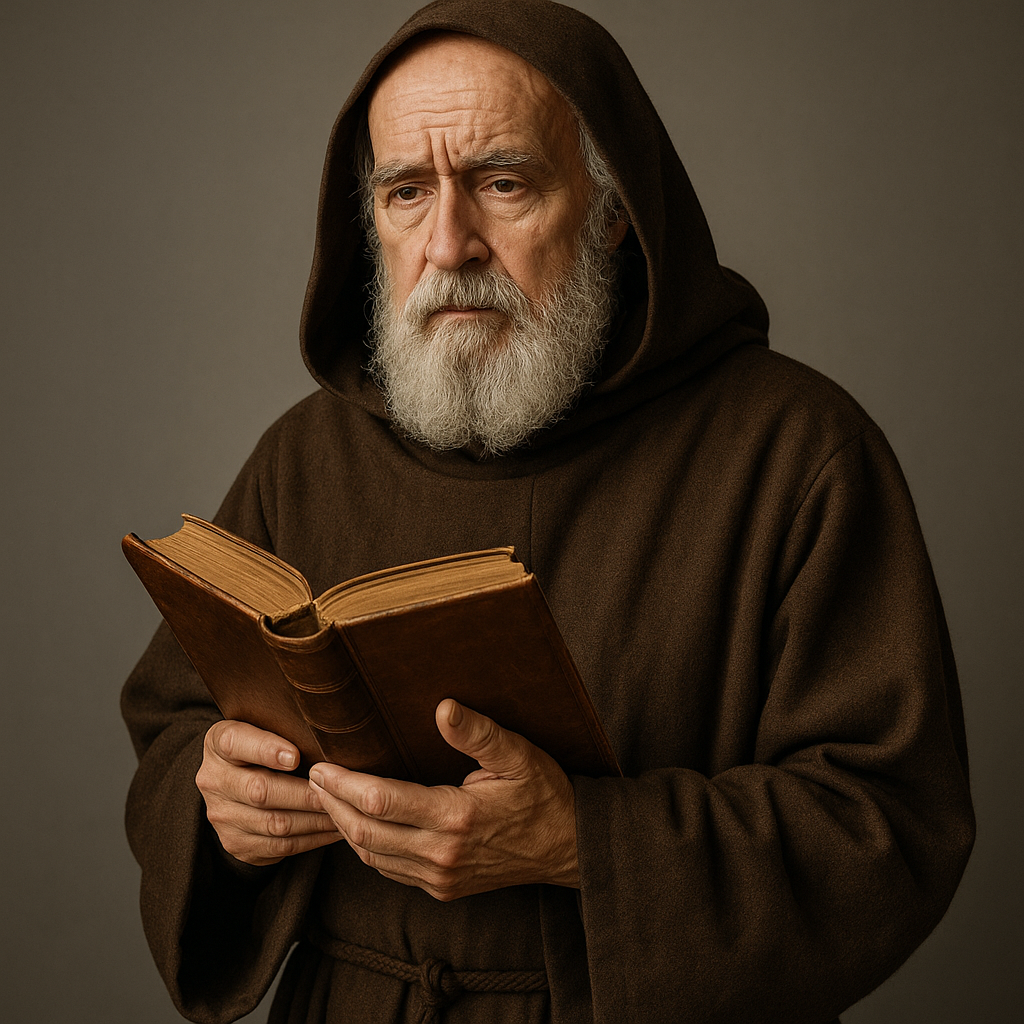
He emphasized the importance of sound doctrine and adherence to the traditions of the universal Church, particularly regarding the calculation of Easter. His writings underscored the unity of the Church and the importance of prayer, penance, and the sacraments for the spiritual life of believers. In art, Bede is often depicted as a monk holding a book or scroll, symbolizing his profound scholarship and his monumental contribution to sacred and secular history. These images serve as a constant reminder of his dual legacy as a spiritual guide and an intellectual giant.
Devotion Today
St. Bede the Venerable continues to be revered as a significant figure in the Catholic Church, particularly in England and among scholars worldwide. His feast day is celebrated annually on May 25th, commemorating his death and entrance into eternal life. This day is observed in parishes and religious communities, often with special emphasis on the connection between faith and learning.
The primary site of devotion to St. Bede is Durham Cathedral in England, where his relics were eventually enshrined after being moved from Jarrow. His tomb rests in the Galilee Chapel, a serene and beautiful part of the cathedral, attracting pilgrims, historians, and students who come to pay their respects to the “Father of English History.” The Jarrow Hall Anglo-Saxon Farm, Village and Bede Museum, located at the site of his monastery, offers an immersive experience into the world Bede inhabited, honoring his contributions to history and culture.
While there are no large-scale pilgrimages specifically dedicated to St. Bede in the same vein as those for other saints, his influence is strongly felt in academic and educational institutions. Many schools, libraries, and university chairs are named in his honor, serving as ongoing tributes to his patronage of scholars, writers, and educators. He is invoked by students facing academic challenges, historians striving for accuracy, and writers seeking clarity and inspiration. His life story continues to be a source of encouragement for anyone seeking to integrate intellectual pursuits with a deep, abiding faith.
Reflections for Modern Readers
St. Bede’s life, lived thirteen centuries ago, offers surprisingly potent and practical lessons for us today in the 21st century. His unwavering dedication and holistic approach to life are truly inspiring.
1. Embrace Lifelong Learning with Joy: Bede devoted his entire life to learning, not out of obligation, but out of a profound love for truth and a desire to understand God’s creation more deeply. In our fast-paced world, it’s easy to stop learning after formal education. Bede challenges us to maintain a spirit of curiosity, to always seek knowledge, whether through reading, listening, or engaging in new experiences. Think of learning a new skill, delving into a complex topic, or simply staying informed about the world around you with an open mind. This continuous intellectual growth enriches our lives and helps us better appreciate the complexity and beauty of God’s handiwork.
2. Cultivate Diligence and Perseverance in Your Work: Bede’s massive output was not the result of fleeting inspiration but of persistent, meticulous labor. He meticulously gathered sources, wrote, and revised, often under challenging conditions. For us, this means approaching our responsibilities—whether at work, school, or home—with thoroughness and dedication. When faced with a difficult project or a long-term goal, remember Bede’s example of steady, unwavering effort. Completing a challenging assignment with careful research, or faithfully fulfilling daily tasks, demonstrates a commitment that honors both our abilities and the gifts God has given us.
3. Integrate Faith and Reason: For Bede, scholarship was an act of worship. He saw no conflict between seeking intellectual truth and deepening spiritual understanding; rather, they were two sides of the same coin. In an age that often pits science against religion, Bede reminds us that faith can inform and elevate reason, and reason can illuminate faith. Consider how your spiritual beliefs can guide your professional ethics, or how scientific discoveries can inspire awe at creation. For example, a scientist might see their research into the natural world as an exploration of God’s design, or an artist might use their talent to express spiritual truths.
4. Practice Humility in Your Achievements: Despite being one of the most learned men of his era, Bede remained a humble monk. He understood that his talents and knowledge were gifts from God. In a world that often rewards self-promotion, Bede teaches us the value of humility. When you achieve success or receive recognition, remember to give credit where it is due, to God and to those who have supported you. Being open to learning from others, acknowledging your limitations, and serving others even when you are skilled are all ways to embody Bede’s humble spirit.
5. Understand the Power of Story and History: Bede’s *Ecclesiastical History* wasn’t just a collection of facts; it was a compelling narrative that shaped identity and inspired faith. He understood that stories connect us to our past, teach us lessons, and give meaning to our present. Take time to understand your own family history, the history of your community, or the narrative of your faith. Sharing your personal story, or listening to the stories of others, can build connections and transmit important values, just as Bede’s history did for the English people.
In religious art, St. Bede is most commonly depicted as a monk in Benedictine habit, often with a tonsure (the shaved crown of the head). His primary symbols are a book or a scroll, representing his vast writings and profound scholarship, particularly the Ecclesiastical History of the English People. Sometimes he is shown with a quill pen, further emphasizing his role as a writer. The presence of a halo signifies his sanctity. These symbols consistently point to his identity as a scholar-saint, a man who dedicated his life to the Word of God through both study and teaching.
Timeline Summary
- c. 673: Born in Wearmouth, Northumbria, England.
- 680: Entered the monastery of Monkwearmouth at age seven; later moved to the newly founded monastery at Jarrow.
- 692: Ordained a deacon at age nineteen.
- 703: Ordained a priest at age thirty.
- c. 700-735: Prolifically wrote numerous biblical commentaries, scientific treatises (including *De temporum ratione*), grammatical works, and hymns.
- 731: Completed his masterpiece, the Ecclesiastical History of the English People.
- 735: Died peacefully on May 25th, reportedly dictating the final sentences of a translation of St. John’s Gospel.
- 8th Century (post-mortem): Widely recognized as “Venerable” for his sanctity and learning.
- 1020: His remains were translated to Durham Cathedral.
- 1899: Declared a Doctor of the Church by Pope Leo XIII, making him the only native of Great Britain to receive this honor.
Scripture for Reflection
St. Bede’s life perfectly illustrates the biblical call to wisdom, diligence, and the integration of one’s gifts with faith. Here are a few passages that resonate with his spiritual and intellectual journey:
Proverbs 4:7: “Wisdom is the principal thing; therefore get wisdom: and with all thy getting get understanding.”
Bede spent his entire life in pursuit of wisdom and understanding, not just for earthly knowledge but for a deeper comprehension of God’s truth. This verse speaks directly to his relentless dedication to study and learning, seeing wisdom as the most valuable pursuit.
1 Corinthians 10:31: “So, whether you eat or drink, or whatever you do, do all to the glory of God.”
This verse encapsulates Bede’s approach to his scholarly work. For him, writing, teaching, and researching were not mere academic exercises but profound acts of worship, all directed towards revealing God’s glory and strengthening faith in His people.
2 Timothy 2:15: “Do your best to present yourself to God as one approved, a worker who has no need to be ashamed, rightly handling the word of truth.”
Bede was a diligent and meticulous scholar, especially in his handling of Scripture and historical sources. This passage reflects his commitment to careful study, accurate interpretation, and truthful presentation, making him a model for all who seek to understand and proclaim God’s word with integrity.
Prayers to St. Bede the Venerable
Prayer to St. Bede for Knowledge and Wisdom
O glorious Saint Bede, who from your youth dedicated your life to learning and to the service of God, we humbly ask for your intercession. You diligently studied the Sacred Scriptures, chronicled the history of your people, and illuminated the mysteries of faith for generations. Grant us, we pray, a similar thirst for knowledge and a love for truth. Help us to apply our minds and our hearts to understanding God’s word and His creation. Inspire students, teachers, writers, and historians to pursue their work with diligence, humility, and a constant aim for God’s greater glory. Through your prayers, may we grow in wisdom and virtue, and one day come to the fullness of understanding in the Kingdom of Heaven. Amen.
A Shorter Prayer to St. Bede
Saint Bede, model of prayer and scholarship, intercede for us. Grant us grace to seek diligently after truth, to share generously the knowledge we gain, and to serve God humbly in all our endeavors. May your example inspire us to unite faith with reason, for the honor and glory of God. Amen.