The Elf on the Shelf has dominated the last decade of Christmas culture. It’s easy to see why: it provides daily excitement, a visual countdown to Christmas, and a touch of morning magic for kids.
However, many Catholic parents feel uncomfortable with the underlying theology of the Elf. The idea of a scout reporting “naughty” behavior to Santa to determine gift-worthiness is a morality based on works, not grace. Advent isn’t about earning Christmas; it’s about preparing our hearts to receive a Savior who comes to us because we need Him, not because we’ve been perfect.
You don’t have to be a Grinch to want something deeper. You can keep the fun of the daily “hide-and-seek” tradition but shift the focus from behavior modification to spiritual preparation.
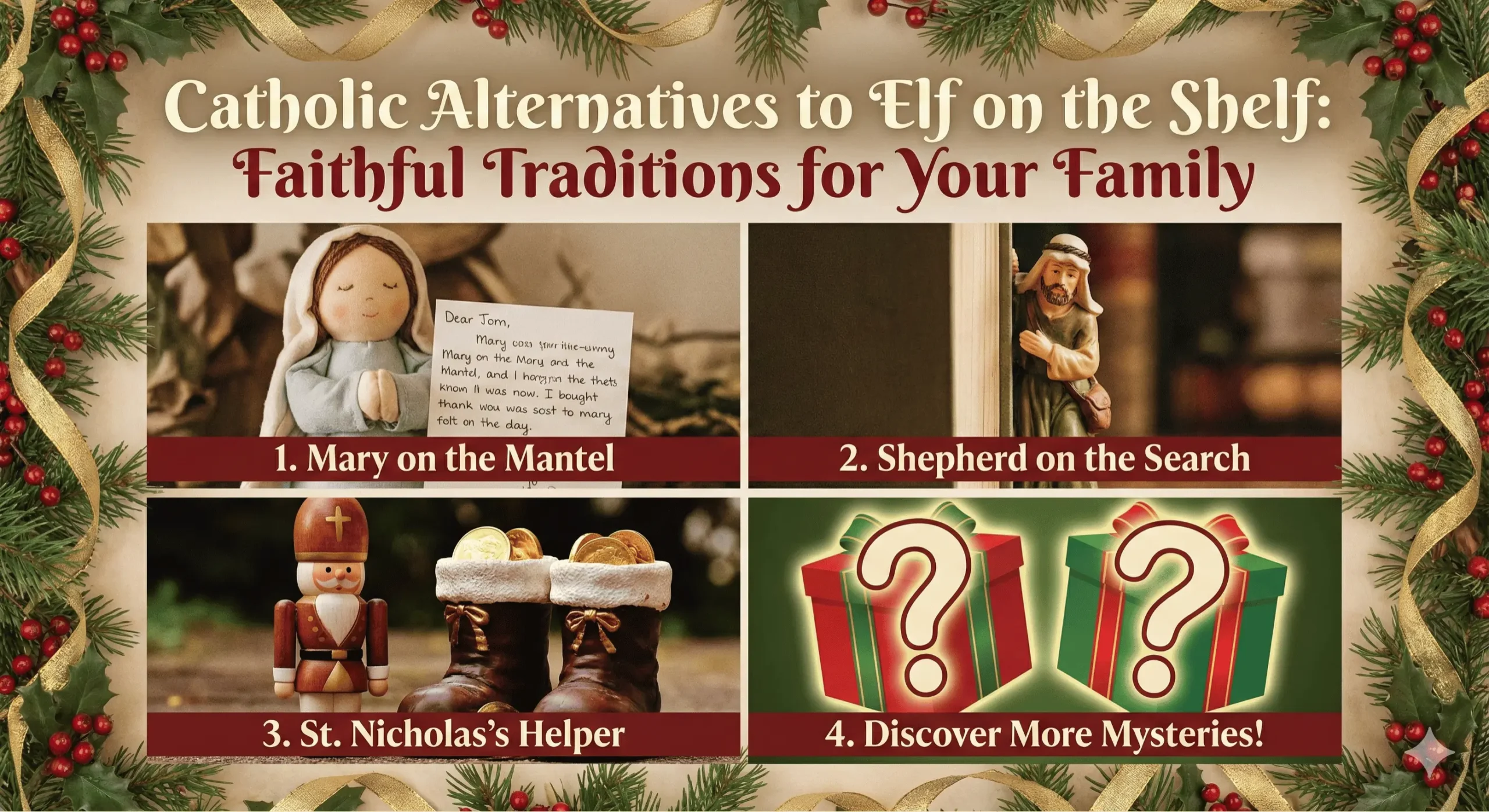
Here are 10 Catholic alternatives that keep the daily engagement but center the story on the Incarnation.
1. Mary on the Mantel (The “Preparation” Focus)

Instead of a mischievous elf, this tradition uses a doll of a pregnant Mary. She is tired, traveling to Bethlehem, and looking for a place to rest.
- The Routine: Every morning, Mary is found “resting” somewhere new in the house. She doesn’t make messes; she finds cozy spots—a pile of towels, a soft chair, or near the baking supplies.
- The Message: She often leaves notes asking children to prepare their hearts like a soft cradle for Jesus by doing small acts of kindness.
2. The Shepherd on the Search (The “Seeker” Focus)
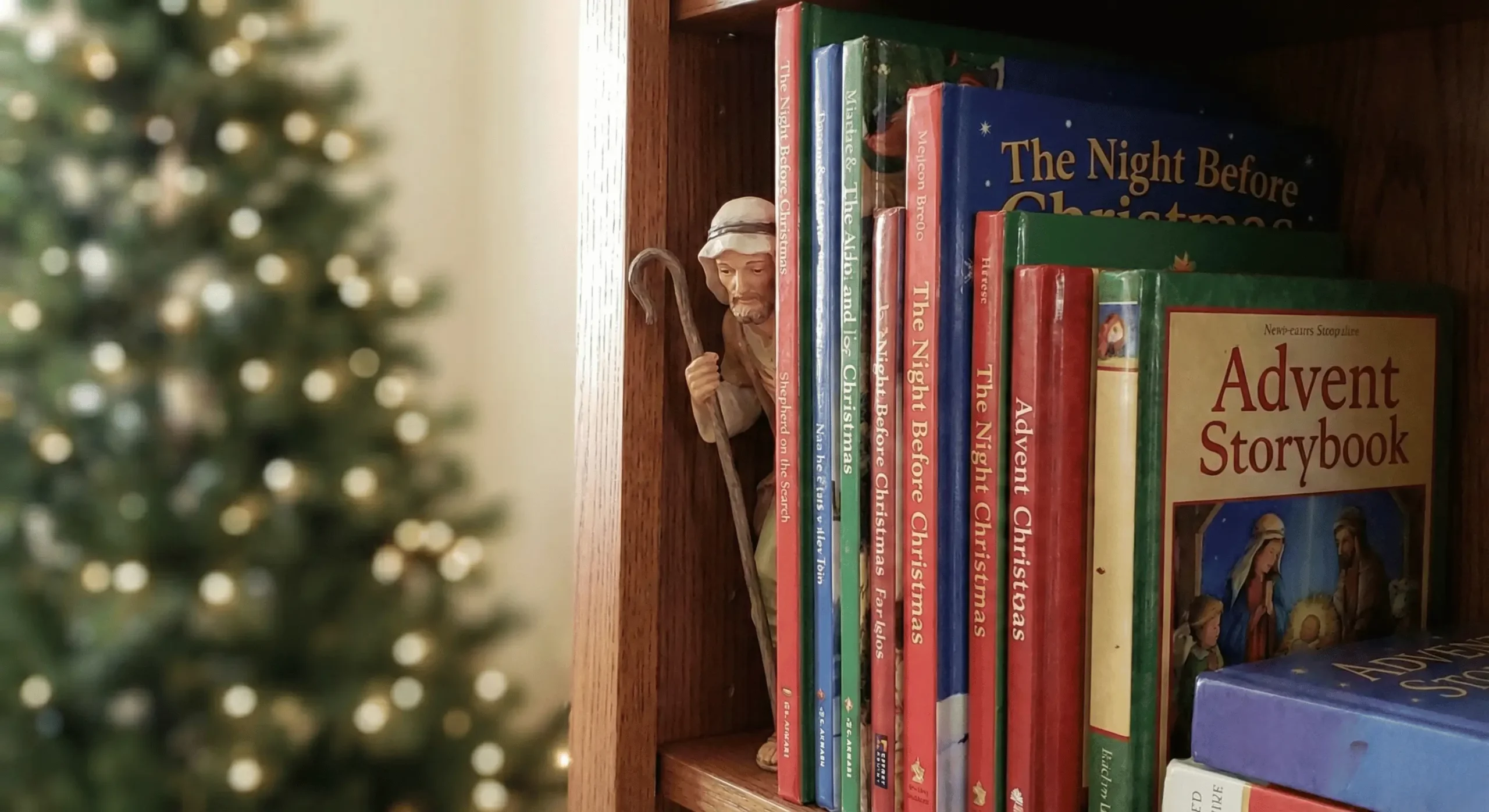
Based on the Gospel of Luke, the shepherds were the first to receive the Good News and immediately went “with haste” to find the baby.
- The Routine: This is the closest to the Elf in terms of energy. Your shepherd figure is actively looking for Jesus. He hides in high places, peeking around corners, or climbing furniture, trying to get a better view of the Star.
- The Message: The focus is on actively seeking Christ in daily life. On Christmas morning, he is found kneeling at the family Nativity set.
3. The Wandering Wise Men (The “Liturgical” Focus)
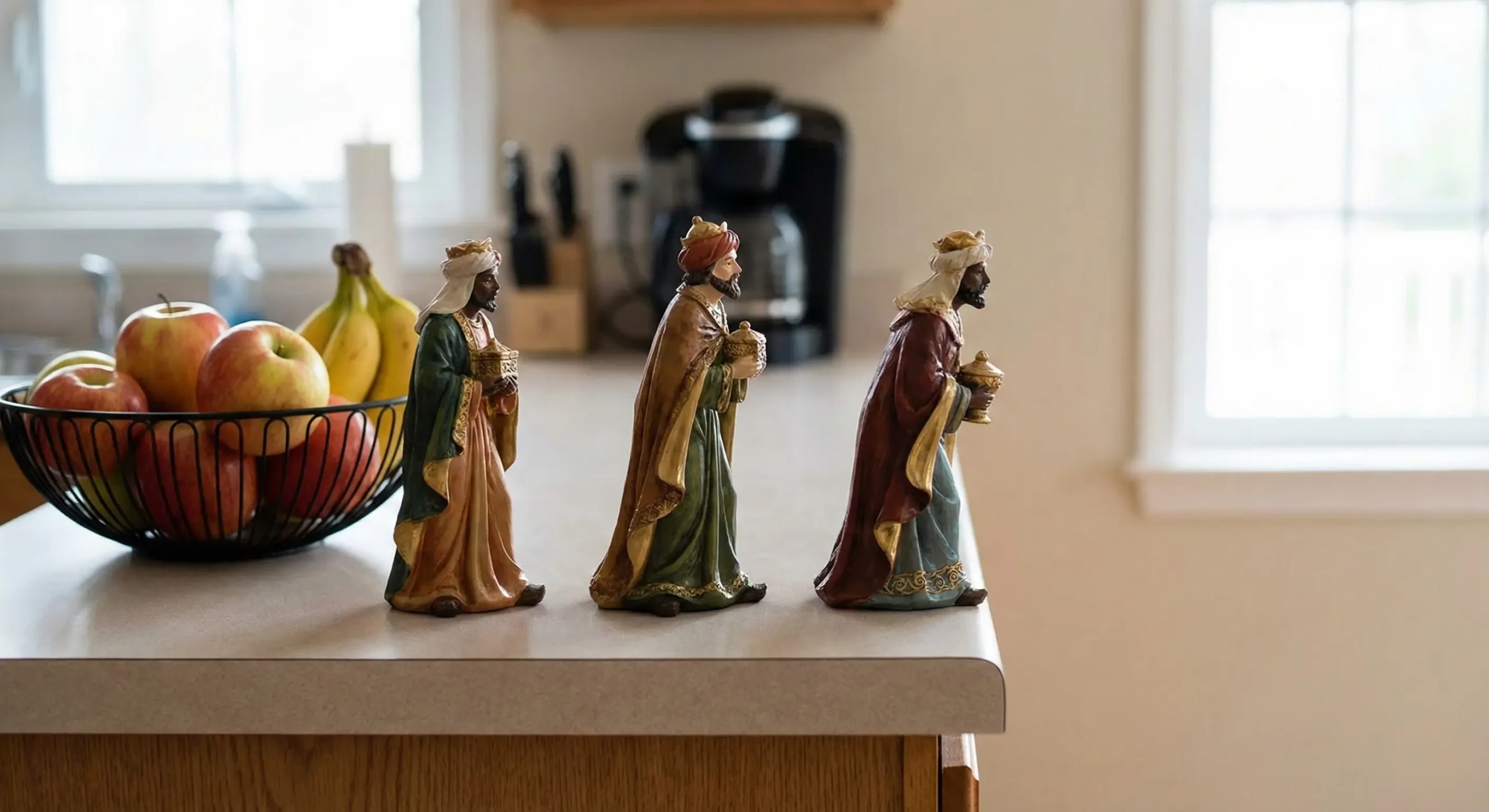
This tradition extends the season beyond December 25th. Liturgically, the Magi did not arrive at the stable on Christmas night; they had a long journey.
- The Routine: At the start of Advent, place your three Magi figures far away from your Nativity set (in another room). Each day, they move a little closer to the living room. They travel across bookshelves and windowsills.
- The Message: They don’t arrive at the manger until the Feast of the Epiphany (January 6th). It teaches patience and the reality of a long spiritual journey.
4. The Advent Angel (The “Service” Focus)
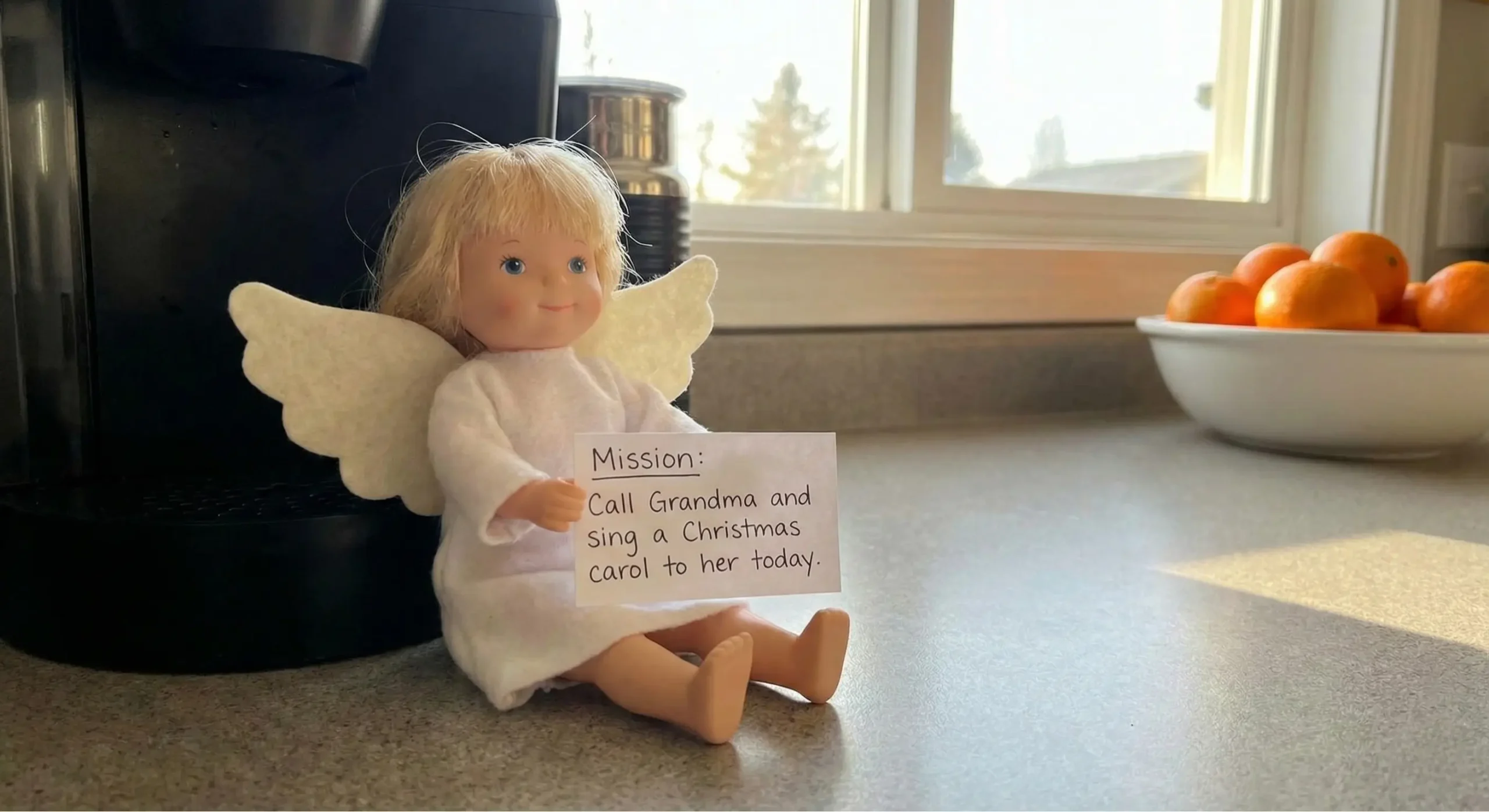
Instead of a scout spying for Santa, an angel messenger (perhaps Gabriel) visits the home to invite the family into the Corporal and Spiritual Works of Mercy.
- The Routine: The angel figure appears in a new spot daily holding a “Mission Card.”
- The Message: The cards contain simple tasks: “Let’s make cookies for a neighbor,” “Choose two old toys to donate,” or “Say a prayer for the mailman.” It shifts the focus from “What am I getting?” to “What can I give?”
5. The Bethlehem Donkey (The “Humility” Focus)

The unsung hero of the Nativity is the donkey who carried a pregnant Mother of God all the way to Bethlehem.
- The Routine: Hide a small toy donkey around the house. He doesn’t do tricks; he is looking for ways to help carry burdens.
- The Message: When the kids find him, it’s a reminder to help with chores without complaining, just like the humble donkey. Sometimes he might be found next to the dishwasher or the laundry basket, ready to “help.”
6. St. Nicholas’s Helper (The “Generosity” Focus)
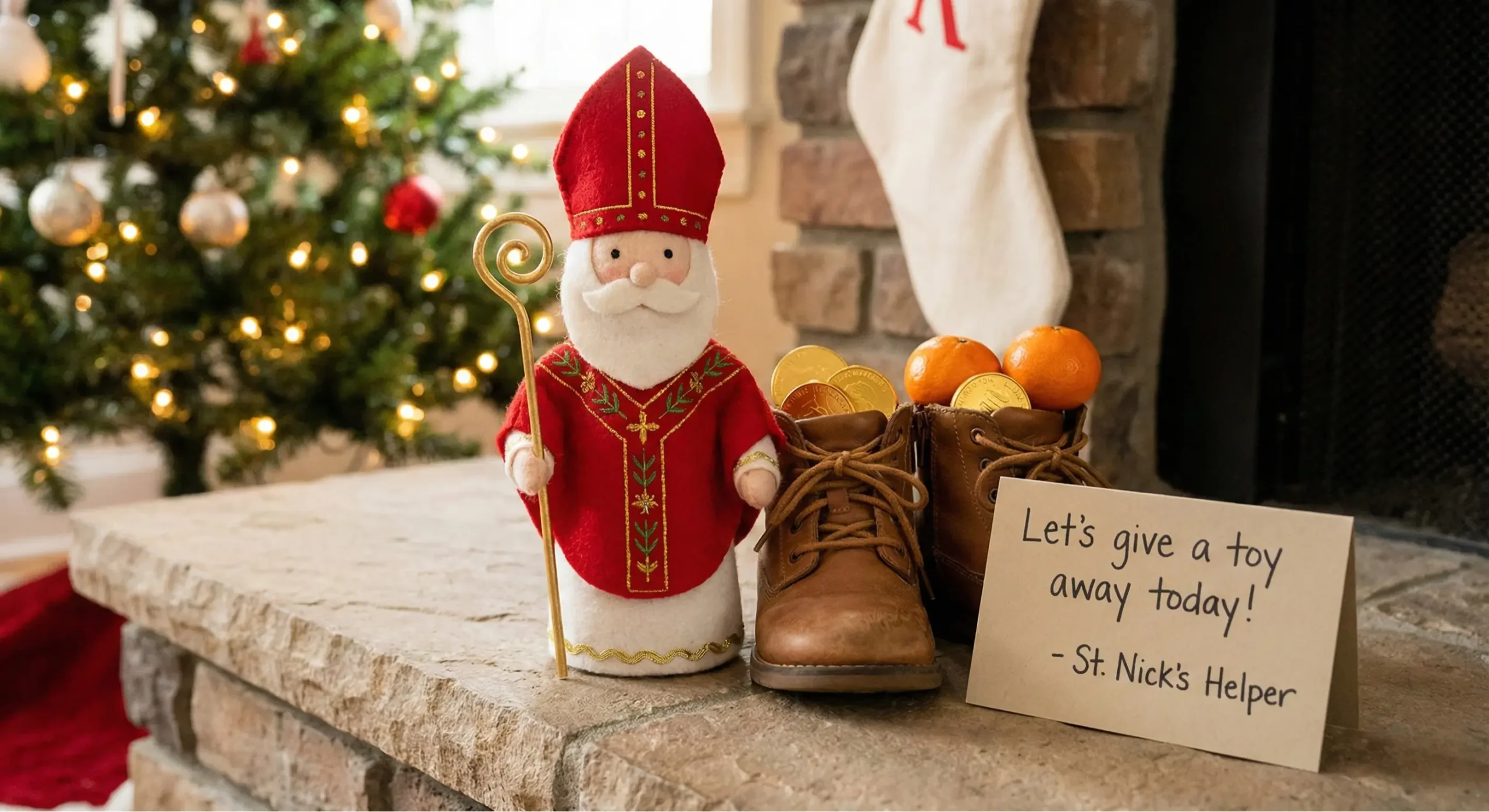
Bridge the gap between Santa Claus and the real Bishop of Myra. Use a small figure dressed as a bishop (miter hat and staff), not a Santa suit.
- The Routine: He arrives at the start of Advent to help the family prepare for St. Nicholas Day (December 6th). He doesn’t watch for bad behavior; he models generosity.
- The Message: He might leave small chocolate coins, oranges, or notes encouraging the children to give one of their own toys away before Christmas.
7. The Guiding Star (The “Visual” Focus)

This is the simplest alternative, perfect for young toddlers or busy parents who don’t have energy for elaborate setups.
- The Routine: Use a shiny star ornament or a cutout covered in glitter. Every day, the star moves to a new spot in the house.
- The Message: The star is never “naughty.” It simply shines. Its daily movement reminds the family that the light of Christ is moving closer, and we must keep our eyes on Him, even when we are brushing our teeth or eating breakfast.
8. The Little Drummer Boy (The “Talents” Focus)
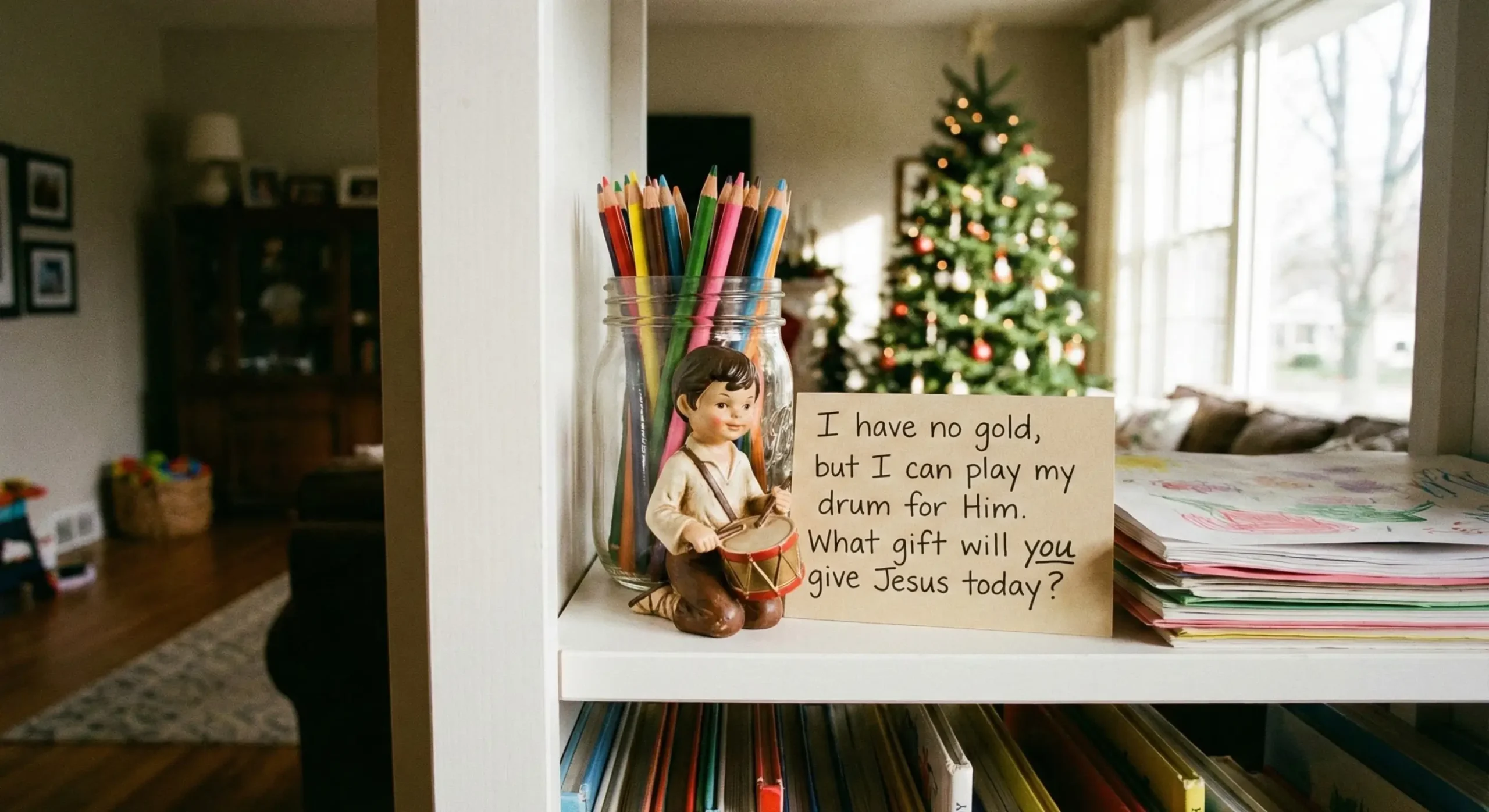
Based on the beloved carol, this figure represents offering whatever simple gifts we have to Jesus.
- The Routine: Hide a small drummer boy figurine (perhaps from an old Nativity set).
- The Message: He has no expensive gifts like the Wise Men; he only has his drum. When the kids find him, they have to think of one “gift” they can give Jesus that day using their own talents—drawing a picture, singing a song, or doing a chore cheerfully.
9. The Saint Seeker (The “Educational” Focus)
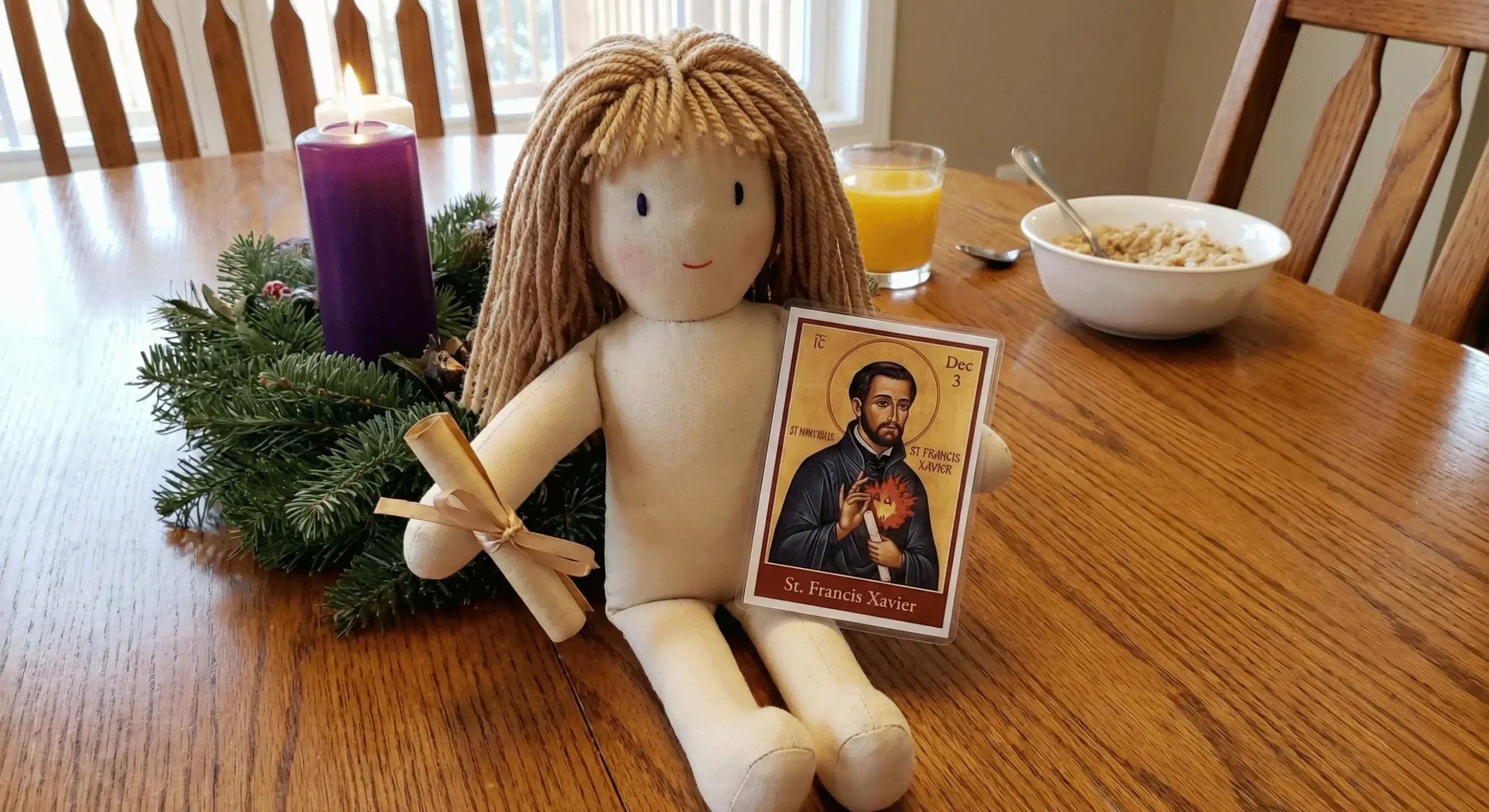
Advent is full of amazing feast days. Use a small, generic messenger doll or angel to introduce them.
- The Routine: Every few days, the messenger doll appears holding a small scroll or picture of that day’s saint (e.g., St. Francis Xavier on Dec 3, St. Nicholas on Dec 6, St. Juan Diego on Dec 9, Our Lady of Guadalupe on Dec 12, St. Lucy on Dec 13).
- The Message: The family learns about a hero of the faith during dinner. It connects the season of Advent to the wider “cloud of witnesses.”
10. The “O Antiphon” Herald (The “Deep Advent” Focus)
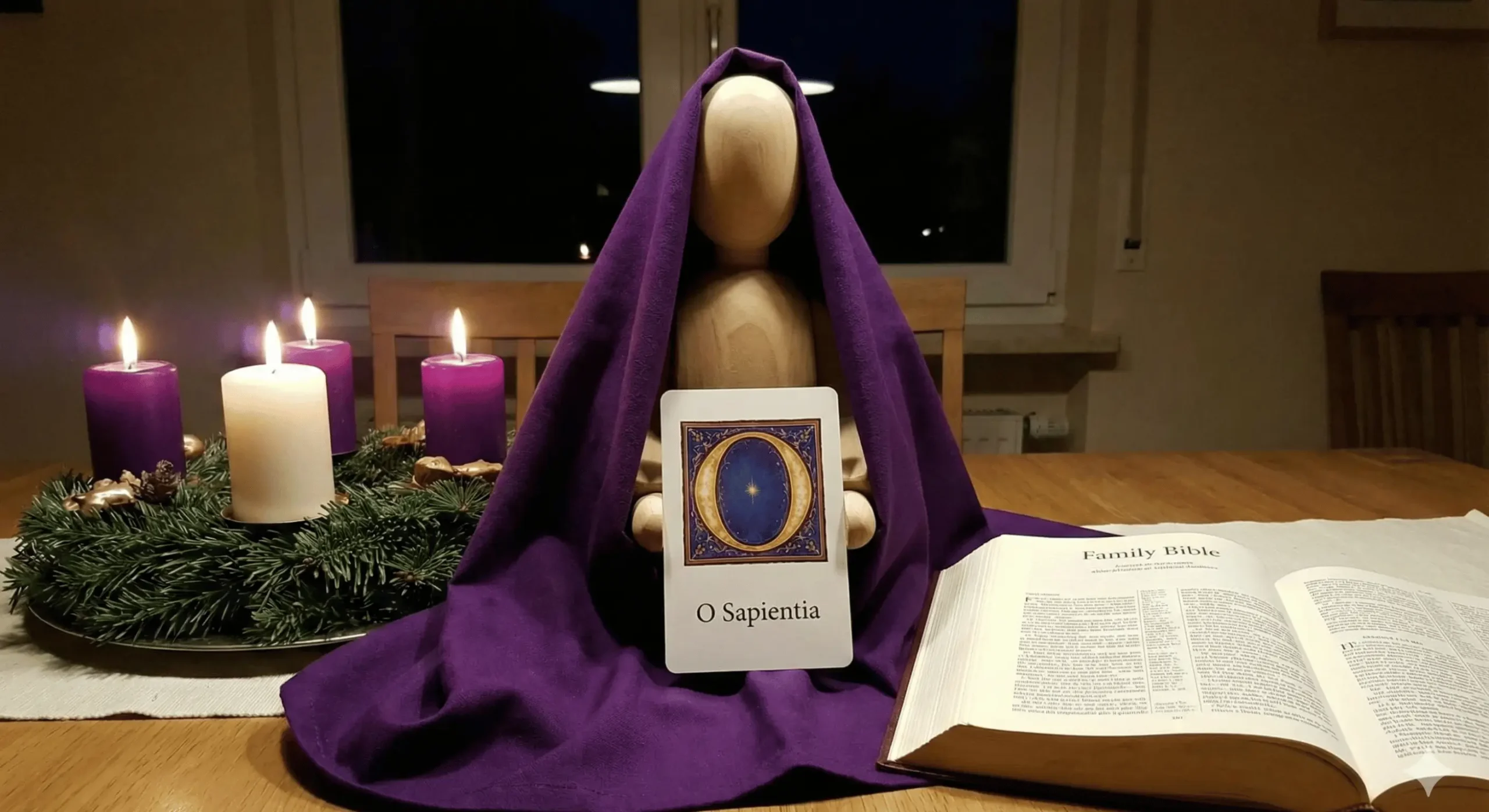
This is for families who want to connect deeply with the liturgy during the final, intense week of Advent (December 17-23).
- The Routine: Use a figure draped in purple cloth (the color of Advent penance and royalty). This figure only appears for the last seven days before Christmas Eve.
- The Message: Each day, the figure brings one of the ancient “O Antiphons”—the beautiful prophetic titles of Jesus (O Wisdom, O Root of Jesse, O Key of David, etc.)—to be read during evening prayer as the anticipation for Christmas hits its peak.