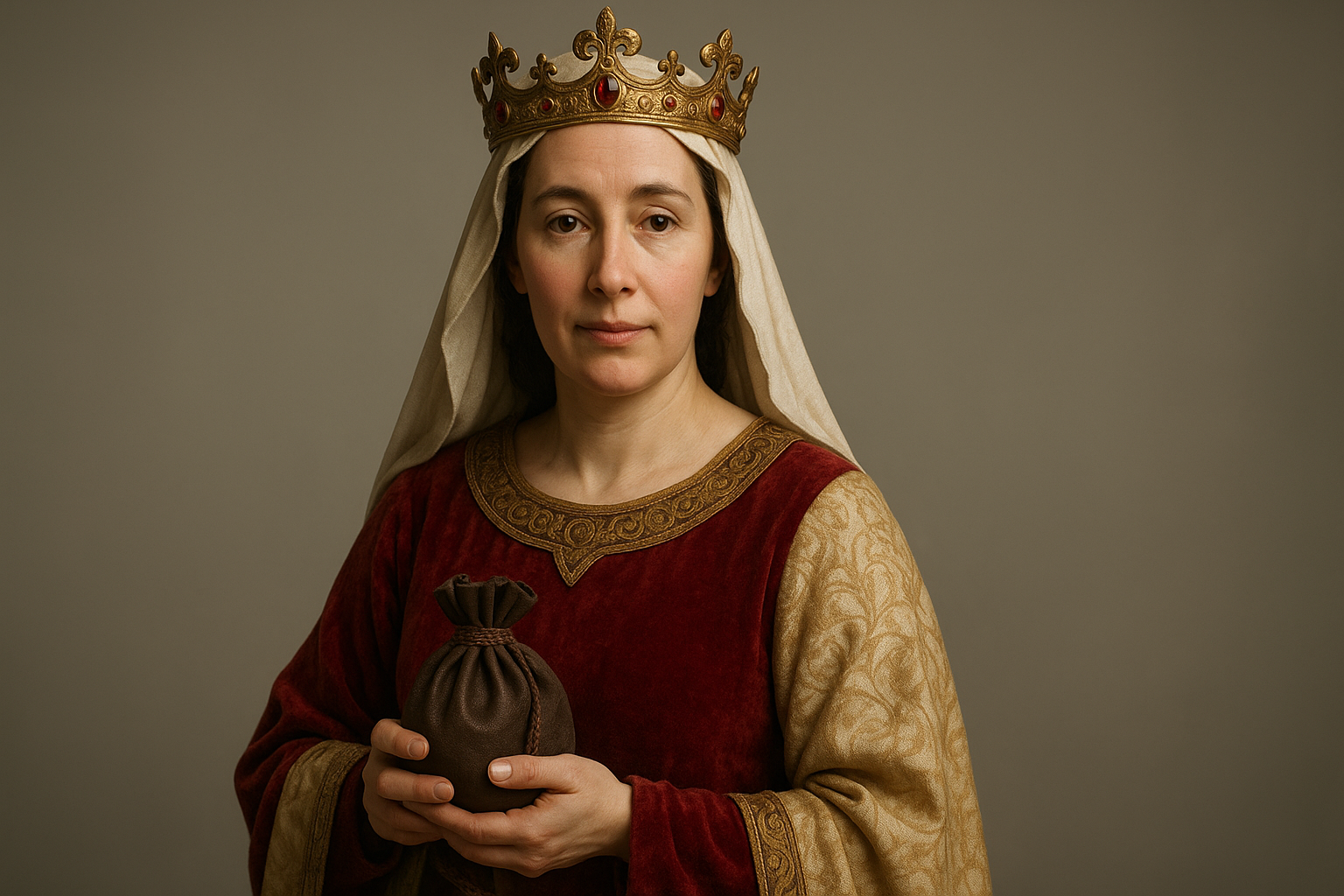
In the vibrant tapestry of Catholic saints, certain figures shine as beacons of both regal authority and profound humility. One such luminary is St. Margaret of Scotland, a queen whose life was a testament to unwavering faith, tireless charity, and a deep commitment to both her family and her people. Far from being merely a historical footnote, Margaret’s story resonates powerfully today, offering timeless lessons on leadership, compassion, and the transformative power of a virtuous life lived in Christ. From her early days as an exiled princess to her impactful reign as queen, this article will explore the remarkable journey of St. Margaret, delving into her significant contributions, her enduring spiritual legacy, and how her example continues to inspire believers across generations.
Quick Facts
| Attribute | Detail |
|---|---|
| Birth | c. 1045, Reska, Hungary |
| Death | November 16, 1093, Edinburgh Castle, Scotland |
| Feast Day | November 16 |
| Patronage | Scotland, Queens, Mothers, Large Families, Widows, Converts, the Sick, Poor People |
| Canonized | 1250 by Pope Innocent IV |
Historical Context & Early Life
The 11th century was a tumultuous period in European history, marked by shifting borders, dynastic struggles, and the ongoing consolidation of Christian influence. In England, the Norman Conquest of 1066 irrevocably altered the political and cultural landscape. It is against this backdrop of upheaval that the story of Margaret unfolds. Born around 1045 in Reska, Hungary, Margaret was a princess of Anglo-Saxon royal lineage, her parents being Edward the Exile and Agatha. Edward was the son of King Edmund Ironside of England, who had been defeated by the Danish King Canute. To protect him, Edmund had sent Edward to Hungary, where he grew up and married.
Margaret’s early life was one of displacement and uncertainty. Her family eventually returned to England in 1057, hopeful that Edward, as the rightful heir, might one day reclaim the throne. However, these hopes were dashed with Edward’s sudden death shortly after their return. This left Margaret, her younger sister Christina, and their brother Edgar Atheling in a precarious position, especially after the Norman Conquest. With William the Conqueror seizing the English throne, the Anglo-Saxon royal family became a direct threat to his rule. Fearing for their safety and resisting Norman dominance, Margaret and her family, including her widowed mother, decided to flee England by ship in 1068. Their intended destination was Hungary, but a severe storm forced their vessel off course, landing them on the shores of Scotland.
This unexpected twist of fate brought them to the court of King Malcolm III of Scotland. Malcolm, a rugged warrior king, was initially drawn to the strategic advantage of hosting the English royal exiles, seeing them as potential allies against the Normans. However, it wasn’t long before he was captivated by the intelligent, pious, and refined Princess Margaret. Her upbringing, though marked by exile, had instilled in her a deep sense of decorum, a love for learning, and a profound personal faith, nurtured by her devout mother. These formative experiences of displacement and reliance on God’s providence would profoundly shape her character and her future reign as Queen of Scotland.
Calling & Key Milestones
From Exile to Queen of Scotland
Upon her arrival in Scotland, Margaret found herself in a rugged kingdom far removed from the more sophisticated courts of England or Hungary. King Malcolm III, though a powerful ruler, presided over a court that was, by comparison, less refined in its customs and less aligned with the broader European Christian traditions. Despite her initial reluctance, perhaps longing for a more quiet, contemplative life, Margaret was eventually persuaded to marry Malcolm. Their marriage, which took place around 1070, was a turning point for Scotland. Margaret, now Queen, embraced her new role not merely as a consort, but as a spiritual leader and a force for good. Her influence on Malcolm was profound; the fierce warrior king was softened by her piety and gentle wisdom, frequently seeking her counsel and allowing her to guide him in matters of faith and justice. He admired her deeply, often kissing her prayer books and even commissioning special copies for her. Their union resulted in eight children—six sons and two daughters—many of whom would themselves go on to shape the future of Scotland and England.
A Pious Queen and Mother
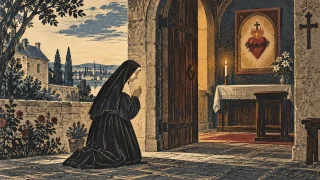
At the heart of Margaret’s life was her deep personal piety. She was a woman of intense prayer, spending hours each day in spiritual devotion and meditation on Scripture. Her personal chapel was a sanctuary where she would retreat for contemplation. Beyond her private devotions, Margaret was a dedicated mother. She meticulously oversaw the education and spiritual formation of her children, ensuring they received proper instruction in both secular learning and Christian virtues. She emphasized humility, justice, and compassion, virtues that many of her children, particularly her son David I, would carry into their own reigns. Her home life was an example of a devout Christian household, where prayer, study, and acts of charity were commonplace. She lived a disciplined life, often fasting and performing penances, all while maintaining her duties as Queen and mother.
Reforming the Scottish Church
One of Margaret’s most significant contributions was her zealous effort to reform the Scottish Church. At the time, certain practices in Scotland diverged from the broader customs of the Roman Catholic Church, often due to isolation and historical tradition. Margaret convened synods, engaging in respectful but firm theological discussions with local clergy and lay leaders. She addressed issues such as the proper observance of Lent, the timing of Easter, and the celebration of the Eucharist (Holy Communion). She advocated for a more reverent celebration of Mass, the reception of communion by the laity, and the abolition of certain questionable practices, such as marriages between close relatives that were not permitted by Church law. Her reforms were not imposed forcefully but guided by her deep knowledge of Scripture and Church teaching, and her genuine desire to bring the Scottish Church into closer communion with Rome. Her efforts laid a foundation for a stronger, more unified Catholic identity in Scotland.
Advocate for the Poor and Vulnerable
Margaret’s piety was not confined to personal prayer or liturgical reform; it manifested most powerfully in her boundless charity. She lived out the Gospel call to serve the poor and the marginalized with an extraordinary dedication that earned her the title “Mother of the Poor.” Each day, she would personally feed hundreds of impoverished Scots within the royal palace, often washing their feet herself in an act of profound humility. She established hospitals and hostels for the sick and the destitute, personally tending to their needs and ensuring they received care and comfort. She used her royal treasury not for personal luxury but for almsgiving, ransoming captives, and supporting orphans and widows. Her generosity was legendary, demonstrating that true queenship was about servant leadership and compassion for the least of her brethren.
Mother of Kings
Margaret’s legacy extended deeply through her children. Her sons, especially Edgar, Alexander I, and David I, all reigned as kings of Scotland and continued many of her reforms and charitable works. Her influence on them was undeniable. David I, in particular, is remembered as one of Scotland’s greatest kings, largely due to the strong foundation of faith and justice instilled in him by his mother. He continued her work of establishing monasteries, reforming the Church, and promoting justice throughout his realm. Margaret also played a role in diplomacy, using her family connections to foster peace between Scotland and England, often mediating between her husband and her brother, Edgar Atheling.
Her Peaceful Passing
Towards the end of her life, Margaret suffered from a prolonged illness. Her final days were marked by intense suffering, which she accepted with characteristic resignation and faith, offering it up to God. In 1093, while on her deathbed at Edinburgh Castle, she received the devastating news that her husband, King Malcolm III, and their eldest son, Edward, had been killed in battle against the English at Alnwick. Despite her grief and physical pain, she found strength in prayer, reciting psalms and commending herself to God. She passed away on November 16, 1093, only three days after her husband and son, dying peacefully in the arms of her confessor. Her immediate veneration as a saint began almost spontaneously among the Scottish people who revered her for her holiness, charity, and wisdom.
Spiritual Legacy & Theological Themes
St. Margaret’s spiritual legacy is rich and multifaceted, embodying core Catholic virtues that remain relevant today. At the heart of her life was **charity** (agape), a selfless love for God and neighbor that manifested in her unwavering commitment to the poor and vulnerable. This aligns perfectly with scriptural teachings on charity, such as Christ’s command to “love your neighbor as yourself” (Mark 12:31) and the parable of the Last Judgment in Matthew 25:31-46, where Jesus identifies with “the least of these.” Margaret didn’t just give alms; she personally served, demonstrating that true Christian love is active and embodied.
Another prominent virtue was **humility**. Despite her royal status, Margaret eschewed pomp and luxury for a life of modest dress and fervent prayer. Her willingness to wash the feet of the poor and dine with the destitute showcased a profound understanding that all are equal in God’s eyes. This echoes Philippians 2:3, which encourages us to “in humility value others above yourselves.” Her humility enabled her to be an approachable and effective leader, beloved by her people.
Her **zeal for reform** within the Scottish Church highlighted her deep faith and commitment to Catholic orthodoxy. She wasn’t content with superficial piety but sought genuine spiritual renewal and adherence to universal Church practices. This reflected a theological understanding of the Church as one, holy, catholic, and apostolic, striving for unity in faith and worship. Her work contributed significantly to bringing Scotland into closer alignment with the broader currents of European Christianity, reinforcing the importance of doctrinal and liturgical fidelity.
Finally, Margaret exemplified **devotion as a wife and mother**. She demonstrated that queenship and family life were not mutually exclusive but could be integrated into a single vocation of holiness. Her efforts to spiritually form her children, instilling in them virtues of justice and compassion, left a lasting impact on Scottish history. This underscores the Catholic teaching on the family as the “domestic church,” where parents are the primary educators of their children in faith. Her influence on King Malcolm, transforming him into a more just and pious ruler, also highlights the potential for Christian wives to spiritually uplift their husbands and households.
Her lasting influence is seen in the continued veneration of Catholic monarchs who rule with justice and piety, and in the Church’s emphasis on social justice and care for the poor. Her life inspired countless acts of charity and the establishment of institutions dedicated to helping those in need. In art, she is often depicted with a cross, a book (symbolizing her love for learning and Scripture), or an alms purse, representing her boundless generosity. Her devotion to liturgical purity also influenced subsequent reforms and the preservation of sacred traditions in Scotland.
Devotion Today
Even centuries after her death, St. Margaret of Scotland remains a revered figure, especially in her adopted homeland. Her principal shrine is located at **Dunfermline Abbey** in Fife, Scotland. Though her remains were scattered during the Scottish Reformation, the abbey still serves as a powerful testament to her legacy and a site of pilgrimage. A stone coffin, believed to have once held her remains, lies within the abbey grounds, attracting visitors who come to reflect on her life and pray for her intercession.
Her feast day, November 16, is celebrated with particular devotion in Scotland and by Scottish communities worldwide. Parishes and schools named in her honor continue to thrive, perpetuating her memory and virtues. The **St. Margaret’s Chapel** within Edinburgh Castle, the oldest building still standing on the castle rock, is a small but significant site of devotion. It was built by her son, David I, in her memory and serves as a poignant reminder of her enduring presence. Although it was temporarily deconsecrated during the Reformation, it was restored for worship in the 19th century and remains a place of prayer, offering a quiet respite for visitors.
Modern devotion to St. Margaret often focuses on her patronage of Scotland, queens, mothers, large families, and the poor. Many mothers pray to her for guidance in raising their children in faith and virtue, while those working with the impoverished seek her inspiration and intercession. She is also seen as a patron for converts, remembering her efforts to strengthen Catholic practice among her people, and for widows, having experienced deep loss herself. Her story is frequently taught in Catholic schools as an example of holiness lived out in a secular vocation, proving that one can serve God faithfully even from a position of worldly power.
Reflections for Modern Readers
St. Margaret of Scotland’s life, though lived in the 11th century, offers incredibly relevant and actionable lessons for us today. Her story challenges us to examine how we integrate our faith into every aspect of our lives.
- Integrate Faith and Life: Margaret didn’t compartmentalize her faith; it informed her queenship, her marriage, her motherhood, and her acts of charity. For us, this means seeing our work, our family life, and our civic duties not as separate from our spiritual lives, but as arenas where our faith can shine. A modern parent, for example, might reflect on how Margaret’s dedication to her children’s spiritual education can inspire them to prioritize family prayer or discussions about faith, even amidst busy schedules.
- Serve the Vulnerable with Humility: Margaret’s personal service to the poor, including washing their feet, is a radical example of Christian charity. In a world often focused on self-promotion, her humility reminds us that true greatness lies in serving others, especially those on the margins. This could translate into volunteering at a local food bank, befriending someone experiencing homelessness, or advocating for those without a voice in our communities, remembering to do so with genuine compassion and respect, not just performative acts.
- Seek Unity and Truth in Faith: Her efforts to align the Scottish Church with broader Catholic practices teach us the importance of understanding and upholding the teachings of the Church, and seeking unity in our expressions of faith. In an age of diverse spiritualities, Margaret’s example encourages us to delve deeper into Catholic teaching, participate actively in the sacraments, and strive for coherence and authenticity in our own spiritual lives. This could mean engaging in adult faith formation or seeking to understand the “why” behind Church practices.
- Be a Transformative Influence: Margaret’s gentle yet powerful influence on King Malcolm transformed his character and, consequently, his kingdom. This teaches us that even in challenging environments, one person’s commitment to virtue can have a ripple effect. Whether in our workplaces, friendships, or families, we can, through patience, prayer, and good example, be agents of positive change, inspiring others towards goodness and God. A young professional, for instance, might demonstrate integrity and kindness in their workplace, subtly influencing company culture.
In art and jewelry, St. Margaret is frequently depicted with several meaningful symbols. The **cross** is perhaps the most common, signifying her deep personal piety and devotion to Christ. A **book** or a **scroll** often accompanies her, representing her love for learning, her study of Scripture, and her efforts to promote literacy and religious education. Sometimes she holds an **alms purse** or a **basket of bread**, symbolizing her extraordinary charity and personal care for the poor. A **crown** or a **scepter** identifies her royal status, yet these symbols are often paired with others that highlight her humility, reminding us that her true royalty was found in her service to God and humanity. These symbols collectively paint a picture of a queen whose power was rooted in profound faith and selfless love.
Timeline Summary
- c. 1045: Born in Reska, Hungary, to Edward the Exile and Agatha.
- 1057: Returns to England with her family; her father, Edward, dies shortly after.
- 1066: Norman Conquest of England; William the Conqueror takes the throne.
- 1068: Flees England with her family by ship, landing in Scotland after a storm.
- c. 1070: Marries King Malcolm III of Scotland, becoming Queen.
- 1070s-1090s: Dedicates her life to prayer, charity, raising her children, and reforming the Scottish Church. Convenes synods to address liturgical and moral issues.
- 1093 (November 13): King Malcolm III and eldest son Edward are killed in battle at Alnwick.
- 1093 (November 16): St. Margaret dies at Edinburgh Castle, three days after her husband and son.
- 1250: Canonized by Pope Innocent IV.
- 1693: Her feast day is extended to the whole Roman Catholic Church.
Scripture for Reflection
St. Margaret’s life beautifully reflects several scriptural themes, especially those concerning charity, wisdom, and devoted leadership. These passages offer further insight into the virtues she embodied:
-
Matthew 25:34-40 (The Last Judgment and service to the least of these): “Then the King will say to those on his right, ‘Come, you who are blessed by my Father; take your inheritance, the kingdom prepared for you since the creation of the world. For I was hungry and you gave me something to eat, I was thirsty and you gave me something to drink, I was a stranger and you invited me in, I needed clothes and you clothed me, I was sick and you looked after me, I was in prison and you came to visit me.’ Then the righteous will answer him, ‘Lord, when did we see you hungry and feed you, or thirsty and give you something to drink? When did we see you a stranger and invite you in, or needing clothes and clothe you? When did we see you sick or in prison and go to visit you?’ The King will reply, ‘Truly I tell you, whatever you did for one of the least of these brothers and sisters of mine, you did for me.'”
Reflection: This passage directly mirrors Margaret’s tireless and personal efforts to feed, clothe, and care for the poor. She saw Christ in every suffering person and served them with boundless love, truly living out this Gospel command.
-
Proverbs 31:10-12, 26-27 (The Virtuous Woman): “A wife of noble character who can find? She is worth far more than rubies. Her husband has full confidence in her and lacks nothing of value. She brings him good, not harm, all the days of her life… She speaks with wisdom, and faithful instruction is on her tongue. She watches over the affairs of her household and does not eat the bread of idleness.”
Reflection: This description of a virtuous woman perfectly captures Margaret’s role as queen, wife, and mother. Her wisdom guided her husband and her kingdom, and her diligent oversight brought both spiritual and temporal blessings to Scotland.
Prayers to St. Margaret of Scotland
Here is a traditional prayer to St. Margaret, invoking her intercession for grace and guidance:
O God, who didst adorn Saint Margaret, Queen of Scotland, with royal lineage and with holiness of life, grant, we beseech Thee, that through her intercession, we may be so filled with Thy grace, as to love Thee above all things, and serve Thee faithfully in all our actions. Through Christ our Lord. Amen.
Another prayer often used, especially for mothers and families:
Glorious Saint Margaret, Queen of Scotland, you were a model of true Christian queenship, a devoted wife and mother, and a tireless servant of the poor. Through your deep faith and charity, you brought light and reform to your kingdom. Intercede for us, we pray, that we may imitate your virtues, especially your humility, compassion for the needy, and unwavering devotion to God and Holy Church. Help us to raise our families in faith, to serve others with a generous heart, and to seek unity and truth in all things. Guide us, O holy Queen, to live lives worthy of heaven. Amen.