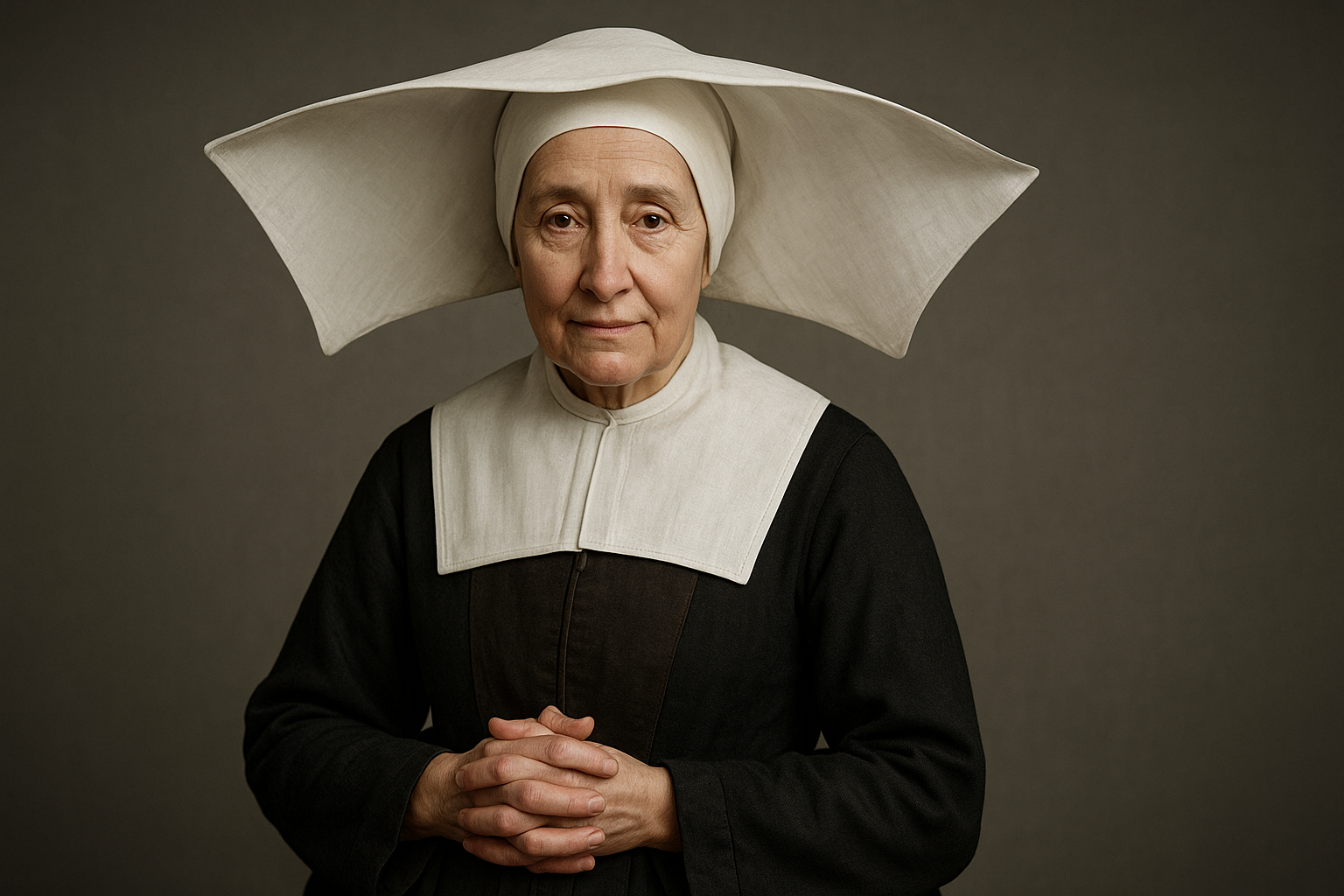
In the bustling, often challenging world of 17th-century France, a woman named Louise de Marillac emerged as a beacon of compassion and practical charity. Born into a privileged family, she nevertheless encountered profound personal struggles and societal injustices that shaped her remarkable journey. Her life, marked by deep faith and an unwavering commitment to serving the poor and sick, led her to co-found one of the most influential religious congregations in history: the Daughters of Charity. This article will explore St. Louise de Marillac’s early life, her pivotal partnership with St. Vincent de Paul, her enduring spiritual legacy, and how her example continues to inspire countless individuals to live lives of humble, active service today.
Quick Facts
| Category | Detail |
|---|---|
| Birth | August 12, 1591, in Ferrières-en-Brie, France |
| Death | March 15, 1660, in Paris, France |
| Feast Day | May 9 (formerly March 15) |
| Patronage | Social workers, sick people, widows, those who have lost parents, Daughters of Charity, St. Vincent de Paul Societies |
| Canonized | March 11, 1934, by Pope Pius XI |
Historical Context & Early Life
The France of St. Louise de Marillac’s time was a land of stark contrasts, a society grappling with both opulent grandeur and widespread destitution. The early 17th century saw the waning of the Wars of Religion, but new forms of social strife emerged. While the monarchy, particularly under Louis XIII and later Louis XIV, consolidated power and cultural influence, the vast majority of the population, especially in rural areas and the burgeoning cities, lived in dire poverty. Disease, famine, and lack of education were rampant. The Catholic Church, having undergone the reforms of the Council of Trent, was experiencing a revival of spirituality and a renewed emphasis on charity, with figures like St. Francis de Sales and St. Jane de Chantal promoting a vibrant, accessible holiness for all states of life.
It was into this complex world that Louise de Marillac was born on August 12, 1591, likely in Ferrières-en-Brie. Though her exact parentage is debated, it is clear she came from a noble family; her father, Louis de Marillac, Seigneur de Ferrières, acknowledged her and ensured she received an education far superior to most women of her era. She was educated at the royal monastery of Poissy, where her aunt was a Dominican nun. There, she learned Latin, philosophy, fine arts, and developed a deep love for God and a contemplative spirit. However, the early loss of her mother (likely at birth) and being placed in boarding schools created a deep sense of abandonment and insecurity that would challenge her throughout her life.
After leaving Poissy, Louise felt a strong pull towards religious life, specifically considering becoming a Capuchin nun. However, her spiritual director advised against it, perhaps due to her delicate health. Instead, at the age of 22, in 1613, she entered into an arranged marriage with Antoine Le Gras, a secretary to Queen Marie de’ Medici. The marriage, though initially difficult, blossomed into a loving partnership, and they had a son, Michel. Despite her domestic duties, Louise remained deeply prayerful, often engaging in penance and works of charity, even amidst her own struggles with chronic illness and persistent spiritual anxieties. Her early life laid the foundation for her future work, equipping her with administrative skills, a refined intellect, and a profound empathy born from personal suffering.
Calling & Key Milestones
The Light of Pentecost
Louise’s spiritual journey took a significant turn on Pentecost Sunday in 1623. For years, she had grappled with profound doubts and inner turmoil, questioning her faith, her marriage, and her calling. On this pivotal day, while praying in the Church of St. Nicholas des Champs in Paris, she experienced a powerful spiritual illumination. She later described it as a moment where her mind was “made free of all doubt” regarding her vocation, understanding that she would eventually serve God by working with a small community, possibly under the direction of someone she had yet to meet. This “Lumière de la Pentecôte” (Light of Pentecost) provided her with clarity, peace, and renewed direction, preparing her for the transformative encounter that was to come.
Meeting St. Vincent de Paul
Following her husband Antoine’s declining health and eventual death in 1625, Louise found herself a widow with a young son, her spiritual struggles resurfacing amidst her grief. Her confessor recommended she seek spiritual guidance from a priest named Vincent de Paul, who was already gaining renown for his organizational skills and tireless efforts to serve the poor. Vincent initially hesitated to take on Louise, recognizing her intellectual depth and intensity. However, their first meeting marked the beginning of a remarkable partnership. Vincent became her spiritual director, challenging her to move beyond her anxieties and intellectualizing, guiding her towards practical action and trusting in God’s providence.
The Confraternities of Charity
St. Vincent de Paul had already established “Confraternities of Charity” (Ladies of Charity) – groups of wealthy women who volunteered to care for the sick and poor in their parishes. While well-intentioned, these noble ladies often struggled with the daily realities of serving the suffering, finding the tasks messy or beneath their social standing. Vincent saw in Louise a woman with not only deep faith but also keen organizational skills, compassion, and a down-to-earth practicality. He entrusted her with the mission of visiting and organizing these confraternities, training the volunteers, and ensuring the care was consistent and dignified. This was Louise’s first major step into active, organized charity, and she excelled at it, bringing structure and warmth to the fledgling efforts.
Founding the Daughters of Charity
As Louise continued her work with the Confraternities, she recognized a crucial gap: the need for dedicated, full-time caregivers who were not cloistered nuns (bound to a monastery) but could move freely among the poor in the streets and homes. In 1633, St. Vincent de Paul and St. Louise de Marillac officially founded the “Company of the Daughters of Charity.” This was a revolutionary concept for its time. Unlike traditional nuns, the Daughters would live “in the world,” without habits or cloister, dedicated entirely to serving the “poorest of the poor.” Their “convent would be the sickroom, their chapel the parish church, their cloister the streets of the city, their grille the fear of God, and their veil modesty.”
Louise took on the primary role of forming and training these young women, many of whom were simple peasant girls. She taught them practical skills like nursing, cooking, and household management, but more importantly, she instilled in them a deep spiritual formation, emphasizing humility, gentleness, courage, and respect for every person they served. She was a demanding but loving superior, fostering a spirit of joyful, humble service. The first small group of four women gathered at Louise’s home, marking the humble beginning of an organization that would profoundly impact global healthcare and social work.
Expansion and Enduring Service
Under St. Louise’s indefatigable leadership, the Daughters of Charity quickly expanded their ministry. They cared for the sick in their homes, opened schools for girls, established orphanages, visited prisoners, and cared for the mentally ill. During the Thirty Years’ War and the Fronde civil wars, the Daughters bravely went to the front lines, tending to wounded soldiers and displaced civilians, demonstrating extraordinary courage and dedication. Louise oversaw the opening of numerous houses, wrote constitutions for the community, and tirelessly managed the growing needs of the sisters and those they served. Her administrative genius, combined with her deep spiritual insight, ensured the longevity and effectiveness of the Daughters of Charity, solidifying their place as pioneers of organized social service.
Spiritual Legacy & Theological Themes
St. Louise de Marillac’s spiritual legacy is characterized by a profound integration of contemplative prayer and active charity. Her life demonstrates that holiness is not merely found in grand gestures, but in consistent, humble service motivated by love for God and neighbor. She exemplified several core virtues:
- Practical Charity (Caritas): Louise understood that love for God must translate into concrete action for others. Her approach to charity was holistic, addressing not just physical needs but also spiritual and emotional suffering. She insisted on dignified care for the poor, recognizing Christ in each person. This aligns perfectly with scriptural teachings such as Matthew 25:40, “Truly I tell you, whatever you did for one of the least of these brothers and sisters of mine, you did for me.”
- Humility and Simplicity: Despite her noble background and intellectual prowess, Louise modeled profound humility. She taught the Daughters to serve without ostentation, to be simple in their manners, and to prioritize the needs of others over their own comfort. This echoes Philippians 2:3, “Do nothing out of selfish ambition or vain conceit. Rather, in humility value others above yourselves.”
- Perseverance in Suffering: Louise experienced chronic illness, personal loss, and deep spiritual struggles throughout her life. Yet, she persevered, using her suffering as a means of drawing closer to God and empathizing with the pain of others. Her resilience teaches us to trust in God’s plan even amidst adversity, reflecting Romans 5:3-4, “we also glory in our sufferings, because we know that suffering produces perseverance; perseverance, character; and character, hope.”
- Providence and Trust: Working with St. Vincent de Paul, Louise learned to place unwavering trust in Divine Providence. Often facing immense challenges and scarcity of resources, she relied on God to provide, reminding her sisters that their work was ultimately God’s work.
Her lasting influence on the Church is immense. The Daughters of Charity, celebrating nearly 400 years, continue to be a leading force in social work, healthcare, and education worldwide, serving in hospitals, schools, orphanages, and disaster relief zones. Louise’s vision profoundly shaped the understanding of consecrated life, demonstrating that active service “in the world” could be a path to holiness, not just cloistered contemplation. She is rightly honored as a co-founder alongside St. Vincent de Paul, her administrative genius and spiritual depth making the Daughters’ mission a sustainable reality. Her meticulous records, letters, and instructions provide a rich source of spiritual guidance, revealing her deep love for God and her commitment to fostering a vibrant, compassionate community of service.
Devotion Today
St. Louise de Marillac continues to be a revered figure in the Catholic Church and among those dedicated to social justice and healthcare. Her primary shrine is the Chapel of the Motherhouse of the Daughters of Charity, located at 140 Rue du Bac in Paris, France. Here, her incorrupt body lies alongside that of St. Vincent de Paul, drawing pilgrims from around the world who come to pray, reflect, and seek her intercession. This chapel is a place of profound spiritual significance, serving as a reminder of the origins of the Vincentian charism and the enduring legacy of active charity.
Beyond this central shrine, St. Louise is honored in countless ways globally. Many hospitals, schools, and social service organizations are named after her, particularly those founded and staffed by the Daughters of Charity and other Vincentian congregations. Her feast day on May 9th (moved from March 15th to avoid Lent) is celebrated with special Masses and events within the Daughters of Charity and the wider Vincentian family. Her teachings and writings are still studied and applied by social workers, nurses, and charitable organizations seeking to emulate her holistic approach to care. Furthermore, she is often invoked as a patron saint for those suffering from chronic illness, widows, those who have lost parents, and social workers, reflecting the various aspects of her own life and ministry.
Reflections for Modern Readers
St. Louise de Marillac’s life, though lived centuries ago, offers profound and actionable lessons for us in the 21st century:
- Serve with Humility, See Christ in Others: Louise taught her sisters to serve the poor “as masters, not servants.” In our busy, often hierarchical world, this means approaching every person, especially those in need, with genuine respect and recognizing their inherent dignity, understanding that in serving them, we serve Christ himself. This could mean actively listening to a homeless person, volunteering at a food bank with genuine empathy, or advocating for the rights of marginalized communities not as a superior offering aid, but as an equal sharing love.
- Persevere Through Personal Struggles: Louise grappled with chronic illness, anxiety, and profound loss. Her journey reminds us that faith does not remove suffering, but equips us to navigate it with grace and purpose. When facing our own health challenges, career setbacks, or personal disappointments, we can draw inspiration from her resilience, trusting that even in weakness, God can work wonders.
- Combine Prayer with Action: Louise was a woman of deep prayer, yet her prayer always led to practical action. For modern readers, this is a call to integrate our spiritual lives with our daily responsibilities. Whether through personal prayer, Mass, or spiritual reading, let our faith fuel our work, our relationships, and our efforts to make the world a better place, rather than seeing them as separate spheres.
- Embrace a “Calling in the World”: The Daughters of Charity revolutionized consecrated life by serving outside the cloister. For laypeople today, this affirms that one’s profession, family life, or daily interactions are sacred spaces for living out one’s faith. We don’t need to join a religious order to live a life of profound service; our homes, workplaces, and communities are the “cloisters” where we can embody Christ’s love.
- Organize for Greater Impact: Louise was a brilliant organizer and administrator. While individual acts of kindness are vital, she shows us the power of structured, collaborative efforts to address systemic problems. This lesson encourages us to not only give charitably but also to support or create organizations that provide sustainable, well-managed care for those in need, amplifying our impact.
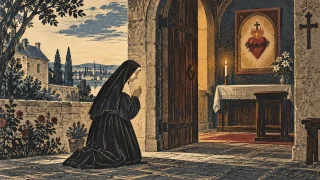
In art and jewelry, St. Louise de Marillac is most commonly depicted wearing the traditional cornette, a wide, winged white head covering that was part of the Daughters of Charity habit until the mid-20th century. This cornette has become her signature symbol, representing her order’s distinctive approach to active service. She is often shown holding a sick child, a basket of food, or a small crucifix, symbolizing her patronage of the sick, her works of mercy, and her deep faith. Sometimes, she is seen with a scroll or book, representing her intellectual gifts and her role in writing the rules for the Daughters. These symbols visually communicate her life’s mission: humble, compassionate, and organized service to the most vulnerable members of society.
Timeline Summary
- 1591: Born in Ferrières-en-Brie, France, on August 12.
- c. 1599-1611: Educated at the royal monastery of Poissy.
- 1613: Marries Antoine Le Gras.
- 1614: Son, Michel, is born.
- 1623: Experiences the “Light of Pentecost,” clarifying her vocation.
- 1625: Antoine Le Gras dies; Louise becomes a widow.
- 1625: Meets St. Vincent de Paul, who becomes her spiritual director.
- 1629: Begins visiting and organizing the Confraternities of Charity at St. Vincent’s request.
- 1633: Co-founds the Company of the Daughters of Charity with St. Vincent de Paul on November 25.
- 1634: First sisters gather at her home for formation.
- 1636: Begins to send Daughters of Charity to various missions.
- 1641: Daughters of Charity begin ministry in hospitals.
- 1646: Daughters of Charity begin care for foundlings (abandoned children).
- 1655: The Company of the Daughters of Charity receives official recognition and approbation by the Archbishop of Paris and papal approval.
- 1660: Dies in Paris, France, on March 15.
- 1920: Beatified by Pope Benedict XV.
- 1934: Canonized by Pope Pius XI on March 11.
- 1960: Declared Patroness of Christian Social Workers by Pope John XXIII.
Scripture for Reflection
St. Louise de Marillac’s life vividly reflects the Gospel call to active charity and humble service. Several Scripture passages illuminate her core virtues:
Matthew 25:34-40 (The Judgment of the Nations):
“Then the King will say to those on his right, ‘Come, you who are blessed by my Father; take your inheritance, the kingdom prepared for you since the creation of the world. For I was hungry and you gave me something to eat, I was thirsty and you gave me something to drink, I was a stranger and you invited me in, I needed clothes and you clothed me, I was sick and you looked after me, I was in prison and you came to visit me.’ Then the righteous will answer him, ‘Lord, when did we see you hungry and feed you, or thirsty and give you something to drink? When did we see you a stranger and invite you in, or needing clothes and clothe you? When did we see you sick or in prison and go to visit you?’ The King will reply, ‘Truly I tell you, whatever you did for one of the least of these brothers and sisters of mine, you did for me.’”
This passage perfectly encapsulates Louise’s mission and that of the Daughters of Charity. Her entire life was dedicated to seeing and serving Christ in the “least of these” – the sick, the poor, the orphaned, and the marginalized. She taught her sisters that their service was not merely an act of kindness but a direct encounter with Jesus.
Philippians 2:3-4 (Humility and Selflessness):
“Do nothing out of selfish ambition or vain conceit. Rather, in humility value others above yourselves, not looking to your own interests but each of you to the interests of the others.”
Humility was a cornerstone of Louise’s spiritual formation and a virtue she instilled deeply in the Daughters. She emphasized that their service should be without expectation of reward or recognition, always prioritizing the needs and dignity of those they served above their own.
James 2:17 (Faith and Works):
“In the same way, faith by itself, if it is not accompanied by action, is dead.”
Louise de Marillac was a living testament to the truth that faith must be lived out through action. Her profound interior life of prayer was inseparable from her tireless external works of charity. She showed that authentic faith blossoms into tangible love for one’s neighbor, making her an exemplary model of “faith working through love” (Galatians 5:6).
Prayers to St. Louise de Marillac
Prayer for St. Louise de Marillac’s Intercession
O glorious St. Louise, who, born to a noble station, embraced a life of humble service to the poor and suffering, we turn to you for guidance and intercession. You encountered profound personal struggles and societal injustices, yet you found your deepest joy in serving Christ in the “least of these.”
Inspire us, we pray, to cultivate a heart of compassion and practical charity, seeing the face of Jesus in every person we meet, especially those who are marginalized, sick, or neglected. Teach us to combine a fervent interior life of prayer with an active commitment to works of mercy, just as you did with St. Vincent de Paul.
Help us, through your powerful intercession, to persevere through our own difficulties and anxieties, trusting always in God’s loving providence. Guide social workers, nurses, and all who dedicate their lives to serving others, that they may carry out their mission with your characteristic gentleness, courage, and unwavering dedication.
St. Louise de Marillac, patroness of social workers and the sick, pray for us and help us to live lives that truly reflect the boundless love of God. Amen.