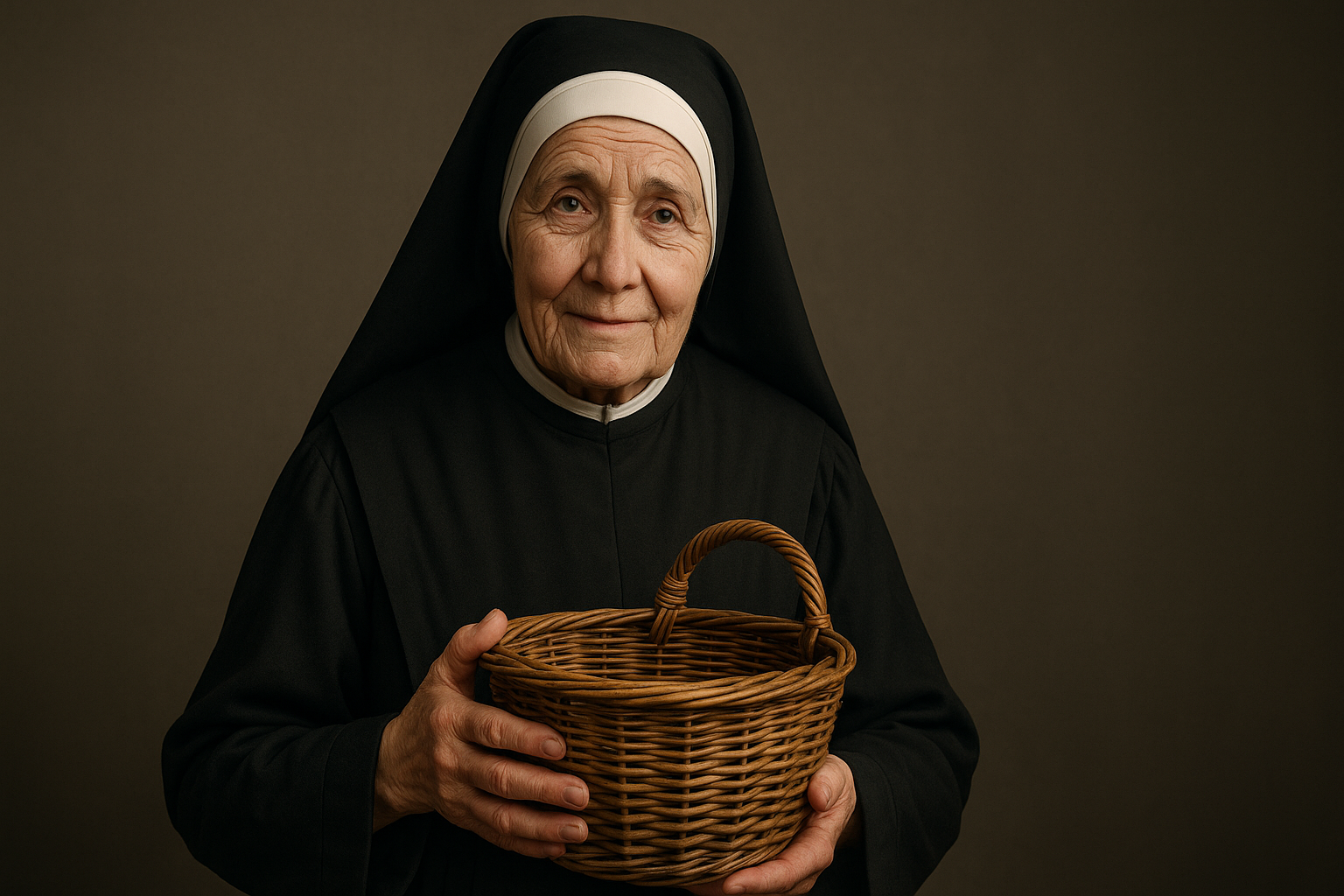
In the tapestry of Catholic saints, some figures shine with extraordinary brilliance, their lives a beacon of divine grace. St. Jeanne Jugan, also known as St. Mary of the Cross, is one such luminous soul. Her story is not one of grand theological debates or dramatic miracles, but of profound humility, unwavering trust in God’s providence, and boundless compassion for the most vulnerable among us: the elderly poor. Born into a world reeling from the French Revolution, Jeanne’s simple yet heroic commitment to loving her neighbor sparked a worldwide movement, the Little Sisters of the Poor, that continues to serve millions today. This article will explore her humble beginnings, the challenges she faced in founding her order, her enduring spiritual legacy, and how her life continues to inspire devotion and practical charity in our modern age.
Quick Facts
| Category | Detail |
|---|---|
| Birth | October 25, 1792, Cancale, France |
| Death | August 29, 1879, Saint-Servan, France |
| Feast Day | August 30 |
| Patronage | Elderly, those caring for the elderly, Little Sisters of the Poor |
| Canonized | October 11, 2009, by Pope Benedict XVI |
Historical Context & Early Life
To truly appreciate the life and work of St. Jeanne Jugan, it’s essential to understand the tumultuous era in which she lived. Born in 1792, just three years after the storming of the Bastille, Jeanne grew up in a France grappling with the profound aftershocks of the French Revolution. This period witnessed not only political upheaval but also immense social and economic disruption. The traditional support structures provided by the monarchy and the Church had been shattered, leaving countless people, particularly the elderly and infirm, without assistance.
Jeanne’s home region of Brittany, a rugged coastal area, was known for its deep Catholic faith, which had stubbornly resisted the anti-religious sentiments of the Revolution. Despite the official suppression of the Church, many families, including Jeanne’s, maintained their piety in secret. Jeanne’s own family faced considerable hardship; her father, a fisherman, was lost at sea when she was only four years old. Her widowed mother was left to raise four young children in extreme poverty, instilling in them a robust faith and a strong work ethic.
From a young age, Jeanne experienced the harsh realities of life for the working poor. She began working at sixteen as a kitchen maid for a wealthy family, later moving to a hospital as a nurse. These experiences exposed her directly to the suffering of the sick and elderly, igniting in her a nascent desire to serve God by caring for those most in need. She witnessed firsthand how elderly individuals, after a lifetime of labor, were often left to fend for themselves, without family, resources, or dignity. This formative period, marked by personal struggle and exposure to widespread societal pain, laid the groundwork for her extraordinary vocation. She spent years discerning her path, even contemplating joining a religious order, but felt a persistent inner prompting towards a unique form of service.
Calling & Key Milestones
The First Embrace: A Foundational Act of Charity
The turning point in Jeanne Jugan’s life, and the seed of what would become a worldwide congregation, occurred in the winter of 1839. Jeanne, then 47 years old, was living in a small, rented apartment in Saint-Servan, France, sharing it with two other pious women, Françoise Trébuchet and Virginie Tredaniel. One cold evening, a blind, paralyzed, and utterly destitute elderly woman named Anne Chauvin knocked on their door. Without hesitation, Jeanne offered Anne her own bed, while Jeanne herself slept in the attic. This simple act of profound charity was not merely an offering of shelter; it was an offering of dignity, compassion, and unconditional love. It was here, in this humble room, that the first “Little Sister of the Poor” began her work, seeing Christ in the face of the suffering elderly.
Soon after, another elderly woman, penniless and frail, joined their small household. The need was overwhelming, and word of Jeanne’s generosity spread. Young women, drawn by her example, began to join her, eager to share in her mission. They pooled their meager resources, but it was clear that a more sustainable model was needed to care for the growing number of elderly residents.
The “Quest”: Trusting in Divine Providence
With more mouths to feed and a larger house soon required, Jeanne instinctively turned to what she called “the Quest.” This involved going out into the town, basket in hand, knocking on doors and begging for food, clothing, and funds for her “grandparents,” as she affectionately called the elderly residents. This act of begging, often seen as humiliating, became a cornerstone of her spirituality and the unique charism of the Little Sisters of the Poor. It was a radical expression of trust in Divine Providence – a firm belief that God would provide for their needs through the generosity of others. Jeanne taught her companions that by humbling themselves and relying completely on God’s goodness, they were also offering others an opportunity to practice charity and share in their holy work. This practice continues to this day for the Little Sisters of the Poor.
Growth, Injustice, and Humility
The burgeoning community, initially called the Servants of the Poor, grew rapidly. By 1842, they had expanded to a larger house, and several young women had formally committed to the work. In 1843, a critical and painful event occurred that would define Jeanne’s spiritual journey for the rest of her life. The community’s first chaplain, Father Auguste Le Pailleur, who had initially supported their work, gradually began to exert control. Driven by what some historians believe was a desire for personal recognition or a misunderstanding of Jeanne’s foundational role, he systematically sidelined her. In 1843, he removed her from leadership entirely, appointing another sister, Marie Jamet, as Superior. For the next 36 years, until her death, Jeanne Jugan was forced into obscurity within the very congregation she founded. She was assigned various humble tasks – collecting provisions, working in the laundry, or gardening – and was largely kept out of sight, forbidden from even speaking about her role as foundress.
This period of profound injustice could have easily led to bitterness, despair, or rebellion. Instead, Jeanne embraced it with astonishing humility and obedience. She saw God’s will in her suffering, accepting her removal with quiet dignity, often repeating, “God alone suffices.” Her hidden life became her greatest sermon, demonstrating a radical detachment from worldly recognition and a deep identification with Christ’s own suffering and humility. She truly lived the paradox that to be first, one must be last. During these years, the Little Sisters of the Poor expanded rapidly, establishing homes across France and beyond, yet few outside the inner circle knew the true identity of their foundress.
A Life of Prayer and Peaceful Passing
Despite her enforced anonymity, Jeanne continued to inspire the sisters through her example of prayer, hard work, and profound love for the elderly. She spent countless hours in silent adoration before the Blessed Sacrament, drawing strength and solace from her intimate relationship with God. She died peacefully on August 29, 1879, in the motherhouse of the congregation in Saint-Servan, surrounded by the sisters who had eventually come to understand her true place in their history. It would be decades before the full truth of her foundational role was widely acknowledged by the Church and the world. Her beatification by Pope John Paul II in 1982 and her canonization by Pope Benedict XVI in 2009 finally brought her remarkable story of self-effacing love and trust to the forefront of the Church’s calendar of saints.
Spiritual Legacy & Theological Themes
St. Jeanne Jugan’s life is a profound testament to several core Christian virtues, deeply rooted in Scripture and Catholic teaching. Her spiritual legacy resonates powerfully today, offering a practical path to holiness for all believers.
At the heart of Jeanne’s spirituality was a radical form of humility. This wasn’t merely modesty, but a profound self-emptying, a willingness to be overlooked and even unjustly treated for the sake of God’s will. When she was removed from leadership, she didn’t protest or seek vindication; instead, she embraced her hidden life as a direct participation in Christ’s own humble obedience. This aligns perfectly with the theological concept of kenosis, Christ’s self-emptying (Philippians 2:6-8), and the call to take up one’s cross daily. Her life teaches that true greatness in God’s eyes often lies in silent service, without seeking worldly acclaim.
Secondly, Jeanne exemplified extraordinary trust in Divine Providence. Her “Quest” for the poor was not a fundraising strategy born of worldly wisdom, but an act of pure faith. She believed implicitly that if the work was God’s, He would provide for it. This theological theme is central to Catholic understanding of God’s active involvement in human affairs. It’s about letting go of anxiety and control, and leaning entirely on God’s unfailing care, echoing Jesus’ teachings about not worrying about tomorrow (Matthew 6:25-34).
Thirdly, her entire life was a living embodiment of Christian charity (agape). Jeanne saw Christ in every elderly, poor, and vulnerable person who came to her door. Her love was not sentimental but intensely practical – providing food, shelter, comfort, and above all, dignity. This directly reflects Jesus’ powerful teaching in Matthew 25:40: “Whatever you did for one of the least of these brothers and sisters of mine, you did for me.” Her compassion transformed not just individuals but society’s perception of the elderly, asserting their inherent worth and right to respectful care.
Finally, Jeanne’s life was a witness to the power of simple service and quiet perseverance. She didn’t write theological treatises or perform dramatic miracles in the traditional sense. Her miracle was the sustained, dedicated, day-in-and-day-out care for those whom society had forgotten. Her perseverance through decades of unjust obscurity speaks volumes about the enduring power of faith lived out in faithfulness to one’s calling, even when unacknowledged. Her influence on liturgy and devotion is primarily through the continued existence and work of the Little Sisters of the Poor, whose charism of hospitality and care for the elderly poor spreads her spirit globally. Though not an artist, her life is itself a work of art, inspiring countless others to a similar path of selfless love.
Devotion Today
The devotion to St. Jeanne Jugan today is vibrant and continues to grow, particularly among those involved in caring for the elderly and those who identify with her profound humility and trust in God’s providence. Her primary legacy, and indeed the focal point of modern devotion, is the enduring work of the Little Sisters of the Poor. This international religious congregation, founded on her charism, operates homes for the elderly poor in dozens of countries across five continents, embodying her spirit of hospitality, compassionate care, and reliance on God. Every sister and every home continues the “Quest” for their residents, living out Jeanne’s radical trust.
The motherhouse of the Little Sisters of the Poor in Saint-Servan, France (now part of Saint-Malo), serves as a significant pilgrimage site. Here, visitors can pray at the tomb of St. Jeanne Jugan, which is located in the chapel. Her preserved room and other artifacts from her life are also maintained, offering a tangible connection to her humble beginnings and her spiritual journey. Pilgrims often come seeking her intercession for the elderly, for caregivers, or for strength in facing personal challenges with humility and trust.
Her feast day, August 30, is celebrated annually by the Little Sisters of the Poor and by Catholics worldwide. This day is marked by special Masses, prayers, and reflections on her life and virtues. Many parishes and Catholic organizations that work with the elderly will hold specific events to honor her on or around her feast day.
St. Jeanne Jugan is also increasingly recognized as a patron saint for the elderly themselves, reminding them of their dignity and value, and for all those who dedicate their lives to caring for the aged, whether professionally or within their families. Her example encourages a holistic approach to care, one that prioritizes not just physical needs but also the spiritual and emotional well-being of the elderly. Numinous artifacts associated with her, such as relics, are treasured by the Little Sisters of the Poor and can be found in various homes and chapels, serving as a point of spiritual connection for the faithful.
Reflections for Modern Readers
St. Jeanne Jugan, though she lived in a different century, offers timeless wisdom and practical lessons for contemporary life. Her virtues provide a powerful blueprint for navigating the complexities of the 21st century with grace and purpose.
1. Embrace the Power of Humility: Jeanne’s life teaches us that true strength and influence often come not from seeking the spotlight or holding positions of power, but from humble service and a willingness to be last. In a world obsessed with personal branding and recognition, her example calls us to quiet acts of kindness. For instance, instead of always wanting credit for a successful team project at work, we can choose to highlight the contributions of others. Or, in personal relationships, practicing active listening and letting others lead or take the initiative can foster deeper connections than always needing to be in control.
2. Cultivate Trust in Divine Providence: Jeanne’s unwavering trust in God’s provision, even when resources were scarce, is a profound challenge to our anxiety-ridden culture. It invites us to release our grip on excessive control and worry, believing that God will provide what we need, often through unexpected channels. When facing financial uncertainty, instead of succumbing to panic, one might take a leap of faith, starting a new project with limited resources, trusting that necessary support will emerge. Or when a loved one is struggling, instead of feeling overwhelmed, we can trust in a higher power to guide us in offering the right kind of support, acknowledging our limits.
3. See Christ in the Vulnerable: Jeanne’s radical love for the elderly poor reminds us that our greatest calling is to care for the marginalized and overlooked. In a society that often values youth and productivity above all else, she refocuses our attention on the inherent dignity of every human being, especially those who are frail, sick, or alone. This could mean volunteering at a local nursing home, not just as a duty, but as an opportunity to truly connect with the residents. It could also inspire us to reach out to isolated neighbors, or to advocate for policies that support the dignity and care of senior citizens in our communities.
4. The Magnificence of Small Beginnings: Jeanne started with one elderly woman in her small apartment, a seemingly insignificant act. Yet, from this mustard seed of compassion grew a global congregation. This teaches us that we shouldn’t despise small beginnings or feel that our contributions are too minor to make a difference. Starting a small community garden, initiating a local book club focused on uplifting themes, or simply committing to daily acts of kindness within our family – these seemingly small actions can ripple outwards, creating significant positive change over time.
5. Persevere Through Adversity with Faith: Jeanne endured decades of unjust obscurity within her own order, yet she remained faithful, humble, and loving. Her life is a powerful testament to perseverance in the face of profound personal trials and injustice. When we face setbacks in our careers, misunderstandings in our relationships, or personal suffering, Jeanne’s example encourages us to maintain our faith, trust in God’s plan, and continue to serve with love, even when our efforts go unappreciated or are met with adversity. Her quiet resilience is a model for weathering life’s storms.
Symbols and Representations
In art and jewelry, St. Jeanne Jugan is often depicted with several meaningful symbols:
- Basket or Begging Bowl: This is perhaps her most recognizable symbol. It represents her profound trust in Divine Providence and the unique “Quest” for the poor that became a hallmark of the Little Sisters of the Poor. It reminds us of her humility in asking for alms and her faith that God would provide.
- Elderly Person: She is frequently shown ministering to or gently supporting an elderly man or woman. This symbolizes her central mission and her boundless love and care for the aged, whom she affectionately called her “grandparents.”
- Rosary: Often clutched in her hands or hanging from her waist, the rosary signifies her deep prayer life and her reliance on Mary, the Mother of God, for strength and guidance.
- Habit of the Little Sisters of the Poor: She is almost always depicted in the traditional habit of the congregation she founded, identifying her with her life’s work and spiritual family.
- Cross: Sometimes, a simple cross is present, particularly referencing her religious name, “Mary of the Cross,” which she took later in life. This symbolizes her identification with Christ’s suffering and her willingness to carry her own cross of humility and hiddenness.
Timeline Summary
- October 25, 1792: Born Marie Jugan in Cancale, Brittany, France.
- c. 1796: Her father, Joseph Jugan, is lost at sea, leaving her mother to raise four children in poverty.
- c. 1808-1810: Begins working as a kitchen maid for a wealthy family, then as a nurse in a hospital, gaining exposure to the suffering of the poor and sick.
- 1817-1837: Works various jobs, dedicates herself to prayer and service, discerns her vocation. Joins a lay Third Order.
- 1837: Moves to Saint-Servan and lives with Françoise Trébuchet and Virginie Tredaniel in a small apartment, forming a pious association.
- Winter 1839: Takes in Anne Chauvin, a blind, paralyzed, elderly woman, marking the foundational act of the Little Sisters of the Poor.
- 1840: Takes in a second elderly woman.
- 1841: Takes in a third elderly woman; several young women join her in caring for the poor. The community begins the “Quest” for alms.
- 1842: The community moves to a larger house. Jeanne is elected Superior by the sisters.
- 1843: Removed from leadership by Father Le Pailleur, the community’s first chaplain. Begins 36 years of hidden life within her own congregation.
- 1852: The Congregation of the Little Sisters of the Poor receives official imperial approval from the French government.
- 1854: The Constitutions of the Little Sisters of the Poor receive pontifical approval from Rome.
- August 29, 1879: Dies in obscurity at the motherhouse in Saint-Servan, her foundational role largely unknown outside the community.
- July 13, 1982: Declared Venerable by Pope John Paul II.
- October 3, 1982: Beatified by Pope John Paul II, formally recognizing her as “Blessed.”
- December 6, 2008: Pope Benedict XVI approves a second miracle attributed to her intercession, paving the way for canonization.
- October 11, 2009: Canonized as a saint by Pope Benedict XVI in Rome.
Scripture for Reflection
The life of St. Jeanne Jugan beautifully reflects several core Scriptural truths:
Matthew 25:34-40 (The Last Judgment): “Then the King will say to those on his right, ‘Come, you who are blessed by my Father; take your inheritance, the kingdom prepared for you since the creation of the world. For I was hungry and you gave me something to eat, I was thirsty and you gave me something to drink, I was a stranger and you invited me in, I needed clothes and you clothed me, I was sick and you looked after me, I was in prison and you came to visit me.’ Then the righteous will answer him, ‘Lord, when did we see you hungry and feed you, or thirsty and give you something to drink? When did we see you a stranger and invite you in, or needing clothes and clothe you? When did we see you sick or in prison and go to visit you?’ The King will reply, ‘Truly I tell you, whatever you did for one of the least of these brothers and sisters of mine, you did for me.'”
St. Jeanne Jugan’s entire life was a living commentary on this passage. She saw Christ in every elderly, poor, and vulnerable person she welcomed into her homes, dedicating herself completely to their care and dignity. She embodied the selfless love Jesus calls us to have for the “least of these.”
Philippians 2:3-8 (Humility of Christ): “Do nothing out of selfish ambition or vain conceit. Rather, in humility value others above yourselves, not looking to your own interests but each of you to the interests of the others. In your relationships with one another, have the same mindset as Christ Jesus: Who, being in very nature God, did not consider equality with God something to be used to his own advantage; rather, he emptied himself by taking the very nature of a servant, being made in human likeness. And being found in appearance as a man, he humbled himself by becoming obedient to death—even death on a cross!”
This passage profoundly illuminates Jeanne’s astonishing humility. When unjustly removed from leadership and forced into obscurity, she did not seek her own interests or advantage. Instead, she emptied herself, taking on the role of a hidden servant, mirroring Christ’s own self-emptying obedience. Her life teaches us the transformative power of genuine humility.
1 Peter 5:6-7 (Trust in God’s Care): “Humble yourselves, therefore, under God’s mighty hand, that he may lift you up in due time. Cast all your anxiety on him because he cares for you.”
Jeanne’s radical trust in Divine Providence, especially through the “Quest” for her elderly residents, is beautifully captured here. She humbled herself by relying entirely on God’s care, casting aside anxieties about providing for so many. Her life is a powerful witness to the truth that when we surrender our worries to God, He provides.
Prayers to St. Jeanne Jugan
Prayer for the Intercession of Saint Jeanne Jugan
O Saint Jeanne Jugan, in your profound humility and unwavering trust, you embraced the elderly poor, seeing in them the very face of Christ. You taught us that true wealth lies in acts of loving service and that God’s Providence never fails those who truly rely on Him. We humbly ask for your intercession for all the elderly, especially those who are alone, neglected, or in need. Inspire all caregivers with your compassion, patience, and tireless dedication. Help us to imitate your spirit of humility, that we too may generously serve the most vulnerable among us, recognizing their dignity and worth. May we, like you, cast all our anxieties upon God, trusting in His infinite goodness. Amen.
Prayer for Humility and Trust in God
Saint Jeanne Jugan, your life was a magnificent example of humility and unshakeable trust in God’s loving care. You accepted hardship, misunderstanding, and obscurity with a peaceful heart, always believing that God alone suffices. Grant us, through your intercession, the grace to grow in these virtues. Help us to let go of pride and self-importance, to serve others without seeking recognition, and to embrace the quiet moments of life where God’s presence is often most profoundly felt. May we learn to trust in Divine Providence in every circumstance, knowing that God will always provide for our needs and guide us on our path. Through Christ our Lord. Amen.