On Thursday, March 19, 2026, the somber violet of Lent will briefly be replaced by the festive red and gold of one of the Church’s greatest Solemnities: The Feast of St. Joseph, Spouse of the Blessed Virgin Mary.
While many Catholics know St. Joseph as the silent protector of the Holy Family, there is a loud, vibrant, and delicious tradition associated with his feast day that is seeing a massive resurgence in the United States: The St. Joseph’s Table (La Tavola di San Giuseppe).
Most online guides will just give you a recipe for Zeppole (cream puffs). But if you want to actually host a St. Joseph’s Table—whether for your parish hall or your dining room—you need a logistical roadmap. This guide covers the history, the specific altar construction, the “Lucky Bean,” and the liturgical rules for 2026.
First: The “Lent Question” (Can We Break the Fast?)
Before planning the menu, we must address the most common question Catholics Google every March: “Is my Lenten penance lifted on St. Joseph’s Day?”
The Answer is Yes.
Because St. Joseph’s Day is a Solemnity (the highest rank of feast day), the obligation to fast or abstain is lifted. Canon Law dictates that festive joy takes precedence over Lenten penance on Solemnities. If you gave up sweets, alcohol, or social media for Lent, you are permitted—and even encouraged—to partake on March 19th to honor St. Joseph.
However, there is a catch regarding the food…
The Tradition: Why is the Food Meatless?
Even though the Church allows you to eat meat on a Solemnity, a traditional St. Joseph’s Table is strictly meatless.
The History: The tradition originated in Sicily during the Middle Ages. A severe drought caused a massive famine. The people prayed to St. Joseph, promising that if he brought rain, they would prepare a massive feast to share with the poor. The rain came, the crops were saved, and the “Tavola” was born.
Because the famine occurred during Lent, and because meat was scarce for the poor, the feast has always featured fish, breads, vegetables, and pastries. It is a “Poor Man’s Feast.”
How to Build the Altar: A Step-by-Step Guide
A St. Joseph’s Table is not a buffet; it is a devotional altar. If you are setting this up in a parish hall or home, structure is everything. Here is the blueprint:
1. The Three Tiers
You cannot just use a flat table. You must use crates or boxes to create three distinct tiers, draped in white linen.
Symbolism: The three tiers represent the Holy Trinity. The ascent represents the journey from earth to heaven.
2. The Statue
A statue or icon of St. Joseph holding the Christ Child goes on the top tier. He is the guest of honor. Surrounded him with white lilies (his flower) and candles.
3. The Bread (Pane di San Giuseppe)
The bread is not just for eating; it is the primary decoration. It is a dense dough, glazed with egg wash and sesame seeds (representing the sawdust of the carpenter).
Must-Have Shapes:
- The Crown (Corona): Representing the glory of Christ.
- The Staff: St. Joseph’s blossoming staff.
- The Carpenter’s Tools: Hammers, saws, and ladders sculpted from dough.
- The Monstrance: Often placed near the top tier.
The Menu Checklist: What to Serve
If you are coordinating potluck sign-ups, ensure these specific symbolic items are covered:
- Mudica (The Sawdust): You will see pasta dishes (usually Pasta con Sarde or a marinara) topped not with cheese, but with toasted seasoned breadcrumbs. This represents the sawdust on the floor of Joseph’s carpentry shop.
- Fava Beans (The “Lucky Bean”): During the Sicilian famine, the fava bean was the only crop that survived. It is the centerpiece of the table. You should serve them in a stew, but also have dried, blessed fava beans to give away as tokens.
Tradition says: “Keep a fava bean in your pantry, and you will never starve.”
- Zeppole di San Giuseppe: The heavy hitters. These are fried dough pastries filled with custard and topped with a black cherry. (In some regions, Sfinge are served, which are filled with ricotta).
- Citrus and Fennel: Seasonal crops that mark the end of winter.
The Ritual: The “Tupa Tupa” (Knocking)
This is the part most blog posts miss, but it is the heart of the parish event.
You should select three people to portray the Holy Family (Jesus, Mary, and Joseph). Before the meal begins, they walk around the room (or the house) and knock on three doors (or three areas of the hall).
- First Knock: They ask for shelter. The host (or crowd) yells, “There is no room!”
- Second Knock: They ask for food. The crowd yells, “We have nothing!”
- Third Knock: They ask for St. Joseph’s protection. The host opens the “door” wide and says, “Enter, and share our table!”
The “Holy Family” eats first, followed by the guests.
The Charity Element (Crucial!)
You cannot have a St. Joseph’s Table without almsgiving. It contradicts the entire history of the event.
For Parishes: The food on the altar is blessed by a priest. Often, the fancy shaped breads and pastries are sold/auctioned after the meal, with 100% of proceeds going to a local food pantry or soup kitchen.
For Families: If you host a dinner, ask every guest to bring a non-perishable food item to donate to the poor.
Printable Prayer for the Blessing of the Table
(Print this out for your pastor or the head of the household to read before eating)
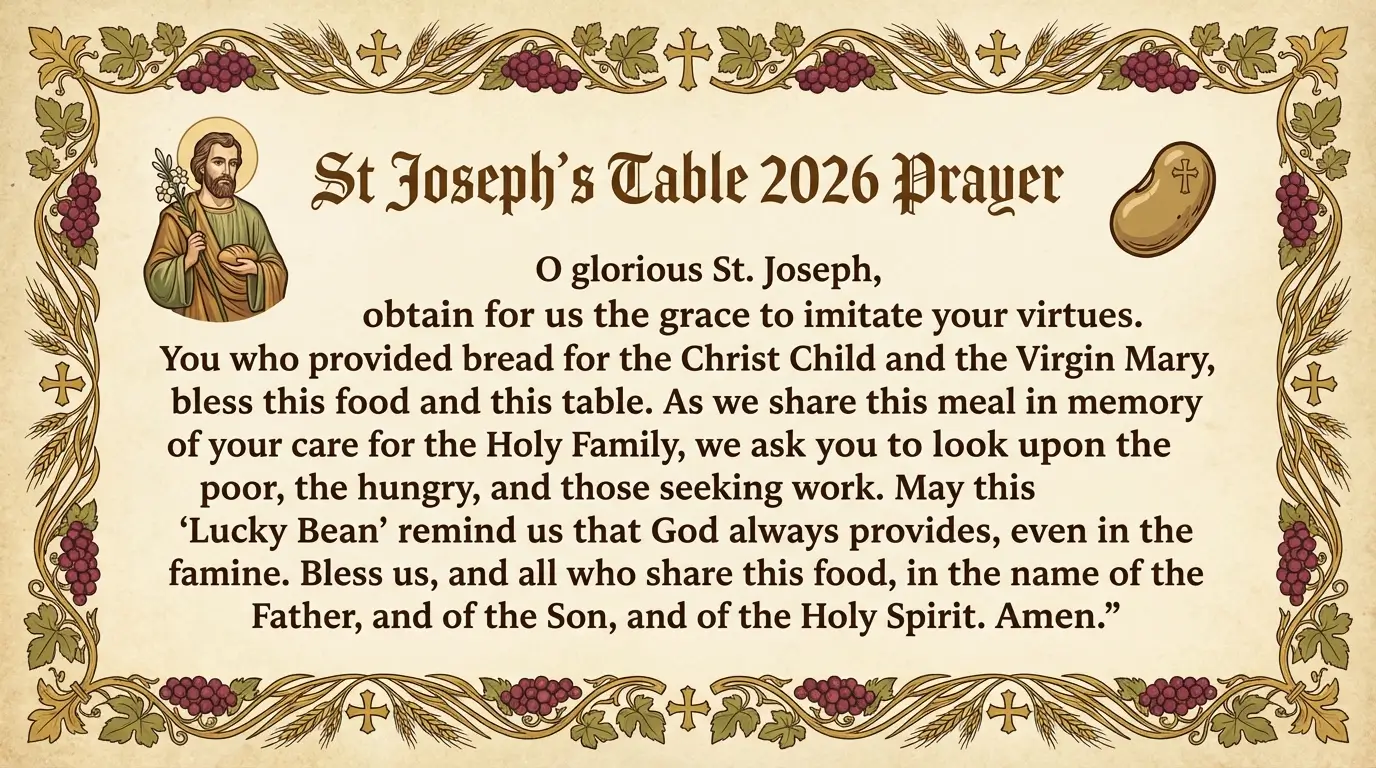
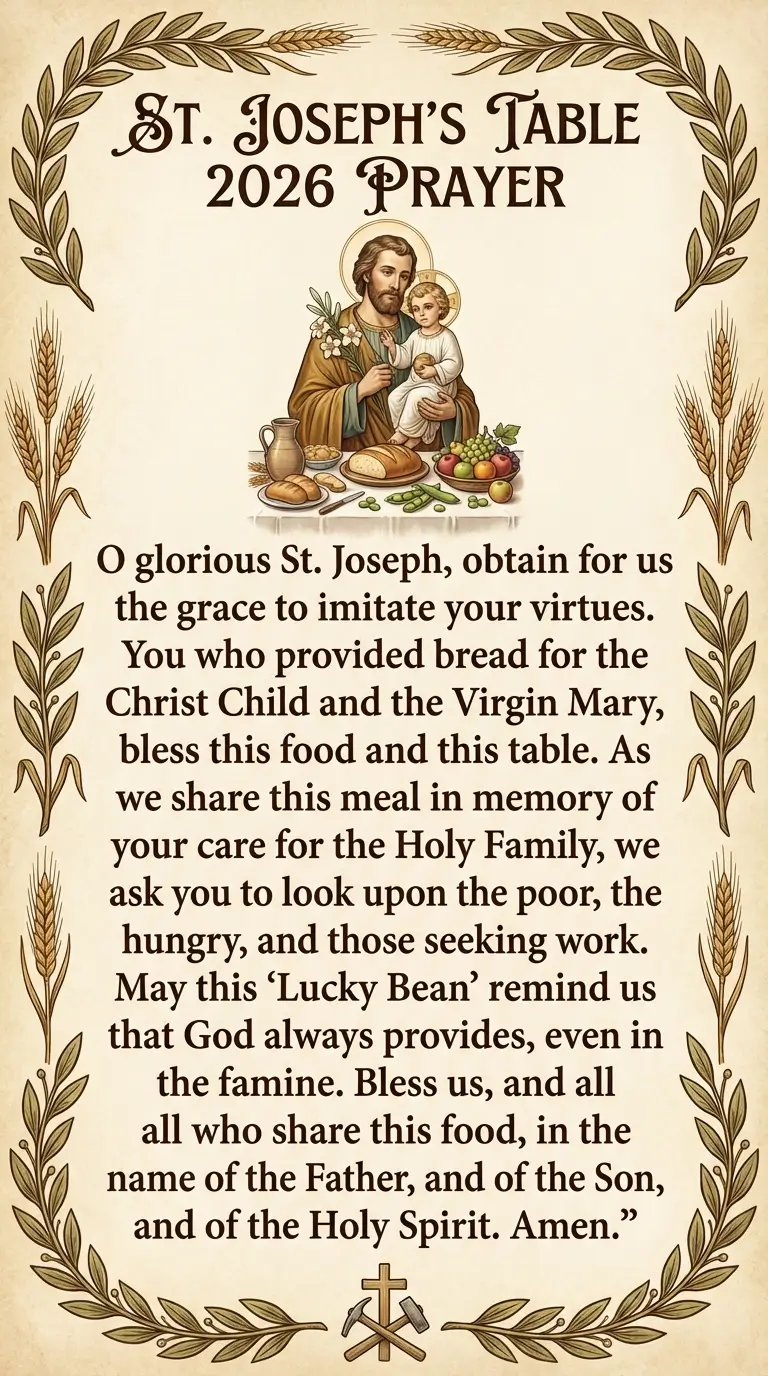
“O glorious St. Joseph, obtain for us the grace to imitate your virtues. You who provided bread for the Christ Child and the Virgin Mary, bless this food and this table.
As we share this meal in memory of your care for the Holy Family, we ask you to look upon the poor, the hungry, and those seeking work. May this ‘Lucky Bean’ remind us that God always provides, even in the famine.
Bless us, and all who share this food, in the name of the Father, and of the Son, and of the Holy Spirit. Amen.”
Planning Timeline for March 19, 2026
- Feb 19 (1 Month Out): Secure the hall and the “Baker’s Committee” (the breads take skill!). Order Fava beans online if you can’t find them locally.
- March 10 (Novena Begins): Start the Novena to St. Joseph.
- March 18 (St. Joseph’s Eve): Set up the three-tiered altar. Place the statue and the dry breads/decorations.
- March 19 (Feast Day): Priest blesses the table before dinner. Eat, celebrate, and distribute the blessed bread/beans to take home.
Looking for a St. Joseph’s Table near you? Find your local Italian parish in your area.