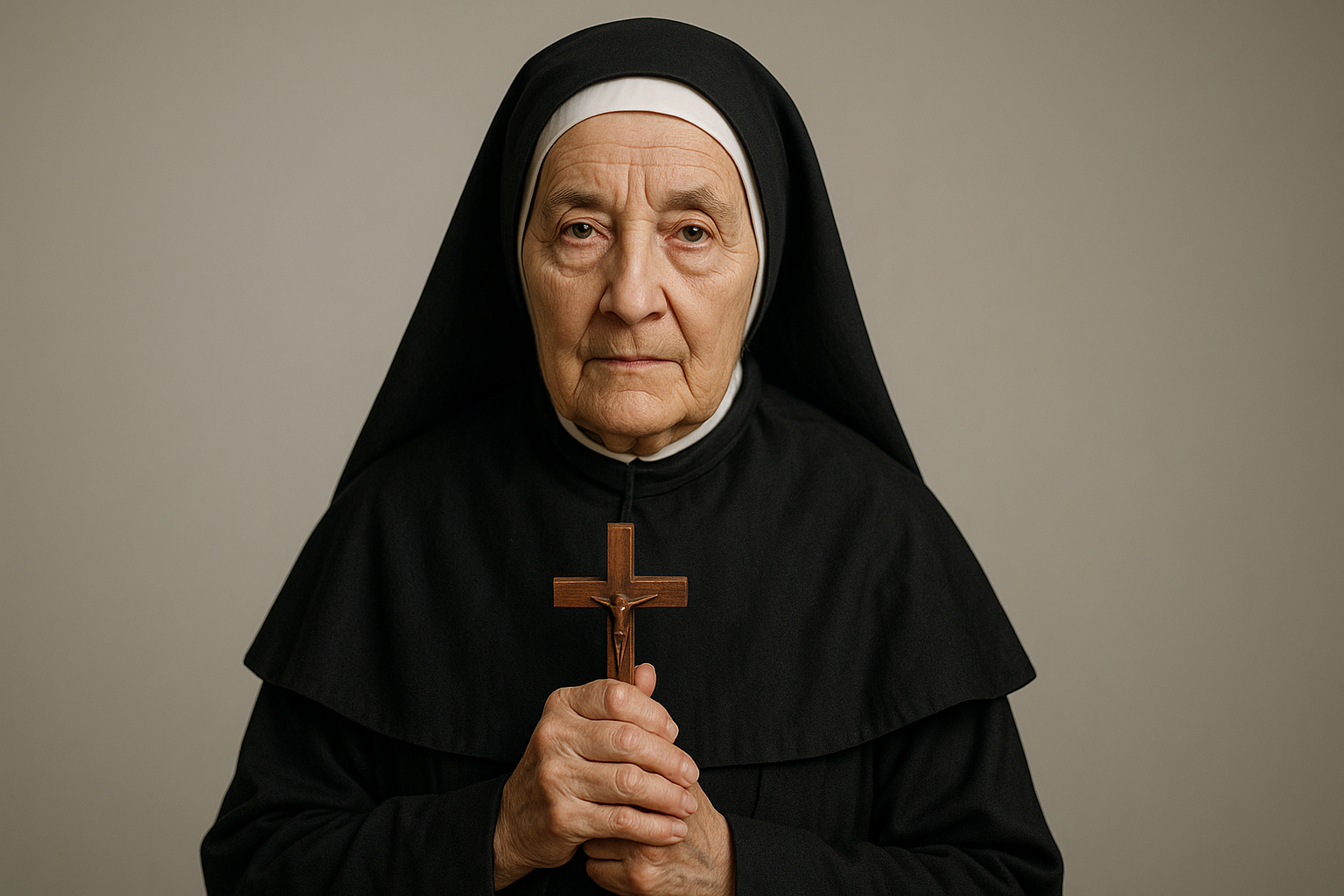
In the vast tapestry of Catholic saints, some figures stand out for their extraordinary courage, unwavering faith, and pioneering spirit. One such remarkable woman is St. Rose Philippine Duchesne, a French nun who journeyed across an ocean to bring education, compassion, and the love of God to the American frontier. Her life story is a testament to perseverance, sacrifice, and a deep missionary zeal that continues to inspire believers today. This article will delve into her early life, her pivotal role in establishing Catholic education in the fledgling United States, her profound spiritual legacy, and how her example resonates with us in the modern world.
Quick Facts
| Category | Detail |
|---|---|
| Birth | August 29, 1769, Grenoble, France |
| Death | November 18, 1852, St. Charles, Missouri, USA |
| Feast Day | November 18 |
| Patronage | Pioneers, courage in the face of adversity, Native Americans, orphans, Diocese of Springfield-Cape Girardeau |
| Canonized | July 3, 1988, by Pope John Paul II |
Historical Context & Early Life
To understand the remarkable journey of St. Rose Philippine Duchesne, we must first appreciate the turbulent world into which she was born. Her story begins in late 18th-century France, a time of profound societal upheaval. Born on August 29, 1769, in Grenoble, she grew up amidst the intellectual ferment that would soon ignite the French Revolution. Her family was wealthy and influential, prominent in both business and politics. Her father, Pierre-François Duchesne, was a respected lawyer, and her mother, Rose Perier, came from a family of successful merchants. Young Sophie, as she was known, had access to a good education and a comfortable life, but her heart yearned for something beyond worldly success.
The Duchesne family, while somewhat influenced by the Enlightenment, maintained strong Catholic ties. Sophie was deeply devout from a young age, demonstrating a profound spiritual sensitivity. She was particularly drawn to stories of missionaries and harbored a secret dream of serving God in far-off lands. At the age of 18, defying her family’s wishes, she entered the Visitation of Holy Mary convent in Grenoble. This was a pivotal decision, marking her first step away from worldly comforts and towards a life dedicated wholly to Christ. However, this period of peace and spiritual growth was dramatically interrupted by the escalating violence of the French Revolution, which sought to dismantle the Church and traditional institutions. Convents were closed, religious orders suppressed, and nuns, including Sophie, were forced back into secular life. For ten years, she lived under scrutiny, attempting to keep her spiritual life alive amidst persecution, even discreetly offering refuge to priests. This intense period of trial forged in her a formidable resilience and an even deeper reliance on God’s Providence, preparing her for the extraordinary challenges she would later face.
Calling & Key Milestones
Early Vocation and Challenges
From a very young age, Rose Philippine felt an intense calling to religious life and a profound desire to serve as a missionary. Her entry into the Visitation convent in Grenoble in 1788 was a courageous act of obedience to this call, despite her family’s resistance. She found joy and spiritual growth there, but this peace was short-lived. The French Revolution’s fervor against the Church led to the convent’s closure in 1792, scattering the community. For the next decade, Sophie lived with her family, but her heart remained committed to her vows. She secretly continued to practice her faith, even converting a part of her family’s estate into a makeshift chapel and attempting, unsuccessfully, to revive the Visitation order in the dilapidated convent buildings after the Revolution subsided.
Joining the Society of the Sacred Heart
Her path took a decisive turn in 1801 when she met St. Madeleine Sophie Barat, the young foundress of the Society of the Sacred Heart. Madeleine Sophie Barat was building a new order focused on the education of girls, embodying devotion to the Sacred Heart of Jesus. Philippine Duchesne, recognizing a shared spiritual vision and a structured way to realize her missionary dreams, joined the nascent Society in 1804. She brought with her a small group of former Visitation sisters and her own profound spiritual zeal, becoming an integral part of the Society’s early growth. She served in various leadership roles within the Society in France, but her childhood dream of serving Native Americans in distant lands never faded.
Mission to America
Philippine Duchesne’s lifelong aspiration finally came to fruition when Bishop Louis William Dubourg of Louisiana requested nuns to establish schools in his vast and burgeoning diocese, which then included the entire American Midwest. Despite being 49 years old, past the customary age for such arduous missions, and having faced skepticism about her suitability for the rugged frontier life, her unwavering determination shone through. In 1818, she embarked on a perilous 70-day voyage across the Atlantic with four other nuns. Their destination was St. Louis, Missouri, a rapidly expanding settlement on the edge of the American wilderness. This journey marked the culmination of years of prayer and longing, and the beginning of her profound impact on the New World.
Founding the First Free School West of the Mississippi
Upon their arrival in St. Louis, the sisters faced immediate challenges. Bishop Dubourg directed them to St. Charles, a small, struggling frontier town where they found a dilapidated log cabin for their convent. Undeterred, St. Rose Philippine Duchesne, with her companions, opened the Academy of the Sacred Heart, the first free school for girls west of the Mississippi River, in September 1818. This was a monumental achievement, establishing Catholic education in a wild, uncultured land. Life was incredibly hard: poverty, harsh winters, primitive living conditions, and cultural adjustments tested their resolve daily. Philippine struggled with the English language, a source of frustration, but her deep prayer life sustained her through all adversities. The school provided education to girls from diverse backgrounds, including French, American, and Native American children, embodying the Society’s commitment to holistic formation.
Ministry to Native Americans
From her earliest years, Philippine had nourished a deep desire to serve Native American peoples. This dream, though often deferred, remained a burning flame in her heart. At the age of 72, after decades of dedicated service in various Sacred Heart foundations, her opportunity finally arrived. In 1841, she traveled to Sugar Creek, Kansas, to establish a school for the Potawatomi Nation. Despite her age and frail health, she endured the hardships of frontier life, the language barrier, and the cultural differences with remarkable patience and love. Though she struggled to learn their language, her quiet presence and deep prayerfulness deeply impressed the Potawatomi. They affectionately called her “Quahkahkanumad” – “The Woman Who Prays Always,” or “Quaking Mother” because of her constant prayer and, perhaps, her slight tremor from age. She could not teach them much by word, but she taught them profoundly by example, through her boundless compassion and her silent, unwavering devotion.
Later Years and Return to St. Charles
After a year of profound yet challenging ministry among the Potawatomi, St. Rose Philippine Duchesne’s health declined further, and she was reluctantly recalled to St. Charles in 1842. She spent her final decade living a life of quiet prayer and contemplation, often in the very first convent building. Though her active missionary work had ceased, her spiritual influence continued to be immense, serving as a beacon of faith for the younger sisters. She died peacefully on November 18, 1852, at the age of 83, having dedicated her entire life to God’s service and the expansion of His Kingdom on earth. Her legacy as a pioneer of education and an apostle of the Sacred Heart in America was firmly established.
Spiritual Legacy & Theological Themes
The spiritual legacy of St. Rose Philippine Duchesne is rich and multifaceted, offering profound insights into Christian virtue and missionary discipleship. At her core, she exemplified an extraordinary level of **perseverance and unwavering trust in Divine Providence**. Despite immense challenges—the French Revolution, the arduous journey to America, the harsh realities of frontier life, and personal struggles with language and leadership—she never lost faith in God’s plan. This deep trust aligns perfectly with Scriptural teachings such as Proverbs 3:5-6, “Trust in the Lord with all your heart, and do not lean on your own understanding. In all your ways acknowledge him, and he will make straight your paths.” Her life demonstrates that true faith means forging ahead even when the path is unclear.
Her **zeal for souls and missionary spirit** were truly remarkable. From a young age, she harbored a fervent desire to bring Christ to those who had not heard of Him, especially the Native Americans. This zeal is a direct reflection of the Great Commission given by Jesus in Matthew 28:19-20, “Go therefore and make disciples of all nations, baptizing them in the name of the Father and of the Son and of the Holy Spirit.” Her life was a living embodiment of this command, showing that the call to evangelize is not just for a select few, but for all who are willing to sacrifice for the Gospel.
St. Rose Philippine Duchesne also lived a life of profound **self-sacrifice and humility**. She willingly relinquished the comforts of her wealthy French upbringing for the privations of the American frontier. Her greatest desire was often to be hidden, serving God in obscurity, yet she accepted leadership roles out of obedience. Her deep personal prayer life, particularly her hours spent in adoration before the Blessed Sacrament, nourished her humility and strength. She taught through example, showing that true spiritual power comes not from worldly acclaim but from a deep, abiding relationship with Christ, lived out in quiet service. Her constant devotion to the Sacred Heart of Jesus underscored her spirituality, emphasizing God’s boundless love and mercy, a theme central to Catholic teaching.
Her lasting influence on the Church is particularly evident in the realm of **education**. She was a pioneer, establishing the first free school for girls west of the Mississippi, laying the groundwork for countless Catholic educational institutions that followed. This work was not merely about academic instruction, but about the holistic formation of young women in faith, virtue, and intellect, reflecting the Society of the Sacred Heart’s charism. Her dedication to serving marginalized communities, especially the Native Americans, also highlights her commitment to social justice and the dignity of every person, a core tenet of Catholic social teaching. St. Rose Philippine Duchesne’s life continues to inspire devotion, particularly among those involved in education and missionary work, reminding us of the transformative power of a life lived for Christ.
Devotion Today
The legacy of St. Rose Philippine Duchesne continues to inspire devotion and pilgrimage in the United States, particularly in the Midwest where she labored so tirelessly. The primary center of devotion is the **Shrine of St. Rose Philippine Duchesne** located at the Academy of the Sacred Heart in St. Charles, Missouri. This is the very site where she established the first free school for girls west of the Mississippi River and where her mortal remains are interred. Pilgrims from across the country and around the world visit the shrine to pray, reflect, and seek her intercession. The original convent building and chapel, where she spent many hours in prayer, are preserved, offering a tangible connection to her remarkable life.
Her feast day, November 18, is celebrated annually, especially in the dioceses and communities associated with her work and the Society of the Sacred Heart. Schools and institutions named in her honor, particularly those of the Sacred Heart network, hold special Masses and events to commemorate her life and virtues. Her story is frequently shared in Catholic schools and catechetical programs as an example of missionary zeal, perseverance, and dedication to education. Many individuals also engage in private devotion, seeking her intercession for courage, patience in difficulties, and a deepened commitment to prayer and service, especially for those working with indigenous peoples or in challenging missionary territories.
Reflections for Modern Readers
St. Rose Philippine Duchesne’s life, though lived in a vastly different era, offers powerful and actionable lessons for us in the 21st century. Her journey across an ocean and into the wilderness of America wasn’t just a physical move; it was a profound spiritual leap. Here are a few reflections to consider:
-
Embrace the Missionary Spirit in Your Own Backyard: While most of us won’t cross an ocean to evangelize, St. Rose Philippine reminds us that the missionary spirit begins with an openness to serve wherever we are. Actionable takeaway: Look for opportunities to share your faith, offer compassion, or educate others about Christ in your daily life, whether it’s through volunteering, mentoring, or simply being a joyful witness at your workplace or school. For example, a student might choose to tutor a classmate struggling with academics, embodying the saint’s dedication to education, or a family might commit to acts of charity in their local community.
-
Persevere Through Discouragement with Deep Faith: St. Rose Philippine faced incredible hardships—poverty, language barriers, illness, and the sheer difficulty of frontier life. Yet, she never gave up. Actionable takeaway: When you encounter obstacles or feel overwhelmed, remember her unwavering trust in God. Instead of giving in to despair, turn to prayer and ask for the grace of perseverance. A young professional facing a daunting project or a parent juggling multiple responsibilities can draw strength from her example, remembering that God provides the strength for every challenge.
-
Seek God in Silence and Solitude: Known as “The Woman Who Prays Always” by the Potawatomi, her deep spiritual life was the source of her strength. She spent hours in adoration. Actionable takeaway: In our noisy, fast-paced world, make intentional time for quiet prayer and reflection. Even short periods of silent meditation or adoration can recharge your spirit and help you discern God’s will. Take five minutes each morning to pray before starting your day, or dedicate a half-hour each week to quiet contemplation, much like she would in her simple chapel.
-
Serve the Marginalized with Compassion: Her profound desire to serve Native Americans, even in her old age, highlights her commitment to those on the fringes of society. Actionable takeaway: Seek out opportunities to serve those who are often overlooked or marginalized in your own community. This could mean volunteering at a homeless shelter, visiting the elderly, or advocating for those without a voice. Her life shows us that every act of love, no matter how small, has immense value in God’s eyes.
In art and jewelry, St. Rose Philippine Duchesne is often depicted with symbols that reflect her life and mission. You might see her holding a **crucifix or a rosary**, symbolizing her deep prayer life and devotion. A **log cabin** or a **simple frontier schoolhouse** often appears in the background, representing her pioneering efforts in establishing education in the American wilderness. Sometimes, she is shown wearing the habit of the Society of the Sacred Heart. Occasionally, she might be depicted with **Native American children or people**, signifying her lifelong dream and actual ministry among the Potawatomi. A **ship** can also be a symbol, representing her arduous journey across the Atlantic. These symbols remind us of her unwavering faith, her spirit of sacrifice, and her dedication to education and missionary work.
Timeline Summary
- 1769: Born August 29 in Grenoble, France.
- 1788: Enters the Visitation of Holy Mary convent.
- 1792: French Revolution forces her out of the convent.
- 1801: Meets St. Madeleine Sophie Barat.
- 1804: Joins the newly founded Society of the Sacred Heart.
- 1818: Leads a group of nuns to the United States, arriving in St. Louis; establishes the first Sacred Heart convent and school in St. Charles, Missouri.
- 1820: Establishes a second Sacred Heart school in Florissant, Missouri.
- 1841: At age 72, travels to Sugar Creek, Kansas, to open a school for Potawatomi children.
- 1842: Returns to St. Charles due to declining health.
- 1852: Dies on November 18 in St. Charles, Missouri.
- 1940: Beatified by Pope Pius XII.
- 1988: Canonized by Pope John Paul II.
Scripture for Reflection
St. Rose Philippine Duchesne’s life beautifully illustrates several core Scriptural themes. Her incredible perseverance and missionary zeal resonate strongly with these passages:
Matthew 28:19-20 (The Great Commission): “Go therefore and make disciples of all nations, baptizing them in the name of the Father and of the Son and of the Holy Spirit, teaching them to observe all that I have commanded you. And behold, I am with you always, to the end of the age.”
This passage directly speaks to St. Rose Philippine’s lifelong dream and ultimate fulfillment of bringing the Gospel and Catholic education to new lands and new peoples. It underscores the divine mandate behind her arduous journey and pioneering work.
Philippians 4:13: “I can do all things through Christ who strengthens me.”
Faced with overwhelming challenges—from political upheaval in France to the harsh realities of the American frontier, language barriers, and old age—St. Rose Philippine Duchesne consistently relied on Christ’s strength. This verse captures the essence of her unwavering faith and resilience in the face of adversity, reminding us that with God, all things are possible.
Proverbs 3:5-6: “Trust in the Lord with all your heart, and do not lean on your own understanding. In all your ways acknowledge him, and he will make straight your paths.”
Her life was a testament to profound trust in Divine Providence. She often faced uncertainty and opposition, yet her heart remained fixed on God’s will. This passage reflects her deep spiritual disposition, guiding her through unknown territories and difficult decisions, always believing that God would make her path clear.
Prayers to St. Rose Philippine Duchesne
O Saint Rose Philippine Duchesne, you left home and country to teach the love of God in a new world. We admire your courage, your spirit of sacrifice, and your perseverance in the face of hardship. You were a woman of prayer, known by the Native Americans as “The Woman Who Prays Always.” Teach us to be prayerful as you were, and help us to trust in God’s providence no matter the circumstances.
Inspired by your zeal for souls and your dedication to education, we ask you to intercede for us:
- For courage to face the challenges in our own lives, especially when we feel like giving up.
- For a missionary spirit, to share the love of Christ with those around us, particularly the marginalized.
- For wisdom and perseverance in our efforts to educate and uplift others.
- For a deep and abiding prayer life, that we may always find our strength and solace in God.
May your example lead us closer to the Sacred Heart of Jesus, whom you loved so deeply and served so faithfully. Amen.
St. Rose Philippine Duchesne, pray for us!