In the sweeping narrative of early Christian Europe, few figures loom as large and as inspiring as Saint Columba of Iona. Far more than just a monk or a scholar, Columba was a force of nature—a princely Irishman whose fiery spirit, deep love for God, and unwavering missionary zeal dramatically shaped the spiritual landscape of Scotland and beyond. From his noble birth in Ireland to his pivotal role in establishing the famed monastic center on the remote island of Iona, his life story is a testament to penance, perseverance, and the transformative power of faith. This article will explore his early life and historical context, his profound calling and key milestones, his enduring spiritual legacy, and how his witness continues to resonate with believers in the modern world.
Quick Facts
| Attribute | Detail |
|---|---|
| Birth | 7 December 521 AD, Gartan, County Donegal, Ireland |
| Death | 9 June 597 AD, Iona, Scotland |
| Feast Day | 9 June |
| Patronage | Ireland, Scotland, poets, bookbinders, against floods, Dalriada, Derry |
| Canonized | Pre-Congregation (Venerated as a saint shortly after his death) |
Historical Context & Early Life
The 6th century in Europe was a time of immense change and upheaval. The once-mighty Roman Empire in the West had collapsed over a century prior, giving way to a patchwork of emerging barbarian kingdoms. While much of continental Europe faced political instability and the slow, arduous work of rebuilding, Ireland stood as a beacon of learning and monasticism, having embraced Christianity without undergoing Roman conquest. The “Island of Saints and Scholars” was flourishing, with vibrant monastic communities becoming centers of spiritual life, education, and the preservation of classical knowledge.
In this dynamic period, Christianity was gradually making inroads into the pagan lands of Scotland, particularly among the Gaelic kingdom of Dál Riata in the west, and the indigenous Pictish tribes who dominated the north and east. The Church in Ireland, often referred to as the Celtic Church, developed a distinctive character, placing a strong emphasis on monasticism, asceticism, and a decentralized structure led by powerful abbots rather than bishops. Missionaries from Ireland were already journeying for Christ—a practice known as peregrinatio Christi—spreading the faith to Britain and continental Europe.
It was into this rich tapestry that Crimthann, later known as Columba, was born on December 7, 521 AD, in Gartan, County Donegal, in the north of Ireland. His lineage was impressive, for he belonged to the powerful Uí Néill clan, one of Ireland’s most influential royal dynasties. This aristocratic background meant he was destined for a life of privilege, perhaps even secular leadership. However, from a young age, his path veered towards God.
Crimthann’s early education took place in several prominent monastic schools, a testament to the thriving intellectual and spiritual environment of Ireland. He studied first at Moville under St. Finnian and later at Clonard Abbey, led by another St. Finnian, famously known as “the Master of the Saints of Ireland” for the many holy men he trained. It was during these formative years that Crimthann embraced the monastic life, took vows, and was eventually ordained a priest. He became renowned not only for his fervent piety but also for his exceptional intelligence, his beautiful voice, and his profound love for books and learning. It was around this time that he acquired the name Colm Cille, meaning “church dove,” a moniker that would eventually evolve into Columba.
Despite his growing reputation for holiness, Columba possessed a strong, indeed sometimes fiery, personality. His noble background instilled in him a certain pride and a fierce sense of justice, which would, at one crucial juncture, lead to a dramatic turn in his life’s journey.
Calling & Key Milestones
St. Columba’s life was marked by a profound sense of calling, a vocation that unfolded through significant events, often shaped by his intense personality and unwavering commitment to God’s work. His story is one of transformation, from a powerful, sometimes impetuous, prince to a humble, yet formidable, missionary.
The Battle of the Books and Exile from Ireland
One of the most defining moments in Columba’s life, and arguably the catalyst for his missionary work abroad, was the infamous “Battle of the Books.” The story goes that Columba, with his immense passion for learning and texts, secretly copied a Psalter (a book of Psalms) belonging to his former teacher, St. Finnian of Moville. In an age when manuscripts were painstakingly copied by hand and therefore incredibly valuable, Finnian claimed ownership of the copy, arguing that “to every cow belongs its calf, so to every book belongs its copy.” Columba disagreed, believing knowledge should be shared.
The dispute escalated to High King Diarmait mac Cerbaill, who ruled in Finnian’s favor. Feeling unjustly treated, Columba, whose family was powerful, rallied his kin. This led to the Battle of Cúl Dreimhne around 560 AD, a bloody conflict that resulted in thousands of deaths. Deeply remorseful for the lives lost due to his actions and pride, Columba sought spiritual counsel. He was reportedly told by St. Molaise that his penance was to leave Ireland forever and win as many souls for Christ as had perished in the battle.
This dramatic event, whether entirely factual in every detail or embellished by tradition, undeniably spurred Columba’s decision to embrace exile, known as peregrinatio pro Christo (pilgrimage for Christ), leaving behind his beloved homeland and embarking on a new, unforeseen mission.
Founding of Iona
In 563 AD, at the age of 42, Columba set sail from Ireland with twelve companions in a small coracle (a lightweight boat traditionally made of wicker and animal hides). Their journey led them to the remote, windswept island of Iona, off the coast of what is now Scotland. Tradition holds that Columba chose Iona because it was the first place from which he could no longer see the shores of Ireland, thus fulfilling his vow of exile. Here, in this wild and beautiful locale, he and his companions established a monastic settlement that would become one of the most significant centers of Christian learning and evangelization in Europe.
The monastery on Iona was more than just a place of prayer; it was a self-sufficient community where monks lived, worked, studied, and worshipped. It served as a spiritual powerhouse, a repository of knowledge, and a launching pad for missionary endeavors. Iona’s strategic location made it ideal for reaching both the Scots of Dál Riata and the pagan Pictish tribes of mainland Scotland.
Mission to the Picts
From Iona, Columba spearheaded the monumental task of evangelizing the Picts, the indigenous peoples of northern Scotland who still practiced paganism and were influenced by powerful Druid priests. This was no easy feat, requiring immense courage, patience, and a deep reliance on God’s grace. Columba traveled extensively, preaching the Gospel, teaching, and establishing new churches and monastic cells.
One of his most famous encounters was with King Brude, the powerful Pictish ruler. According to Columba’s biographer, Adomnán, the gates of the king’s fortress were initially slammed shut against Columba. However, through prayer and an act of God’s power (the gates miraculously flying open), Columba gained access and eventually won the respect, and ultimately the conversion, of King Brude. This conversion was a pivotal moment, opening the way for Christianity to spread more freely throughout Pictland.
Stories of Columba’s miracles during this period abound, illustrating his perceived authority over nature and pagan forces. These include healing the sick, multiplying food, and famously, confronting a “water beast” in the River Ness (often associated with the Loch Ness Monster legend), saving a man from its jaws through prayer and the sign of the cross. While some accounts may be legendary, they speak to the profound impact Columba had on the people and their belief in his spiritual power.
Scholarship and Scriptorium
Despite his active missionary life, Columba never lost his love for learning and books. Iona became a renowned scriptorium, a place where monks meticulously copied manuscripts, preserving sacred texts, and producing new ones. Columba himself was a prolific scribe, reportedly copying over 300 books during his lifetime. This commitment to scholarship ensured that the light of knowledge continued to burn brightly even as much of Europe experienced a decline in literacy.
The illuminated manuscripts produced at Iona, such as the famous Book of Kells (though completed after his death, it represents the Iona tradition), are masterpieces of Celtic art and demonstrate the rich intellectual and artistic flourishing inspired by Columba’s foundation.
Later Life and Death
For 34 years, Columba served as the Abbot of Iona, overseeing its growth and guiding its spiritual and missionary endeavors. His influence extended far beyond Iona, touching monastic foundations across Scotland and reaching into Northern England through his disciples. As he approached the end of his life, Columba remained active, still copying texts and tending to his community. On the night of June 8, 597 AD, he was found collapsed before the altar in the church, and he died shortly after midnight on June 9, surrounded by his weeping monks. His death marked the peaceful culmination of a life lived fully for Christ, leaving behind a vibrant spiritual legacy that continues to inspire.
Spiritual Legacy & Theological Themes
St. Columba’s spiritual legacy is profound, reverberating through centuries and leaving an indelible mark on the Church, particularly in Ireland and Scotland. His life exemplified a constellation of virtues that align perfectly with Scripture and core Catholic teaching, offering a powerful model for all believers.
Core Virtues Exemplified
At the heart of Columba’s spirituality was an intense and unwavering missionary zeal. Driven by the command of Christ to “go and make disciples of all nations” (Matthew 28:19), he left his homeland and endured hardship to bring the Gospel to the Picts. This was not a casual endeavor but a total commitment to evangelization, seeing the salvation of souls as his ultimate purpose.
Despite his royal lineage and sometimes fiery temper, Columba matured into a man of profound humility. His self-imposed exile, driven by penance for the Battle of the Books, demonstrates a deep sense of accountability and a willingness to accept severe consequences for his actions. This act of humility transformed a personal tragedy into a monumental missionary success. Living the austere monastic life on Iona, he modeled a detachment from worldly comforts, prioritizing spiritual riches over earthly ones.
Columba possessed an extraordinary love of learning and scholarship. He believed that the careful preservation and copying of sacred texts was a holy work, integral to the transmission of faith and culture. His personal dedication to being a scribe, even in his old age, underscores the Catholic Church’s long-standing tradition of valuing intellectual pursuits and the arts alongside spiritual devotion. Iona, under his leadership, became a beacon of literacy and knowledge in a time when much of Europe was plunged into intellectual darkness.
His deep prayer life was the wellspring of his strength and courage. Accounts of his life emphasize his constant prayer, often performed in solitude or during arduous journeys. This communion with God fueled his ministry, enabling him to face kings, convert pagans, and perform miracles. His compassion for the sick and the poor, and his willingness to intercede for others, all flowed from his intimate relationship with Christ.
Finally, Columba embodied remarkable courage and perseverance. Establishing a monastery on a wild, remote island and venturing into pagan lands fraught with danger required immense bravery. He faced down hostile druids and powerful rulers, always trusting in divine providence. His unwavering commitment to his mission, even in the face of adversity, is a testament to his spiritual fortitude.
Lasting Influence on Liturgy, Devotion, Art, or Doctrine
St. Columba’s influence on the Church is primarily seen in the development of Celtic Christianity. While the Celtic Church eventually integrated more fully into the Roman tradition (especially after the Synod of Whitby), Columba’s emphasis on monasticism, the abbot’s authority, and the penitential tradition left a distinct spiritual flavor. Iona became a template for other monastic foundations, fostering a unique blend of spiritual rigor and intellectual pursuit.
His work was instrumental in the evangelization of Scotland, earning him the title of one of its patron saints. The seeds he planted grew into a flourishing Christian community that would profoundly shape Scottish identity. His legacy is etched into the very landscape of Scotland, with countless churches, schools, and place names honoring him.
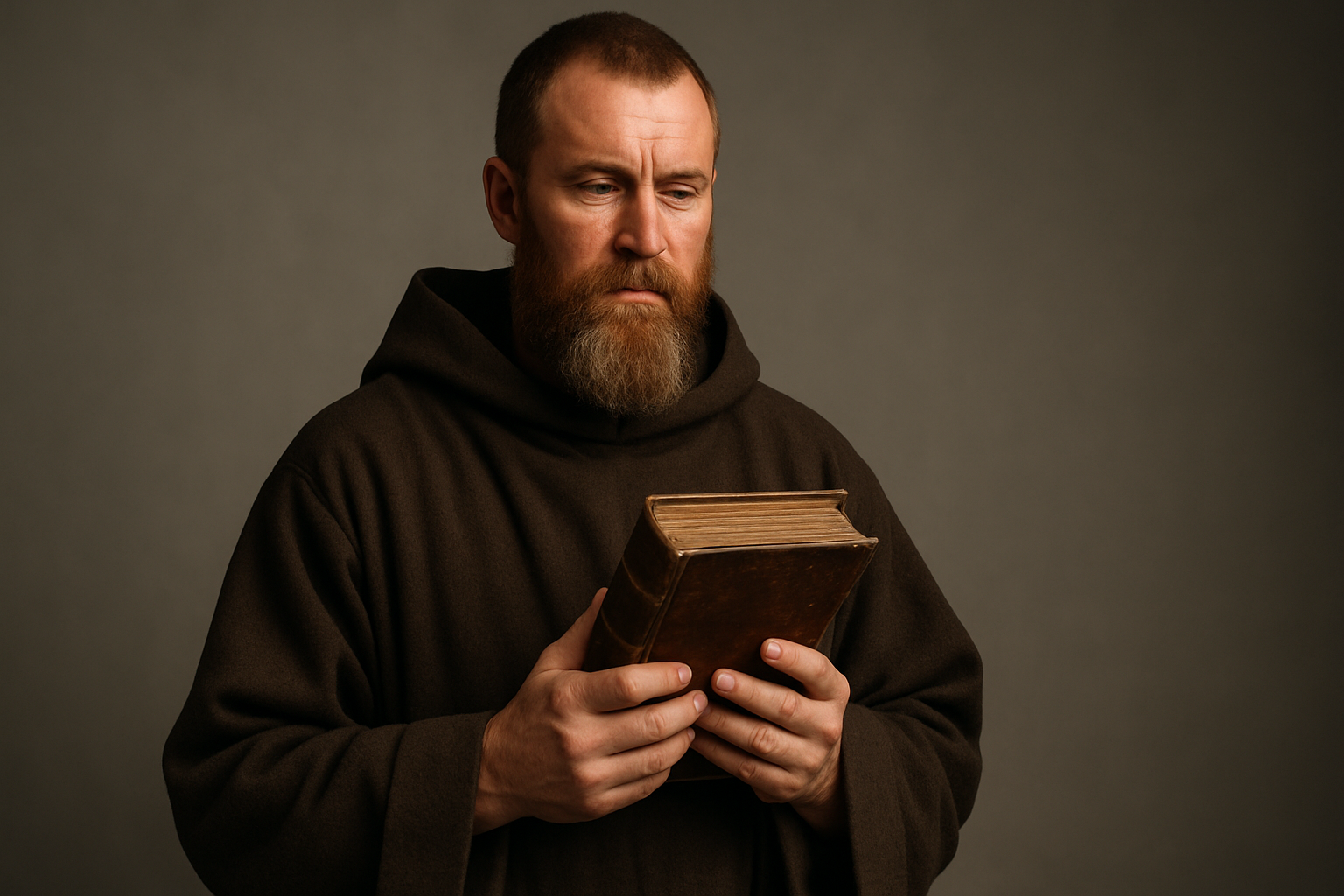
In terms of art and devotion, Columba is often depicted with a dove, referencing his name “Colm Cille” (church dove) and symbolizing the Holy Spirit. He is also frequently shown with a book or scroll, highlighting his role as a scribe and scholar, or holding a crozier, representing his abbatial authority. These images perpetuate his memory and remind believers of his core virtues. The stunning Insular art of the Celtic period, exemplified by manuscripts like the Book of Kells, is a direct descendent of the artistic and scribal tradition fostered at Iona under Columba’s inspiration.
While Columba did not contribute new theological doctrine, his life beautifully illustrated the Church’s teaching on penance and redemption. His willing acceptance of exile as atonement for his past actions transformed personal failure into a glorious missionary success, demonstrating that God can use our brokenness for His greater glory. He also championed the monastic ideal as a radical response to Christ’s call, showcasing it as a powerful vehicle for sanctification and evangelization.
Devotion Today
Even after more than fourteen centuries, devotion to Saint Columba remains vibrant, particularly in the lands he evangelized and influenced. His memory is honored not just by Catholics, but also by many Protestants, making him a figure of ecumenical significance, especially in Scotland.
The most significant site of devotion is undoubtedly Iona Abbey itself. Though the original monastic buildings have long since disappeared and been rebuilt multiple times (most recently in the early 20th century), the island continues to draw pilgrims from across the globe. Iona Abbey today houses an active ecumenical Christian community dedicated to prayer, reconciliation, and hospitality, carrying forward Columba’s spirit of mission and community. Pilgrims come to walk the sacred ground, reflect in the ancient ruins, and participate in services, finding a deep sense of peace and spiritual renewal in this remote, hallowed place.
Throughout Ireland and Scotland, numerous churches, schools, and hospitals are named in honor of St. Columba (or St. Colmcille). These institutions serve as living memorials, continuing his legacy of faith, education, and service to others. For instance, in Derry (Doire Colmcille), Ireland, which he founded, his presence is still felt deeply.
His feast day, June 9th, is celebrated with special Masses and services, particularly in dioceses in Ireland and Scotland where he is a patron. Many communities hold local festivities, incorporating elements of Celtic culture and Christian tradition to remember his life and work. In some areas, there are annual processions or special blessings on this day.
Devotion also extends to private prayer, with individuals and communities invoking St. Columba’s intercession. While there isn’t one universally known novena (a nine-day prayer) to him, many private prayers ask for his guidance in missionary endeavors, for the courage to spread the Gospel, for a love of learning, and for peace and reconciliation, especially between divided Christian communities.
For those interested in their Celtic heritage or seeking a connection to the early monastic movements, Columba provides a powerful link. He represents a bridge between ancient Celtic traditions and the universal Church, making him a compelling figure for many modern Catholics seeking deeper roots for their faith.
Reflections for Modern Readers
St. Columba, though living in a vastly different world, offers timeless wisdom for our contemporary lives. His journey from impulsive prince to serene saint provides rich lessons for personal growth and spiritual living in the 21st century.
- Embrace Penance and Transformation: Columba’s exile was a direct consequence of his actions, yet he embraced it as a path to redemption. This teaches us that our past mistakes, when humbly acknowledged and offered to God, can be transformed into opportunities for profound spiritual growth and new vocations. For example, someone who made poor financial choices in their youth might later dedicate their life to helping others manage their finances ethically or volunteer at a debt counseling service. Columba shows us that God can redeem any situation, turning our brokenness into a blessing.
- The Power of Place and Community: Columba chose Iona deliberately, seeking a place where he could commit entirely to God and build a community focused on prayer and mission. In our fast-paced, often isolating world, finding our spiritual “Iona”—a parish, a prayer group, a volunteer organization, or even a dedicated prayer space in our home—is crucial for sustained spiritual growth. It reminds us that faith is lived not only individually but also in supportive community.
- Evangelization Through Action and Witness: Columba didn’t just preach; he lived a life that commanded respect and inspired conversion. His courage, austerity, and genuine love for people spoke louder than words. Today, we are called to evangelize not just with eloquent arguments, but by living compelling Christian lives. This could mean volunteering at a soup kitchen, consistently practicing kindness to neighbors, or simply showing integrity in the workplace, allowing our actions to subtly reflect the love of Christ to those around us.
- Cherish Learning and Culture: Columba’s passion for books and scholarship saved countless ancient texts and fueled a vibrant intellectual tradition at Iona. In an age of information overload, his example reminds us of the importance of discerning good knowledge, seeking wisdom, and nurturing Catholic intellectual and artistic traditions. We can apply this by supporting Catholic education, engaging with Church history, reading quality spiritual books, or participating in parish Bible studies, fostering a love for truth and beauty.
- Courage in the Face of the Unknown: Leaving the familiar shores of Ireland for a remote, pagan land required immense faith and courage. Columba teaches us to step out in faith when God calls us to new challenges, even when they seem daunting or unfamiliar. Whether it’s starting a new ministry, moving to a new city for a job that aligns with our values, or taking a stand for our faith in a challenging environment, Columba encourages us to trust in God’s guiding hand and step beyond our comfort zones.
Common Symbols and Representations: In art and jewelry, St. Columba is frequently depicted with several key symbols:
- A Dove: This is perhaps the most iconic symbol, directly referencing his name “Colm Cille” or “Columba,” which means “church dove” or simply “dove.” It symbolizes peace, the Holy Spirit, and his gentle, prayerful nature, even despite his earlier fiery temperament.
- A Book or Scroll: This highlights his immense love for learning, his role as a prolific scribe, and Iona’s legacy as a center for scholarship and the preservation of sacred texts. It also signifies the Word of God that he passionately spread.
- A Crozier or Staff: As an abbot and a spiritual leader, he is often shown with a crozier, representing his pastoral authority and his role in shepherding his monastic community and the souls he evangelized.
- A Boat or Coracle: Less common in personal jewelry but often seen in larger artworks, the coracle symbolizes his journey of exile from Ireland and his missionary travels across the seas to Scotland.
These symbols collectively paint a picture of a man dedicated to God, learning, and the spread of the Gospel, embodying both strength and peace.
Timeline Summary
- 521 AD: Born Crimthann (later Columba) in Gartan, County Donegal, Ireland.
- c. 540s AD: Receives monastic education at Moville and Clonard, ordained a priest.
- c. 560 AD: Involved in the “Battle of the Books” at Cúl Dreimhne; takes vows of exile as penance.
- 563 AD: Sails from Ireland to Iona with twelve companions, establishes the famous monastery.
- c. 565 AD: Begins missionary journeys to the Picts, famously encountering and converting King Brude.
- 574 AD: Reportedly present at the convention of Druim Cett, influencing King Áedán of Dál Riata.
- 597 AD: Dies peacefully on Iona on June 9th, after a life of profound prayer and missionary work.
Scripture for Reflection
St. Columba’s life deeply resonates with several key scriptural themes, offering powerful passages for reflection on his virtues and mission.
Matthew 28:19-20 (The Great Commission): “Go therefore and make disciples of all nations, baptizing them in the name of the Father and of the Son and of the Holy Spirit, teaching them to observe all that I have commanded you. And behold, I am with you always, to the end of the age.”
This passage perfectly encapsulates Columba’s missionary zeal. Driven by this divine command, he embarked on his daunting journey to Scotland, leaving behind comfort and familiarity to spread the Gospel. It reminds us that every Christian is called, in some way, to participate in this mission, whether across oceans or in our local communities.
Psalm 119:105 (The Word as a Lamp): “Your word is a lamp to my feet and a light to my path.”
Columba’s intense love for sacred texts, his dedication to copying manuscripts, and his establishment of Iona as a center of learning all point to his profound reverence for God’s Word. This psalm speaks to the guiding and illuminating power of Scripture, a truth that Columba lived out through his tireless efforts to preserve and disseminate the Bible.
Luke 9:23 (Taking Up One’s Cross): “And he said to all, ‘If anyone would come after me, let him deny himself and take up his cross daily and follow me.'”
The act of penance and self-denial was central to Columba’s spiritual journey. His self-imposed exile and the austere monastic life he embraced on Iona were his way of taking up his cross daily. This verse reminds us that true discipleship involves sacrifice and a willingness to put Christ above all else, transforming personal hardship into an opportunity for grace.
Prayers to St. Columba
Here is a prayer often invoked to St. Columba, asking for his intercession and guidance:
O God, Who didst call Thy servant Columba from his native land to preach the Gospel to the Picts, and didst make him a father in God to many nations: Grant that we, following his example, may so deny ourselves that we may take up our cross daily and follow Christ, who liveth and reigneth with Thee and the Holy Ghost, one God, world without end. Amen.
Another prayer, reflecting his spirit of pilgrimage and evangelization:
Holy Saint Columba, noble prince of Ireland and diligent servant of God, who for love of Christ embraced exile and brought the light of faith to the peoples of Scotland; inspire us, we pray, with your fervent missionary zeal. Help us to share the Good News with courage, to cherish the sacred Word, and to build communities of prayer and learning. Guide us in our own pilgrimages of faith, that we may always seek God’s will and serve Him faithfully, through Christ our Lord. Amen.