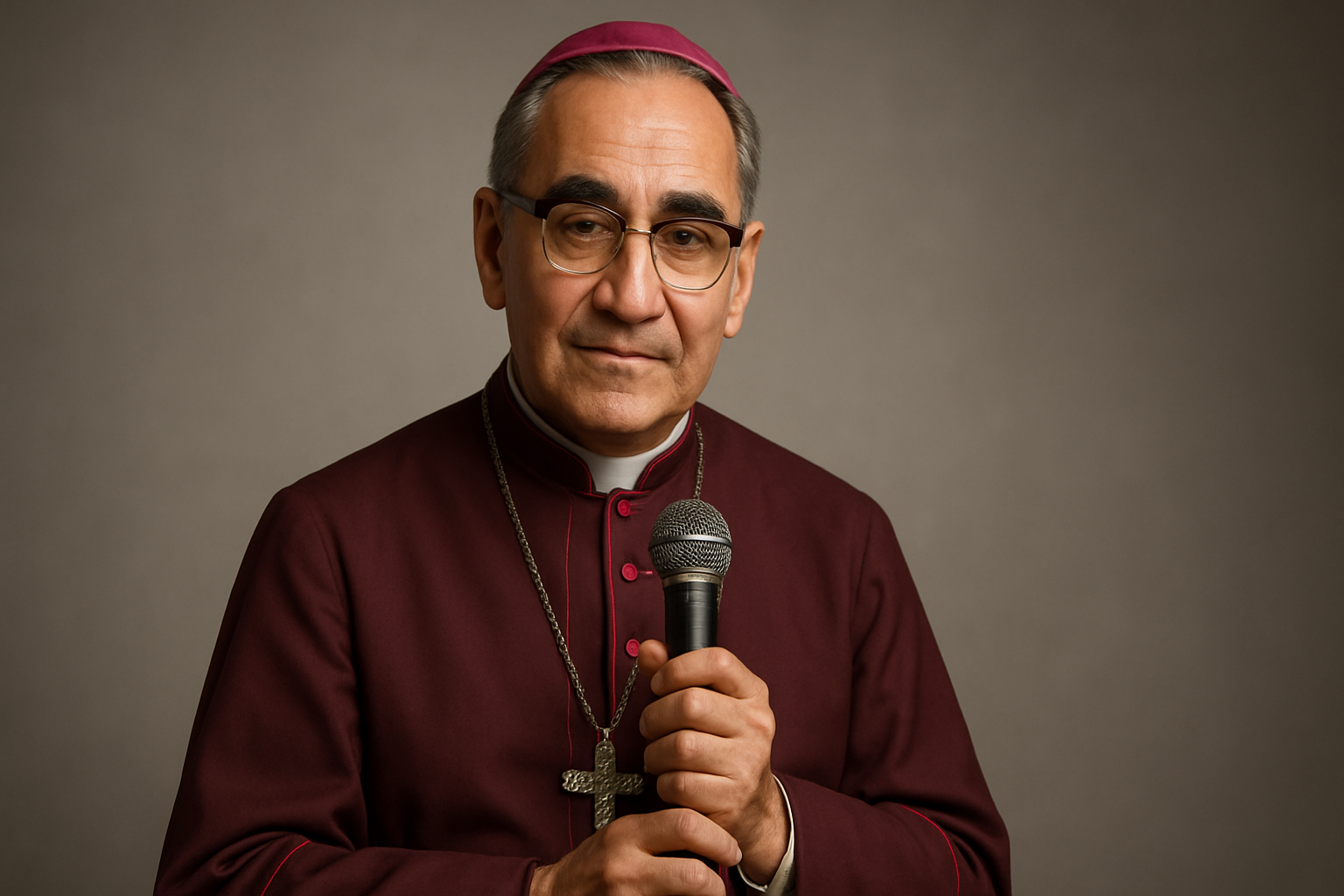
In the tumultuous landscape of 20th-century El Salvador, a quiet, unassuming bishop named Óscar Romero emerged as a beacon of hope and a powerful voice for the voiceless. His life, marked by deep faith and a dramatic conversion of heart, unfolded against a backdrop of severe social injustice, political unrest, and escalating violence. Romero’s journey from a reserved, traditional priest to a fearless advocate for human rights and the poor captivated the world, ultimately leading to his martyrdom. This article will explore his early life and historical context, trace his remarkable spiritual transformation and key milestones, delve into his enduring spiritual legacy, and examine how his courageous witness continues to inspire devotion and reflection for modern readers, offering timeless lessons in faith, justice, and solidarity.
Quick Facts
| Category | Detail |
|---|---|
| Birth | August 15, 1917, Ciudad Barrios, El Salvador |
| Death | March 24, 1980, San Salvador, El Salvador (Martyred) |
| Feast Day | March 24 |
| Patronage | El Salvador, archdiocese of San Salvador, martyrs, persecuted Christians, human rights, social justice, charity |
| Canonized | October 14, 2018, by Pope Francis |
Historical Context & Early Life
To understand the profound impact of St. Óscar Romero, it is essential to grasp the complex and often brutal reality of El Salvador during the mid-20th century. For decades, the nation was plagued by extreme inequality, with a small, wealthy elite controlling most of the land and resources, while the vast majority of the population lived in abject poverty. Political power was often maintained through military rule and repression, leading to widespread human rights abuses, including arbitrary arrests, torture, and assassinations of anyone perceived as a threat to the established order. The Catholic Church, while historically a significant institution, found itself increasingly polarized. Some clergy aligned with the powerful, while others, inspired by the Second Vatican Council (1962-1965) and the Latin American bishops’ conferences at Medellín (1968) and Puebla (1979), began to embrace liberation theology – a theological current emphasizing social justice and a “preferential option for the poor.”
Óscar Arnulfo Romero y Galdámez was born on August 15, 1917, in Ciudad Barrios, a small, rural town in eastern El Salvador. He was one of eight children in a modest family. His father, Santos Romero, was a telegraph operator, and his mother, Guadalupe de Jesús Galdámez, was a homemaker. From a young age, Óscar was a diligent and studious child. He initially apprenticed as a carpenter, learning a trade that would instill in him a strong work ethic and an understanding of the lives of ordinary laborers. However, his true calling began to emerge early on. At the age of 13, he entered the minor seminary in San Miguel, showing a serious inclination towards the priesthood.
Romero continued his priestly formation in San Salvador and later at the Pontifical Gregorian University in Rome, one of the most prestigious Catholic universities in the world. He pursued studies in theology, specializing in ascetic theology and Christian perfection, and was ordained a priest on April 4, 1942. His time in Rome provided him with a solid intellectual and spiritual foundation, shaping him into a traditionally pious and theologically conservative priest. Upon his return to El Salvador, he served various roles, including parish priest, seminary rector, and diocesan secretary. He was known for his dedication, organizational skills, and pastoral care, particularly for the poor, though he avoided direct political involvement. He was perceived as a safe, spiritual choice by both the Church hierarchy and the government, who saw him as someone who would maintain the status quo rather than challenge it.
Calling & Key Milestones
St. Óscar Romero’s vocational journey was a slow burn, culminating in a profound and unexpected transformation that redefined his priesthood and episcopacy. His life demonstrates that God can call us to new depths of faith and action at any stage, even when we least expect it.
From Quiet Administrator to Bishop
After decades of faithful service as a parish priest, seminary rector, and later as the editor of the archdiocesan newspaper, Romero’s reputation grew as a devout and doctrinally sound clergyman. He became known for his administrative abilities and conservative theological leanings, which made him an appealing candidate for advancement within the Church. In 1970, he was appointed Auxiliary Bishop of San Salvador. His episcopal motto, “Sentir con la Iglesia” (“To think with the Church”), reflected his deep loyalty to the institutional Church and its teachings. In 1974, he was appointed Bishop of Santiago de María, a poor, rural diocese, where he witnessed firsthand the brutal realities of poverty and oppression faced by campesinos (farmworkers). This experience began to stir a deeper pastoral concern within him, though he still maintained a cautious approach to social issues.
Archbishop of San Salvador and the Murder of Father Rutilio Grande
In February 1977, Óscar Romero was appointed Archbishop of San Salvador. His appointment was met with relief by the wealthy and powerful, who saw him as a moderate who would not rock the boat. They believed his conservative past would ensure he would not challenge the government or the entrenched social order, unlike some of the more outspoken bishops and priests inspired by liberation theology. However, this perception would be dramatically overturned just a few weeks after his installation. On March 12, 1977, Romero’s close friend, Father Rutilio Grande, a Jesuit priest known for his outspoken advocacy for the rights of the poor and oppressed, was assassinated along with two companions as they drove to celebrate Mass. This brutal murder was a turning point for Archbishop Romero. It was a direct attack on the Church and, more personally, a profound shock to his system. He cancelled all Masses in the archdiocese for the following Sunday, demanding that the government investigate the murder and respect human rights. He presided over a single, massive concelebrated Mass in the cathedral, attended by thousands, using the occasion to powerfully preach about the injustice and violence plaguing the nation.
A Voice for the Voiceless
Following Father Grande’s death, Romero’s transformation became evident to all. He shed his cautious approach and became an unwavering voice for justice and human rights. His weekly Sunday homilies, broadcast throughout the country via radio, became a lifeline for the Salvadoran people. In these homilies, he bravely denounced the government’s atrocities, identified the victims of state-sponsored violence, and called for an end to the repression. He appealed to the military to stop killing their own people and urged the rich to share their wealth with the poor. He spoke out against the injustices of the economic system, the widespread corruption, and the systematic violence. His words, delivered with a pastor’s heart, resonated deeply with the suffering population, offering solace, hope, and courage. He became known as “the voice of the voiceless,” daring to speak truths that no one else would. This advocacy came at a heavy personal cost, earning him the enmity of the government, the military, and the wealthy elite, who repeatedly threatened his life.
Martyrdom for the Faith
Despite constant threats, Romero refused to be silenced. His final homily, delivered on March 23, 1980, included a powerful plea to the soldiers: “I beg you, I entreat you, I order you in the name of God: stop the repression!” The very next day, March 24, 1980, while celebrating Mass in the chapel of the Hospital of Divine Providence where he lived, Archbishop Óscar Romero was shot and killed by an assassin’s bullet. He died a martyr, sacrificing his life at the altar, a direct consequence of his unwavering commitment to justice and his fidelity to the Gospel. His martyrdom sent shockwaves around the world, solidifying his status as a hero of faith and a symbol of resistance against oppression.
Spiritual Legacy & Theological Themes
The spiritual legacy of St. Óscar Romero is immense, deeply rooted in core Catholic virtues and teachings. He exemplified courage, prophetic witness, and a profound pastoral love, particularly for the most marginalized members of society. His life beautifully illustrates the practical application of Catholic social teaching.
At the heart of Romero’s spiritual journey was his embrace of the “preferential option for the poor.” This theological principle, articulated in Catholic social teaching, asserts that God has a special concern for the poor and vulnerable, and therefore, the Church must prioritize their needs and rights. Romero saw Christ in the faces of the suffering campesinos, the tortured political prisoners, and the families of the disappeared. His advocacy was not politically motivated in a partisan sense, but deeply theological, stemming from his belief that true faith demands solidarity with the oppressed. He understood that defending the poor was not charity but a matter of justice, a direct consequence of following Christ, who himself identified with the least of his brethren (Matthew 25:40).
Romero also demonstrated extraordinary prophetic courage. A prophet, in the biblical sense, is not merely someone who foretells the future but one who speaks God’s truth to power, calling individuals and societies to repentance and justice. Romero’s radio homilies were modern-day prophetic pronouncements, echoing the Old Testament prophets who challenged kings and rulers to uphold righteousness. He preached uncomfortable truths, knowing full well the danger he faced. His willingness to sacrifice his own life for the sake of his flock aligns perfectly with Jesus’ teaching, “Greater love has no one than this, that someone lay down his life for his friends” (John 15:13).
His lasting influence extends to Catholic liturgy and devotion. His life and martyrdom provide a contemporary example of Christian discipleship, inspiring countless individuals and communities to engage more deeply with issues of social justice. He has become a powerful symbol for human rights organizations, Christian advocacy groups, and those working for peace and reconciliation in conflict zones. His beatification by Pope Francis in 2015 and subsequent canonization in 2018 officially recognized his heroic virtue and martyrdom, cementing his place as a universal saint whose witness transcends geographical and cultural boundaries. He reminds us that true evangelization includes working for the integral human development of all people.
Devotion Today
Devotion to St. Óscar Romero has grown exponentially since his death, solidifying his place as a modern saint revered worldwide. His story resonates deeply with those who champion human rights, social justice, and peace, both within and beyond the Catholic Church. His canonization by Pope Francis on October 14, 2018, was a momentous occasion, affirming the Church’s recognition of his heroic witness and shedding any lingering political controversy from his legacy. Pope Francis himself declared that Romero was “a bishop who offered his life for his sheep.”
In El Salvador, St. Óscar Romero is more than a national hero; he is a spiritual father and a symbol of hope. The Metropolitan Cathedral of San Salvador, where his tomb is located, has become a major pilgrimage site. Pilgrims from all over the world visit his tomb in the crypt, a place of quiet reflection and prayer. The small chapel at the Hospital of Divine Providence, where he was martyred, is preserved as a sacred space, drawing visitors who wish to stand where he offered his final Mass and life. The archdiocese of San Salvador organizes annual celebrations around his feast day on March 24, including Masses, vigils, and processions, often attended by thousands. His image, often depicted with a cross or a microphone, is seen in homes, churches, and public spaces throughout the country.
Beyond El Salvador, St. Óscar Romero is venerated in numerous churches and justice-oriented organizations. Many parishes and schools globally have been named in his honor. Statues and stained-glass windows depicting him can be found in cathedrals and churches, including one of the ten martyr statues on the West Front of Westminster Abbey in London. His life is frequently studied in seminary formation, theology programs, and social justice courses, offering a powerful example of faithful discipleship in the face of immense challenge. Various prayers and novenas to St. Óscar Romero circulate, asking for his intercession in matters of justice, courage, and protection for the persecuted. His feast day is marked by special liturgies and events in dioceses around the world, particularly those with a strong commitment to Catholic social teaching.
Reflections for Modern Readers
St. Óscar Romero’s life offers profound lessons that are remarkably relevant for readers in the 21st century, even in contexts very different from El Salvador in the 1970s.
- Speak Truth to Power, No Matter the Cost: Romero teaches us the importance of having the courage to speak out against injustice, even when it is uncomfortable, unpopular, or dangerous. In an age of misinformation, social media echo chambers, and systemic inequalities, his example challenges us to discern truth, find our voice, and advocate for what is right, even if it means standing alone. For instance, a student might speak up against bullying, or an employee might call out unfair labor practices, drawing inspiration from Romero’s unwavering stance.
- Solidarity with the Marginalized: Romero radically embraced the “preferential option for the poor.” This calls us to actively seek out and stand with those on the margins of society – whether they are the homeless in our cities, refugees fleeing war, or those suffering from discrimination. It means moving beyond mere charity to advocating for systemic change that addresses the root causes of poverty and injustice. This could involve volunteering at a soup kitchen, supporting organizations that help migrants, or advocating for policies that protect vulnerable populations.
- The Cost of Discipleship and Inner Transformation: Romero’s journey from a cautious, traditional priest to a prophetic martyr reminds us that spiritual growth often involves profound inner transformation and a willingness to step outside our comfort zones. Following Christ can lead us to unexpected paths and demand sacrifices. His life asks us to consider what we are truly willing to give up for our faith and for justice. It could mean sacrificing personal comfort to serve others or taking a stand for ethical principles in our professional lives, even if it impacts our career.
- The Power of the Word: Romero’s homilies, broadcast over radio, were his primary tool for evangelization and advocacy. They illustrate the immense power of words to inspire, comfort, challenge, and mobilize people for good. This encourages us to be mindful of the words we use, whether in personal conversations, public discourse, or online, and to use them to build up, inform, and advocate for truth and justice. His example reminds modern communicators of the responsibility that comes with having a platform.
In art and jewelry, St. Óscar Romero is often depicted in various ways that symbolize his life and legacy:
- Archiepiscopal Vestments: He is usually shown wearing the distinctive robes of a bishop or archbishop, symbolizing his pastoral office and authority within the Church.
- A Crozier (Shepherd’s Staff): This staff, held by bishops, represents his role as a shepherd guiding his flock, particularly in challenging times.
- A Microphone or Radio: A very common and poignant symbol, representing his powerful radio homilies that reached thousands and became the voice of the voiceless, bravely speaking truth to power.
- A Cross or Crucifix: Often prominent in his imagery, it symbolizes his deep faith, his identification with Christ’s suffering, and his ultimate martyrdom for the Gospel. Sometimes he is shown standing near an altar, referencing his death during Mass.
- Bloodstains or a Bullet Hole: More graphic representations might subtly or overtly reference his violent death as a martyr, emphasizing the sacrifice he made.
- A Palm Branch: A traditional symbol of martyrdom, signifying his victory through suffering and death for the faith.
Timeline Summary
- August 15, 1917: Born Óscar Arnulfo Romero y Galdámez in Ciudad Barrios, El Salvador.
- 1930: Enters the minor seminary in San Miguel.
- 1937: Travels to Rome for theological studies at the Pontifical Gregorian University.
- April 4, 1942: Ordained a priest in Rome.
- 1944-1966: Serves as a parish priest and seminary rector in San Miguel, known for his administrative skills and traditional piety.
- 1967-1970: Becomes Secretary of the Bishops’ Conference of El Salvador.
- June 21, 1970: Consecrated Auxiliary Bishop of San Salvador.
- October 15, 1974: Appointed Bishop of Santiago de María, a poor, rural diocese, witnessing firsthand the suffering of the campesinos.
- February 3, 1977: Appointed Archbishop of San Salvador.
- March 12, 1977: His close friend, Father Rutilio Grande, is assassinated; this event becomes a turning point for Romero.
- 1977-1980: Becomes a fearless advocate for human rights, using his weekly radio homilies to denounce injustices and violence.
- February 1978: Nominated for the Nobel Peace Prize.
- February 1980: Receives an honorary doctorate from the University of Louvain, where he delivers a powerful address on his commitment to justice.
- March 23, 1980: Delivers his final homily, calling on soldiers to stop the killing.
- March 24, 1980: Martyred by an assassin’s bullet while celebrating Mass at the Hospital of Divine Providence.
- May 23, 2015: Beatified in San Salvador as a martyr for the faith by Pope Francis.
- October 14, 2018: Canonized as a saint by Pope Francis in Rome.
Scripture for Reflection
St. Óscar Romero’s life profoundly mirrored several scriptural themes, especially those concerning justice, prophetic witness, and love for the poor.
Isaiah 58:6-7 (NABRE): “Is not this the fast that I choose: to loose the bonds of injustice, to untie the cords of the yoke, to let the oppressed go free, and to break every yoke? Is it not to share your bread with the hungry, and bring the homeless poor into your house; when you see the naked, to cover them, and not to hide yourself from your own kin?”
Romero embodied this passage, recognizing that true worship and faith involve active engagement with social justice. He did not merely preach about charity but challenged systemic injustice, advocating for the liberation of the oppressed and the provision for the poor, often at great personal risk. His life was a testament to the fast that God truly desires.
Matthew 25:40 (NABRE): “And the king will answer them, ‘Truly I tell you, just as you did it to one of the least of these who are members of my family, you did it to me.’”
This foundational passage of Christian social teaching was at the core of Romero’s pastoral work. He saw Christ’s face in every impoverished campesino, every victim of violence, and every voice silenced by oppression. His defense of the poor and marginalized was not merely humanitarianism, but a profound act of love for Christ himself, urging all believers to recognize and serve Christ in “the least of these.”
John 15:13 (NABRE): “No one has greater love than this, to lay down one’s life for one’s friends.”
Romero’s martyrdom is the ultimate fulfillment of this scripture. He literally laid down his life while serving his flock, becoming a “friend” to all who suffered. His death during Mass, at the altar, symbolizes his complete self-offering, a testament to a love that transcends fear and self-preservation, mirroring Christ’s own sacrifice.
Prayers to St. Óscar Romero
Prayer for Courage and Justice through the Intercession of St. Óscar Romero
O God, who gave to your Church the courageous witness of Saint Óscar Romero, a bishop who, following the example of Christ, gave his life for his sheep, grant us, through his intercession, a spirit of truth and justice, of love and mercy. Inspire us to defend the cause of the poor and the marginalized, to speak out against injustice, and to work tirelessly for peace, reconciliation, and human dignity. Strengthen us, Lord, by your grace, to follow his example of faithful discipleship, so that we may always strive to build your kingdom of justice and peace on earth, even amidst persecution. Through Christ our Lord. Amen.
Another Prayer:
Saint Óscar Romero, faithful shepherd and martyr, you defended the dignity of all people and spoke out against oppression. We pray for your intercession in our world today. Guide us to be voices for the voiceless, to comfort the afflicted, and to challenge those who exploit the poor. Help us to have the courage to stand for truth and justice, even when it is difficult. May our lives reflect your profound love for God and for neighbor, and may we never falter in our commitment to build a more just and peaceful world. Amen.