A quiet room is not always available. Neither is a quiet mind. St. Elizabeth of the Trinity offers a way to begin thinking about silence as attention to God rather than a perfect absence of sound. Her life can speak to readers whose days are crowded with work, family, and constant messages.
A young Carmelite in Dijon
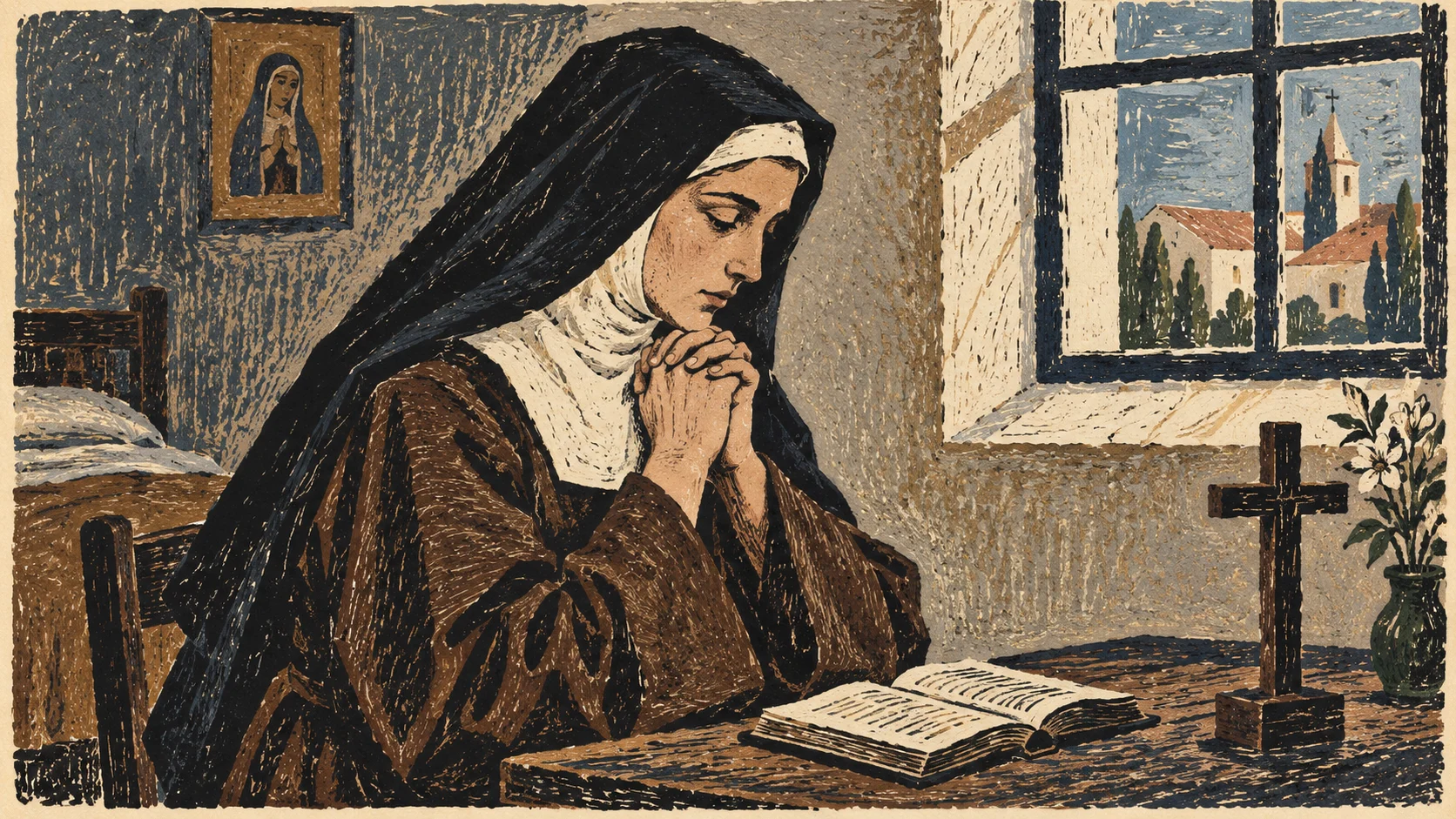
Elizabeth Catez was born in France in 1880. A gifted pianist, she entered the Discalced Carmelites in Dijon and took the name Elizabeth of the Trinity. She died in 1906, at only twenty-six, and was canonized in 2016. Her spiritual writing centers on God’s presence and the life of the Trinity. The Discalced Carmelites introduce her life.
Start smaller than a retreat
A plan for thirty minutes of silence may collapse if the day has no room for it. Begin with two minutes at a reliable point: before opening email, after returning home, or while the household settles for the night. Choose a place where you can be reasonably comfortable.
Let the phone remain out of reach. Begin with a short prayer in your own words. When a task comes to mind, note it briefly if necessary and return. The aim is not to win a contest against distraction. It is to practice coming back.
Let a threshold become a reminder
A doorway can mark a change of attention. Before entering home after work, pause and ask for the grace to meet the people inside with patience. Before joining a meeting, recall that the people across the table deserve care even when the conversation is difficult.
This is a contemporary exercise inspired by Elizabeth’s theme of interior prayer, not a technique she prescribed. It links a brief moment of recollection to a relationship or responsibility that already exists.
Silence in a household with children
- Keep the first attempt short enough that everyone can succeed.
- Explain what you are doing: taking a moment to be with God.
- Offer a simple focus, such as a crucifix or a candle-shaped battery light.
- Allow movement and do not treat a giggle as a moral failure.
- End with one intention offered by each person who wishes to speak.
A minute shared peacefully may be more fruitful than ten minutes enforced with frustration. Children can learn that prayer belongs in family life without being expected to imitate a monastery.
What to notice after a week
Instead of asking whether you felt unusually spiritual, ask whether the practice helped you pause before reacting. Did you listen a little longer? Did you notice a person you might have hurried past? These are useful questions even when prayer itself felt ordinary.
Elizabeth’s brief life directs attention toward a depth that busyness can obscure. For another gentle starting point, try our guide to prayer when words run out.