Some days prayer arrives easily. On others, even a familiar sentence feels difficult to finish. St. Paul of the Cross, the founder of the Passionists, offers a starting place for those days: stay with Christ in his Passion. You do not need a polished speech to bring a troubled heart before a crucifix.
Who was Paul of the Cross?
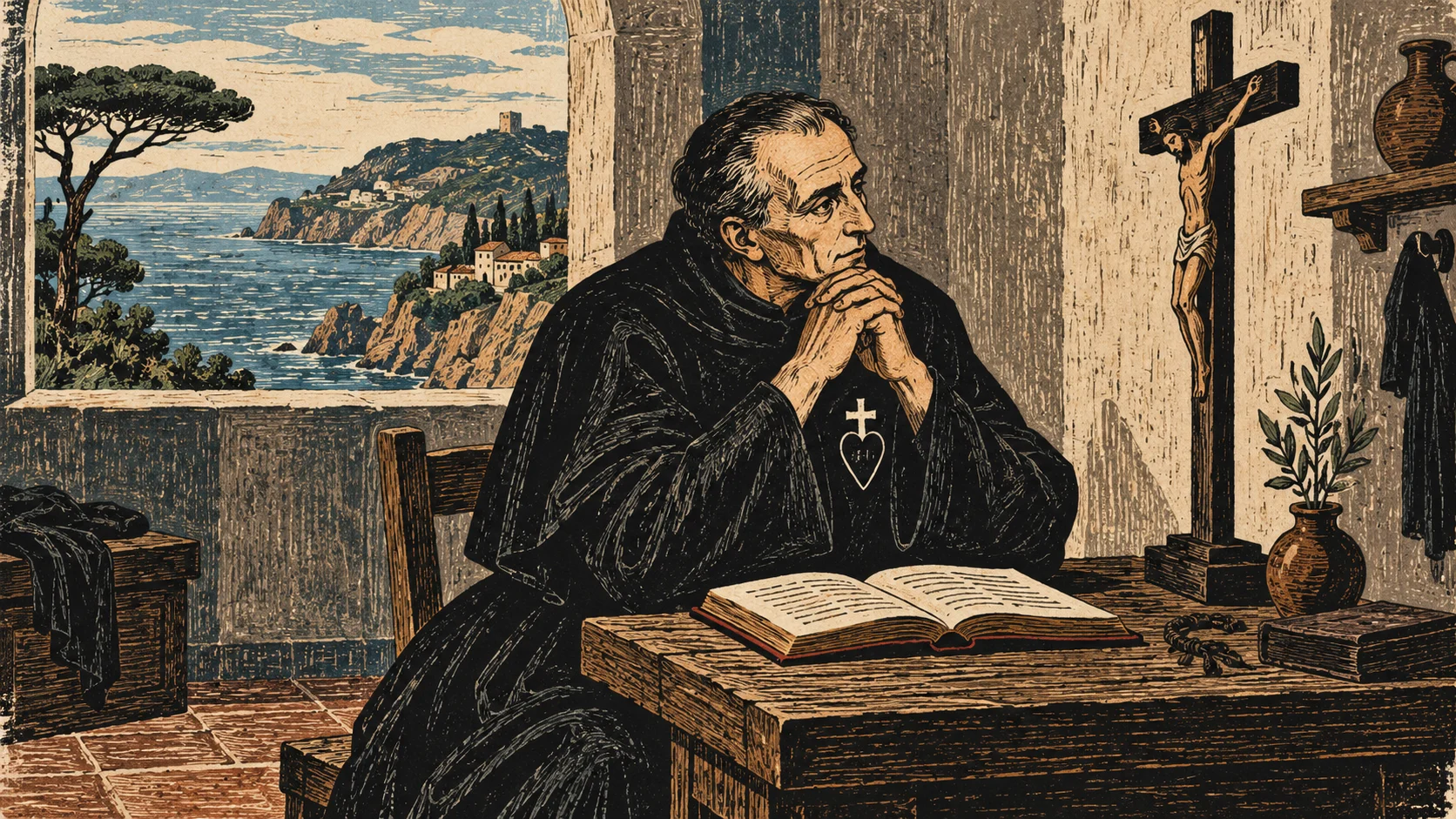
Paul was born in Ovada, in what is now Italy, in 1694. He developed a deep devotion to Christ’s Passion and founded the religious community known as the Passionists. Prayer and the preaching of Christ’s suffering and love shaped his vocation. He died in Rome in 1775. The Passionists’ biography outlines his life. The U.S. calendar commemorates him on October 20; calendars elsewhere may list October 19.
Beginning with one scene
If reading a whole Passion narrative feels overwhelming, choose one short scene from the Gospels. You might begin with Jesus praying in Gethsemane or with the people standing near his cross. Read slowly. Notice a word, a movement, or a person. Then stop long enough to let the scene remain with you.
You are not trying to manufacture an emotion. Tears are not a measure of successful prayer, and the absence of tears is not failure. A person can pray faithfully while tired, distracted, or emotionally flat. The practical task is simply to return attention to Christ when you notice it has wandered.
A quiet way to pray for ten minutes
- Choose a place where you can sit comfortably and place a crucifix nearby if you have one.
- Read a short Gospel passage. Mark 14:32–42 is one possible beginning.
- Name what you bring: a worry, a person, a decision, or a feeling you cannot explain.
- Stay quietly for a few minutes. When thoughts scatter, return to a simple request such as “Jesus, help me remain with you.”
- Close by choosing one loving action for the day.
The suggested words above are an original prayer prompt, not a quotation from Paul. You can use your own words or say nothing for a while.
Compassion should follow contemplation
After praying before the cross, consider who needs companionship in a difficult hour. A friend receiving treatment may need a ride. A grieving neighbor may welcome a meal without an expectation of conversation. A caregiver may need someone to cover an ordinary errand.
Ask what would help and accept the answer. Sometimes the kindest visit is short. Sometimes it is better to arrange a practical task than to offer a spiritual explanation for another person’s pain.
When words are still absent
Keep the practice small. A minute of honest prayer is a real beginning. If a particular passage stirs painful memories, choose another and speak with someone you trust. Prayer and appropriate personal support can belong together.
Paul’s life invites a steady return to Christ’s love. For a related practice, read our introduction to Margaret Mary Alacoque and the Sacred Heart, then choose one form of prayer to try this week.