Hospitality sounds simple until someone needs more than a meal and a friendly greeting. St. Benedict Menni devoted his life to care that required buildings, trained people, patient organization, and a willingness to welcome those others overlooked. His story asks what welcome costs when it becomes a lasting commitment.
Who was Benedict Menni?
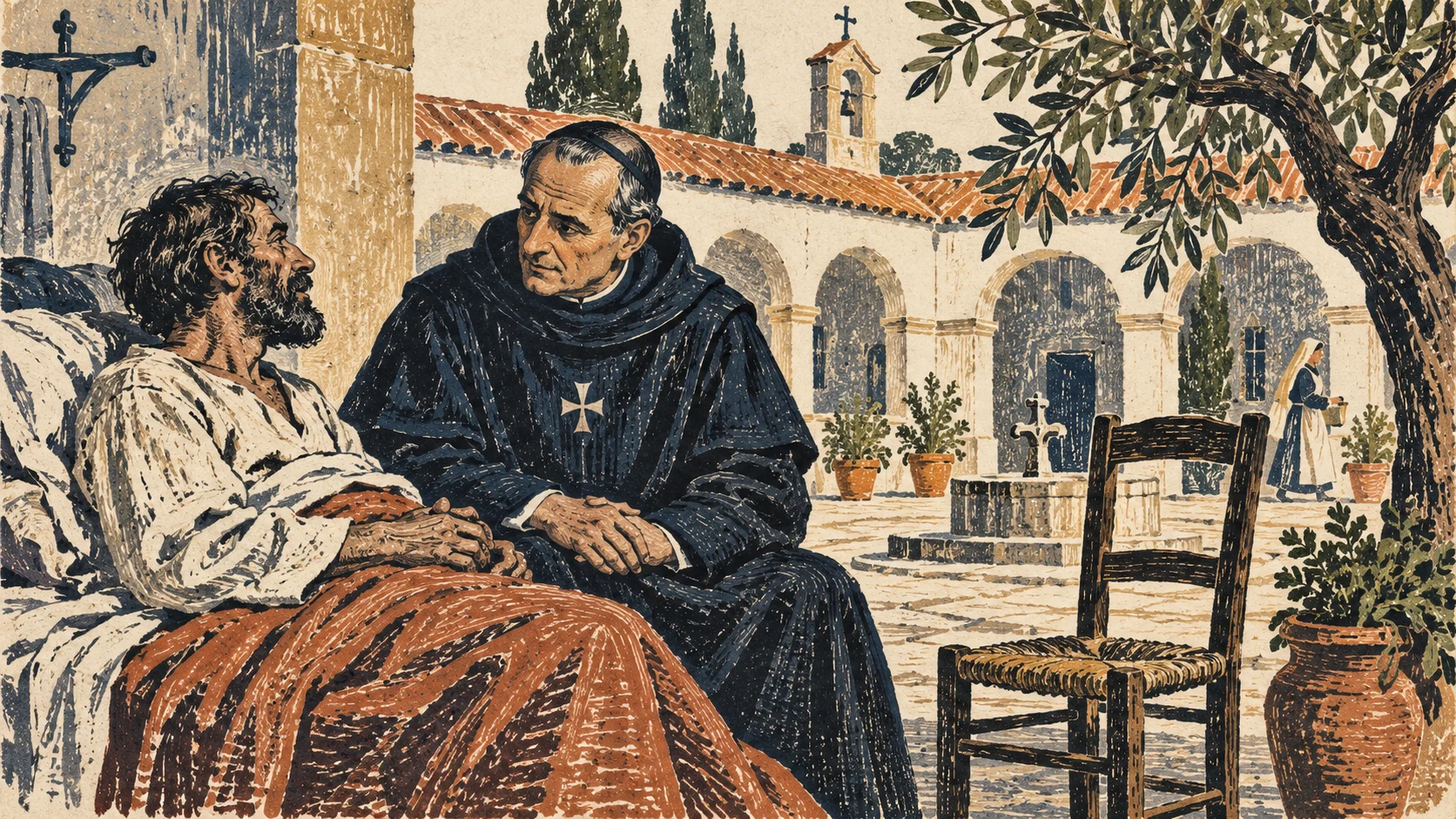
Born in Milan in 1841, Menni entered the Hospitaller Order of St. John of God. His work took him to Spain, where he helped renew the order’s service to people who were sick. He also founded the Hospitaller Sisters of the Sacred Heart of Jesus, whose mission included care for women with mental illness. He died in 1914 and was canonized in 1999. His Vatican biography explains this mission of hospitality.
Welcome needs a practical form
A parish can sincerely say that people facing difficult circumstances belong in its community while still making participation hard. A confusing entrance, a loud gathering with no quieter space, or a volunteer who asks intrusive questions can turn a welcome into an obstacle.
Begin by asking people what would help them participate. Do not assume that one person’s experience represents everyone. A clear schedule, a private way to request assistance, and permission to step out of an activity can be useful changes that do not require a large project.
How to support a caregiver without taking over
- Offer something specific. A meal on a named evening or an errand at an agreed time is easier to consider than an open-ended offer.
- Respect privacy. Let the family decide what personal information to share and with whom.
- Stay within your role. Friendship and parish support can accompany professional care without trying to replace it.
- Keep the promise. Reliability matters when someone is arranging a complicated day.
A refusal does not mean the offer was unwelcome. The timing or kind of help may be wrong. You can ask whether another arrangement would be useful and then respect the answer.
The invisible work behind a ministry
It is natural to admire the person delivering a meal or visiting someone who is ill. The person checking the schedule, maintaining supplies, or welcoming a new volunteer also makes that care possible. Thank them by name. If you are planning a new ministry, make room for those responsibilities from the beginning.
A simple planning sheet can list the task, the person responsible, the next date, and the backup arrangement. Keep sensitive personal information out of shared documents unless there is a proper reason and appropriate protection for it.
A question for All Saints’ Day
Menni’s life is a reminder that holiness can take the form of organized, durable care. As the Church celebrates its saints, ask which people find it hardest to enter your community’s ordinary life. Then choose one barrier you can help remove.
Read another story of practical mercy in our feature on St. Dulce Lopes Pontes.