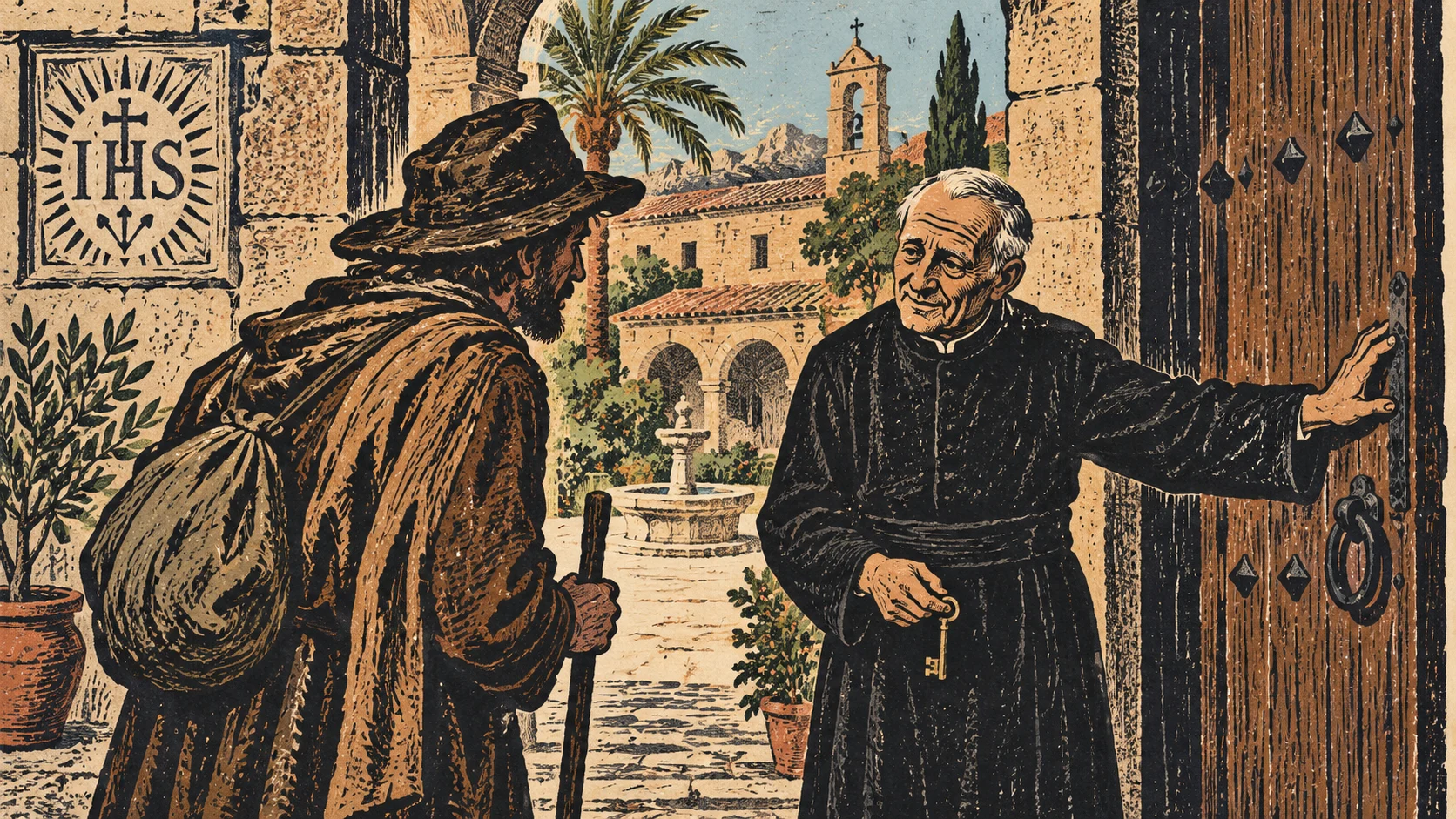
The person at the door can change how an entire place feels. A visitor may arrive embarrassed, impatient, lost, or unsure whether they belong. St. Alphonsus Rodríguez spent years doing work that could easily have been dismissed as routine: receiving the people who came to a Jesuit college.
A new vocation after profound loss
Alphonsus was a Spanish widower who experienced the deaths of his wife and children before entering the Society of Jesus as a lay brother. He served as porter at the Jesuit college in Palma, Mallorca, and became known for a life of prayer and humble service. He died in 1617. Franciscan Media tells the story of his vocation.
What a porter actually offers
A doorway is a practical place. Someone needs directions, an appointment, a message delivered, or an answer. Hospitality begins with attention to that need. It can be as ordinary as looking up, learning a name, and explaining what happens next.
For a parish, the equivalent doorway might be the office phone, the contact form, or a volunteer at the entrance to Mass. A kind greeting matters, but so does accurate information. A warm answer that sends someone to the wrong building can still leave them feeling forgotten.
Try a parish welcome walk-through
Imagine arriving for the first time with a child, a mobility limitation, or limited English. Start where a visitor would start: the website or parking area. Can you find the entrance, the current schedule, and someone to ask for help?
- Read the signs as though you do not know the building.
- Check whether office hours and phone numbers are current.
- Notice whether a newcomer is expected to understand unexplained abbreviations.
- Ask how a person can request accessibility assistance privately.
- Offer one specific improvement to the person responsible.
This exercise works best as help, not criticism. Volunteers often inherit confusing systems and limited time. Offer to update a page or make a clear sign rather than simply pointing out the problem.
Hospitality with sensible boundaries
Being welcoming does not require promising an immediate answer to every request. It is possible to say, “I cannot solve that here, but this is the person to contact,” with respect. Clear boundaries protect volunteers and prevent visitors from being given unrealistic expectations.
At home, hospitality may mean agreeing on a time to talk rather than answering every interruption at once. The aim is to treat people as people while remaining honest about what you can offer.
A vocation hidden in repetition
Alphonsus reminds us to look again at work that repeats. The task may be familiar, but the person arriving is new to this moment. Before answering the next call or opening the next door, pause briefly. Ask what would help this particular person feel seen and understand their next step.
For another saint associated with welcoming visitors, read the life of St. André Bessette.