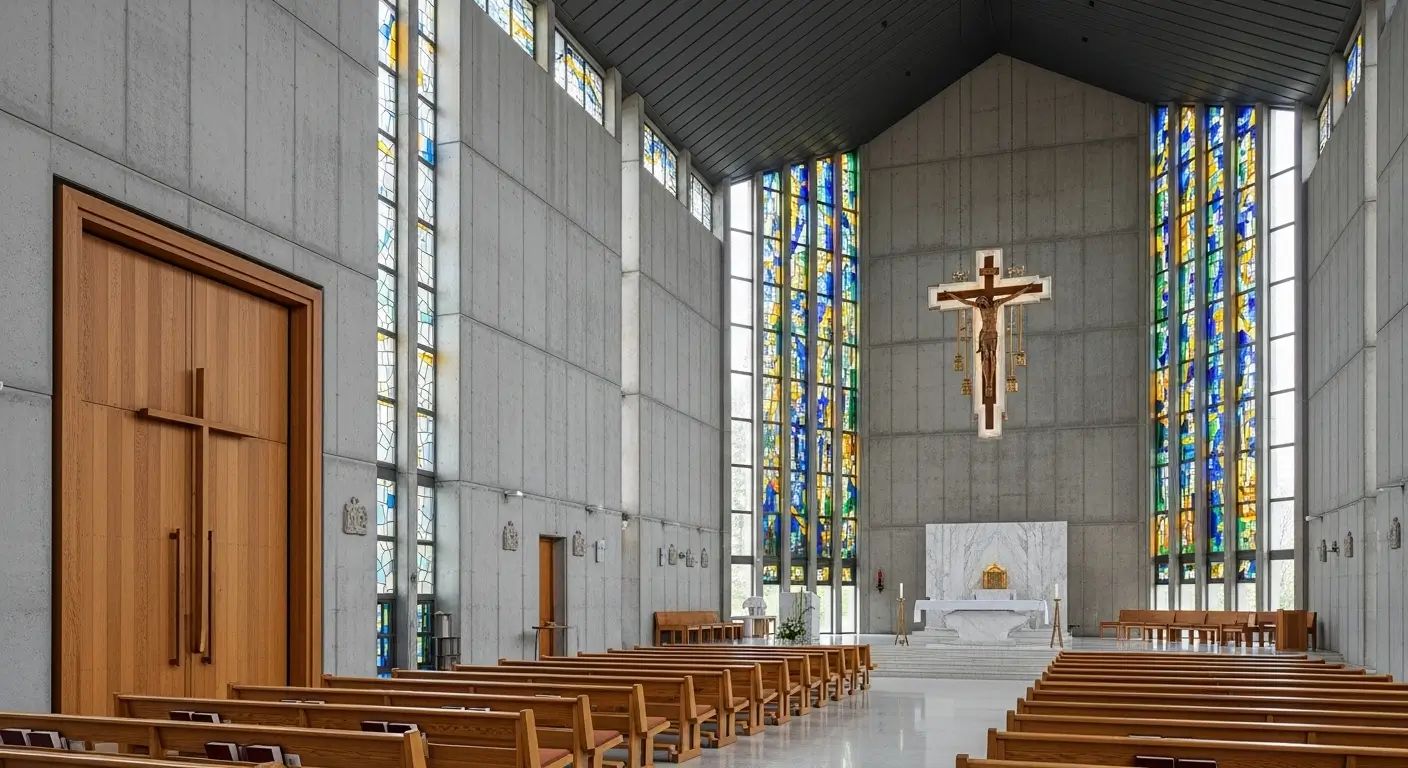
In the bustling heart of Montreal, amidst the grand architecture and modern rush, stands a monumental testament to quiet faith and unwavering perseverance: St. Joseph’s Oratory. This magnificent shrine owes its very existence to a humble, uneducated doorkeeper named Alfred Bessette, known to the world as St. André Bessette. His extraordinary life, marked by chronic illness and profound poverty, blossomed into a vibrant spiritual legacy, inspiring millions with his simple devotion to St. Joseph and his boundless compassion for the suffering. This article will journey through Brother André’s remarkable story, exploring his early life, his calling to serve God in the most unassuming of roles, the miracles attributed to his intercession, and the enduring spiritual themes that make him a powerful guide for modern believers, culminating in a look at the vibrant devotion surrounding him today.
Quick Facts
| Category | Detail |
|---|---|
| Birth | August 9, 1845 (Alfred Bessette) |
| Death | January 6, 1937 |
| Feast Day | January 6 |
| Patronage | Sick, caregivers, orphans, those suffering from physical illness, family harmony |
| Canonized | October 17, 2010 by Pope Benedict XVI |
Historical Context & Early Life
The Canada into which Alfred Bessette was born in 1845 was a land in significant transition. Quebec, his home province, was still deeply rooted in its French-Catholic heritage, a bastion of faith and tradition in an increasingly industrializing and English-speaking North America. The mid-19th century saw rapid social change, with many families struggling with poverty as agriculture gave way to factory work. The Catholic Church played a central, guiding role in daily life, providing not only spiritual nourishment but also education, social services, and a sense of community for the predominantly French-speaking population.
Alfred Bessette’s early life was marked by hardship from nearly the beginning. Born the ninth of twelve children to Isaac and Clothilde Bessette in Saint-Grégoire-d’Iberville, Quebec, his family knew poverty intimately. His father, a carpenter, tragically died in a logging accident when Alfred was just nine years old, leaving his mother to care for their large family. Three years later, when Alfred was twelve, his mother also passed away from tuberculosis. This left him an orphan, adrift in a world with little safety net. He suffered from chronic stomach ailments and was always frail, hindering his ability to perform strenuous labor.
With minimal formal education—he could barely read or write—and his delicate health, Alfred was forced to leave school early to find work. He moved from one manual labor job to another, trying his hand as a farmhand, factory worker, shoemaker, baker, and even a railroad worker in the textile mills of New England for a time. Each experience highlighted his physical limitations and the precariousness of his existence. Despite these immense challenges, Alfred harbored a deep and unwavering faith. From a young age, he nurtured a profound devotion to Saint Joseph, the foster father of Jesus, seeing in him a model of quiet strength, humility, and steadfast trust in God’s plan. This simple, heartfelt piety would become the cornerstone of his entire life.
Calling & Key Milestones
Despite his lack of education, frail health, and humble background, Alfred Bessette felt a persistent call to religious life. This was a path traditionally reserved for the robust and educated, making his aspirations seem almost impossible. He faced numerous rejections from various religious orders who deemed him unsuitable. However, his parish priest, Father André Provençal, recognized Alfred’s exceptional piety and humility, observing a spiritual depth that transcended his worldly limitations. It was Father Provençal who wrote a letter of recommendation for Alfred, stating, “I am sending you a saint.”
Entry to the Congregation of Holy Cross
In 1870, at the age of 25, Alfred Bessette finally gained admission to the Congregation of Holy Cross in Montreal. He took the name Brother André, honoring his recommending priest. His superiors, still uncertain about his physical capabilities, assigned him the most unassuming of roles: the doorkeeper (porter) at Notre Dame College, an educational institution run by the Holy Cross brothers. This was a position that required little education or physical strength, seemingly a place where he could do no harm and would not be a burden. Yet, it was precisely in this humble post that Brother André’s extraordinary ministry began to unfold.
Brother André, the Porter and Healer
For over 40 years, Brother André dedicated himself to his duties as a doorkeeper. He greeted visitors, ran errands, managed the mail, and served as a general handyman. But his influence soon extended far beyond these simple tasks. People began to seek him out, drawn by his reputation for kindness, wisdom, and an uncanny spiritual insight. He listened patiently to their troubles, offered words of encouragement, and, most notably, prayed with them for healing.
Brother André never claimed to be a healer himself. Instead, he would direct people to God through the intercession of St. Joseph. He would often advise the sick to rub themselves with oil from a lamp burning before a statue of St. Joseph, encouraging them to have faith and trust in God’s power. Over time, countless individuals reported miraculous healings from various ailments after praying with Brother André. Crutches were left behind, illnesses vanished, and hope was restored. He always insisted, “I am nothing but a dog; St. Joseph performs the cures.” His ministry became so renowned that thousands flocked to the college, seeking his prayers and counsel.
Opposition and Perseverance
The growing crowds and the reports of miraculous cures did not come without challenges. Some within the Congregation, as well as parts of the medical establishment, were skeptical, even hostile. Brother André was sometimes accused of being a charlatan or a superstitious figure. He faced misunderstanding, criticism, and attempts to restrict his interactions with the public. Yet, through it all, Brother André remained serene and steadfast. His humility and unwavering faith in St. Joseph continued to draw people, and the documented healings gradually earned him widespread popular support, eventually quieting many of his detractors.
The Vision of St. Joseph’s Oratory
From early in his ministry, Brother André harbored a profound and ambitious dream: to build a grand basilica dedicated to St. Joseph on Mount Royal, across from Notre Dame College. He believed St. Joseph deserved a magnificent shrine in his honor. This vision seemed impossible for a poor, uneducated doorkeeper with no financial resources. However, with unwavering faith, he began collecting small donations, mostly pennies from grateful visitors and students. He purchased a small plot of land on the mountain and, in 1904, oversaw the construction of a modest wooden chapel. This small chapel quickly became inadequate for the ever-increasing number of pilgrims.
Brother André’s perseverance was remarkable. Despite constant financial struggles, bureaucratic hurdles, and even a fire that destroyed a portion of the structure, he never gave up. He often collected stones and carried them up the mountain himself. In 1917, construction began on the Crypt Church, the first major phase of what would become the vast St. Joseph’s Oratory. In 1924, the cornerstone for the massive Upper Basilica was laid, a project that continued for decades. Brother André lived to see much of his dream realized, though he passed away in 1937, long before the Oratory’s iconic dome was completed. His life’s work culminated in one of the most significant pilgrimage sites in North America, a tangible symbol of faith, humility, and the power of intercession.
Spiritual Legacy & Theological Themes
St. André Bessette’s life provides a rich tapestry of virtues and theological insights that continue to resonate with Catholics today. His spiritual legacy is primarily defined by his profound humility, unwavering faith, boundless compassion, and a singular devotion to St. Joseph.
Humility: Perhaps the most striking virtue Brother André exemplified was humility. He never sought recognition, always attributing any good or miracle to God and St. Joseph. His famous saying, “I am nothing but a dog,” reflected his deep awareness of his own smallness before God. He embraced his lowly position as a doorkeeper, showing that true holiness is not found in grand titles or powerful positions, but in faithfully performing one’s duties, no matter how humble, with extraordinary love and dedication. This aligns perfectly with scriptural teachings that value humility, such as found in Matthew 18:4, where Jesus teaches, “Whoever humbles himself like this child is the greatest in the kingdom of heaven.”
Faith: Brother André’s faith was simple, yet profound and absolute. He trusted completely in God’s providence and the powerful intercession of St. Joseph. This faith allowed him to overcome monumental obstacles—his own ill health, poverty, lack of education, and the skepticism of others—to achieve what many deemed impossible: the building of a magnificent basilica. His faith was not intellectual assent but a lived reality, a constant dialogue with God that informed every action. His life beautifully illustrates the words of Hebrews 11:1, “Now faith is confidence in what we hope for and assurance about what we do not see.”
Compassion: Brother André possessed an immense compassion for the suffering, especially the sick and the marginalized. He saw Christ in every person who came to him seeking solace or healing. He listened without judgment, offered comfort, and prayed fervently. His ministry was a testament to the Catholic teaching of the corporal works of mercy, particularly “caring for the sick.” His life echoes the sentiment of Matthew 25:40, where Jesus says, “Truly I tell you, whatever you did for one of the least of these brothers and sisters of mine, you did for me.” His gentle presence and genuine concern brought healing not just to bodies, but also to spirits.
Perseverance: Brother André’s life was a continuous exercise in perseverance. He endured chronic illness, poverty, rejection from religious orders, and persistent opposition to his ministry and his dream of the Oratory. Yet, he never gave up. His quiet determination and relentless pursuit of his vision for St. Joseph’s shrine, despite seemingly insurmountable odds, offer a powerful lesson in steadfastness in the face of adversity. This echoes the biblical call to “run with perseverance the race marked out for us” (Hebrews 12:1).
Devotion to St. Joseph: Central to Brother André’s spirituality was his deep and active devotion to St. Joseph. He understood St. Joseph as a model of quiet strength, a faithful provider, a protector, and a powerful intercessor. Through Brother André, devotion to St. Joseph, already significant in French-Canadian Catholicism, reached new heights, becoming a hallmark of the region’s spiritual life and spreading throughout the world. He taught that St. Joseph was a loyal friend of God, always ready to help those who invoked him.
Brother André’s lasting influence extends beyond the Oratory itself. He demonstrated that holiness is accessible to everyone, regardless of their station in life, education, or physical abilities. His life is a powerful affirmation that God often chooses the weak and humble to accomplish His greatest works, profoundly impacting modern devotion, particularly among the sick and their caregivers.
Devotion Today
Devotion to St. André Bessette remains vibrant and widespread, centered primarily around the magnificent St. Joseph’s Oratory of Mount Royal in Montreal, Canada. This towering basilica, a national shrine, stands as a living testament to his faith and perseverance, drawing millions of pilgrims and visitors each year from across the globe.
The Oratory is not just a historical monument; it is a bustling spiritual center where Brother André’s legacy continues to unfold. Pilgrims visit to pray for healing, to seek intercession for their loved ones, and to express gratitude for answered prayers. One of the most poignant areas within the Oratory is the Votive Chapel, where thousands of crutches, canes, and other orthopedic aids are displayed, left behind by those who reported miraculous healings through St. André’s intercession. This physical evidence serves as a powerful reminder of his compassionate ministry and the countless lives he touched.
His tomb, located within the Oratory’s crypt, is a focal point for prayer and veneration. Many visitors touch his tomb or leave petitions, believing in his continued intercession in heaven. Furthermore, his heart, preserved as a relic, is also housed at the Oratory, symbolizing his immense love for God and humanity.
Annual celebrations play a significant role in modern devotion. His feast day on January 6th is observed with special Masses and prayer services at the Oratory and in parishes worldwide. Similarly, St. Joseph’s Day on March 19th is a major celebration, reflecting Brother André’s lifelong devotion to the foster father of Jesus. The Oratory also hosts novenas and special events throughout the year, fostering a continuous spiritual connection to St. André and St. Joseph.
Beyond Montreal, St. André Bessette is honored in churches, hospitals, and homes around the world. He is a beloved patron saint for the sick, those suffering from chronic illness, caregivers, and orphans. His story offers hope to those who feel overlooked or inadequate, reminding them that God works through the most humble of instruments. His life continues to inspire countless individuals to cultivate a deeper faith, to serve others with humility, and to trust in the power of prayer and intercession, particularly through St. Joseph.
Reflections for Modern Readers
St. André Bessette’s life offers profound lessons that resonate deeply in our fast-paced, often cynical modern world. His simple yet powerful journey reminds us that holiness is not reserved for the extraordinary, but can be found in the ordinary tasks of daily life.
- Embrace Humility in Service: Brother André, a simple doorkeeper, showed that true greatness lies in serving others without seeking recognition. In a world often driven by ambition and status, his life challenges us to find dignity and spiritual fulfillment in humble service.
- Real-world example: A student volunteering to tutor classmates, not for extra credit or accolades, but purely to help others succeed, embodying a spirit of selfless service.
- Persevere in Faith Despite Obstacles: Faced with poor health, lack of education, poverty, and skepticism, Brother André never wavered in his calling or his dream. His story encourages us not to let perceived limitations or external opposition deter us from pursuing what we believe God is calling us to do.
- Real-world example: An entrepreneur launching a social enterprise with limited resources, facing initial failures, but persisting because they deeply believe in its positive impact.
- Cultivate a Simple, Profound Faith: In an age of complex theological debates, Brother André’s faith was characterized by an unshakeable trust in God and St. Joseph. He reminds us that a deep, personal relationship with God, built on simple prayer and trust, can move mountains.
- Real-world example: A busy professional dedicating a few minutes each morning to quiet prayer or meditation, seeking spiritual grounding amidst the day’s demands, rather than relying solely on intellectual pursuits.
- Practice Compassion for the Suffering: Brother André’s ministry was driven by immense compassion for the sick and those in pain. He saw Christ in every suffering individual. This calls us to actively seek out and minister to those in need, whether physically, emotionally, or spiritually, in our own communities.
- Real-world example: A neighbor regularly checking in on an elderly resident, offering to run errands, or simply providing a listening ear during a difficult time, demonstrating practical empathy.
- Reverence for the Ordinary: St. André found holiness in the mundane duties of a doorkeeper. His life teaches us that every task, no matter how small, can be an act of love and a path to holiness when performed with intention and a loving heart.
- Real-world example: A parent seeing sacredness in the daily routines of childcare, understanding that preparing meals, reading stories, and offering comfort are profound acts of love and formation.
Symbols and Representations in Art:
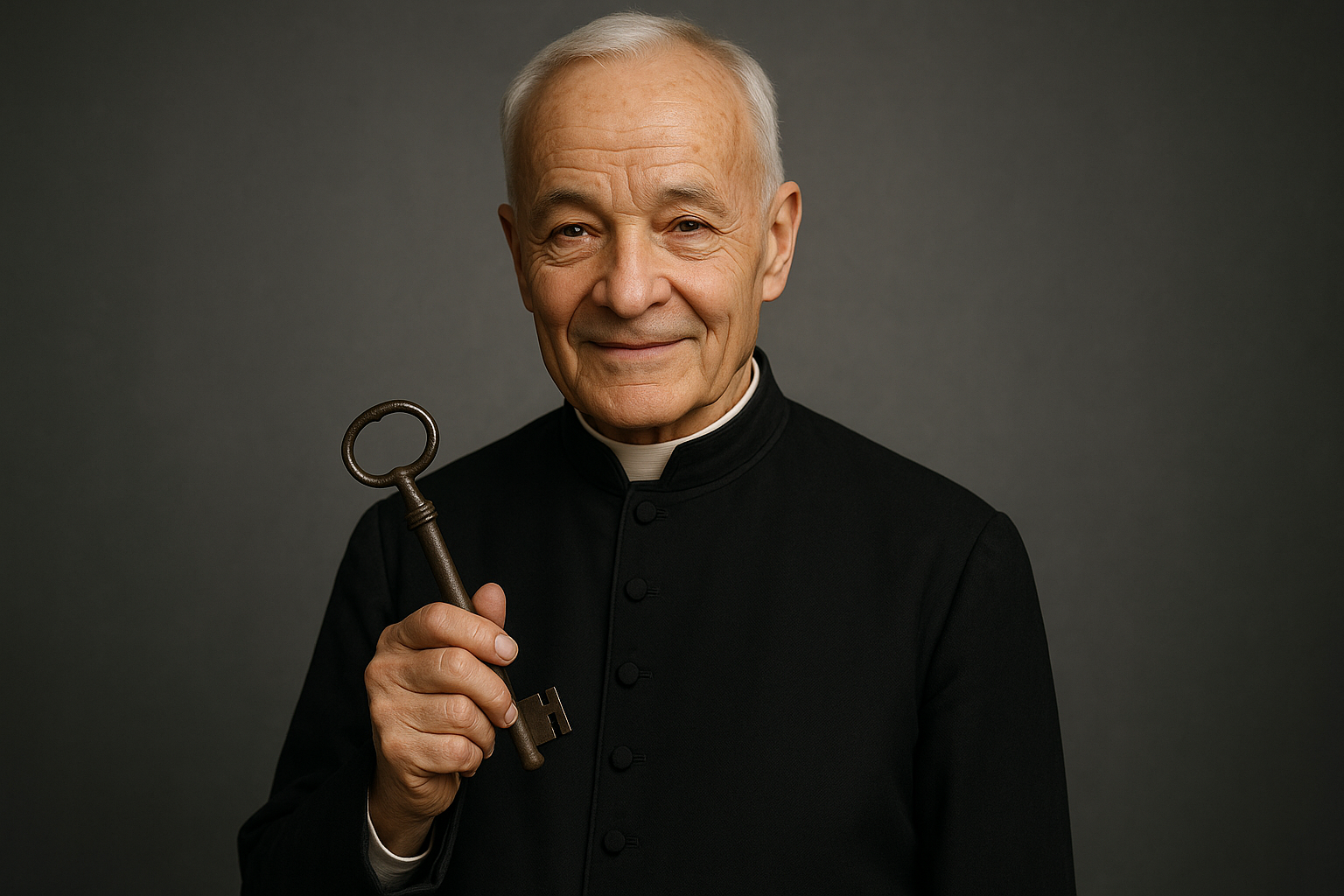
- A Doorkeeper’s Key: This is the most common symbol, directly referencing his long tenure as the porter at Notre Dame College. It signifies his humble service, his role in opening doors (literally and figuratively) for people seeking help, and his position as a gatekeeper to St. Joseph’s Oratory.
- A Staff or Cane: Often depicted with a walking aid, symbolizing his lifelong frail health and the physical challenges he endured, especially in his later years. It also represents his journey and the path he walked in faith.
- A Small Chapel or the Oratory Dome: Sometimes shown holding a miniature chapel or with the iconic dome of St. Joseph’s Oratory in the background. This symbolizes his visionary dream and his relentless efforts in founding the great shrine dedicated to St. Joseph.
- A Lamp or Oil: Referring to the oil from the lamp burning before St. Joseph, which he encouraged people to use with faith for healing. It symbolizes the light of faith and the healing power of God through intercession.
- St. Joseph: Brother André is often depicted in prayer before a statue or image of St. Joseph, or St. Joseph may be shown nearby. This highlights his profound and defining devotion to the foster father of Jesus.
Timeline Summary
- 1845: Born Alfred Bessette in Saint-Grégoire-d’Iberville, Quebec, on August 9.
- 1854: His father dies in a logging accident.
- 1857: His mother dies, leaving him an orphan. He works various manual labor jobs.
- 1870: Enters the novitiate of the Congregation of Holy Cross in Montreal, taking the name Brother André.
- 1872: Professes his perpetual vows and is assigned as the doorkeeper (porter) at Notre Dame College.
- Early 1900s: His reputation for healing through St. Joseph’s intercession grows, drawing many sick visitors.
- 1904: A small chapel dedicated to St. Joseph is built on Mount Royal, largely through his efforts and donations.
- 1917: Construction begins on the Crypt Church, the first major phase of the St. Joseph’s Oratory.
- 1924: The cornerstone for the immense Upper Basilica of St. Joseph’s Oratory is laid.
- 1937: Dies on January 6; over one million people visit his remains in the following days.
- 1982: Beatified by Pope John Paul II.
- 2010: Canonized by Pope Benedict XVI on October 17, becoming Canada’s first male saint.
Scripture for Reflection
St. André Bessette’s life beautifully illuminates several scriptural passages, offering a concrete example of Christian virtues in action:
Philippians 2:3-4: “Do nothing out of selfish ambition or vain conceit. Rather, in humility value others above yourselves, not looking to your own interests but each of you to the interests of the others.”
This passage perfectly encapsulates Brother André’s humility and selfless service. He never sought personal glory but always directed attention to God and St. Joseph. His entire life was dedicated to the interests of others, especially the sick and suffering, whom he valued and served with profound love.
Matthew 25:40: “The King will reply, ‘Truly I tell you, whatever you did for one of the least of these brothers and sisters of mine, you did for me.'”
Brother André lived this verse profoundly. He ministered to thousands of people who were sick, poor, or marginalized, seeing in each of them Christ Himself. His compassion for the suffering was a direct expression of his love for Jesus, reminding us that acts of charity to those in need are acts of love for God.
Mark 11:24: “Therefore I tell you, whatever you ask for in prayer, believe that you have received it, and it will be yours.”
This verse reflects Brother André’s unwavering faith and trust in the power of prayer. He encouraged everyone to pray with belief, insisting that it was not his power, but God’s, working through St. Joseph, that brought about healings. His life is a testament to the efficacy of faith-filled prayer and intercession.
Prayers to St. André Bessette
Here are popular prayers for the intercession of St. André Bessette:
Prayer for Healing through St. André Bessette
Dear Saint André, humble porter of God, we come before you with hearts full of hope and trust. You who, through your deep devotion to Saint Joseph, brought comfort and healing to countless souls, intercede for us now before God. We place before you our specific intentions (mention your intentions here, especially for healing). Through your simple yet profound faith, you showed us that God works wonders through the meek and the humble. Help us to imitate your humility, your patience, and your unwavering trust in divine providence. May we, like you, turn to Saint Joseph with confidence and experience the healing touch of God. Amen.
Another Prayer to St. André Bessette
O Saint André, you chose to walk the path of humility and simplicity, dedicating your life to serving God and neighbor, especially the sick and suffering. Despite your frail health and modest education, your profound faith in God and your loving devotion to Saint Joseph made you a channel of healing and grace. We ask you to pray for us, that we may embrace our own crosses with courage and patience. Help us to trust in God’s loving plan, even when we do not understand it. Inspire us to be agents of compassion and hope in our world, just as you were. Guide us in our own daily tasks, that we may perform them with love and dedication, finding holiness in the ordinary. Saint André, pray for us. Amen.