Discover the remarkable story of Saint Faustina Kowalska, the Polish nun whose visions of Jesus Christ sparked the worldwide devotion to Divine Mercy that transforms millions of lives today.
Quick Facts
| Key | Detail |
|---|---|
| Birth | August 25, 1905, Głogowiec, Poland |
| Death | October 5, 1938, Kraków, Poland |
| Feast Day | October 5 |
| Patronage | Mercy, World Youth Day |
| Canonized | April 30, 2000, by Pope John Paul II |
| Birth Name | Helena Kowalska |
| Religious Name | Sister Faustina |
Historical Context & Early Life
The early 20th century marked a period of unprecedented turmoil for Poland and the world. Helena Kowalska was born just a decade before World War I would devastate Europe, and she would live through Poland’s struggle for independence, economic hardship, and the rising threat of totalitarian ideologies. Within this context of suffering and uncertainty, God would choose a humble peasant girl to deliver a message of mercy that the world desperately needed.
Helena was born into a devout Catholic family in the small village of Głogowiec, in what was then Russian-occupied Poland. Her parents, Marianna and Stanisław Kowalski, were poor farmers who struggled to provide for their ten children. Despite their poverty, the family maintained deep faith, gathering each evening for the rosary and attending Mass regularly despite the considerable distance to their parish church.
From early childhood, Helena displayed extraordinary piety and sensitivity to the spiritual realm. She experienced her first vision of Jesus at age seven and felt called to religious life as a young teenager. However, her parents, facing financial difficulties, needed her to work and help support the family. This tension between her spiritual calling and family obligations would shape her early years.
At sixteen, Helena moved to Warsaw to work as a housekeeper, sending most of her earnings home to her family. The bustling capital city exposed her to modern life’s temptations and distractions, yet she maintained her devotion and her sense of religious calling. During this period, she experienced a profound vision of the suffering Jesus that intensified her desire to enter religious life.
Calling & Key Milestones
Entrance to Religious Life
Despite her family’s initial resistance due to their financial dependence on her wages, Helena persisted in her religious vocation. In 1925, at age twenty, she entered the Congregation of the Sisters of Divine Mercy in Warsaw, taking the religious name Sister Faustina. This congregation, founded in the 19th century, was dedicated to caring for fallen women and abandoned children, work that would deeply influence Faustina’s understanding of God’s mercy.
Her early years in religious life were marked by faithfulness in ordinary duties rather than extraordinary mystical experiences. She worked as a gardener, porter, and cook, approaching each task with remarkable dedication and joy. Her fellow sisters initially found her unremarkable, not suspecting the profound spiritual life developing within her heart.
The Divine Mercy Visions
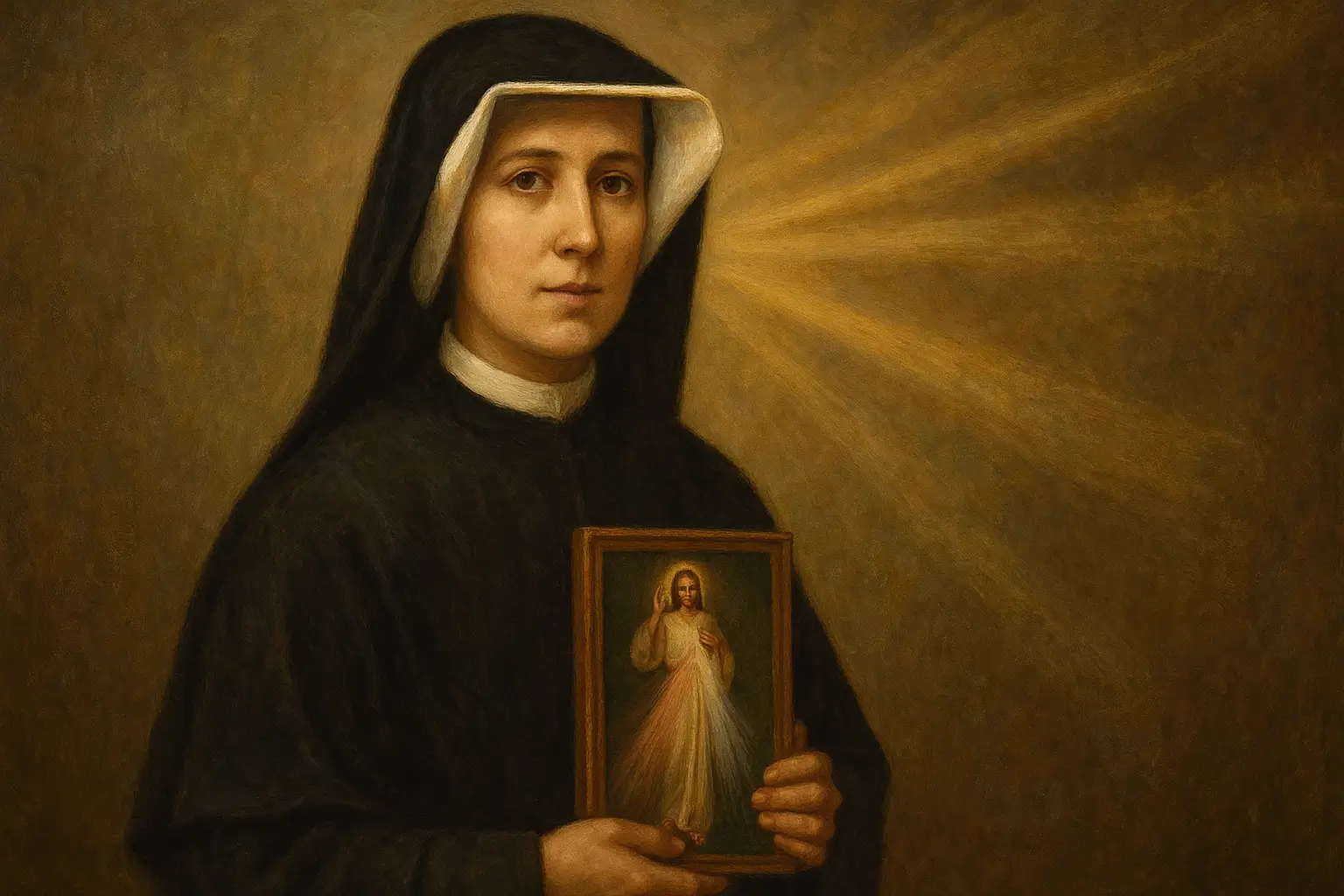
On February 22, 1931, while in her convent cell in Płock, Sister Faustina experienced the vision that would change her life and impact the universal Church. Jesus appeared to her dressed in a white garment with rays of red and pale light emanating from His heart. He instructed her to have an image painted with the inscription “Jesus, I trust in You” and promised great graces to those who would venerate this image.
This vision marked the beginning of an extraordinary mystical relationship with Christ that would continue for the remaining seven years of her life. Through subsequent visions, Jesus taught her specific prayers, devotions, and practices that would form the foundation of the Divine Mercy devotion, including the Divine Mercy Chaplet and the celebration of Divine Mercy Sunday.
The Spiritual Diary
At the direction of her spiritual directors, Sister Faustina recorded her mystical experiences, prayers, and spiritual insights in a diary that would eventually contain over 600 pages. This remarkable document, written by a woman with minimal formal education, demonstrates profound theological insight into God’s mercy and provides detailed instructions for the devotions Jesus requested.
The diary reveals not only her extraordinary mystical experiences but also her struggles with doubt, suffering, and the ordinary challenges of religious life. Her transparency about both spiritual heights and human weakness makes her testimony particularly credible and relatable to modern readers seeking authentic spirituality.
Final Years and Death
Sister Faustina’s health began declining in 1936 when she was diagnosed with tuberculosis. Despite her physical suffering, this period marked the intensification of her mystical experiences and her deepest union with Christ’s passion. She offered her sufferings for the conversion of sinners and the spread of devotion to Divine Mercy.
She died on October 5, 1938, at the young age of 33, the same age as Christ at His crucifixion. Her death occurred just one year before World War II would bring unprecedented suffering to her beloved Poland, making her message of Divine Mercy particularly prophetic and necessary for the trials ahead.
Spiritual Legacy & Theological Themes
Saint Faustina’s spirituality centers on the infinite mercy of God as revealed through Jesus Christ. Her devotion emphasizes that God’s mercy is greater than human sin and that no one should despair of salvation. This message directly countered the Jansenist influences that had made many Catholics fearful of God’s judgment rather than confident in His love.
The Divine Mercy devotion includes several key elements that Jesus revealed to her. The Divine Mercy Chaplet, prayed on ordinary rosary beads, focuses on Christ’s passion as the source of mercy for humanity. The prayer “Jesus, I trust in You” serves as both a declaration of faith and a surrender to divine providence. The celebration of Divine Mercy Sunday, established by Jesus as the “Feast of Mercy,” offers special graces to those who approach the sacraments with proper preparation.
Her understanding of mercy encompasses both forgiveness of sin and the positive outpouring of God’s love that transforms hearts and lives. She taught that experiencing God’s mercy should lead to showing mercy to others, creating a cycle of compassion that transforms communities and societies.
The theological depth of her writings impressed Church authorities despite her lack of formal theological training. Her insights into the Trinity, the nature of God’s mercy, and the relationship between justice and mercy demonstrate the Holy Spirit’s teaching through ordinary believers who remain open to divine grace.
Pope John Paul II, her fellow Pole, recognized the particular significance of her message for the modern world. He established Divine Mercy Sunday as a universal celebration and promoted the spread of the devotion worldwide, seeing in it a response to the errors of materialism, atheism, and despair that characterized the 20th century.
Devotion Today
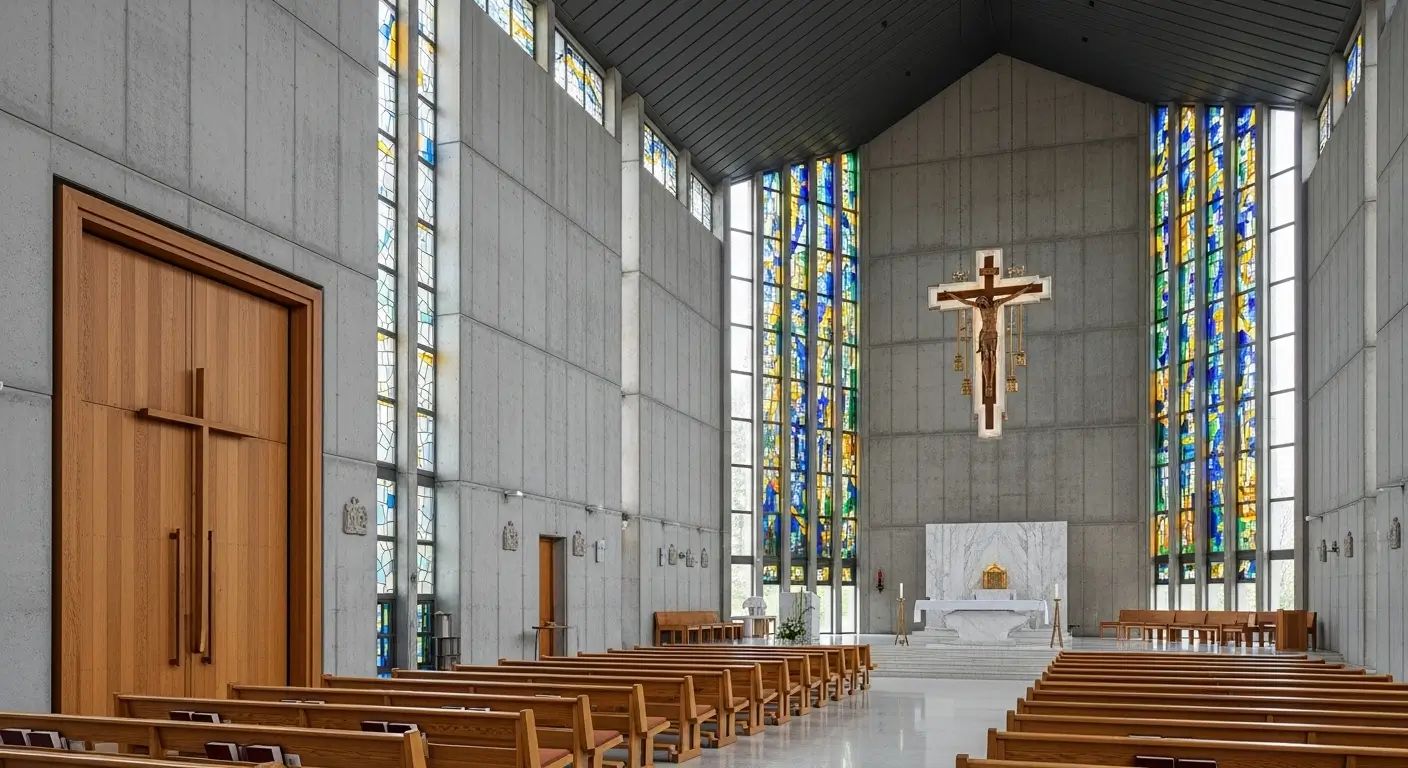
The Shrine of Divine Mercy in Kraków-Łagiewniki, built at the site where Sister Faustina lived and died, attracts millions of pilgrims annually. The complex includes the original convent, her tomb, a museum displaying her personal effects and the original Divine Mercy image, and a modern basilica capable of accommodating large crowds. Pope John Paul II visited this shrine multiple times, emphasizing its importance for the universal Church.
Divine Mercy Sunday, celebrated on the second Sunday of Easter, has become one of the most widely observed devotions in the Catholic Church. Parishes worldwide organize special celebrations including the Divine Mercy Chaplet, veneration of the Divine Mercy image, and opportunities for confession and communion. Many churches report their largest congregations of the year on this feast day.
The Divine Mercy Chaplet has become one of the most popular Catholic prayers, recited daily by millions of faithful worldwide. Prayer groups gather regularly to pray the chaplet, often in conjunction with Eucharistic adoration. The prayer’s simple structure and profound meaning make it accessible to Catholics of all ages and backgrounds.
Devotion to Divine Mercy flourishes particularly in times of crisis and suffering. During the COVID-19 pandemic, many Catholics turned to this devotion for comfort and hope. The prayer “Jesus, I trust in You” has provided strength to those facing illness, loss, and uncertainty, demonstrating the enduring relevance of Saint Faustina’s message.
Religious communities worldwide have embraced her spirituality, with many congregations adopting the Divine Mercy devotion as central to their charism. The original Sisters of Divine Mercy continue to spread the devotion while maintaining their traditional works of mercy among the marginalized and suffering.
Reflections for Modern Readers
Saint Faustina’s message offers profound hope for contemporary believers facing personal and societal challenges. First, her emphasis on God’s infinite mercy provides antidote to the despair and anxiety that characterize modern life. In a world that often feels divided between judgment and permissiveness, she presents a third way that acknowledges sin while affirming God’s desire to forgive and heal.
Second, her simple prayer “Jesus, I trust in You” offers a practical response to uncertainty and worry. Modern examples include healthcare workers who repeat this prayer during difficult procedures, parents who invoke it during family crises, or individuals facing unemployment who find peace in surrendering their concerns to divine providence.
Third, her understanding that receiving mercy should lead to showing mercy provides a framework for addressing social divisions and conflicts. Contemporary applications include forgiveness in marriage relationships, reconciliation between estranged family members, and efforts to bridge political and cultural divides through compassion rather than condemnation.
Fourth, her integration of mystical experience with ordinary religious life demonstrates that extraordinary grace can flourish within routine duties and common struggles. Modern believers can find encouragement that holiness doesn’t require dramatic spiritual experiences but can develop through faithful response to daily challenges and opportunities for service.
Finally, her message that God’s mercy is particularly available during times of greatest need offers hope for those facing serious illness, loss, or moral failures. Her example shows that no situation is beyond God’s healing grace and that even the most difficult circumstances can become opportunities for deeper trust and spiritual growth.
Timeline Summary
• 1905 – Born Helena Kowalska in Głogowiec, Poland • 1921 – Moves to Warsaw to work as housekeeper • 1925 – Enters Sisters of Divine Mercy convent • 1928 – Makes first vows as Sister Faustina • 1931 – Receives first Divine Mercy vision on February 22 • 1933 – Makes perpetual vows • 1934 – First Divine Mercy image painted by Eugene Kazimierowski • 1935 – Jesus reveals the Divine Mercy Chaplet • 1936 – Diagnosed with tuberculosis • 1937 – Experiences intensified mystical visions despite illness • 1938 – Dies October 5 in Kraków • 1993 – Beatified by Pope John Paul II • 2000 – Canonized by Pope John Paul II; Divine Mercy Sunday established
Further Reading & References
Ewa, Sister M. Faustina: Saint for Our Times. Stockbridge: Marian Press, 2015.
John Paul II, Pope. Homily for the Canonization of Sister Faustina. Vatican City: Libreria Editrice Vaticana, 2000.
Kowalska, Faustina. Diary: Divine Mercy in My Soul. Stockbridge: Marian Press, 2005.
Michalenko, Sophia. The Life of Saint Faustina Kowalska: The Authorized Biography. Ann Arbor: Servant Publications, 1999.
Stackpole, Robert. Divine Mercy: A Guide from Genesis to Benedict XVI. Stockbridge: Marian Press, 2008.
Treece, Patricia. Meet Saint Faustina: Apostle of Divine Mercy. Ann Arbor: Servant Publications, 2006.