In the vibrant tapestry of early Christian thought, few figures shine as brightly or with as much intellectual depth as Saint Gregory of Nyssa. Born into a remarkable family of saints in what is now Turkey during the 4th century, Gregory emerged not only as a staunch defender of orthodox Christian teaching during a tumultuous era but also as one of the most profound spiritual writers the Church has ever known. This article will delve into his fascinating life, his pivotal role in shaping Christian doctrine, his enduring spiritual legacy, and how his wisdom continues to speak to believers in the modern world.
Quick Facts
| Category | Detail |
|---|---|
| Birth | c. 335 AD, Caesarea Mazaca, Cappadocia |
| Death | c. 395 AD, Nyssa or Constantinople |
| Feast Day | March 9 (Western Church), January 10 (Eastern Church) |
| Patronage | Theologians, mystics, philosophers, educators |
| Canonized | Acknowledged as a Saint through ancient veneration (pre-congregation) |
Historical Context & Early Life
Saint Gregory of Nyssa lived in a pivotal time for the Christian Church, a period of intense theological debate and significant shifts within the Roman Empire. The 4th century saw Christianity transition from a persecuted minority religion to the official religion of the empire, but this newfound freedom also brought internal struggles over fundamental doctrines. The most pressing of these was the Arian controversy, which challenged the divinity of Jesus Christ, asserting that he was created by God the Father and thus not fully divine. This debate threatened to tear the Church apart, necessitating clear and articulate theological defense.
Gregory’s upbringing in Cappadocia, a region in modern-day Turkey, was extraordinary. He was the younger brother of two towering figures of early Christianity: Saint Basil the Great, one of the most influential theologians and monastic reformers, and Saint Macrina the Younger, a revered spiritual guide and monastic founder in her own right. Their family was deeply devout, educated, and well-connected. Their grandmother, Saint Macrina the Elder, had been a disciple of Saint Gregory Thaumaturgus, a missionary who had converted much of Pontus to Christianity in the 3rd century. This rich spiritual heritage provided a fertile ground for Gregory’s intellectual and spiritual development.
Unlike his elder brother Basil, Gregory initially pursued a more secular path. He received a rigorous classical education, excelling in rhetoric and philosophy, and seemed destined for a career as a rhetorician or lawyer. He married a devout woman named Theosebia, with whom he shared a loving and intellectually stimulating relationship. While he eventually embraced a clerical life, his deep grounding in classical learning and his experiences in the secular world profoundly influenced his later theological writings, allowing him to bridge the gap between Christian revelation and Hellenistic philosophy.
Calling & Key Milestones
Embracing a Spiritual Path
Despite his early academic and professional success, Gregory felt a growing pull towards a deeper spiritual life. This redirection was significantly influenced by his siblings. His brother Basil, having established monastic communities, encouraged Gregory to devote himself more fully to God. However, it was his sister Macrina who played an even more crucial role. She transformed the family estate into a monastic community, where she led a life of profound asceticism and contemplation. Through her example and wise counsel, Gregory began to seriously consider a life dedicated to God beyond secular pursuits. He spent a period living as a rhetorician, then briefly served as a reader (a minor clerical order) in the Church, before ultimately withdrawing from public life to live a monastic existence for a time, deeply studying Scripture and philosophy.
Bishop of Nyssa
Gregory’s period of monastic solitude was short-lived. In 371 or 372 AD, his brother Basil, who had become the Archbishop of Caesarea, orchestrated Gregory’s appointment as Bishop of the small, obscure see of Nyssa. This was largely a strategic move by Basil to consolidate Nicene orthodoxy against Arianism within the region, placing trusted allies in key positions. Gregory, by his own admission, was reluctant, feeling ill-equipped for the administrative and pastoral demands of an episcopal office. He preferred the quiet life of study and contemplation. However, he eventually accepted the call, demonstrating a humble obedience to his brother and the needs of the Church.
Exile and Return
The political and ecclesiastical landscape of the 4th century was fraught with danger for those who upheld the Nicene Creed, which affirmed the full divinity of Christ. The Emperor Valens, an Arian sympathizer, actively persecuted Nicene bishops. Gregory’s outspoken defense of orthodoxy made him a target. In 375 AD, trumped-up charges of mismanagement of church funds and illegal consecration were brought against him, leading to his exile from Nyssa. This period of banishment, lasting several years, was a time of hardship but also of spiritual growth and deeper theological reflection for Gregory. He returned triumphantly to his see in 378 AD after Valens’ death, warmly welcomed by his flock, a testament to his spiritual authority and pastoral care.
Council of Constantinople (381 AD)
One of the pinnacle moments in Gregory’s life was his participation and significant contribution to the First Council of Constantinople in 381 AD. This ecumenical council was convened by Emperor Theodosius I to settle the remaining disputes of the Arian controversy and to address new heresies, particularly those concerning the divinity of the Holy Spirit (Macedonianism). Gregory, alongside his close friend Gregory of Nazianzus, played a leading role. He was a principal architect of the Niceno-Constantinopolitan Creed, which clarified the Church’s teaching on the Holy Spirit, asserting His full divinity and equality with the Father and the Son. His eloquent theological arguments were instrumental in solidifying the doctrine of the Trinity, earning him the title of one of the “Cappadocian Fathers,” alongside Basil and Gregory of Nazianzus, who are renowned for articulating Trinitarian theology with unprecedented clarity and precision.
A Prolific Writer and Theologian
Throughout his life, Gregory of Nyssa was an exceptionally prolific writer. His theological works are vast and varied, encompassing philosophical treatises, exegetical commentaries, polemical writings against heresy, and profound spiritual reflections. Key works include:
- On the Soul and the Resurrection: A dialogue with his sister Macrina on death, immortality, and the hope of resurrection, written after her passing.
- The Great Catechism: A systematic theological handbook designed to instruct catechumens (those preparing for baptism), covering topics from creation to redemption.
- Life of Moses: Not merely a biography, but a profound allegorical interpretation of Moses’ life as a paradigm for the soul’s journey of spiritual ascent towards God.
- Against Eunomius: A refutation of the extreme Arian theologian Eunomius, defending the incomprehensibility of God and the full divinity of the Son.
These writings reveal a mind deeply steeped in Scripture, classical philosophy (especially Platonism), and a profound personal experience of God. He used philosophy not to dilute Christian truth but to articulate it more deeply, always in service of spiritual growth and the defense of orthodoxy.
Spiritual Legacy & Theological Themes
St. Gregory of Nyssa’s spiritual legacy is immense, profoundly influencing both Eastern and Western Christian thought. He exemplified numerous virtues, including intellectual humility, a tireless pursuit of truth, unwavering faith in the face of adversity, and a deep, contemplative love for God. These virtues are not just abstract ideas but are beautifully woven into his theological framework, which consistently emphasizes the human person’s capacity for divine communion.
His lasting influence on doctrine is evident in his contributions to Trinitarian theology, particularly in articulating the distinct yet co-equal persons of the Father, Son, and Holy Spirit. He stressed that while God’s essence is unknowable, we can know God through His operations and energies in the world and in our souls. He taught that God is an infinite, dynamic reality, and our knowledge of Him is therefore an unending process.
Among his most significant theological contributions is his understanding of humanity. Gregory believed that humans are created in the “image and likeness” of God (Genesis 1:26-27), meaning we possess rationality, freedom, and a capacity for spiritual growth. He introduced the concept of epektasis, which describes the soul’s ceaseless progress towards God. For Gregory, spiritual perfection is not a static state but an eternal, dynamic stretching forward into the infinite God. As we approach God, we realize there is always more to know and experience, leading to an endless journey of transformation and divinization (theosis – the process of becoming more like God).
He also developed an early form of “apophatic theology,” or negative theology, asserting that we can describe God more accurately by what He is not, rather than by what He is. This humility before the divine mystery underscores the incomprehensibility of God, yet paradoxically deepens our longing to experience Him.
His writings on the mystical journey have made him a patron saint of mystics. Through allegorical interpretations of Scripture, such as his *Life of Moses*, he detailed the soul’s ascent through purification, illumination, and ultimately union with God, a path still followed in Eastern Orthodox spirituality. While some of his more speculative ideas, like “apokatastasis” (the ultimate restoration of all creation, including possibly all rational beings, to God), have been understood differently or debated within the Church, his core emphasis on God’s boundless love and restorative power remains profoundly influential.
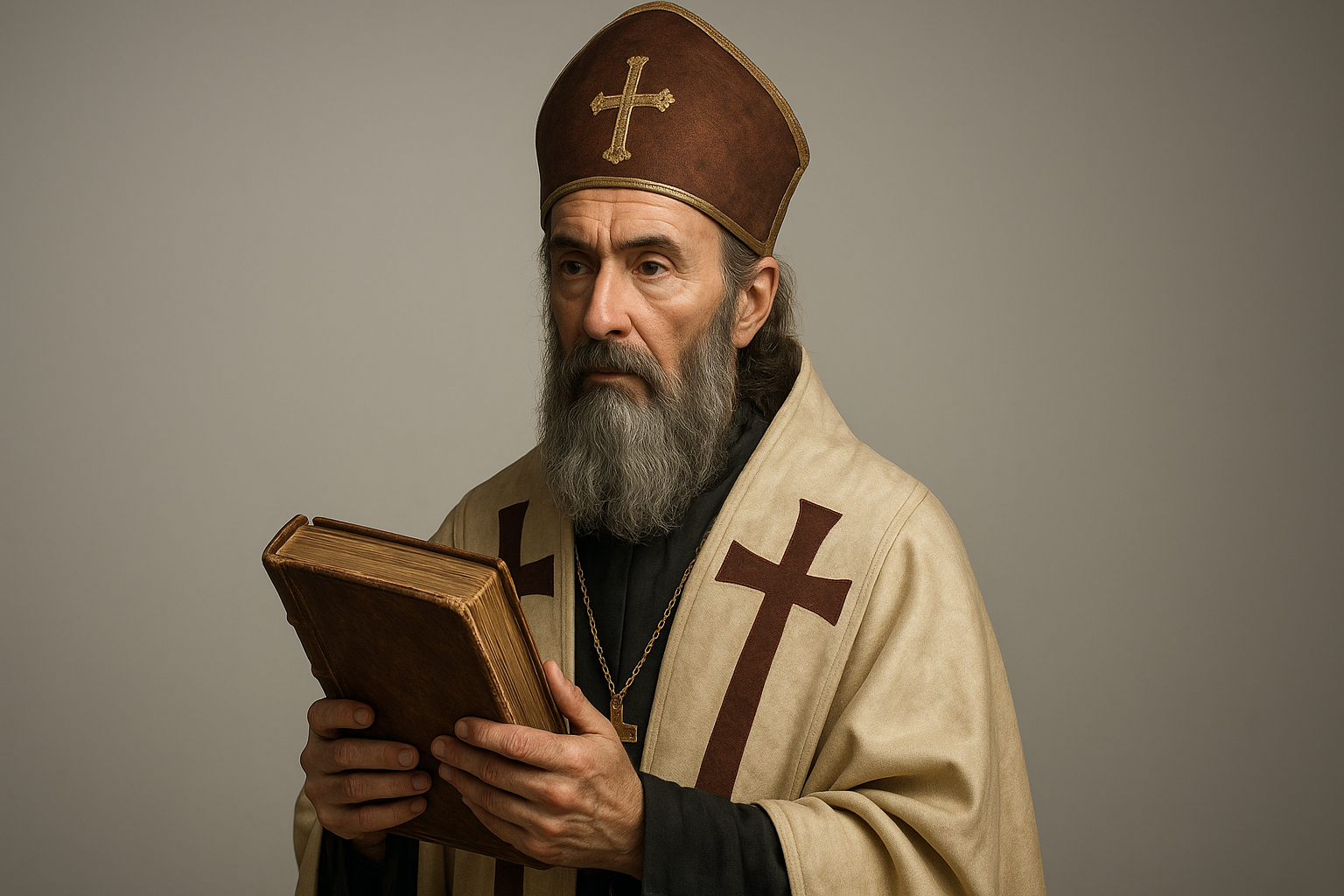
In art, Gregory is often depicted as a bishop, often holding a book or scroll, symbolizing his role as a profound theologian and writer. He might also be shown with a dove, representing the Holy Spirit’s inspiration, or in conversation with other Cappadocian Fathers, highlighting their collective impact on Trinitarian doctrine.
Devotion Today
Saint Gregory of Nyssa is highly venerated in both the Eastern Orthodox Church and the Roman Catholic Church, though his influence is particularly strong in the East, where he is regarded as one of the “Three Cappadocian Fathers” (along with Basil the Great and Gregory of Nazianzus) and one of the most profound theologians. His feast day is celebrated on March 9 in the Western Church and January 10 in the Eastern Church.
While specific pilgrimage sites directly associated with his episcopal see of Nyssa are no longer prominent due to historical changes in the region, his legacy is celebrated through his writings and the academic study of his theology. Many Orthodox monasteries and theological schools bear his name or celebrate his feast with special reverence. His works are studied by theologians, philosophers, and spiritual seekers across denominations who are drawn to his rich mystical insights and his profound defense of foundational Christian doctrines.
His writings continue to be translated and published, making his timeless wisdom accessible to new generations of readers seeking depth in their faith. Liturgical texts in the Eastern Church frequently draw from his theological language, ensuring his ideas remain vibrant in the worship life of millions.
Reflections for Modern Readers
St. Gregory of Nyssa, though living centuries ago, offers timeless wisdom for contemporary believers grappling with faith, reason, and spiritual growth in the 21st century.
1. Embrace Intellectual Curiosity and Faith: Gregory was a master of both classical philosophy and Christian theology. He demonstrates that faith is not a retreat from reason but an invitation to use our intellects to delve deeper into the mysteries of God. For modern readers, this means engaging thoughtfully with science, philosophy, and current events from a faith perspective, seeking harmony rather than conflict. For example, a student of science can find inspiration in Gregory’s systematic approach to understanding the created order, seeing it as a reflection of God’s wisdom.
2. Persevere Through Adversity for Truth: Gregory faced exile and political intrigue for upholding the truth of Christ’s divinity. His steadfastness reminds us that standing for truth, especially unpopular truth, often requires courage and perseverance. In a world of misinformation and shifting values, his example encourages us to remain firm in our convictions and to speak truth with charity and clarity. Think of standing up against online bullying or advocating for ethical practices in your workplace, even when it’s difficult.
3. Seek Continuous Spiritual Growth (Epektasis): Gregory’s concept of epektasis—the soul’s unending progress toward God—is profoundly hopeful. It tells us that spiritual perfection isn’t a destination but an eternal journey of becoming. This challenges us to avoid complacency in our faith and always strive for deeper prayer, greater virtue, and a more profound relationship with God. This could mean picking up a new spiritual practice, committing to regular Bible study, or serving others more intentionally, knowing there’s always more room to grow.
4. Uphold the Dignity of Every Person: Central to Gregory’s anthropology is the belief that every human being is created in God’s image, possessing inherent dignity and infinite worth. This theological insight has profound ethical implications, calling us to respect, protect, and love every individual, regardless of their background, beliefs, or circumstances. In today’s world, this translates into advocating for human rights, working for social justice, and treating everyone we encounter with Christ-like love, recognizing the image of God within them.
In art and jewelry, St. Gregory of Nyssa is commonly represented with symbols reflecting his life and work. He is often depicted wearing episcopal vestments, signifying his role as a bishop and teacher of the Church. A prominent symbol is a book or scroll, representing his voluminous writings, profound theological insights, and his mastery of Scripture. Sometimes, he holds a quill or stylus, further emphasizing his identity as a prolific writer. These symbols remind us of his intellectual prowess, his commitment to explaining the faith, and his enduring legacy as one of the Church’s greatest theological minds.
Timeline Summary
- c. 335 AD: Born in Caesarea Mazaca, Cappadocia, into a prominent Christian family.
- c. 350-360s AD: Pursues a secular education in rhetoric and philosophy; marries Theosebia.
- c. 360-370 AD: Influenced by his siblings, St. Basil the Great and St. Macrina the Younger, he embraces a more monastic and spiritual lifestyle.
- c. 371-372 AD: Reluctantly consecrated as Bishop of Nyssa by his brother Basil.
- 375 AD: Exiled from Nyssa on fabricated charges by the Arian Emperor Valens.
- 378 AD: Returns triumphantly to his see after the death of Emperor Valens.
- 379 AD: His brother, Basil the Great, dies; Gregory writes the funeral oration and begins to assume a more prominent role in defending Nicene orthodoxy. His sister Macrina dies; he writes *On the Soul and the Resurrection*.
- 381 AD: Plays a leading role in the First Council of Constantinople, affirming the divinity of the Holy Spirit and solidifying Trinitarian doctrine.
- Post-381 AD: Continues to write extensively, producing works like *The Great Catechism*, *Life of Moses*, and various polemical treatises.
- c. 395 AD: Dies, likely in Nyssa or Constantinople, having solidified his place as one of the greatest theologians of the early Church.
Scripture for Reflection
Genesis 1:26-27 (NRSVCE): “Then God said, ‘Let us make humankind in our image, according to our likeness; and let them have dominion over the fish of the sea, and over the birds of the air, and over the cattle, and over all the wild animals of the earth, and over every creeping thing that creeps upon the earth.’ So God created humankind in his image, in the image of God he created them; male and female he created them.”
St. Gregory of Nyssa deeply explored the meaning of humanity being created in God’s “image and likeness.” For him, this wasn’t just about our physical form but our spiritual capacities: reason, free will, and our potential for communion with God. This passage reminds us of the inherent dignity and divine spark within every human person, a cornerstone of Gregory’s theology.
Philippians 3:12-14 (NRSVCE): “Not that I have already obtained this or have already reached the goal; but I press on to make it my own, because Christ Jesus has made me his own. Beloved, I do not consider that I have made it my own; but this one thing I do: forgetting what lies behind and straining forward to what lies ahead, I press on toward the goal for the prize of the upward call of God in Christ Jesus.”
This passage beautifully encapsulates Gregory’s concept of epektasis, the soul’s ceaseless spiritual progress. Like St. Paul, Gregory believed that true spiritual life is an unending journey of “straining forward” toward God, realizing that perfection is not a static achievement but an eternal stretching into the infinite divine. It encourages us to continually grow and deepen our relationship with God.
Prayers to St. Gregory of Nyssa
O God, who enlightened your Church with the wondrous learning of Saint Gregory of Nyssa, grant that through his intercession and instruction, we may grow in the knowledge of you and come to a deeper love of your divine mysteries. Through Christ our Lord. Amen.
Heavenly Father, through the intercession of Saint Gregory of Nyssa, who brilliantly defended the truth of your Son’s divinity and the profound mystery of the Holy Trinity, grant us clarity of mind and unwavering faith. Inspire us to seek you with intellectual curiosity and a heart open to your boundless wisdom. May we, like him, continually stretch towards you in our spiritual journey, striving for growth and ever-deepening communion. We ask this through Jesus Christ our Lord. Amen.