In the vast tapestry of Catholic saints, some figures stand out with exceptional clarity, their lives illuminating the path of faith for generations. Others, like Saint James the Less, shine with a quieter, yet profoundly significant light. Often overshadowed by his namesake, James the Greater, this Apostle played an indispensable role in the early Church, guiding its nascent community through foundational challenges and leaving us a powerful written legacy. This article invites you to explore the life and times of St. James the Less, delving into his identity, his crucial contributions as the first Bishop of Jerusalem, the wisdom found in his inspired letter, and the enduring lessons he offers to believers today. Join us as we uncover the spiritual richness of this humble yet mighty pillar of our faith, from his early life to his timeless message of living faith through action.
Quick Facts
| Attribute | Detail |
|---|---|
| Birth | Likely Nazareth or Galilee, precise date unknown (1st century AD) |
| Death | c. 62 AD, Jerusalem (martyred) |
| Feast Day | May 3 (with St. Philip) |
| Patronage | Fullers, pharmacists, people suffering from eye diseases, dying people |
| Canonized | By acclamation from the earliest days of the Church as an Apostle and martyr |
Historical Context & Early Life
To understand Saint James the Less, we must first transport ourselves to the tumultuous landscape of Judea in the first century AD. It was a land under the heavy hand of Roman occupation, yet teeming with vibrant Jewish religious life. Roman governors, distinct cultural practices, and varying Jewish factions – like the Pharisees, Sadducees, and Essenes – created a complex social and political environment. In the midst of this, a new movement was stirring: the followers of Jesus of Nazareth, proclaiming a message of repentance, love, and the coming of God’s Kingdom. It was into this crucible of faith, empire, and expectation that James the Less was born.
James is often identified as “James, son of Alphaeus,” one of the twelve apostles chosen by Jesus. He is also widely believed to be the same James referred to in the Gospels as “James, the brother of the Lord” (Galatians 1:19, Mark 6:3). This phrase, “brother of the Lord,” has been a point of careful theological discussion throughout Church history. According to Catholic tradition, which upholds the perpetual virginity of Mary, “brother” in this context refers not to a biological sibling of Jesus, but rather to a close relative, most likely a cousin. In ancient Semitic languages, terms for kinship were often much broader than our modern definitions, encompassing cousins, nephews, and other close relatives. Thus, James the Less would have grown up within the extended family circle of Jesus, likely sharing the same Galilean Jewish cultural and religious upbringing, steeped in the traditions of the Mosaic Law and the prophets.
His early life, like that of many apostles, is not extensively detailed in Scripture. We can infer that he was a working man, perhaps a fisherman or a farmer, living a humble existence in a small town. This background would have given him a grounded, practical understanding of life and a deep connection to the daily struggles and hopes of ordinary people. It was from this ordinary existence that Jesus called him, not for his social standing or scholarly prestige, but for his heart and his willingness to follow.
Calling & Key Milestones
Called to Apostleship
James the Less was among the chosen few, the twelve Apostles whom Jesus personally selected to be his closest companions, witnesses to his ministry, miracles, death, and resurrection. This call was not just an invitation but a profound transformation, drawing him away from his former life to become a foundational stone of the nascent Church. While he is not as prominently featured in the Gospels as Peter, John, or his namesake James the Greater, his presence among the Twelve signifies his direct discipleship and his privileged position as one who learned directly from Christ.
First Bishop of Jerusalem
After Christ’s Ascension and the descent of the Holy Spirit at Pentecost, James the Less emerged as a towering figure in the early Christian community, specifically in Jerusalem. He became the first Bishop of Jerusalem, a role of immense responsibility and spiritual authority. This appointment was crucial, as Jerusalem was the birthplace of the Church, the hub from which the Gospel would spread. James’s leadership was characterized by wisdom, piety, and a deep reverence for Jewish tradition, which helped bridge the gap between the new Christian faith and its Jewish roots. He was known for his ascetic lifestyle, often depicted with calloused knees from constant prayer, earning him the title “James the Just” among both Christians and non-Christians in Jerusalem.
The Council of Jerusalem
Perhaps James’s most significant historical contribution was his pivotal role in the Council of Jerusalem, recorded in Acts 15. This was the first major theological and pastoral crisis the Church faced: did Gentile converts need to be circumcised and follow all the Mosaic Laws to become Christians? Some Jewish Christians insisted that they did, causing great contention. After Peter and Paul presented their arguments, it was James who, as the presiding authority, delivered the definitive judgment. His ruling, inspired by the Holy Spirit, was a masterstroke of wisdom and diplomacy. He affirmed that Gentile converts did not need to be circumcised but should abstain from certain practices (like eating food sacrificed to idols or consuming blood) to maintain peace and fellowship with Jewish Christians. This decision was monumental, preventing an early schism and allowing the Gospel to truly become a universal message, accessible to all nations without requiring them to first become Jewish. His measured approach ensured the Church could expand while honoring its heritage.
The Epistle of James
One of the most enduring legacies of St. James the Less is the New Testament letter bearing his name, the Epistle of James. This powerful letter, often called the “Gospel of action,” emphasizes the inseparable link between faith and works. James declares, “Faith without works is dead” (James 2:26), challenging believers to demonstrate their faith through concrete actions of charity, justice, and perseverance. He addresses practical matters like controlling the tongue, caring for the poor, resisting temptation, and praying with confidence. The Epistle is a direct, no-nonsense guide for living an authentic Christian life, warning against hypocrisy and superficial religiosity. It remains a cornerstone of Catholic teaching on the necessity of active faith, reminding us that true belief transforms our lives and manifests in love for God and neighbor.
Martyrdom
Saint James the Less ultimately sealed his witness with his blood. According to early Church historians like Eusebius and Hegesippus, he was martyred around 62 AD in Jerusalem. The Sanhedrin, the Jewish high court, under the high priest Ananus, condemned him for his unwavering faith in Christ. Tradition holds that he was thrown from a pinnacle of the Temple, and when he survived the fall, he was then stoned and clubbed to death while praying for his persecutors. His steadfastness in the face of death, his refusal to recant his belief, and his final prayers for forgiveness for those who killed him stand as a testament to his profound holiness and courage, making him an enduring model of martyrdom for the Church.
Spiritual Legacy & Theological Themes
The spiritual legacy of Saint James the Less is both profound and practical. He exemplified several core virtues that align perfectly with Scripture and Catholic teaching, offering a robust model for Christian living.
Foremost among these virtues is **active faith**, a cornerstone of his Epistle. James taught that faith isn’t merely intellectual assent but a dynamic, living force that compels us to action. This resonates deeply with Jesus’s teachings on bearing good fruit (Matthew 7:16-20) and the emphasis throughout the Gospels on loving God and neighbor not just in word, but in deed. His insistence that “faith by itself, if it has no works, is dead” (James 2:17) challenges a passive approach to religion, urging believers to translate their convictions into tangible acts of charity, justice, and service. This teaching has had a profound impact on Catholic theology, underscoring the necessity of both faith and works for salvation, a theme consistently taught by the Church.
Another key theme is **wisdom and discernment**. As the leader of the Jerusalem Church, James demonstrated immense wisdom in navigating complex issues, particularly at the Council of Jerusalem. His counsel prevented division and forged a path for the Church’s universal mission. This virtue is also evident in his Epistle, where he speaks extensively about the wisdom that comes from God, contrasting it with worldly wisdom (James 3:13-18). He encourages seeking divine wisdom through prayer, promising that God gives generously to those who ask (James 1:5). This aligns with the Church’s emphasis on prudence and seeking the guidance of the Holy Spirit in all decisions, both personal and communal.
He also championed **justice and care for the poor**. James’s Epistle is unflinching in its condemnation of favoritism towards the wealthy and neglect of the poor. He reminds believers that true religion involves “visiting orphans and widows in their affliction” (James 1:27) and warns against oppressing the laborer (James 5:1-6). This prophetic voice for social justice has continually inspired Catholic social teaching, which calls for solidarity with the marginalized and a preferential option for the poor. James’s own ascetic life and reputation for holiness reinforced this commitment to simple living and concern for those in need.
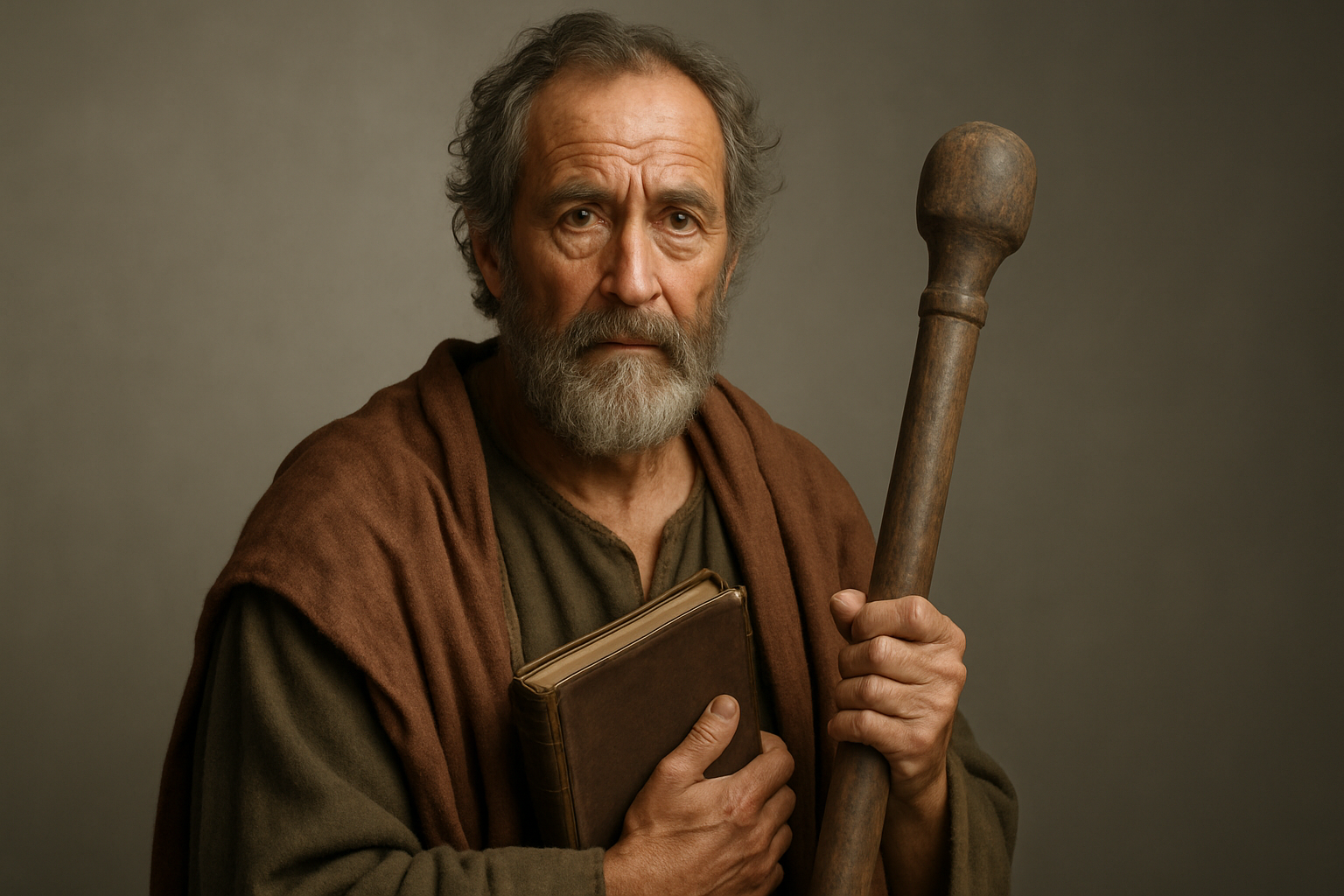
His lasting influence is felt throughout Church history. As the first Bishop of Jerusalem, he laid foundational structures for ecclesiastical governance, setting a precedent for the role of bishops in guiding the local Church. His leadership at the Council of Jerusalem irrevocably shaped the Church’s missionary outreach, ensuring it could transcend cultural barriers. The Epistle of James has always been a vital part of Catholic liturgy and spiritual reading, offering timeless ethical and moral guidance. In art, he is often depicted with a fuller’s club or a book, symbolizing his martyrdom and his written legacy, respectively. His quiet steadfastness and profound moral clarity continue to inspire those who seek to live an authentic, action-oriented faith.
Devotion Today
While Saint James the Less may not have the widespread, massive pilgrimage sites associated with some other apostles, his devotion remains strong within the Catholic Church, particularly in his shared feast day and through his enduring Epistle. His feast day, celebrated annually on **May 3rd**, pairs him with another Apostle, Saint Philip. This joint celebration highlights their foundational roles in the early Church and offers an annual opportunity for reflection on their lives and teachings.
Because of his identification with the “brother of the Lord” and his role as the first Bishop of Jerusalem, he is especially venerated in the Holy Land. Though specific grand shrines solely dedicated to James the Less are rare, his memory is honored in many churches across Jerusalem and the broader region. Pilgrims to the Holy Land often visit sites associated with the early Christian community, where James’s leadership would have been central.
Beyond geographical sites, devotion to St. James the Less is often expressed through study and meditation on his Epistle. Many individuals and Bible study groups delve into his challenging and practical wisdom, applying his exhortations on faith and works to their daily lives. His patronage of fullers (due to his martyrdom by a fuller’s club) and pharmacists, as well as those suffering from eye diseases and the dying, connects him to particular professions and needs, where individuals seek his intercession. These patronages reflect traditions passed down through centuries, linking aspects of his life or martyrdom to specific human concerns.
His quiet strength and unwavering commitment to justice and practical holiness continue to resonate with those who seek a faith that is not just intellectual, but deeply lived and actively expressed in service to others. He remains a model of a faithful leader and a zealous advocate for living out the Gospel in the world.
Reflections for Modern Readers
Saint James the Less, though living two millennia ago, offers incredibly relevant insights for our lives today. His example calls us to a deeper, more authentic walk with Christ.
-
Integrate Faith and Action: James famously taught that “faith without works is dead.” In a world where it’s easy to compartmentalize our beliefs from our daily lives, he challenges us to let our faith actively shape our choices, relationships, and actions. For instance, if we truly believe in Christ’s call to love our neighbor, how does that translate into our response to local homelessness, our support for a food bank, or even just a kind word to a struggling colleague? James reminds us that our faith is meant to be lived out, not just held as a private conviction.
-
Embrace Practical Wisdom: James’s Epistle is filled with practical advice on controlling our tongue, being patient in suffering, and praying effectively. He shows us that true spiritual wisdom isn’t abstract but applies directly to our everyday struggles and interactions. In an age of information overload, he encourages us to seek discernment and apply divine wisdom to our conversations, our decisions, and how we manage our time and resources. Consider pausing before you speak, especially online, and ask: “Is this truly wise, kind, and necessary?”
-
Stand for Justice and the Vulnerable: As a leader who championed the poor and condemned favoritism, James calls us to be agents of justice in our own spheres of influence. He reminds us that true religion involves caring for the marginalized and not being swayed by wealth or status. In a society grappling with inequality, we can ask ourselves: how do I advocate for those without a voice? This might mean supporting fair labor practices, volunteering for social justice initiatives, or simply treating everyone with equal dignity and respect, regardless of their background or perceived status.
-
Cultivate Steadfastness in Prayer and Trial: James himself was known for his constant prayer, even earning calloused knees. His letter speaks to enduring trials with patience and praying with faith. In our fast-paced, often anxious world, his example encourages us to cultivate a deep and consistent prayer life, trusting that God hears and answers. When facing personal difficulties or global crises, his message is to “consider it all joy” (James 1:2) and to persevere, knowing that trials refine our faith and lead to spiritual maturity.
In art and jewelry, Saint James the Less is frequently represented by a few key symbols that reflect his life and martyrdom:
- A Fuller’s Club: This is his most common and recognizable symbol, directly referencing the traditional account of his martyrdom, where he was clubbed to death after being thrown from the Temple. It symbolizes his courage, his ultimate sacrifice for Christ, and his patronage of fullers (cloth finishers who used clubs to beat cloth).
- A Book or Scroll: This symbol represents his authorship of the Epistle of James, a foundational New Testament letter. It signifies his wisdom, his role as a teacher, and his lasting written legacy that continues to instruct believers on the nature of living faith.
- A Jerusalem Cross: While not exclusive to him, this cross, often featuring a large central cross with four smaller crosses in each quadrant, is sometimes associated with him due to his role as the first Bishop of Jerusalem. It symbolizes the spread of the Gospel from Jerusalem to the four corners of the earth and the importance of the Holy City in early Christianity.
- Calloused Knees: Though not typically depicted visually in art, the tradition that he had calloused knees from constant prayer is a powerful symbolic representation of his profound piety, asceticism, and unwavering commitment to God. It symbolizes devotion, perseverance in prayer, and humility.
Timeline Summary
- 1st Century AD: Born in Galilee or Nazareth, likely a cousin of Jesus, son of Alphaeus.
- c. 30-33 AD: Called by Jesus to be one of the twelve Apostles, directly witnessing Christ’s public ministry, death, and resurrection.
- c. 33 AD: Present with the other Apostles at Pentecost, receiving the Holy Spirit.
- Early years of the Church: Becomes the first Bishop of Jerusalem, known for his piety and leadership.
- c. 49-50 AD: Plays a decisive role at the Council of Jerusalem, advocating for Gentile converts to not be bound by all Mosaic Law.
- Before 62 AD: Authors the Epistle of James, a letter emphasizing the necessity of faith demonstrated through good works.
- c. 62 AD: Martyred in Jerusalem, traditionally thrown from the Temple and then beaten to death with a fuller’s club.
- May 3rd: His feast day is celebrated annually in the Catholic Church, shared with St. Philip.
Scripture for Reflection
The Epistle of James offers profound scriptural insights directly from St. James the Less himself, illuminating his key virtues and life’s work. Here are a few passages for reflection:
James 1:22: “But be doers of the word, and not hearers only, deceiving yourselves.”
This verse perfectly encapsulates James’s central teaching on the integration of faith and action. It challenges us to move beyond passive listening or intellectual understanding of God’s word and to actively put it into practice in our daily lives. It’s a call to authentic Christian living, demonstrating our faith through concrete deeds.
James 2:17: “So also faith by itself, if it does not have works, is dead.”
This powerful statement is perhaps the most famous line from the Epistle and directly speaks to James’s spiritual legacy. It highlights the inseparability of faith and works in the Catholic tradition, emphasizing that true belief will inevitably manifest in acts of love, charity, and obedience. It serves as a reminder that our inner convictions must lead to outward expressions of goodness.
James 5:16: “Therefore confess your sins to one another and pray for one another, that you may be healed. The fervent prayer of a righteous person is very powerful.”
This passage underscores James’s deep belief in the power of prayer and community. It connects to his own life of constant prayer and highlights the importance of humility, confession, and intercession within the Christian community. It reassures us that our prayers, offered sincerely and with faith, are effective and can bring healing and strength.
Prayers to St. James the Less
Here is a traditional prayer to Saint James the Less, often prayed on his feast day or when seeking his intercession:
O glorious Saint James, who, as an Apostle of Christ and the first Bishop of Jerusalem, faithfully proclaimed the Gospel message and guided the early Church with wisdom and justice, we turn to you for your intercession.
You taught us that faith without works is dead, inspiring us to live out our beliefs through tangible acts of charity and service. Help us to integrate our faith into every aspect of our lives, transforming our intentions into actions that glorify God and benefit our neighbors.
Known for your steadfastness in prayer and your courage in the face of persecution, strengthen us to persevere through trials and to pray with confidence and perseverance. Grant us the grace to seek true wisdom, to control our tongues, and to be advocates for the poor and vulnerable, just as you were.
Through your powerful intercession, may we grow in holiness, courage, and unwavering dedication to Christ and His Church. Amen.