In the vibrant tapestry of Catholic saints, one luminous thread stands out for her profound faith amidst immense cultural change and personal suffering: Saint Kateri Tekakwitha. Known affectionately as the “Lily of the Mohawks,” Kateri’s brief yet impactful life in the 17th century bridges indigenous traditions with the burgeoning Catholic presence in North America, offering a powerful testament to the universal call to holiness. This article will journey through her early life and the challenging historical context she navigated, explore the pivotal moments of her spiritual awakening and unwavering commitment to Christ, and delve into her enduring legacy that continues to inspire devotion and reflection among Catholics today. From her humble beginnings in a Mohawk village to her eventual recognition as the first Native American saint, Kateri’s story illuminates virtues of purity, resilience, and a deep love for God that resonates powerfully in our modern world.
Quick Facts
| Attribute | Details |
|---|---|
| Birth | 1656, Ossernenon (present-day Auriesville, New York) |
| Death | April 17, 1680, Kahnawake, Quebec (Canada) |
| Feast Day | July 14 (United States), April 17 (Canada) |
| Patronage | Environment, ecology, Native Americans, exiles, orphans, people ridiculed for their faith |
| Canonized | October 21, 2012, by Pope Benedict XVI |
Historical Context & Early Life
To understand the remarkable life of Saint Kateri Tekakwitha, one must first grasp the complex historical landscape of 17th-century North America. It was a period of intense cultural collision and dramatic change, particularly in what is now upstate New York and southeastern Canada. European powers, primarily the French and the English, were vying for control of vast territories, bringing with them not only trade goods and military might but also their religions. The French, in particular, established strong ties with various Native American nations, including the Huron, Algonquin, and Iroquois Confederacy, which comprised the Mohawk, Oneida, Onondaga, Cayuga, and Seneca peoples.
Catholic missionaries, predominantly Jesuits, known to the indigenous peoples as the “Blackrobes” due to their habits, embarked on perilous missions to evangelize. These missionaries lived among the tribes, learned their languages, and often endured immense hardships, including torture and martyrdom. Their presence introduced a new spiritual path, often clashing with traditional beliefs and practices, creating a fascinating and sometimes fraught intercultural dialogue.
Kateri Tekakwitha was born in 1656 in the Mohawk village of Ossernenon, near present-day Auriesville, New York. Her father, Kenneronkwa, was a Mohawk chief, and her mother, Tagaskouita, was an Algonquin woman who had been captured by the Mohawks and later baptized by French missionaries. This mixed heritage placed Kateri at the crossroads of two distinct cultures and introduced her to Christianity through her mother’s quiet faith, even though it was not openly practiced in the Mohawk village.
Tragedy struck Kateri’s family when she was just four years old. A devastating smallpox epidemic swept through her village in 1660, claiming the lives of her parents and infant brother. Kateri herself contracted the disease and, though she survived, it left her severely scarred. Her face was disfigured, her eyesight permanently damaged, making her sensitive to light, and she was left partially blind. This experience marked her deeply, setting her apart physically and contributing to her naturally reserved and contemplative nature. Orphaned, Kateri was subsequently raised by her uncle, a prominent Mohawk chief, and his three wives, who struggled to understand her quiet demeanor and growing spiritual inclinations amidst the traditional Mohawk way of life.
Calling & Key Milestones
Kateri’s spiritual journey unfolded gradually, marked by a series of profound encounters and courageous decisions that ultimately defined her sanctity.
Encounter with the Blackrobes
Even after the smallpox epidemic, Jesuit missionaries continued their efforts to evangelize the Mohawk people. In 1667, a peace treaty between the French and the Iroquois allowed the Jesuits to establish a mission in Kateri’s village, which had relocated and was then known as Caughnawaga (distinct from the later mission by the same name in Canada). Kateri, now around 11 years old, listened intently to the teachings of the “Blackrobes” like Father Jacques de Lamberville. She was particularly drawn to their message of God’s love and the promise of eternal life, finding solace and truth in their words. These teachings resonated with the latent Christian faith she had absorbed from her mother, stirring a deeper longing within her heart.
Embracing Christianity and Baptism
As Kateri grew into young womanhood, her family, following Mohawk custom, expected her to marry. However, Kateri repeatedly refused all suitors, expressing a deep desire to consecrate her life to God. This decision was met with confusion and even hostility by her relatives, who saw her refusal to marry as a rejection of her communal duties and traditional way of life. Despite pressure and even threats, Kateri remained steadfast. After several years of catechesis and discernment, she received permission from Father Lamberville to be baptized. On Easter Sunday, April 5, 1676, at the age of 20, she received the sacrament of baptism and was given the name Kateri, the Mohawk equivalent of Catherine.
Persecution and Flight to Kahnawake
Kateri’s baptism intensified the friction within her village. Her relatives and some villagers began to openly persecute her, ridiculing her faith, spreading rumors, and depriving her of food. They ostracized her, sometimes physically harming her or threatening her life for her devotion to the “new way.” Despite this suffering, Kateri remained firm, finding strength in prayer and her burgeoning spiritual life. Understanding the danger she faced, and with the encouragement of Father Lamberville, Kateri made the difficult decision to flee her home village. In the summer of 1677, she undertook a perilous, two-hundred-mile journey through forests and rivers to reach Kahnawake, a Christian Native American settlement near Montreal, Quebec, founded by converted Mohawks. Here, she found refuge and a community where she could freely practice her Catholic faith.
Life of Extraordinary Holiness and Penance
In Kahnawake, Kateri embraced a life of profound prayer and asceticism. She dedicated herself entirely to God, taking a private vow of perpetual virginity on March 25, 1679, a bold and unusual step for a Native American woman of her time. She spent countless hours in adoration before the Blessed Sacrament, praying the rosary, and meditating on the sufferings of Christ. Kateri practiced severe penances, including self-flagellation and sleeping on a bed of thorns, always seeking to imitate Christ’s suffering and offer atonement for sins. While these practices were extreme, they were characteristic of the intense piety of the era and reflective of her deep desire for union with God. Her spiritual director, Father Pierre Cholenec, later attested to her exceptional purity and profound mystical experiences.
Death and Immediate Veneration
Kateri’s health, already fragile from smallpox and her rigorous penances, began to decline rapidly. She fell ill during Holy Week of 1680. On April 17, 1680, at the young age of 24, Kateri Tekakwitha passed away. Witnesses reported an extraordinary event at the moment of her death: the smallpox scars that had disfigured her face for twenty years miraculously vanished, leaving her skin radiant and beautiful. This miraculous transformation was widely seen as a sign of her sanctity and quickly led to her veneration among the Christian Native American communities and the Jesuit missionaries. Miracles and healings were soon attributed to her intercession, solidifying her reputation as a saint.
Spiritual Legacy & Theological Themes
Saint Kateri Tekakwitha’s life, though short, offers a rich tapestry of spiritual lessons and theological themes that continue to inspire believers across the globe.
Core Virtues Exemplified
Kateri embodied several core virtues with extraordinary clarity. Her most celebrated virtue is her **purity**, often earning her the title “Lily of the Mohawks.” This purity was not merely physical virginity but a profound spiritual cleanliness and single-hearted devotion to God, aligning perfectly with the Scriptural call to be “pure in heart, for they shall see God” (Matthew 5:8). Despite immense societal pressure to marry, she courageously maintained her vow of virginity, offering her whole self to Christ.
Another striking virtue was her **perseverance and fidelity** in the face of suffering and persecution. From the loss of her family and her disfigurement by smallpox to the ridicule and threats from her own community for her faith, Kateri endured without wavering. This mirrors the biblical call to “run with endurance the race that is set before us” (Hebrews 12:1) and to rejoice in suffering for Christ’s sake (Romans 5:3-5).
Her **humility and detachment** were also profound. Kateri sought no earthly recognition or comfort, choosing instead a life of simplicity, prayer, and penance. She found her joy and fulfillment not in worldly possessions or status, but in her intimate relationship with Jesus, echoing the teachings on detachment from worldly goods and reliance on God’s providence.
Lasting Influence
Saint Kateri’s influence extends deeply within the Church, particularly concerning devotion and evangelization. She stands as a powerful symbol of **indigenous evangelization**, demonstrating that the Gospel can take root and flourish in any culture, enriching rather than erasing local traditions. Her life shows a beautiful integration of Native American reverence for creation with Catholic spirituality, emphasizing a profound respect for the natural world as God’s handiwork.
Her devotion to the **Eucharist and the Blessed Mother** became central to her spiritual life. She spent hours in adoration, understanding the Eucharist as the true presence of Christ, and cultivated a tender relationship with Mary, seeing her as a model of purity and faith. These devotions remain hallmarks of Catholic spirituality, and Kateri serves as a compelling example of their transformative power.
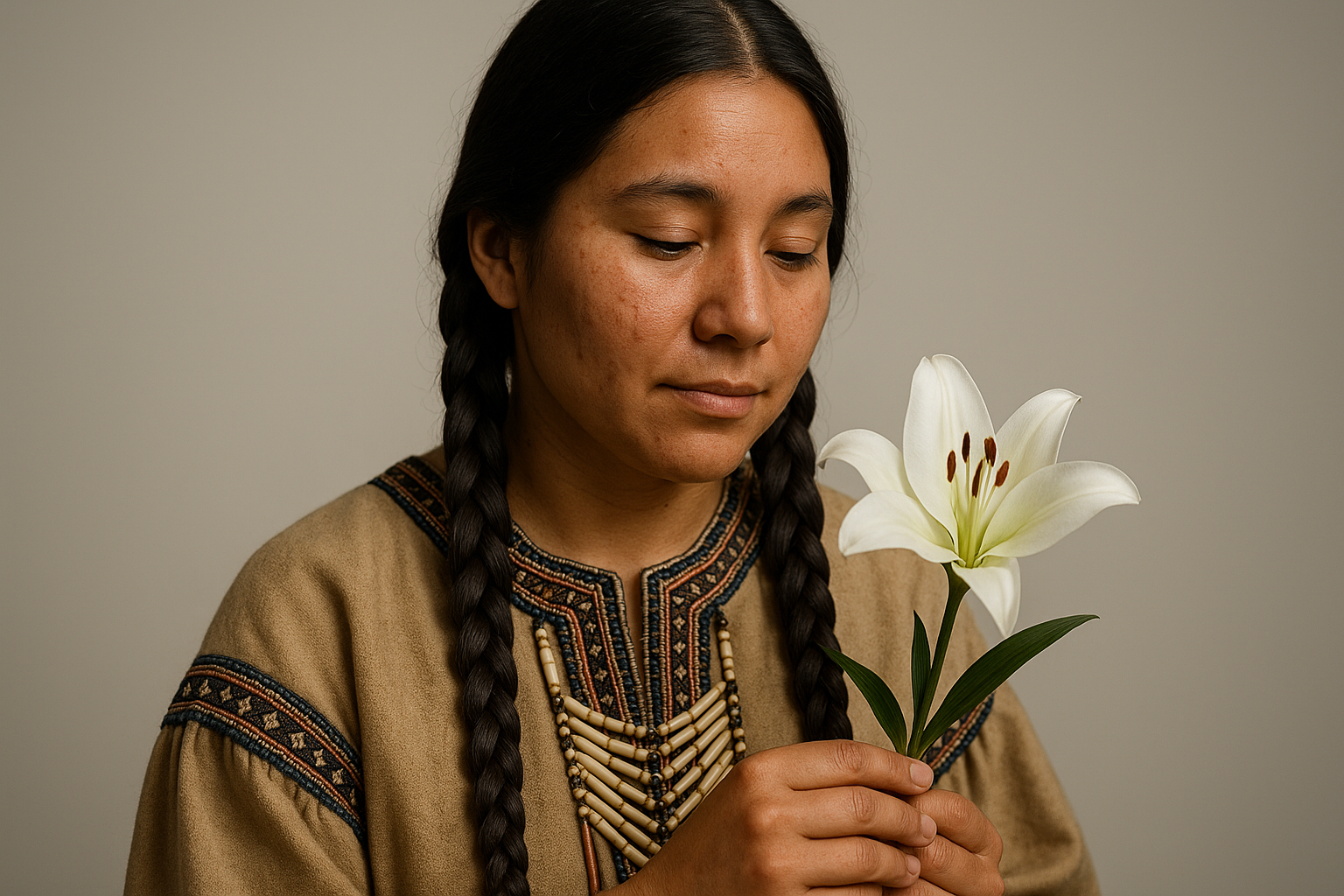
In art and liturgy, Kateri is often depicted with symbols like a lily (for purity), a cross (for her faith and suffering), or a turtle (representing her birth clan, a recognition of her Mohawk heritage within her sainthood). Her canonization in 2012 by Pope Benedict XVI was a momentous occasion, not only for Native American Catholics but for the entire Church, reaffirming the universal call to holiness and the diverse paths through which it can be achieved. She inspires continued efforts for inculturation, ensuring that the Catholic faith can be authentically lived and expressed within diverse cultural contexts.
Devotion Today
Devotion to Saint Kateri Tekakwitha has blossomed, especially since her beatification in 1980 and her canonization in 2012. She is revered as a powerful intercessor and a beacon of hope for many, particularly within Native American communities across North America and beyond.
One of the most significant sites of pilgrimage and devotion is the **National Shrine of Saint Kateri Tekakwitha** in Auriesville, New York. This site, located near her birthplace of Ossernenon, includes a beautiful chapel, outdoor stations of the cross, and a museum dedicated to her life and the Jesuit martyrs of North America. Thousands of pilgrims visit annually to pray, learn about Kateri, and connect with her spiritual legacy.
Another vital center of devotion is the **Saint Kateri Tekakwitha Shrine in Kahnawake, Quebec**, Canada. This is the site of her final resting place and the community where she lived her holiest years. The shrine houses her relics and serves as a vibrant spiritual home for the Mohawk community and pilgrims, offering a deep connection to Kateri’s life and her relationship with the Kahnawake Mohawks.
Across the United States and Canada, numerous churches, schools, and organizations are named in her honor. Annual celebrations, such as her feast day on July 14th (in the U.S.) or April 17th (in Canada), are marked with special Masses, cultural events, and gatherings that celebrate her life and Native American Catholic heritage. Retreats and conferences focused on indigenous spirituality and Kateri’s witness are also common, fostering a deeper understanding of her message.
Kateri’s patronage extends to those who work for the environment and ecology, recognizing her deep connection to creation and the indigenous wisdom of living in harmony with the earth. She is also a patron of exiles, a testament to her journey from her home village to Kahnawake, and a comfort to those who feel displaced or alienated for their faith or other reasons. Her patronage over orphans resonates with her own childhood experience, offering solace to those who have lost parents or families. Furthermore, she is invoked by those who are ridiculed for their faith, drawing strength from her steadfast courage amidst persecution.
Reflections for Modern Readers
Saint Kateri Tekakwitha’s life, though lived centuries ago, offers profound and actionable lessons for people navigating the complexities of the 21st century. Her story is a timeless reminder of faith, resilience, and the power of personal conviction.
- Embrace Your Uniqueness and Stand Firm in Your Convictions: Kateri refused to conform to societal expectations, choosing a path of purity and devotion to Christ despite intense pressure and ridicule from her family and community. In a world that often pressures us to fit in or compromise our values, Kateri reminds us to courageously embrace our unique call from God. For example, a young person facing peer pressure to engage in activities contrary to their faith can draw strength from Kateri’s steadfastness. Her life encourages us to pray, discern, and then stand firm in our moral and spiritual convictions, even when it’s difficult.
- Find God’s Presence in Suffering and Adversity: Kateri’s life was marked by immense suffering from childhood smallpox, disfigurement, and persecution. Yet, she didn’t allow these hardships to define her negatively; instead, she transformed them into avenues for deeper prayer and union with God. In our own lives, when we face illness, loss, or injustice, Kateri’s example encourages us to seek God’s grace and presence within our pain, trusting that even through suffering, God can work for our good and spiritual growth. Someone struggling with a chronic illness can look to Kateri for inspiration on finding meaning and grace in their suffering.
- Cultivate a Deep, Personal Relationship with Christ: Kateri’s spirituality was characterized by her intense personal prayer, devotion to the Eucharist, and her vow of virginity dedicated to Jesus. She made her relationship with Christ the absolute center of her life. Modern readers, amidst busy schedules and distractions, can be inspired by Kateri to prioritize time for prayer, quiet reflection, and participation in the sacraments. Whether it’s setting aside a few minutes daily for prayer, attending adoration, or receiving Communion thoughtfully, Kateri calls us to nurture an intimate, loving friendship with Jesus, making Him the focal point of our existence.
- Live in Harmony with Creation: Kateri lived deeply embedded in her natural environment, reflecting the indigenous reverence for the earth. Her life implicitly encourages us to be stewards of creation, to appreciate the beauty of God’s handiwork, and to live sustainably. In an era of ecological concern, Kateri’s connection to the land and water reminds us that caring for our planet is an integral part of our faith. This can inspire actions like reducing waste, supporting eco-friendly initiatives, or simply spending time appreciating nature as a reflection of God’s glory.
In art and jewelry, Saint Kateri Tekakwitha is most commonly represented with several powerful symbols:
- The Lily: This is perhaps her most prevalent symbol, referring to her nickname, “Lily of the Mohawks.” It symbolizes purity, innocence, and virginity, reflecting her unwavering commitment to God.
- The Cross: Kateri is often depicted holding or gazing at a crucifix. This signifies her deep devotion to Christ’s passion, her acceptance of suffering, and her courage in professing her Christian faith even when it meant persecution.
- A Turtle: As a member of the Mohawk Turtle Clan, Kateri is sometimes shown with a turtle or with a turtle symbol on her clothing. This acknowledges her Native American heritage and her connection to her specific tribal lineage, reminding us that faith can be expressed within diverse cultural contexts.
- Native American Attire: Statues and images often show her in traditional Mohawk dress, sometimes with a blanket or simple garments, reinforcing her identity as an indigenous saint and her roots in her people’s culture.
- A Prayerful Posture: Many depictions show Kateri in a kneeling position, often with eyes cast down or directed toward heaven, emphasizing her profound life of prayer, humility, and contemplation.
Timeline Summary
- 1656: Born in Ossernenon (present-day Auriesville, New York) to a Mohawk chief father and an Algonquin Christian mother.
- 1660: Smallpox epidemic ravages her village, claiming her parents and brother; Kateri survives but is left disfigured and partially blind.
- 1667: Jesuit missionaries establish a mission in her relocated village, now known as Caughnawaga; Kateri begins to learn about Christianity.
- 1670s: Repeatedly rejects marriage proposals, expressing a desire to remain a virgin for God.
- April 5, 1676: Baptized by Father Jacques de Lamberville on Easter Sunday, receiving the name Kateri (Catherine).
- Summer 1677: Due to persecution in her village, Kateri flees to Kahnawake, a Christian Native American settlement near Montreal.
- March 25, 1679: Makes a private vow of perpetual virginity in Kahnawake.
- April 17, 1680: Dies at the age of 24 in Kahnawake; witnesses report her smallpox scars miraculously vanish after her death.
- 1680 onwards: Devotion to Kateri grows rapidly among Christian Native Americans and Jesuit missionaries; miracles are attributed to her intercession.
- 1884: First Plenary Council of Baltimore proposes Kateri’s cause for canonization.
- 1943: Declared Venerable by Pope Pius XII.
- July 19, 1980: Beatified by Pope John Paul II.
- October 21, 2012: Canonized as a saint by Pope Benedict XVI in Rome.
Scripture for Reflection
Saint Kateri’s life beautifully illustrates several scriptural themes, especially regarding purity, perseverance, and finding God amidst suffering.
Matthew 5:8 (The Beatitudes):
“Blessed are the pure in heart, for they shall see God.”
Kateri’s unwavering commitment to virginity and her single-minded devotion to Christ embody this beatitude. Her purity was not just physical, but a spiritual state of having her heart entirely fixed on God, which she believed allowed her to experience His presence deeply.
Hebrews 12:1-2:
“Therefore, since we are surrounded by so great a cloud of witnesses, let us rid ourselves of every burden and sin that clings to us and persevere in running the race that lies before us, looking to Jesus, the pioneer and perfecter of our faith. For the sake of the joy that lay before him he endured the cross, despising its shame, and has taken his seat at the right of the throne of God.”
Kateri’s journey was a race of endurance against immense opposition. She “persevered,” keeping her “eyes fixed on Jesus” amidst family pressure, physical disfigurement, and persecution. Her life reminds us that steadfast faith, even in the face of suffering, is a path to heavenly glory, following Christ’s own example.
1 Corinthians 7:32-34:
“I want you to be free from anxieties. The unmarried man is anxious about the things of the Lord, how he may please the Lord. But the married man is anxious about the things of the world, how he may please his wife, and his interests are divided. And the unmarried woman or virgin is anxious about the things of the Lord, how she may be holy in body and spirit. But the married woman is anxious about the things of the world, how she may please her husband.”
This passage directly speaks to Kateri’s decision to embrace a life of consecrated virginity. By refusing marriage, she sought to dedicate her entire being, “holy in body and spirit,” to pleasing the Lord, freeing herself from worldly anxieties to focus purely on God. It beautifully explains the motivation behind her radical choice.
Prayers to St. Kateri Tekakwitha
Prayer for the Intercession of Saint Kateri Tekakwitha
O Saint Kateri, Lily of the Mohawks,
your life was a testament to purity and profound faith.
You embraced Christ despite immense challenges,
standing firm in your convictions even amidst persecution.
You chose to consecrate your life to Jesus,
dedicating yourself wholeheartedly to prayer and penance.
We ask for your intercession, O holy Kateri,
for all those who seek to live lives of purity and fidelity,
especially the young, that they may find courage in your example.
Protect our environment and help us to be good stewards of creation,
following the wisdom of indigenous peoples and respecting God’s handiwork.
We pray for Native Americans, for the strengthening of their faith,
and for the preservation of their cultural heritage in harmony with the Gospel.
Comfort the lonely, the exiled, and the orphaned,
and grant strength to those who suffer ridicule for their beliefs.
Through your powerful intercession,
may we, like you, grow in holiness,
love the Eucharist and the Blessed Mother with fervent hearts,
and strive always to please our Lord Jesus Christ,
who lives and reigns forever and ever. Amen.