In the vibrant tapestry of Catholic saints, some figures shine with the brilliance of extensive scriptural accounts and dramatic personal histories. Others, like Saint Matthias, step onto the stage of salvation history for a crucial, divine moment, yet remain somewhat veiled in the mists of early Christian tradition. But even in this relative silence, Matthias’s story speaks volumes about faithfulness, divine Providence, and the unbroken chain of apostolic ministry. Chosen directly by God to fill the vacant spot among the Twelve Apostles after Judas’s betrayal, Matthias embodies the spirit of quiet dedication and readiness to serve, reminding us that every call from God, no matter how sudden or unexpected, is profoundly significant. This article will explore the historical context of his calling, his enduring spiritual legacy, and how his humble yet pivotal role continues to inspire believers today.
Quick Facts
| Category | Detail |
|---|---|
| Birth | Likely 1st century AD, Galilee, Judea |
| Death | Traditionally martyred c. 80 AD, possibly in Colchis (modern Georgia) or Judea |
| Feast Day | May 14 (Roman Calendar), August 9 (Byzantine Calendar) |
| Patronage | Alcoholism, carpenters, tailors, smallpox, hope, perseverance |
| Canonized | Pre-Congregation (by acclamation of the early Church) |
Historical Context & Early Life
To understand Saint Matthias, we must first immerse ourselves in the tumultuous yet divinely charged atmosphere of 1st-century Judea. This was a land under Roman occupation, a crossroads of cultures, and a fervent crucible of religious expectation. The Jewish people, heirs to a rich covenantal history, longed for the Messiah—a king, prophet, or priest who would deliver them from foreign oppression and restore the Kingdom of Israel. It was into this world that Jesus of Nazareth stepped, proclaiming the Kingdom of God and gathering disciples.
During Jesus’s public ministry, He called twelve men from various walks of life to be His closest companions, witnesses to His miracles, and recipients of His most profound teachings. These “Apostles,” meaning “those who are sent,” were destined to carry His message to the ends of the earth. Their lives were interwoven with His, from the joyous celebrations to the solemn Passover meal, and ultimately, to the horrifying events of His crucifixion and the glorious wonder of His resurrection.
While the Scriptures provide rich detail about the backgrounds of many of the Twelve, such as the fishermen Peter, Andrew, James, and John, they offer surprisingly little about Matthias’s early life. We know he was not one of the original twelve chosen by Jesus during His earthly ministry. However, the Acts of the Apostles, our primary source, strongly implies that Matthias was a devoted follower of Jesus from the very beginning. The criteria for Judas’s replacement explicitly stated that the chosen man must have been “one of those who accompanied us the whole time the Lord Jesus went in and out among us, beginning from John’s baptism until the time when Jesus was taken up from us” (Acts 1:21-22). This tells us Matthias was present for Jesus’s baptism by John the Baptist, witnessed His miracles and teachings, walked with Him, and was a firsthand observer of His resurrection and ascension. He wasn’t a casual observer but a committed disciple, albeit one not initially counted among the inner circle of the Twelve. This background speaks volumes about his quiet faithfulness and steadfast commitment, even before his divine elevation.
Calling & Key Milestones
The Divine Election: Filling the Apostolic Vacancy
The pivotal moment in Saint Matthias’s life unfolds in the book of Acts, immediately after Jesus’s Ascension into heaven and before the coming of the Holy Spirit at Pentecost. The remaining eleven apostles, along with other disciples, were gathered in Jerusalem, grappling with the sudden vacuum left by Jesus’s departure and the betrayal of Judas Iscariot. It was Peter who, guided by Scripture and the Holy Spirit, initiated the process of selecting a replacement for Judas. He emphasized the prophetic necessity of fulfilling what was written about Judas in the Psalms and the need for a twelfth apostle to restore the symbolic fullness of the apostolic college, mirroring the twelve tribes of Israel.
The criteria for selection were clear: the candidate had to be a witness to Jesus’s entire public ministry, from His baptism by John to His Ascension. Two men were put forward who met these exacting standards: Joseph, called Barsabbas (also known as Justus), and Matthias. Rather than making a human choice based on personal preference, the apostles understood the gravity of their task as divine discernment. They turned to prayer, asking God to “show which of these two you have chosen to take the place in this ministry and apostleship from which Judas turned aside to go to his own place” (Acts 1:24-25). They then cast lots—a common ancient practice of seeking divine will, similar to drawing straws—and “the lot fell on Matthias; and he was added to the eleven apostles.”
This event is profoundly significant. It highlights the early Church’s understanding of apostolic succession—the belief that the authority and mission of the apostles continue through their successors, guided by the Holy Spirit. Matthias’s selection was not merely a practical decision; it was seen as God’s direct intervention, ensuring the complete number of witnesses to Christ’s resurrection remained intact. He was chosen by God to be a foundational pillar of the Church, a witness to the truth of Christ, and a co-worker in the unfolding of God’s plan.
Missionary Work and Evangelization
After his election, Matthias is not mentioned again by name in the New Testament. However, Church tradition fills in the silence, painting a picture of a dedicated apostle who fulfilled his calling with fervor. Early Church historians and traditions suggest that Matthias embarked on extensive missionary journeys, spreading the Good News to distant lands. One prominent tradition, recorded by Eusebius of Caesarea, states that Matthias preached the Gospel in Cappadocia (modern-day Turkey) and along the shores of the Caspian Sea, specifically in a region known as Colchis (modern Georgia).
These missionary endeavors would have been incredibly challenging, involving perilous travel, linguistic barriers, and often fierce opposition from both Jewish authorities and pagan populations. Like the other apostles, Matthias would have been tasked with teaching, baptizing, establishing Christian communities, and performing signs and wonders in the name of Jesus Christ. His life after Pentecost would have been one of tireless evangelization, embodying the Great Commission given by Christ to “go and make disciples of all nations” (Matthew 28:19).
Martyrdom and Enduring Witness
The ultimate testament to an apostle’s faithfulness was often their martyrdom, and Saint Matthias is no exception. While specific details vary across different traditions, the consensus is that he suffered a martyr’s death for his faith. Some accounts suggest he was stoned to death in Judea by the Jewish authorities, then beheaded, a common form of execution for those deemed blasphemous or rebellious. Other traditions place his martyrdom in Colchis, the region where he ministered, stating that he was crucified. Regardless of the exact circumstances, his death sealed his testimony, aligning him with the other apostles who laid down their lives for Christ.
His willingness to suffer and die for the Gospel solidified his place among the revered martyrs of the early Church. His witness reminds us that true discipleship often involves sacrifice, even to the point of giving one’s life, and that the unwavering proclamation of Christ’s truth can come at a great cost. Saint Matthias’s life, though sparsely documented in Scripture, speaks volumes through his divine election, his traditional missionary efforts, and his ultimate embrace of martyrdom.
Spiritual Legacy & Theological Themes
Though not as prominent in scriptural narratives as Peter or Paul, Saint Matthias holds a profound spiritual legacy for the Church. His story illuminates several core virtues and theological themes central to Catholic teaching.
One of the most striking virtues Matthias exemplifies is faithfulness and availability. He was a dedicated disciple of Jesus from the very beginning, faithfully accompanying the Lord throughout His public ministry, even without being part of the initial inner circle. This quiet, steadfast presence made him eligible for God’s call when the time came. His life reminds us that true readiness for God’s service isn’t always about being in the spotlight, but about consistent, humble devotion to Christ. He was simply there, doing what God asked, and when an extraordinary call came, he was prepared.
Matthias’s election powerfully underscores the doctrine of apostolic succession. His selection was not an arbitrary human decision but a divinely guided process to maintain the integrity of the apostolic college. This event established a precedent for the continuous ministry of the apostles through their successors, the bishops, ensuring the Church’s teaching authority and sacramental life would be preserved through the ages. It reinforces the idea that the Church, founded by Christ, is built upon the foundation of the apostles, with Christ Jesus himself as the cornerstone (Ephesians 2:20).
His story also teaches us about discernment and divine Providence. The apostles, faced with a crucial decision, did not rely solely on human judgment. They prayed earnestly for God’s guidance, acknowledging that only He truly knows the hearts of men and can choose the right person for His mission. The casting of lots, in this specific historical and spiritual context, was seen as a way of submitting entirely to God’s will. This speaks to the Catholic belief that God is actively involved in the life of the Church, continually guiding and sustaining it through the Holy Spirit.
Finally, Matthias’s legacy speaks to the importance of witness to the Resurrection. The primary qualification for an apostle was to have seen the Risen Lord. Matthias’s election ensured that the full complement of twelve authoritative witnesses to Christ’s triumph over death remained, a vital component for the credibility of the early Christian message. His life and martyrdom, though less detailed than others, contribute to the powerful testimony of the early Church’s unwavering belief in the Risen Christ, a belief they were willing to die for.
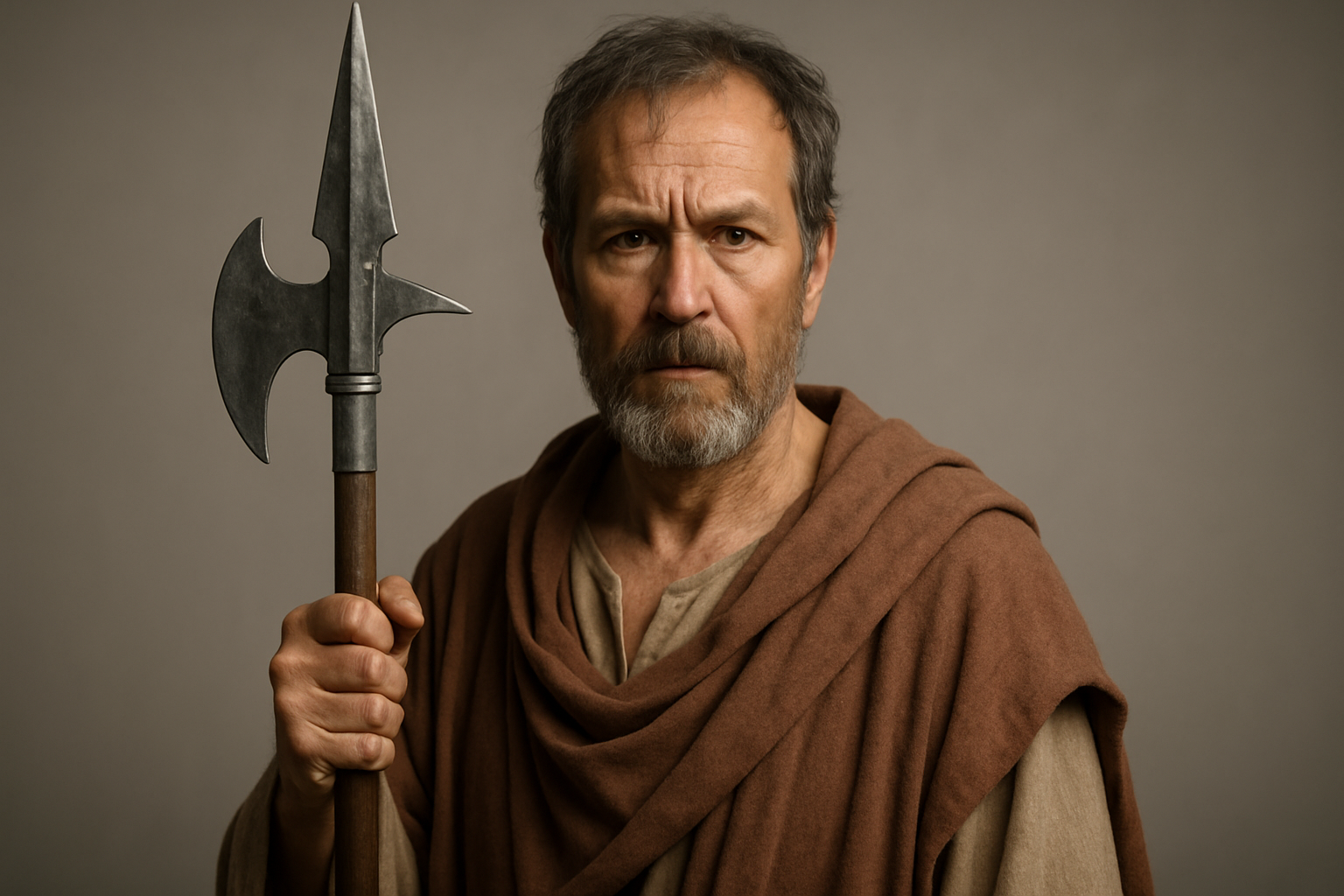
His influence on liturgy and devotion is found primarily in his inclusion in the Roman Canon (Eucharistic Prayer I) and other ancient lists of saints, affirming his foundational role. While not as commonly depicted as Peter or Paul, Matthias is sometimes found in art, often holding a halberd or ax, symbols of his martyrdom. His quiet example continues to inspire devotion to the unseen workings of God’s grace and the vital importance of every individual’s call to holiness and service within the Church.
Devotion Today
While St. Matthias may not have the same widespread popularity or numerous shrines as some of the more prominent apostles, his veneration remains steadfast within the Catholic Church, particularly through his inclusion in ancient liturgical prayers and his designated feast day. His feast day, May 14th in the Roman Calendar (and August 9th in the Byzantine Calendar), is a day when Catholics worldwide remember his unique calling and faithful witness.
Relics attributed to St. Matthias are venerated in several locations. The most famous is in the Benedictine Abbey of St. Matthias in Trier, Germany. Tradition holds that Empress Helena, the mother of Emperor Constantine, brought his relics from Jerusalem to Rome, and later, parts of them were transferred to Trier. This abbey has been a site of pilgrimage for centuries, drawing the faithful who seek St. Matthias’s intercession for strength in discernment, faithfulness, and protection against various ailments, reflecting his patronage. Other traditions suggest relics are also present in Santa Maria Maggiore in Rome and in Padua, Italy.
Devotion to St. Matthias often centers on specific needs. He is invoked as the patron saint against alcoholism, perhaps symbolizing the replacement of destructive habits with a new, divinely chosen path. He is also considered a patron of carpenters and tailors, though the specific historical link for these patronages is less clear, possibly stemming from traditional legends or allegorical connections to building or mending. More broadly, he is seen as a patron of hope and perseverance, inspiring those who feel overlooked or whose contributions seem less significant, reminding them that God’s eye is on all His faithful servants.
Annual celebrations typically occur on his feast day, with special Masses and prayers in churches dedicated to him or holding his relics. While large-scale pilgrimages specifically to St. Matthias are less common than to major Marian shrines or the tombs of Peter and Paul, individual pilgrims and groups do visit the Abbey in Trier. His quiet presence in the liturgical calendar ensures that his story continues to be told, and his unique role in the early Church is remembered and honored by the faithful across the globe.
Reflections for Modern Readers
Saint Matthias’s story, though brief in Scripture, offers profound lessons for believers navigating the complexities of the 21st century. His life, a testament to divine calling and faithful service, holds enduring relevance:
- Be Ready for God’s Call: Matthias was a faithful disciple, present throughout Jesus’s ministry, even before he was “chosen.” This teaches us that God often calls those who are consistently available and humbly serving in the background. We may not always be in the “main” story, but our faithful presence prepares us for whatever God has in store.
- Trust in Divine Discernment: The apostles sought God’s will through prayer and the casting of lots, rather than relying solely on human preferences. In a world full of noise and competing opinions, Matthias’s election reminds us to seek God’s guidance earnestly in our decisions, big or small, trusting that He will show us the way. For instance, when making a major life decision, like choosing a career or a spouse, we can take a cue from the apostles: pray, reflect, and listen for God’s voice, rather than just following popular trends or personal desires.
- Embrace Humility and Availability: Matthias was chosen not because he sought prominence, but because he was a humble and available witness. This virtue is powerful in a world that often rewards self-promotion. His life encourages us to offer our talents and time to God’s service without demanding recognition, knowing that our worth is found in His eyes, not in human applause. A student who consistently helps classmates without seeking praise, or a volunteer who works tirelessly behind the scenes, embodies this Matthiastic humility.
- Every Role Matters in God’s Plan: Matthias’s role was to complete the Twelve, a symbolic and foundational act. He shows us that even seemingly “secondary” roles are indispensable in God’s grand design. Just as a single brick is crucial for a strong wall, every Christian’s unique contribution builds up the Church. This means the person who cleans the church, the one who teaches Sunday school, or the one who prays silently, are all as vital as the priest or bishop.
In art and jewelry, Saint Matthias is commonly depicted with symbols that relate to his traditional martyrdom. The most frequent symbols are:
- Axe: This is the most common symbol, representing the instrument of his traditional beheading, especially in accounts where he was martyred after being stoned.
- Halberd: A halberd is a two-handed pole weapon, similar to a battle-axe or spear. It also signifies his martyrdom and the violent end he met for his faith.
- Sword: Sometimes, though less commonly than the axe or halberd, he is shown with a sword, again signifying his martyrdom by beheading.
- Open Book or Scroll: Less specific to Matthias but common for apostles, this represents his role as an evangelist and a teacher of the Gospel.
These symbols serve as a poignant reminder of his ultimate sacrifice and his unwavering commitment to Christ, even unto death. Wearing a medal or seeing an image of St. Matthias with these symbols invites reflection on the depth of faith required to follow Christ in every circumstance.
Timeline Summary
- 1st Century AD: Born in Galilee, Judea (approximate).
- c. 27-30 AD: Accompanies Jesus throughout His public ministry, from John’s baptism to the Ascension, as a faithful disciple.
- c. 30 AD (after Ascension, before Pentecost): Chosen by lot by the apostles, under the guidance of the Holy Spirit, to replace Judas Iscariot and become the twelfth apostle (Acts 1:15-26).
- c. 30 AD (Pentecost): Receives the Holy Spirit along with the other apostles and disciples.
- c. 30 AD – 80 AD: Embarks on missionary journeys, traditionally preaching in Judea, Cappadocia, and Colchis (modern Georgia).
- c. 80 AD: Suffers martyrdom, traditionally by stoning and beheading in Judea, or crucifixion in Colchis (approximate).
- May 14: Feast Day in the Roman Catholic Church.
Scripture for Reflection
The core of St. Matthias’s story is found in the Acts of the Apostles, which provides direct insight into his calling and the significance of his role.
Acts 1:15-26 (NIV): The Election of Matthias
“In those days Peter stood up among the believers (a group numbering about a hundred and twenty) and said, ‘Brothers and sisters, the Scripture had to be fulfilled in which the Holy Spirit spoke long ago through David concerning Judas, who served as guide for those who arrested Jesus. He was one of our number and shared in our ministry.’ (With the payment he received for his wickedness, Judas bought a field; there he fell headlong, his body burst open and all his intestines spilled out. Everyone in Jerusalem heard about this, so they called that field in their language Akeldama, that is, Field of Blood.) ‘For,’ said Peter, ‘it is written in the Book of Psalms: “May his place be deserted; let there be no one to dwell in it,” and, “May another take his place of leadership.” Therefore it is necessary to choose one of the men who have been with us the whole time the Lord Jesus went in and out among us, beginning from John’s baptism to the time when Jesus was taken up from us. For one of these must become a witness with us of his resurrection.’ So they nominated two men: Joseph called Barsabbas (also known as Justus) and Matthias. Then they prayed, ‘Lord, you know everyone’s heart. Show us which of these two you have chosen to take over this apostolic ministry, which Judas left to go where he belongs.’ Then they cast lots, and the lot fell to Matthias; so he was added to the eleven apostles.”
This passage beautifully illustrates Matthias’s qualifications, the apostles’ discernment process, and the divine nature of his selection. It highlights the importance of being a faithful witness and underscores the unbroken continuity of apostolic ministry in the early Church. It also shows a powerful example of the early Christian community seeking God’s will through prayer and communal discernment.
Prayers to St. Matthias
Prayer to Saint Matthias
O glorious Saint Matthias, you were chosen by God to be numbered among the Twelve Apostles, thereby completing the sacred college that Christ Himself established. We honor you as one who was present with Jesus throughout His public ministry, witnessing His mighty works, hearing His divine teachings, and becoming a firsthand witness to His glorious Resurrection and Ascension. You were found worthy by divine discernment to fill the vacancy left by betrayal, taking up the apostolic ministry with humility and faithfulness.
As we navigate our own lives, we often face moments of uncertainty and the need for clear direction. We pray for your intercession, O Saint Matthias, that we may always be ready and available for God’s call, just as you were. Help us to discern His will in our lives, especially when faced with important decisions, and to respond with courage and unwavering faith. Grant us the grace to be steadfast witnesses to Christ in our words and actions, boldly proclaiming His truth and living according to His Gospel.
Protect us from all temptations to stray from the path of righteousness, and inspire us to persevere in our Christian journey, even amidst trials and difficulties. May your example of quiet devotion, readiness to serve, and ultimate martyrdom strengthen our resolve to follow Christ wherever He may lead us. Amen.