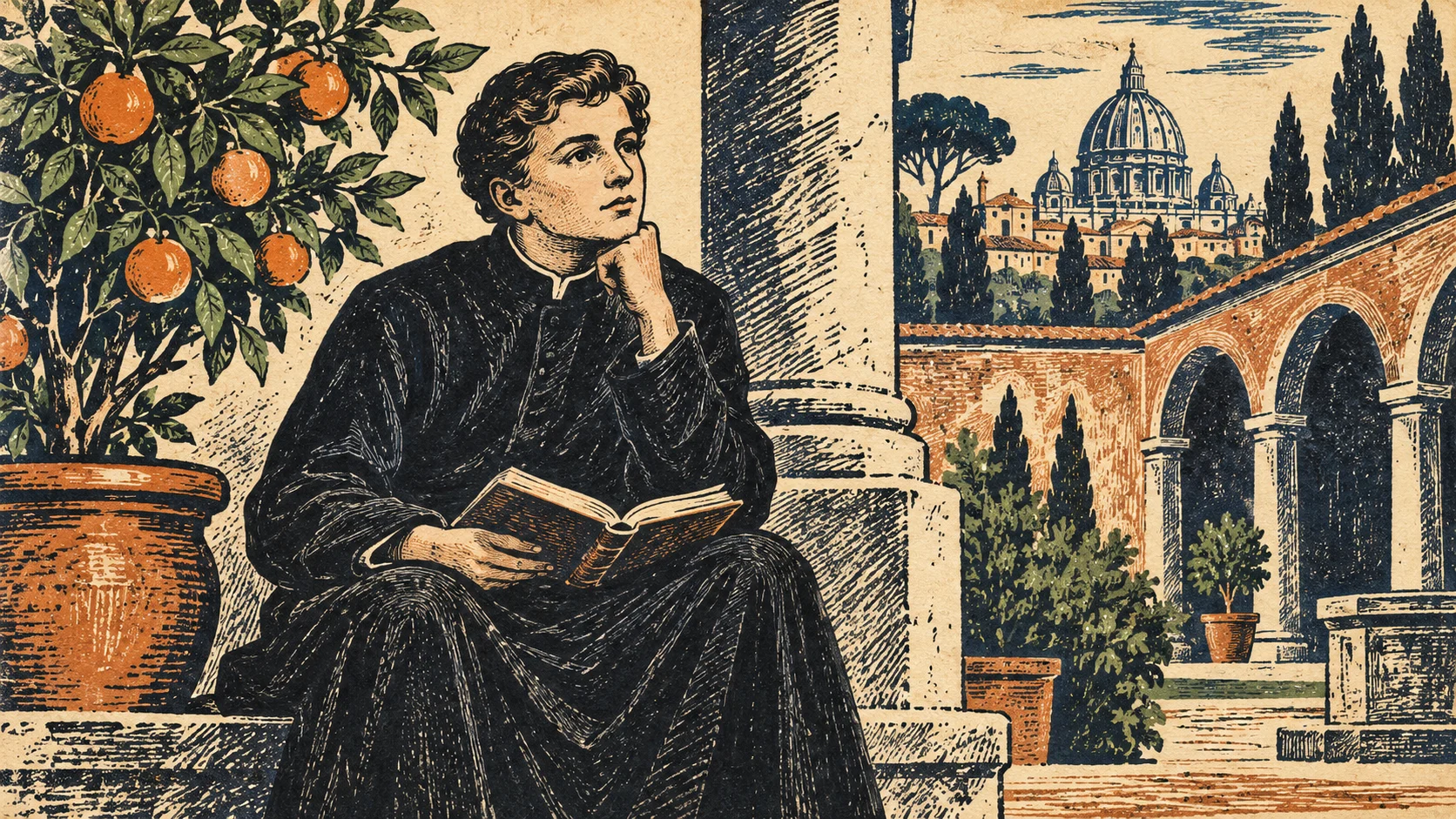
A young person’s sense of vocation deserves patient attention. St. Stanislaus Kostka is remembered for an intense desire to enter the Society of Jesus and a life that ended before adulthood. His story can open a conversation about discernment, especially when hopes and family expectations do not match.
A young Jesuit novice
Stanislaus was born in Poland in 1550. He studied in Vienna and sought admission to the Jesuits despite resistance within his family. He eventually entered the novitiate in Rome, where he died in 1568 at seventeen. The Jesuit tradition remembers him as a model for young people seeking to follow Christ. Pope Francis reflected on his witness on the 450th anniversary of his death.
Discernment needs more than intensity
Feeling strongly about a direction can be the beginning of discernment. It is also useful to ask what the commitment actually involves. What does an ordinary day look like? What preparation is needed? What responsibilities already belong to you?
A young person considering religious life can speak with a trusted priest, parent or guardian, and the community’s vocation director. Adults can help make questions safe to ask without turning every conversation into pressure for an immediate decision.
Four questions for a vocation journal
- When do I feel most ready to give my attention and effort to something worthwhile?
- What do people who know me well recognize as my gifts and limitations?
- Which parts of this possible life attract me, and which parts have I barely investigated?
- What is one responsible next step I can take without pretending to know the whole future?
Write freely and return to the answers after a few weeks. A journal is a place to notice patterns, not a contract that prevents you from learning something new.
When a family conversation becomes tense
Choose a calm time and describe what you are exploring. Ask the other person what worries them. They may be concerned about education, distance, money, or losing a familiar relationship. Those concerns deserve a hearing even when they do not settle the question.
If the conversation repeatedly breaks down, invite a trusted person to help. The dramatic travels in a sixteenth-century saint’s biography should not become instructions for a child to leave home or face danger alone. Responsible accompaniment belongs in a modern conversation about vocation.
Faithfulness in the next step
Most readers will not be deciding whether to enter a novitiate. The same habits can help with study, work, service, or a serious commitment: pray, gather information, listen, and take a proportionate step.
Stanislaus’s short life can encourage young people to take their spiritual lives seriously. Adults can honor that witness by listening carefully and helping them discern with patience, accurate information, and support.