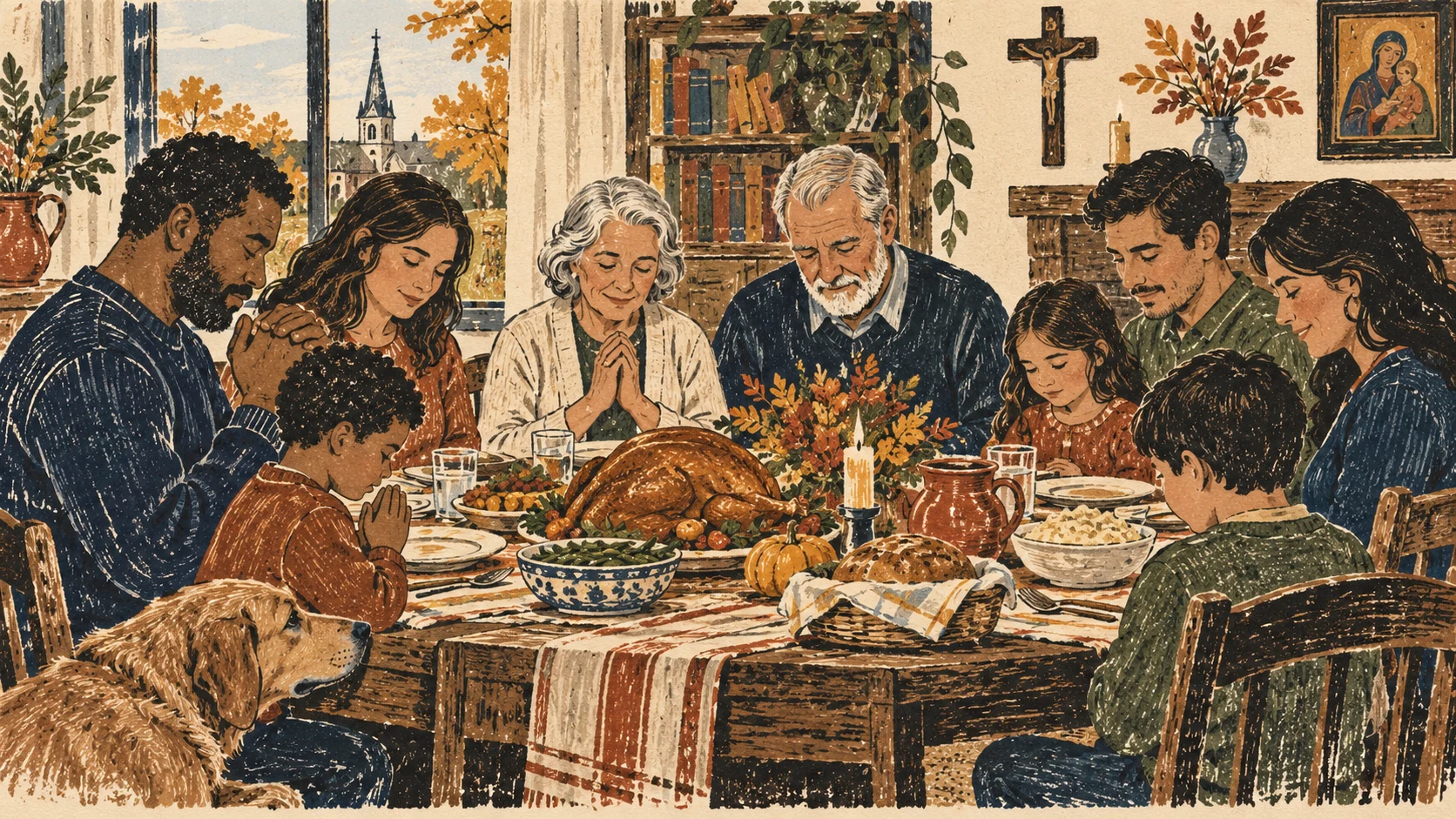
A Catholic Thanksgiving with relatives who practice other faiths, or no faith, can be both clearly Catholic and warmly hospitable. The practical task is to explain what you plan, invite participation without pressure, and give the meal enough room for everyone to be a person rather than a representative of a viewpoint.
Tell guests what to expect
A brief message before the day can prevent awkward surprises: “We usually say a short grace before eating. You are very welcome to join us or simply sit quietly.” If Mass is part of your morning, describe it as an invitation rather than an assumption about everyone else’s plans.
Ask about food needs directly. Dietary restrictions may have religious, medical, or personal reasons, and guests should not have to defend them at the table. Label dishes when helpful and make sure someone can eat a complete meal.
Choose a grace that is short and sincere
You do not need to hide your faith to be considerate. A Catholic host can pray in the name of Christ while making clear that others are free to listen. The USCCB’s collection of prayers for days and seasons includes a Thanksgiving prayer for those who prefer an established resource.
This original prayer is another option: God of goodness, thank you for the food before us, the work that brought it here, and the people sharing this table. Help us remember those who lack food or company, and make us generous with what we have received. Through Christ our Lord. Amen.
Do not ask an unsuspecting guest to lead prayer. If more than one tradition is represented, discuss any shared prayer arrangement beforehand so no one is placed in an uncomfortable position.
Make conversation easier to enter
Questions about ordinary life often create better conversation than a forced round of declarations. Ask what someone has enjoyed learning, what meal they remember from childhood, or what made their week easier. A guest can answer briefly without revealing something private.
If a disagreement becomes heated, the host can redirect it without delivering a lecture: “I would like to hear more another time; let’s give everyone a calmer meal.” Changing the subject is sometimes a way of protecting the gathering, not avoiding all serious discussion.
When children notice differences
Children may ask why a relative does not make the Sign of the Cross or attend Mass. Answer simply and respectfully: people in the family have different beliefs and practices, and we can explain our own while treating them with care. Save a longer discussion for a moment that does not put the guest on display.
A child should not be assigned the task of persuading an adult relative to change beliefs. Let the holiday model clear faith joined to good manners, patient listening, and affection.
Share the work as well as the welcome
Hospitality becomes more concrete when guests know how they can help. Offer a few choices: bring a side dish, set the table, wash up, or arrive without a task if the week has been difficult. People with limited money or energy should not feel that admission to the gathering requires a contribution.
Consider one modest act of generosity beyond the table, such as contributing requested items to a local food pantry. Confirm what the organization actually needs. Avoid making a guest’s donation part of a public comparison.
Keep gratitude free of pressure
Some people arrive carrying unemployment, illness, strained relationships, or grief. A required “what are you thankful for?” round can be harder than the host intends. Make passing an acceptable answer, and let gratitude include small things.
If someone is missing from the gathering because of death, our gentle Thanksgiving plan for grieving families offers ways to remember them without surprising the room. A hospitable holiday allows faith, gratitude, and complicated feelings to share a table. The goal is a meal in which people know they were expected and are glad they came.