
In the sun-drenched, ancient land of Sicily, a young woman named Agatha emerged from the crucible of Roman persecution to become one of Christianity’s most enduring and beloved saints. Her story, a testament to unwavering faith and remarkable courage, continues to inspire millions across the globe. From her noble birth in the 3rd century to her brutal martyrdom and the miraculous intercessions attributed to her, St. Agatha’s life illuminates the power of conviction in the face of immense suffering. This article will delve into her historical context, explore the pivotal moments of her life, examine her profound spiritual legacy, and reveal how her story resonates deeply with modern believers, offering lessons on strength, purity, and divine protection.
Quick Facts
| Category | Detail |
|---|---|
| Birth | c. 231 AD, Catania or Palermo, Sicily |
| Death | c. 251 AD, Catania, Sicily (Martyred) |
| Feast Day | February 5 |
| Patronage | Breast cancer patients, nurses, bell-founders, bakers, victims of torture, epidemics, natural disasters (especially fires and earthquakes), Wet Nurses, Catania, Sicily |
| Canonized | Pre-Congregation (Venerated from early Christianity) |
Historical Context & Early Life
To understand the profound significance of St. Agatha’s life, it’s essential to immerse ourselves in the tumultuous world of the 3rd century Roman Empire. This was a period marked by political instability, economic strife, and, crucially for Christians, intense religious persecution. The Roman Empire, vast and powerful, viewed the burgeoning Christian faith with suspicion and hostility. Christians, with their refusal to worship the Roman gods or the emperor as divine, were often seen as disloyal, atheistic, and a threat to the traditional social order. Periodic, empire-wide persecutions aimed to stamp out this “superstition” and force adherence to the imperial cult.
Sicily, the large island off the toe of Italy, was a vital Roman province, known for its fertile lands and strategic maritime position. It was governed by Roman officials who, during times of persecution, were empowered to enforce imperial edicts against Christians with brutal efficiency. The city of Catania, a bustling port on the eastern coast of Sicily, was a significant center of Roman administration and culture, making it a focal point for both Roman authority and emerging Christian communities.
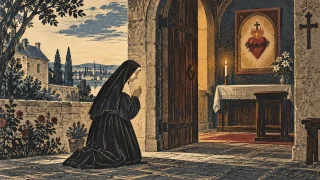
It was into this volatile environment that Agatha was born, likely around 231 AD, either in Catania or possibly Palermo. Her family was noble and wealthy, a status that typically afforded protection and privilege within Roman society. However, Agatha’s family, or at least Agatha herself, had embraced the Christian faith, a dangerous choice that set her apart from her pagan peers. From a very young age, Agatha demonstrated an extraordinary piety and devotion to God. In an era where marriage was often a strategic alliance arranged by families, particularly among the nobility, Agatha made a radical choice: she consecrated her virginity to Christ. This commitment, a spiritual marriage to God, was a profound act of faith and independence, rejecting societal norms and signaling her complete dedication to a higher calling. Her early life, though likely privileged in material terms, was lived under the shadow of potential persecution, shaping her into a woman of immense spiritual fortitude.
Calling & Key Milestones
Agatha’s calling to a life consecrated to God was tested with an intensity that few could imagine. Her story is a powerful narrative of faithfulness, suffering, and divine vindication, making her one of the most revered martyrs of the early Church.
The Vow of Virginity and Imperial Edicts
Agatha, having dedicated her life to Christ as a virgin, lived a life of quiet devotion. However, the political landscape shifted dramatically with the ascension of Emperor Decius in 249 AD. Decius initiated one of the most severe and widespread persecutions of Christians in Roman history. He issued an edict demanding that all citizens perform public sacrifices to the Roman gods and obtain a certificate proving their compliance. Refusal meant imprisonment, torture, and often death. This edict transformed the religious landscape, making every Christian a target, regardless of their social standing. It was during this time that Quintianus, the Roman governor of Sicily, a man known for his cruelty and lust, set his sights on Agatha. He was not only drawn to her beauty and wealth but also saw an opportunity to exploit the emperor’s decree to satisfy his own desires.
Refusal and Imprisonment
Quintianus, upon learning of Agatha’s Christian faith and her vow of virginity, saw an opportunity to both punish a Christian and gratify his personal desires. He ordered her arrest and brought her before him for interrogation. He attempted to coerce her into renouncing her faith and marrying him, using promises of wealth and status, and threats of torture. Agatha, however, remained steadfast, proclaiming her unwavering devotion to Christ. Angered by her defiance, Quintianus decided to break her spirit through humiliation and abuse rather than immediate execution. He handed her over to a woman named Aphrodisia, a madam of a brothel, with instructions to force Agatha into a life of prostitution. Quintianus believed that such an environment would surely corrupt her virtue and break her resolve. However, Agatha’s faith proved stronger than any earthly temptation. She spent a month in Aphrodisia’s care, enduring constant pressure and threats, yet she emerged from this ordeal with her purity and conviction intact, miraculously preserved from defilement.
Torture and Martyrdom
When Aphrodisia reported her failure to Quintianus, the governor was enraged. He ordered Agatha to be brought before him again, intensifying his cruel interrogations. Agatha continued to profess her faith boldly, comparing herself to a servant of Christ. Enraged, Quintianus subjected her to horrific tortures. She was stretched on the rack, scourged, and her flesh torn with iron hooks. Yet, through it all, she refused to yield. In a particularly gruesome act of barbarity, he ordered that her breasts be cut off, an act designed to humiliate and destroy her womanhood, a direct assault on her consecrated virginity. Even after this atrocious mutilation, Agatha remained resolute. Miraculously, that night, St. Peter appeared to her in prison, comforting her and healing her wounds. This divine intervention further strengthened her resolve, infuriating Quintianus even more when he saw her miraculously restored.
Her tortures continued. She was rolled over hot coals mixed with sharp pottery shards. Through unimaginable pain, Agatha prayed to God, giving thanks and committing her soul to Him. It is said that at the moment of her death, a powerful earthquake shook Catania, terrifying the populace and leading many to demand an end to the persecution. St. Agatha died in prison, a true martyr for her faith, around the year 251 AD. Her unwavering courage in the face of such monstrous cruelty left an indelible mark on the Christian community, instantly recognizing her as a powerful intercessor and an exemplar of heroic faith.
Miraculous Intercession and Legacy
Agatha’s story didn’t end with her death. Her spiritual power continued to manifest through miraculous intercessions. The most famous occurred just one year after her martyrdom. Mount Etna, the volcano overlooking Catania, erupted violently, threatening to engulf the city in a torrent of lava. The desperate citizens of Catania retrieved Agatha’s veil from her tomb and processed with it towards the advancing lava flow. According to tradition, as they approached, the lava miraculously stopped, diverting away from the city. This event solidified her status as a protector against fire, earthquakes, and other natural disasters, and her veil became a powerful relic. This miracle, and others attributed to her, cemented her veneration throughout the Christian world and established her as a powerful patron saint.
Spiritual Legacy & Theological Themes
St. Agatha’s life, though tragically cut short, left an enduring spiritual legacy that continues to resonate within the Catholic Church. Her virtues, courage, and unwavering faith offer profound theological insights and practical lessons for believers today.
The core virtues Agatha exemplified are numerous, but paramount among them are her chastity, courage, and unwavering faith. Her decision to consecrate her virginity to Christ, even in a pagan society, speaks to a profound commitment to purity and an exclusive love for God. This mirrors the biblical call to holiness, as found in passages like 1 Corinthians 7:34, which speaks of an unmarried woman being “anxious about the affairs of the Lord, how to be holy in body and spirit.” Agatha understood her body as a temple of the Holy Spirit, a sacred vessel dedicated entirely to God.
Her courage in the face of brutal torture and her refusal to renounce her faith or her purity stands as a testament to the strength that comes from divine grace. She endured unimaginable suffering, not out of stubbornness, but out of a deep, abiding love for Christ. This reflects the biblical promise of strength in weakness, as articulated by St. Paul in 2 Corinthians 12:9: “My grace is sufficient for you, for my power is made perfect in weakness.” Agatha’s physical weakness was overshadowed by her spiritual might.
Her unwavering faith, even unto death, aligns perfectly with the theological concept of martyrdom as the ultimate witness to Christ. Early Christians believed that martyrs, by imitating Christ’s sacrifice, offered the most perfect act of worship. Her willingness to die rather than betray her beliefs echoes the words of Jesus in Matthew 10:28: “And do not fear those who kill the body but cannot kill the soul; rather fear him who can destroy both soul and body in hell.” Agatha demonstrated that true fear belongs only to God, not to earthly tyrants.
St. Agatha’s lasting influence is particularly evident in liturgy and devotion. She is one of the handful of women saints mentioned in the Roman Canon (Eucharistic Prayer I) of the Mass, a testament to her ancient and universal veneration. Her feast day on February 5th is celebrated with solemnity, particularly in Sicily, where she is a beloved patron. Her story is also a common theme in Christian art, depicting her often with symbols of her martyrdom, which serve as visual reminders of her sacrifice and triumph.
Theologically, Agatha’s life underscores the sanctity of the human body and the spiritual strength available to those who unite their suffering with Christ’s. Her patronage against breast cancer, in particular, highlights the Church’s recognition of physical suffering and its spiritual dimension, offering hope and intercession to those afflicted with illness. Her association with protection from fire and natural disasters further emphasizes the belief in saints as powerful intercessors who can appeal to God for temporal and spiritual aid. Her story continually reminds the faithful that true victory lies not in earthly comfort, but in enduring faithfulness to Christ, even unto death.
Devotion Today
St. Agatha’s devotion remains vibrant and widespread, particularly in her native Sicily and throughout the global Catholic Church. Her story of courage and purity continues to inspire millions, drawing pilgrims and devotees to sites associated with her life and miracles.
The epicenter of St. Agatha’s veneration is undoubtedly Catania, Sicily. Here, she is not merely a saint; she is the city’s patroness and protectress, deeply interwoven into its identity and history. The Cathedral of Sant’Agata in Catania houses her sacred relics, including her skull, jawbone, and other bodily parts, encased in an ornate silver bust and a reliquary casket. These relics are venerated with immense reverence, particularly during her annual feast day celebrations.
The Feast Day of St. Agatha on February 5th is one of the most spectacular and deeply moving religious festivals in the world. In Catania, the celebrations span several days, beginning on February 3rd and culminating on February 5th. Thousands of “Cittadini” (citizens), dressed in traditional white tunics, black caps, and white gloves, pull a massive silver carriage (the “fercolo”) bearing her relics through the streets of the city. This arduous procession, known as the “Giro,” can last for over 24 hours, traversing Catania’s ancient roads, with devotees shouting “Viva Sant’Agata!” (Long Live St. Agatha!). It’s a profound display of communal faith, penance, and gratitude, often accompanied by candle offerings and prayers for her intercession. Pilgrims from all over the world travel to Catania to participate in this intense and spiritually charged event.
Beyond Sicily, devotion to St. Agatha can be found globally. Churches and chapels dedicated to her stand in numerous countries, from Italy to Spain, Latin America, and the Philippines. She is a popular saint among those suffering from breast cancer, and many Catholic hospitals, particularly those focused on women’s health, bear her name or invoke her patronage. Her intercession is also sought for protection against fires, earthquakes, and other natural calamities, stemming from the famous miracle of Mount Etna. Small shrines and statues featuring St. Agatha are common in Catholic homes, and many wear medals bearing her image as a sign of their devotion and a request for her protection.
The continuing widespread devotion to St. Agatha speaks to the timeless appeal of her virtues and the powerful belief in her heavenly intercession. She remains a beacon of hope and strength for those facing trials, illnesses, or dangers, reminding the faithful that through Christ, all things are possible, and that courageous faith is rewarded with eternal glory.
Reflections for Modern Readers
St. Agatha’s story, though rooted in the ancient world, offers surprisingly relevant and powerful lessons for people living in the 21st century. Her steadfastness in the face of immense pressure and suffering provides a timeless blueprint for navigating modern challenges.
1. Upholding Personal Integrity and Conviction: In a world that often demands conformity, St. Agatha’s refusal to compromise her beliefs stands as a powerful example. She chose her faith and her commitment to God over wealth, status, and even her own life. For modern readers, this translates into having the courage to stand up for your values, whether in ethical dilemmas at work, resisting peer pressure, or advocating for justice. For example, a student might be pressured to cheat on an exam but chooses honesty, remembering Agatha’s integrity. Or an individual might decline to participate in workplace gossip, upholding their commitment to kindness and truth, even if it makes them unpopular.
2. Resilience in the Face of Adversity: Agatha endured physical and emotional torture that is almost unimaginable. Yet, her spirit remained unbroken. Her story teaches us about the incredible capacity of the human spirit, strengthened by faith, to withstand adversity. Today, while few face physical persecution for their faith, we encounter various forms of hardship: illness, loss, professional setbacks, or emotional struggles. Agatha reminds us to tap into an inner strength, to find hope even when circumstances are dire, and to trust that even in our darkest moments, divine comfort can sustain us. Think of someone battling a chronic illness, finding strength not just in medicine, but in their spiritual resolve and community support, mirroring Agatha’s miraculous healing and fortitude.
3. The Sanctity of the Body and Self-Respect: St. Agatha’s vow of virginity and her protection of her bodily integrity in the face of brutal attempts to defile her speak profoundly to the sanctity of the human body. In an age saturated with objectification and pressures regarding physical appearance, Agatha reminds us that our bodies are temples of the Holy Spirit, deserving of respect and purity. This lesson extends beyond sexual purity to encompass self-care, healthy boundaries, and resisting societal pressures that diminish our inherent dignity. A young person navigating social media’s unrealistic beauty standards might remember Agatha’s deep self-respect, understanding their worth comes from within and from God, not from external validation.
4. Intercession and Community Support: The miraculous stopping of the lava flow through St. Agatha’s intercession highlights the power of prayer and the communion of saints. It reminds us that we are not alone in our struggles. We have fellow believers, both living and in heaven, who can pray for us and support us. For modern readers, this means actively engaging in prayer, both personal and communal, and seeking the support of faith communities during difficult times. It also encourages us to pray for others, recognizing our interconnectedness. When a natural disaster strikes, a community coming together to pray and organize relief efforts exemplifies the spirit of intercession and mutual aid, echoing the citizens of Catania seeking Agatha’s help.
Symbols and Representations of St. Agatha
St. Agatha is often depicted in art with several distinct symbols, each telling a part of her poignant story:
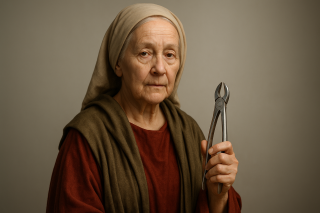
- Pincers and Severed Breasts on a Platter: This is perhaps the most striking and memorable symbol. The pincers represent the instrument of her torture, while the severed breasts on a plate directly reference the horrific mutilation she endured. While graphic, these symbols serve as a powerful reminder of her suffering, her unwavering purity, and her ultimate victory over persecution. They are particularly resonant for those suffering from breast cancer, making her a poignant patron.
- Veil: Often depicted holding or wearing a veil, this symbolizes her sacred veil that was used to miraculously stop the lava flow from Mount Etna, securing her patronage against fire and natural disasters. It also represents her consecrated virginity and purity.
- Lamp: A lamp or lantern is sometimes shown with St. Agatha, symbolizing her readiness and vigilance in faith, like the wise virgins awaiting the bridegroom (Matthew 25:1-13). It signifies her constant devotion and preparedness for her ultimate sacrifice.
- Loaf of Bread: In some depictions, particularly in relation to her patronage of bakers, she may be shown with a loaf of bread. This connects to her protection from fire (as ovens are hot) and her role in providing spiritual sustenance. There’s also a tradition of “St. Agatha’s bread” (small, round loaves) being blessed on her feast day, believed to offer protection.
- Palm Branch: Like many martyrs, St. Agatha is often shown with a palm branch, the universal symbol of martyrdom, signifying her triumph over death through faith.
These symbols not only serve as artistic identifiers but also as mnemonic devices, helping the faithful remember her story, her virtues, and her powerful intercession.
Timeline Summary
- c. 231 AD: Born into a noble family in Sicily (Catania or Palermo).
- Early Life: Dedicates her virginity to Christ at a young age, embracing a life of profound piety.
- 249 AD: Emperor Decius issues edicts intensifying the persecution of Christians throughout the Roman Empire.
- c. 250 AD: Roman governor Quintianus, attracted to her and aware of her Christian faith, orders her arrest.
- c. 250 AD: Agatha steadfastly refuses Quintianus’s advances and demands to renounce her faith.
- c. 250 AD: Quintianus sends her to Aphrodisia, the madam of a brothel, to break her spirit; Agatha’s purity remains intact.
- c. 251 AD: Subjected to various tortures, including scourging, stretching on the rack, and the cutting off of her breasts.
- c. 251 AD: Miraculously healed by St. Peter in prison, further enraging Quintianus.
- c. 251 AD: Endures further torture, including being rolled over hot coals and pottery shards.
- c. 251 AD: Dies in prison, a martyr for her faith; an earthquake shakes Catania at her death.
- c. 252 AD: Mount Etna erupts; citizens use her veil to miraculously stop the lava flow from engulfing Catania.
- From early Christianity: Veneration of St. Agatha begins and spreads rapidly throughout the Church.
- Present Day: Continues to be one of the most beloved and widely venerated virgin martyrs, especially in Sicily, with a major feast day celebration on February 5th.
Scripture for Reflection
St. Agatha’s life profoundly illustrates several biblical themes, particularly those concerning unwavering faith, perseverance in suffering, and the sanctity of the body consecrated to God. Here are a few passages that illuminate her key virtues:
Romans 8:38-39 (NABRE): “For I am convinced that neither death, nor life, nor angels, nor principalities, nor present things, nor future things, nor powers, nor height, nor depth, nor any other creature will be able to separate us from the love of God in Christ Jesus our Lord.”
Connection: This passage perfectly encapsulates St. Agatha’s unwavering commitment. Despite facing the ultimate threats of death and excruciating torture, nothing could separate her from the love of God. Her steadfastness is a living testament to the truth of these verses, showing that true faith can overcome any earthly power or suffering.
1 Peter 4:12-13 (NABRE): “Beloved, do not be surprised that a trial by fire is occurring among you, as if something strange were happening to you. But rejoice to the extent that you share in the sufferings of Christ, so that when his glory is revealed you may also rejoice with great joy.”
Connection: St. Agatha endured a “trial by fire” quite literally, both through her torture on hot coals and the subsequent miracle of her veil stopping the lava flow. Her ability to endure and even rejoice in her suffering, knowing she was sharing in the Passion of Christ, reflects the profound spiritual attitude called for in this epistle. Her ultimate joy came from her union with God through her sacrifice.
1 Corinthians 6:19-20 (NABRE): “Do you not know that your body is a temple of the Holy Spirit within you, whom you have from God, and that you are not your own? For you have been purchased at a great price. Therefore, glorify God in your body.”
Connection: St. Agatha’s dedication of her virginity to Christ and her fierce protection of her bodily integrity, even when it was brutally assaulted, exemplifies this teaching. She understood that her body belonged to God, not to herself or to any earthly ruler. Her martyrdom was the ultimate act of glorifying God in her body, preserving its spiritual purity despite physical defilement.
Prayers to St. Agatha
St. Agatha is invoked for protection against fire, earthquakes, and especially for those suffering from breast ailments and cancer. Many prayers have been written in her honor, seeking her powerful intercession. Here is a common prayer to St. Agatha:
Prayer to St. Agatha
O Heavenly Father, who raised St. Agatha to the dignity of a virgin and martyr, grant us, through her intercession, the grace to preserve our bodies in chastity and our hearts in perfect charity. Strengthen us in our faith, that we may courageously bear witness to Christ in all circumstances, even as St. Agatha faced torture and death with unwavering devotion.
Through her prayers, we ask for protection against all forms of bodily harm, especially against breast cancer and other ailments. Safeguard us also from the dangers of fire, earthquakes, and all natural calamities, remembering her powerful intercession during the eruption of Mount Etna.
May her example inspire us to live lives of purity, courage, and faithful love, that we, too, may one day join her and all the saints in Your eternal kingdom. We ask this through Christ our Lord. Amen.
Another Shorter Invocation:
Saint Agatha, brave martyr of Christ, pure and strong, intercede for us. Protect us from illness, especially breast disease. Grant us courage in trials and steadfastness in faith. Amen.