In a world often defined by ambition and material success, the story of St. Benedict Joseph Labre stands as a radical counter-narrative, a testament to profound faith found in the most unexpected places. This extraordinary saint, born in rural France in the 18th century, chose a life of voluntary poverty, perpetual pilgrimage, and silent prayer, becoming a living sermon on detachment and divine trust. From his challenging early life and repeated rejections from religious orders to his unique vocation as a “pilgrim of God” traversing Europe, Labre’s journey offers powerful lessons for modern seekers. This article will explore his historical backdrop, the contours of his remarkable spiritual path, his enduring legacy, and how his virtues continue to inspire devotion and reflection today.
Quick Facts
| Attribute | Detail |
|---|---|
| Birth | March 26, 1748, Amettes, Artois, France |
| Death | April 16, 1783, Rome, Papal States |
| Feast Day | April 16 |
| Patronage | Homeless, beggars, mentally ill, tramps, outcasts, pilgrims, unmarried men, those rejected by religious orders |
| Canonized | December 8, 1881, by Pope Leo XIII |
Historical Context & Early Life
St. Benedict Joseph Labre’s life unfolded in 18th-century Europe, a period marked by profound societal shifts and burgeoning Enlightenment ideals. While France was still largely Catholic, intellectual currents were challenging traditional religious authority, moving towards rationalism and secularism. The Church itself was grappling with various internal reforms and external pressures, though monastic life remained a respected path to holiness. Economically, many rural areas, like Labre’s birthplace in Artois, still lived a traditional agricultural existence, but urban centers were growing, often with a stark contrast between wealth and poverty. Against this backdrop, Benedict Joseph’s intensely spiritual and counter-cultural life would have stood out all the more.
Born into a prosperous middle-class family, Jean-Baptiste Labre (his given name) was the eldest of 15 children. His father was a successful shopkeeper and farmer. The family was deeply religious, and young Jean-Baptiste showed an early and strong inclination towards piety. From a very young age, he was known for his quiet demeanor, his love for prayer, and his generosity, often giving away his own food to those in need. He felt a deep longing for God and a desire to dedicate his life entirely to Him. At the age of twelve, he began to study Latin with his uncle, a parish priest, who also introduced him to the austere practices of the Trappist monks, further fueling his desire for a life of penance and contemplation.
Calling & Key Milestones
The Rejected Aspirant
From his teenage years, Benedict Joseph felt a strong call to religious life, specifically to the strict contemplative orders. At 16, he sought admission to the Trappists, an order known for its rigorous asceticism. However, he was rejected due to his young age and perceived delicate health. Undeterred, he tried again, and again he was turned away. Over the next several years, he made repeated attempts to join other demanding orders, including the Carthusians, the Cistercians, and the Norbertines. Each time, he faced rejection. The reasons varied: sometimes he was deemed too sickly, sometimes too scrupulous, and sometimes simply “not suited” for community life. These repeated setbacks were immensely painful for a young man whose heart was set on serving God in such a direct way. He experienced deep disappointment, but instead of losing hope, these rejections ultimately shaped a unique spiritual path.
The Pilgrim of God
After nearly a decade of trying to enter various monasteries, Benedict Joseph concluded that God was calling him to a different kind of religious life. He decided to embrace a singular vocation: to be a “pilgrim of God” on earth. In 1770, he set out on a journey that would last for the remaining thirteen years of his life. He discarded his respectable clothes, donned a tattered pilgrim’s cloak, and began to travel barefoot, or sometimes with worn-out shoes, across Europe. His only possessions were the clothes on his back, a rosary, a crucifix, and a New Testament. He walked thousands of miles, visiting the most significant shrines of Christendom: Loreto, Assisi, Rome, Naples, Bari, Santiago de Compostela, Paray-le-Monial, and many others. His journeys were not undertaken for tourism or adventure, but as acts of profound penance and prayer.
Life on the Streets and Devotion to the Eucharist
Benedict Joseph Labre lived a life of extreme voluntary poverty. He never stayed in comfortable lodgings, preferring to sleep outdoors, in abandoned ruins, or in the porches of churches. He subsisted entirely on alms, begging for food, and often shared what little he received with other beggars, sometimes going without himself. He was known for his quiet humility, rarely speaking unless necessary, and always with profound gentleness. Despite his appearance, which often drew scorn and ridicule, he maintained an interior peace and joy. His main activity was prayer, especially before the Blessed Sacrament. He would spend hours, even entire nights, in adoration before the tabernacle in whatever church he found himself, deeply absorbed in contemplation. He also had a tender devotion to the Blessed Virgin Mary, praying the rosary constantly. His life was a continuous act of penance, charity, and unwavering faith, a living example of Christ’s teaching to “take no thought for your life, what you shall eat, or what you shall drink; nor yet for your body, what you shall put on.” (Matthew 6:25)
Death and Immediate Veneration
By 1783, Benedict Joseph’s health had deteriorated significantly due to his rigorous lifestyle. He spent his final days in Rome, a city he especially loved for its many churches. On April 16, 1783, after collapsing in a church, he was taken to a nearby hospice where he died shortly after, surrounded by priests and onlookers. He was only 35 years old. The news of his death quickly spread throughout Rome, particularly among the poor and marginalized who had recognized his holiness despite his outwardly wretched appearance. Children ran through the streets shouting, “The saint is dead! The saint is dead!” Many miracles were attributed to his intercession almost immediately after his death, particularly healings. He was buried in the Church of Santa Maria dei Monti in Rome, where his tomb quickly became a place of pilgrimage.
Spiritual Legacy & Theological Themes
St. Benedict Joseph Labre’s spiritual legacy is profound, offering a challenging yet deeply inspiring vision of holiness. His life beautifully illustrates several core virtues and theological themes central to Catholic teaching.
Firstly, he epitomized **radical poverty and detachment**. His entire life was a voluntary renunciation of worldly goods, comfort, and status, aligning perfectly with Christ’s call to “sell all that you have and distribute to the poor, and you will have treasure in heaven” (Luke 18:22). He lived out the Beatitude, “Blessed are the poor in spirit, for theirs is the kingdom of heaven” (Matthew 5:3), not just spiritually, but materially, trusting entirely in divine providence for his daily needs. This radical detachment freed him to focus solely on God.
Secondly, his life was a testament to **profound humility and hiddenness**. Despite the suffering and scorn he often endured due to his appearance, he never sought recognition or complained. He lived a life of silent witness, performing penance not for human applause, but out of love for God and reparation for sins. His humility allowed him to accept his unique vocation and embrace the lowest station in society, demonstrating that true greatness in God’s eyes often differs vastly from worldly measures.
Thirdly, Labre showed extraordinary **patience and perseverance in prayer**. Despite repeated rejections from religious orders, his desire for God only deepened. His constant pilgrimages were acts of ongoing prayer, and his hours before the Blessed Sacrament revealed an intense interior life. He taught by example that prayer is not merely a formality but a deep communion with God, accessible even amidst the greatest outward deprivation.
His lasting influence stems from his powerful demonstration that holiness is not confined to convents or pulpits, but can be found in the margins of society, in a life dedicated entirely to God through voluntary suffering and love. He challenged the notions that comfort and social standing are prerequisites for spiritual growth. His devotion to the Eucharist and Our Lady also reinforced traditional Catholic practices, showing how deep personal piety can flourish even in unconventional circumstances. St. Benedict Joseph Labre remains a powerful symbol of Christian witness for those who feel rejected or are marginalized, affirming their inherent dignity and capacity for holiness in the eyes of God.
Devotion Today
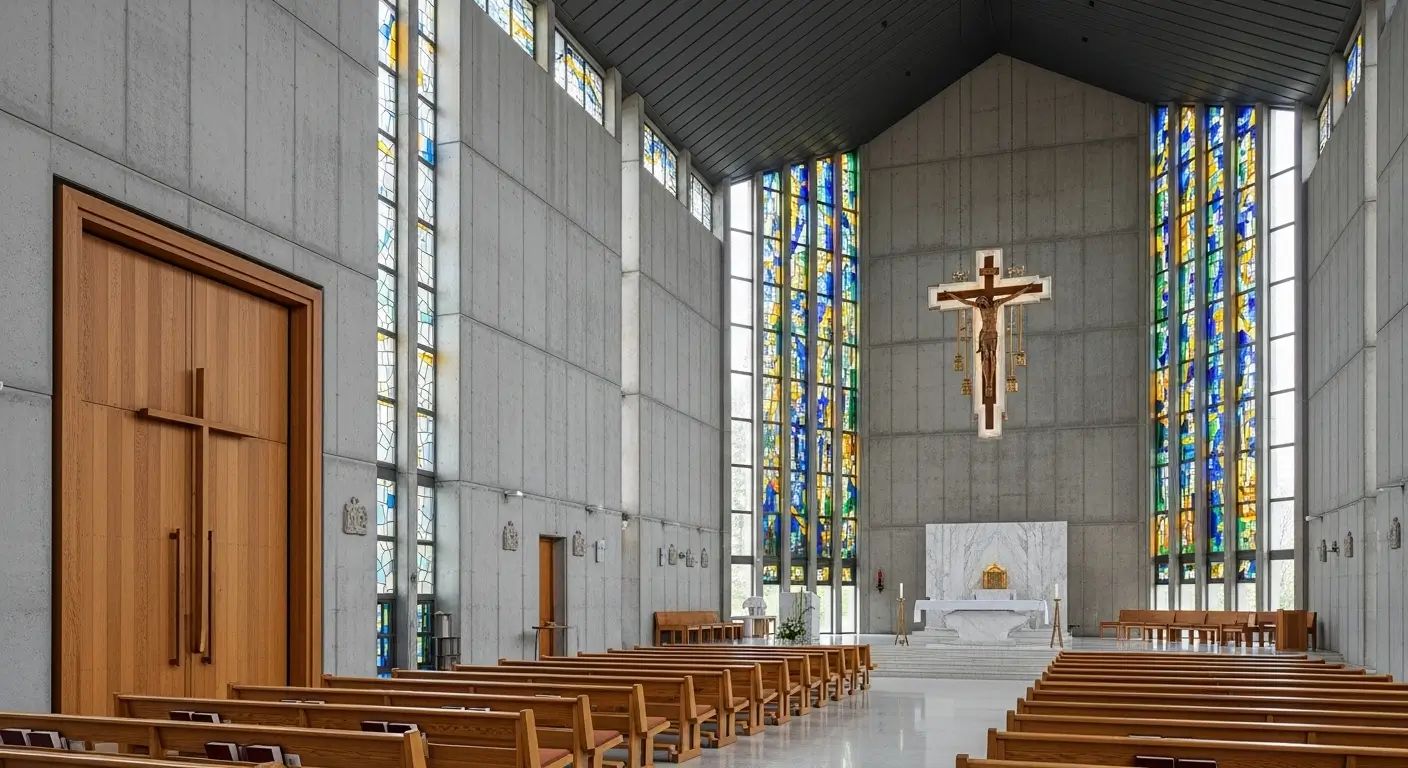
Devotion to St. Benedict Joseph Labre remains strong, particularly among those who identify with his struggles or are inspired by his radical life of faith. His primary shrine is his tomb in the Church of Santa Maria dei Monti in Rome, where he died. This church continues to be a place of pilgrimage, especially on his feast day, April 16th. Many people visit seeking his intercession for the homeless, the mentally ill, and those facing rejection or social ostracism.
Throughout Europe and beyond, various charities and organizations dedicated to serving the homeless and marginalized have adopted St. Benedict Joseph Labre as their patron. They draw inspiration from his life, recognizing in him a profound empathy for the struggles of those living on the streets. His example reminds us to see Christ in the least of our brothers and sisters, fostering a deeper sense of compassion and service.
While not a saint with a massive, worldwide following like some others, St. Benedict Joseph Labre’s devotion is intense and meaningful for those who understand his unique path. His story is particularly cherished by those who feel called to a life of simplicity, radical trust in God, and a deep commitment to prayer, even if their path does not fit conventional expectations.
Reflections for Modern Readers
St. Benedict Joseph Labre’s life, though lived centuries ago, offers profound and actionable takeaways for modern readers navigating the complexities of the 21st century. His radical choices challenge us to reconsider our values and priorities.
- Embrace Humility and Detachment: In a culture obsessed with self-promotion and material accumulation, Labre invites us to a counter-cultural path. He teaches us that true freedom comes from detaching ourselves from worldly possessions and the need for external validation. This could mean decluttering our lives, practicing mindful spending, or simply letting go of the need to always be “right” in arguments. For example, instead of constantly seeking the newest gadgets, we might choose to be content with what we have, finding joy in simpler pleasures and deeper connections.
- Find God in Unexpected Places: Labre found his sanctuary in church porches and on pilgrim trails, demonstrating that holiness is not confined to grand cathedrals or specific vocations. We can encounter God in the quiet moments of our daily lives, in nature, in service to others, or even in the challenges we face. A busy parent might find God’s presence in a quiet moment while preparing breakfast, or a stressed student might experience peace during a walk in a local park.
- Persevere Through Rejection: Labre faced repeated rejection from the very institutions he wished to join. Yet, these setbacks didn’t deter his spiritual quest; instead, they led him to discover a unique path chosen by God. When we face professional setbacks, personal disappointments, or feel misunderstood by others, Labre encourages us to seek God’s alternative plan and trust that every obstacle can be a redirection towards a deeper purpose. Perhaps a job rejection opens the door to a more fulfilling career, or a relationship challenge helps us grow in patience and understanding.
- Practice Radical Trust in Divine Providence: Living without possessions, Labre relied entirely on God’s provision. This extreme example reminds us to cultivate trust in God’s care, even amidst financial worries, health concerns, or uncertainties about the future. It’s not about being irresponsible, but about holding our plans loosely and believing that God will provide what we truly need, often through the kindness of others or unexpected opportunities. This might mean donating to a worthy cause even when our own budget is tight, or choosing faith over fear when facing a difficult decision.
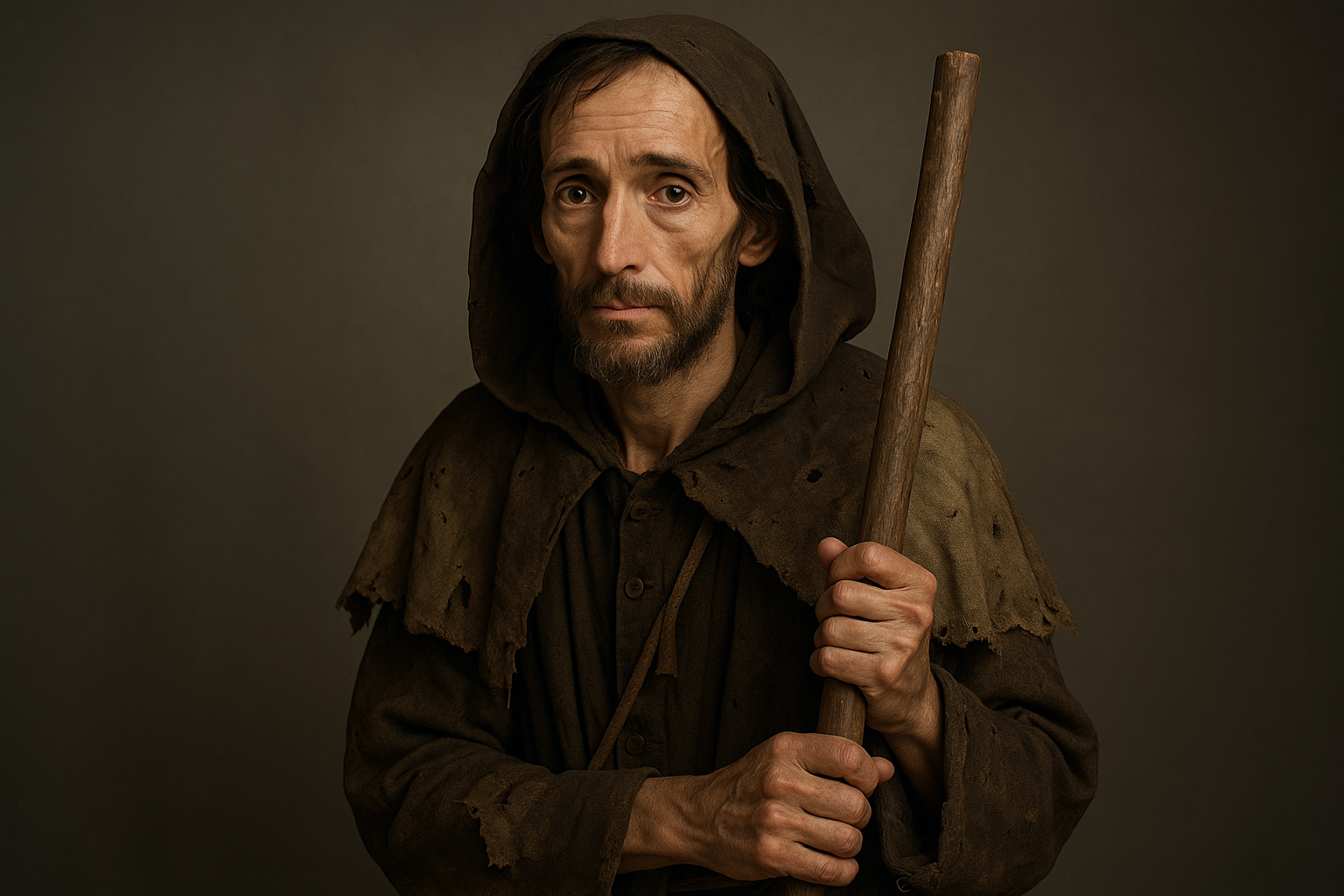
In art and jewelry, St. Benedict Joseph Labre is typically depicted as a **pilgrim**. Common symbols include:
- Tattered Clothes/Rags: These symbolize his radical poverty and detachment from worldly comforts, reminding us that true spiritual wealth is not outward.
- Pilgrim’s Staff: Represents his life as a perpetual pilgrim, journeying from shrine to shrine, and signifies the Christian life as a pilgrimage towards heaven.
- Rosary and/or Crucifix: These highlight his deep devotion to prayer, particularly to the Blessed Virgin Mary and the Passion of Christ, which were central to his spiritual life.
- Begging Bowl or Hat: Symbolizes his dependence on divine providence and the charity of others, as well as his solidarity with the poor and marginalized.
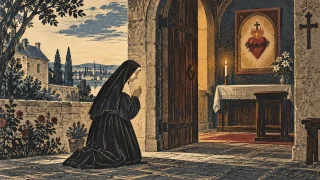
- Church in the Background: Often, an image of a church or the interior of a church is included, reflecting his profound devotion to the Blessed Sacrament and the many hours he spent in adoration.
- Lice or Filth: Though less common in modern depictions, some older art may hint at the unsanitary conditions of his life, emphasizing his humility and acceptance of suffering.
Timeline Summary
- 1748: Born Jean-Baptiste Labre in Amettes, France.
- 1764-1770: Repeatedly attempts to join various strict religious orders (Trappists, Carthusians, Cistercians, Norbertines) but is consistently rejected.
- 1770: Embraces a unique vocation as a “pilgrim of God,” renouncing worldly possessions and beginning his perpetual travels.
- 1770-1783: Journeys thousands of miles on foot across Europe, visiting major shrines like Loreto, Assisi, Rome, Santiago de Compostela.
- 1783: Spends his final years mostly in Rome, dedicating himself to intense prayer before the Blessed Sacrament.
- April 16, 1783: Collapses in the Church of Santa Maria dei Monti in Rome and dies shortly after in a nearby hospice.
- 1783-1881: Rapid spread of devotion and reports of miracles attributed to his intercession.
- 1860: Beatified by Pope Pius IX.
- December 8, 1881: Canonized by Pope Leo XIII, making him St. Benedict Joseph Labre.
Scripture for Reflection
St. Benedict Joseph Labre’s life deeply reflects several scriptural teachings, particularly those on poverty, humility, and trust in God. Here are a few passages for reflection:
Matthew 6:25-26: “Therefore I tell you, do not worry about your life, what you will eat or what you will drink, or about your body, what you will wear. Is not life more than food, and the body more than clothing? Look at the birds of the air; they neither sow nor reap nor gather into barns, and yet your heavenly Father feeds them. Are you not of more value than they?”
This passage directly speaks to Labre’s radical trust in divine providence. He gave up all means of self-support, relying entirely on God to provide for his basic needs, just as the birds of the air are fed. His life was a living embodiment of freedom from worry about earthly provisions.
Philippians 2:5-8: “Let the same mind be in you that was in Christ Jesus, who, though he was in the form of God, did not regard equality with God as something to be exploited, but emptied himself, taking the form of a slave, being born in human likeness. And being found in human form, he humbled himself and became obedient to the point of death—even death on a cross.”
Labre’s profound humility and self-emptying (kenosis) mirrors that of Christ. He consciously chose the lowest station, embracing a life that many would despise, humbling himself to serve God in an unconventional yet profound way. He willingly took on the “form of a slave” for Christ’s sake, emptying himself of all worldly status.
Luke 9:58: “And Jesus said to him, ‘Foxes have holes, and birds of the air have nests; but the Son of Man has nowhere to lay his head.'”
This verse perfectly describes Labre’s chosen lifestyle. Like Christ, he had no fixed home, no comfortable bed, living as a perpetual wanderer for the sake of the Gospel. His life was a literal fulfillment of this teaching, identifying deeply with the homelessness of Christ.
Prayers to St. Benedict Joseph Labre
Here is a popular prayer to St. Benedict Joseph Labre, often used by those seeking his intercession:
O glorious St. Benedict Joseph Labre, you were a pilgrim on earth, a stranger and a wanderer, but ever at home in the Heart of God. You chose poverty, humility, and a life of penance for the love of Jesus and Mary. You spent your days in contemplation before the Blessed Sacrament and in fervent prayer for all humanity. We ask you to intercede for us, especially for those who are homeless, neglected, or suffer from mental illness. Help us to detach our hearts from worldly desires and to fix our gaze on God alone. Grant us your spirit of prayer, patience in suffering, and trust in divine providence. May we, like you, find our true home in the Kingdom of Heaven. Amen.