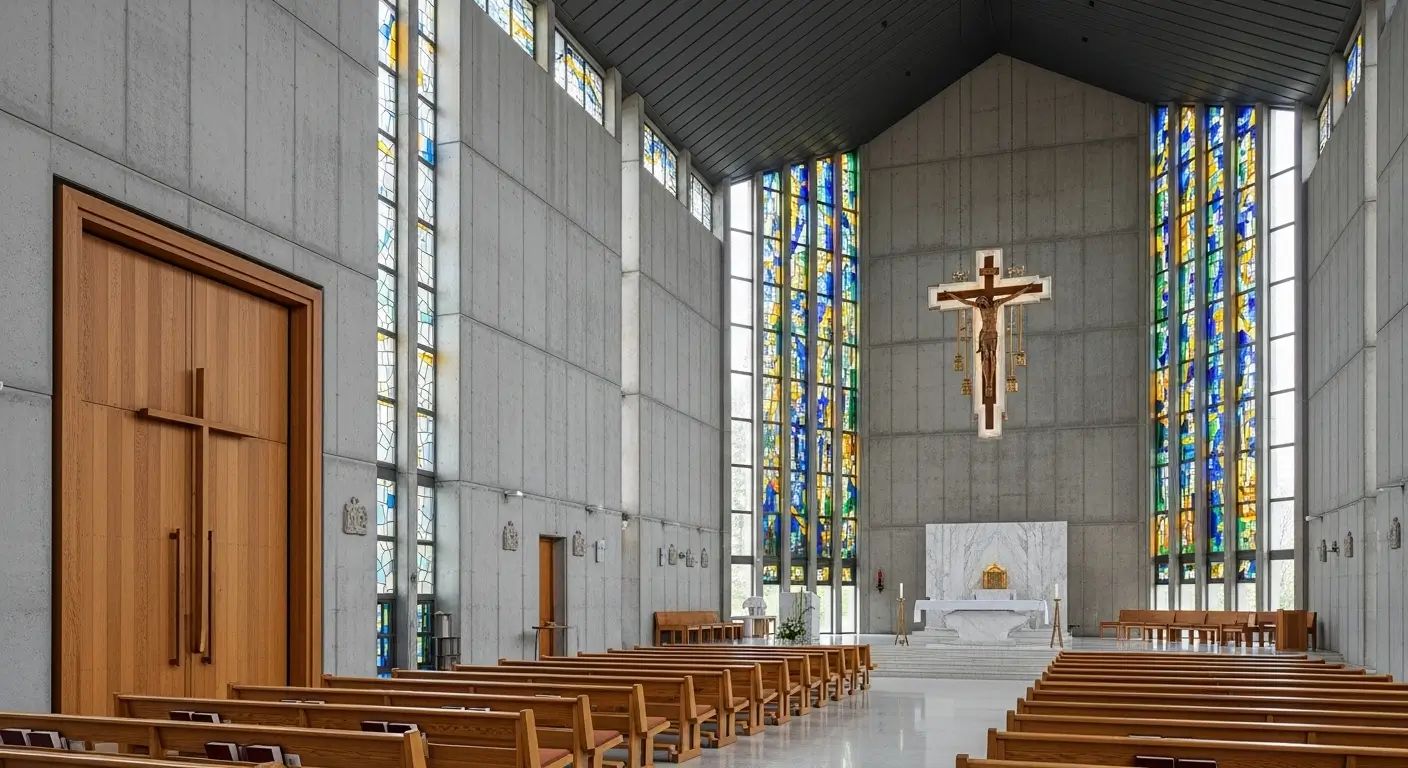
In a world often driven by comfort and self-preservation, the story of St. Damien of Molokai shines as a radiant beacon of selfless love and unwavering faith. This humble Belgian priest journeyed to the remote Hawaiian island of Molokai in the late 19th century, choosing to live and serve among those afflicted with leprosy, a disease widely feared and misunderstood. His life, marked by profound compassion and tireless dedication, transformed a desolate exile colony into a place of dignity and hope. This article will explore his early life and historical context, trace the key milestones of his heroic ministry, delve into his enduring spiritual legacy, and reflect on the powerful lessons his example offers to us today, concluding with prayers for modern reflection.
Quick Facts
| Category | Detail |
|---|---|
| Birth | January 3, 1840, Ninde, Belgium |
| Death | April 15, 1889, Molokai, Kingdom of Hawaii |
| Feast Day | May 10 (formerly May 10, now often celebrated on April 15) |
| Patronage | Lepers, outcasts, people with HIV/AIDS, Hawaii, diocese of Honolulu |
| Canonized | October 11, 2009, by Pope Benedict XVI |
Historical Context & Early Life
The 19th century was a period of immense global change, marked by industrialization, burgeoning colonial empires, and widespread missionary activity. Europe, including Belgium where Joseph de Veuster (the future St. Damien) was born, was undergoing rapid societal shifts. Science was advancing, yet understanding of diseases like leprosy (now known as Hansen’s disease) was rudimentary, leading to widespread fear and brutal isolation policies. Leprosy was viewed not just as a physical ailment but often as a sign of moral failing or divine punishment, fostering immense stigma.
The Catholic Church, meanwhile, was expanding its reach, sending missionaries across the globe to evangelize and serve. Religious orders, like the Congregation of the Sacred Hearts of Jesus and Mary (Picpus Fathers), to which Joseph belonged, were at the forefront of this evangelical zeal, seeking to bring the Gospel message and charitable works to distant lands.
Joseph de Veuster was born into a farming family in a small Belgian village. His parents, devout Catholics, instilled in him a strong sense of faith and duty. From an early age, Joseph showed a deep piety and a desire to serve God. Though initially intending to follow in his father’s footsteps as a farmer, the example of his older siblings, who had entered religious life, deeply influenced him. His older brother, Pamphile, became a priest with the Picpus Fathers, and it was through this connection that Joseph himself felt called to join the same order. He entered the seminary, eventually taking the religious name Damien, inspired by the ancient physician Saint Damian, and dedicated himself to his studies with fervent zeal, eager to embark on a missionary journey.
Calling & Key Milestones
St. Damien’s life unfolded as a powerful narrative of responding to a radical call to serve the most marginalized, culminating in his iconic ministry on Molokai.
Mission to Hawaii
Damien’s initial dream was to join his brother Pamphile in the missions of Hawaii. When Pamphile fell ill and could not make the journey, Damien, still a deacon, eagerly volunteered to take his place. In 1864, at the age of 24, he sailed to Honolulu, Hawaii, arriving with a burning desire to serve God’s people in this distant land. He was ordained a priest shortly after his arrival and began his ministry in various parishes on the Big Island of Hawaii.
Arrival in Molokai
In 1873, the Hawaiian government faced a dire crisis. To contain the spread of leprosy, they had established a segregated settlement on the Kalaupapa peninsula of Molokai, effectively exiling those afflicted. This settlement was a place of immense suffering, despair, and lawlessness, lacking basic infrastructure, medical care, and spiritual guidance. Bishop Louis Maigret of Honolulu called for volunteers to serve these outcasts, knowing it would likely be a one-way trip, a mission of extreme sacrifice. Four priests volunteered, including Father Damien, who famously declared, “I am ready to go, and I will stay there for the rest of my life.” He arrived in Molokai on May 10, 1873, and immediately set to work.
Building Community and Care
Upon his arrival, Damien found a community ravaged not only by disease but by neglect and hopelessness. There were no real homes, no organized care, and little dignity. He didn’t just offer spiritual comfort; he became a hands-on builder, carpenter, doctor, gravedigger, and advocate. He helped construct homes, churches, and coffins. He cleaned wounds, organized schools, and established an orphanage. He fought for better supplies and medical treatment from the government. He ate with the lepers, shared their pipes, and touched their wounds, breaking down the barriers of fear and stigma. By living among them, he restored a sense of community, purpose, and, most importantly, human dignity.
Contracting Leprosy
After 11 years of relentless service, Father Damien noticed the tell-tale signs of leprosy on his own body in 1884. He famously announced the diagnosis by beginning a sermon with “We lepers…” This moment, far from deterring him, seemed to deepen his resolve and solidarity with his flock. He could now say he was truly one of them, sharing their pain and suffering. His diagnosis brought him global attention, leading to increased support and resources for the Molokai settlement, as people were moved by his heroic sacrifice.
Final Years and Death
Despite the progression of his disease, St. Damien continued his work with unwavering dedication. His hands became bandaged, his voice grew hoarse, but his spirit remained indomitable. He continued to build, to teach, to pray, and to care for his beloved Molokai community. He received visitors, including Robert Louis Stevenson, who famously defended Damien’s character against critics. Father Damien died peacefully on April 15, 1889, at the age of 49, after serving the Molokai community for 16 years. He was buried in Molokai, but his remains were later moved to Leuven, Belgium, in 1936, and his right hand was returned to Molokai in 1995.
Spiritual Legacy & Theological Themes
St. Damien’s life is a profound embodiment of several core virtues and theological themes that resonate deeply within Catholic teaching and Scripture.
Charity and Self-Sacrifice: The most striking aspect of Damien’s legacy is his radical charity, a selfless love (agape) that moved him to give his entire life for others. This echoes Christ’s own sacrifice on the cross (John 15:13, “Greater love has no one than this: to lay down one’s life for one’s friends”). He literally laid down his life, not just for his friends, but for those society had cast away, seeing in them the face of Christ.
Solidarity with the Suffering: Damien’s willingness to live and die among the lepers exemplifies true solidarity – standing with and experiencing the pain of the marginalized. This aligns with Jesus’ ministry, who consistently reached out to the sick, the outcast, and the poor, actively touching and healing them. Damien became a leper for the lepers, embodying Christ’s incarnation and identification with humanity’s suffering (Matthew 25:40, “Whatever you did for one of the least of these brothers and sisters of mine, you did for me”).
Human Dignity: Before Damien, the residents of Molokai were stripped of their dignity. He restored it by treating them not as cursed outcasts, but as beloved children of God, deserving of respect, care, and love. He saw beyond their physical ailments to their inherent worth, a fundamental Catholic teaching that every human life, from conception to natural death, possesses immeasurable dignity.
Hope in Despair: In a place of overwhelming despair, Damien brought hope. He didn’t promise a cure for their physical illness, but he offered spiritual solace, community, and the promise of eternal life. He showed them that they were not forgotten by God or humanity, reminding them of the resurrection and the ultimate triumph over suffering, a central theme of Christian hope.
Missionary Zeal: His life is a testament to the missionary call of the Church, to go forth and make disciples (Matthew 28:19-20). He didn’t just preach the Gospel; he lived it out in concrete acts of service, making the love of Christ visible and tangible to those who needed it most. His witness continues to inspire missionaries and healthcare workers worldwide.
Devotion Today
St. Damien of Molokai remains a deeply revered figure around the world, inspiring devotion through his example of heroic charity. The primary site of pilgrimage and devotion is, naturally, Molokai itself, specifically the Kalaupapa National Historical Park. Visitors can travel to this remote peninsula – often by mule ride down a steep cliff or by small plane – to see the restored churches, homes, and Damien’s original grave site. The St. Philomena Church, which Damien helped build and where he served, stands as a testament to his enduring legacy.
In his native Belgium, St. Damien is also honored, particularly in Leuven, where his remains are interred at the chapel of the Congregation of the Sacred Hearts of Jesus and Mary. Many visit this site to pray and reflect on his life. Elsewhere, particularly in dioceses and parishes in Hawaii and throughout the United States, his feast day on April 15 (the anniversary of his death) or May 10 (formerly his feast day) is celebrated with special Masses and remembrance.
Many hospitals, healthcare facilities, and organizations dedicated to caring for those with stigmatized diseases or the marginalized are named after St. Damien, carrying on his spirit of compassionate care. His patronage extends to those with Hansen’s disease, HIV/AIDS, and all who are considered outcasts, making him a relevant intercessor for many contemporary challenges.
Reflections for Modern Readers
St. Damien’s story, though from the 19th century, offers timeless lessons for life in the 21st century. His life challenges us to live with greater purpose, compassion, and courage.
1. Overcoming Fear and Stigma: Damien deliberately chose to enter a place of profound fear and stigma. In our modern world, we still encounter social stigmas surrounding mental health, poverty, certain illnesses, or different social groups. St. Damien encourages us to look beyond superficial differences and fears to see the inherent dignity in every person.
Real-world example: Instead of shying away from a homeless person on the street, offering a kind word, a meal, or connecting them with local resources, imitating Damien’s direct engagement.
2. Radical Empathy and Solidarity: He didn’t just observe suffering from a distance; he immersed himself in it, eventually sharing the very disease of those he served. This calls us to move beyond mere sympathy to true empathy – understanding and sharing the feelings of another – and solidarity, standing with them.
Real-world example: Volunteering regularly at a soup kitchen, befriending refugees, or advocating for marginalized communities, not just with money but with presence.
3. Finding Joy in Service and Sacrifice: Damien found profound joy and purpose in his difficult mission, even after contracting leprosy. His life reminds us that true fulfillment often comes not from seeking personal comfort, but from giving ourselves away for the good of others, even when it requires sacrifice.
Real-world example: Dedicating time to a cause you believe in, even if it means less leisure time, or prioritizing family needs over personal desires, finding satisfaction in the act of giving.
4. Holistic Care: Damien understood that people need more than just spiritual guidance; they need physical care, community, education, and dignity. He worked to address every aspect of the lepers’ lives.
Real-world example: Supporting initiatives that provide comprehensive care – medical, educational, and emotional – for vulnerable populations, or even just checking in on a friend’s overall well-being beyond their immediate concerns.
Common Symbols and Representations:
- The Cross: Represents his ultimate sacrifice and identification with Christ’s suffering, central to his mission.
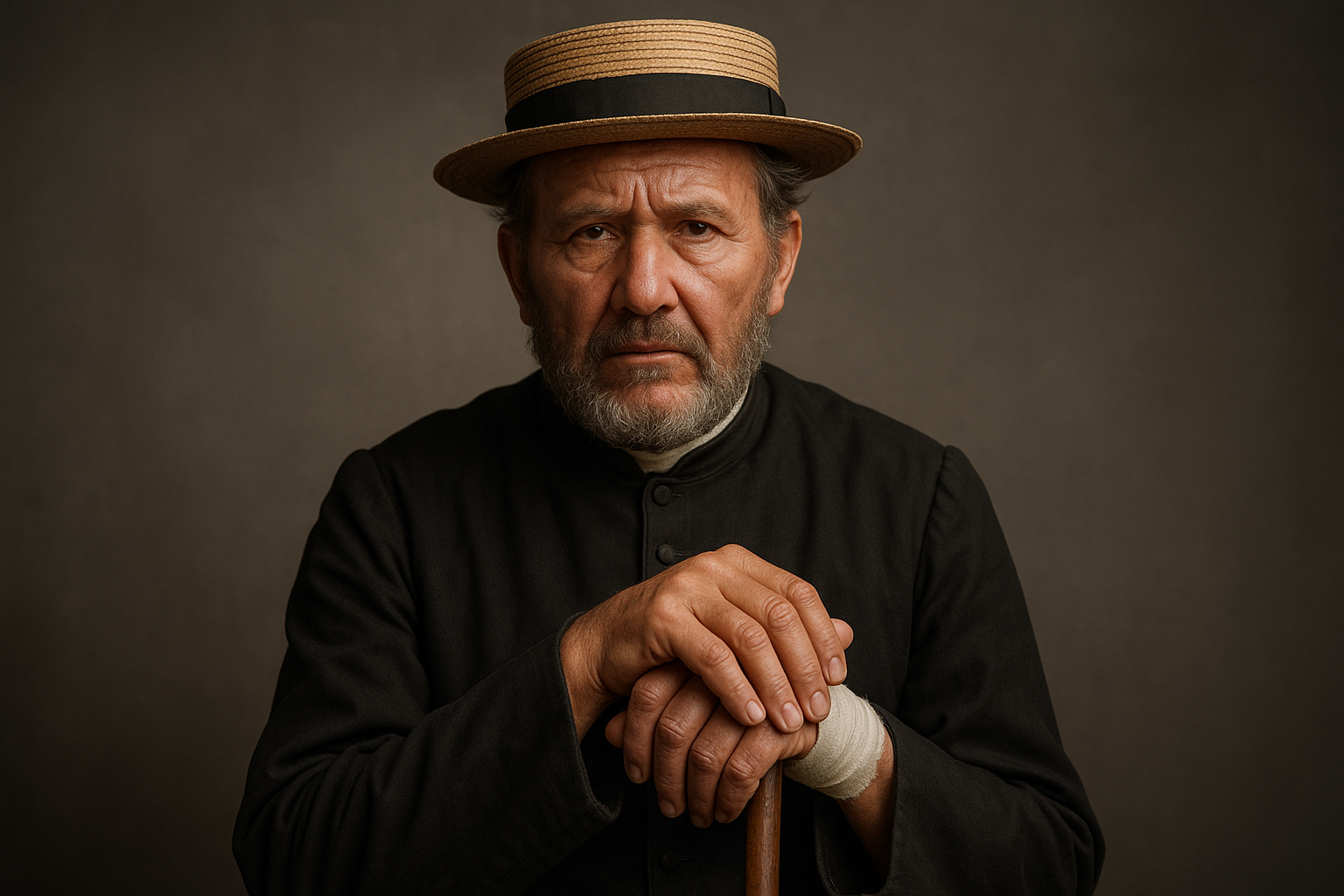
- A Leper or Bandaged Hand: Often depicted with a leper by his side or showing signs of the disease on his own hand, symbolizing his solidarity and shared suffering.
- His Distinctive Hat (Boater Hat): A practical item he wore in the Hawaiian sun, which has become a recognizable personal symbol. It speaks to his down-to-earth, practical approach to ministry.
- A Pipe: Damien was known to smoke a pipe, sharing it with the lepers as a gesture of fraternity and normalcy in a dehumanizing environment. It symbolizes his deep human connection and breaking social taboos.
- A Cane: As his leprosy progressed, he relied on a cane, symbolizing his endurance and continued ministry despite physical challenges.
Timeline Summary
- January 3, 1840: Born Joseph de Veuster in Ninde, Belgium.
- 1858: Enters the Congregation of the Sacred Hearts of Jesus and Mary (Picpus Fathers), taking the name Damien.
- 1863: Volunteers to serve in the Hawaiian missions in place of his ailing brother.
- March 19, 1864: Arrives in Honolulu, Hawaii.
- May 21, 1864: Ordained a priest in Honolulu.
- May 10, 1873: Arrives at the leper settlement on Molokai, volunteering to serve the community.
- 1873-1884: Dedicates himself to rebuilding the community, constructing churches and homes, providing spiritual and practical care.
- 1884: Diagnosed with leprosy (Hansen’s disease).
- 1885: Begins to write more extensively about the conditions on Molokai, drawing international attention and aid.
- April 15, 1889: Dies of leprosy on Molokai at the age of 49.
- June 4, 1995: Beatified by Pope John Paul II in Brussels, Belgium.
- October 11, 2009: Canonized as a saint by Pope Benedict XVI in Rome.
Scripture for Reflection
Matthew 25:35-40 (The Judgment of the Nations):
“For I was hungry and you gave me food, I was thirsty and you gave me drink, I was a stranger and you welcomed me, I was naked and you clothed me, I was sick and you visited me, I was in prison and you came to me.’ Then the righteous will answer him, ‘Lord, when did we see you hungry and feed you, or thirsty and give you drink? And when did we see you a stranger and welcome you, or naked and clothe you? And when did we see you sick or in prison and visit you?’ And the King will answer them, ‘Truly, I tell you, whatever you did for one of the least of these my brothers and sisters, you did for me.'”
St. Damien’s entire ministry is a living commentary on this passage. He saw Christ in the suffering lepers of Molokai and served them as if serving Jesus himself, embodying radical charity and solidarity with the marginalized.
Philippians 2:5-8 (The Humility of Christ):
“Have among yourselves the same attitude that is also yours in Christ Jesus, who, though he was in the form of God, did not regard equality with God something to be grasped. Rather, he emptied himself, taking the form of a slave, coming in human likeness; and found human in appearance, he humbled himself, becoming obedient to death, even death on a cross.”
Like Christ, St. Damien emptied himself, leaving behind comfort and safety to embrace a life of humble service among the outcasts. His willingness to become “a leper among lepers” is a profound imitation of Christ’s self-emptying love (kenosis).
Prayers to St. Damien of Molokai
Prayer for the Intercession of St. Damien:
O Sacred Heart of Jesus, we thank you for the gift of St. Damien of Molokai, who, like you, made himself servant of all, especially the most abandoned. Filled with your Spirit, he gave his life for the lepers, bringing them the comfort of faith, the joy of brotherhood, and the hope of a new life. Through his intercession, we pray for all those who suffer from illness, especially those who are marginalized and forgotten. Grant us the courage to follow his example, to love and serve our brothers and sisters with unwavering charity, and to find joy in giving ourselves for others. St. Damien, pray for us that we may persevere in faith, hope, and love. Amen.
Another Prayer to St. Damien:
Father Damien, who suffered so much for the abandoned, you were always a courageous missionary, a priest of great charity, and a martyr of service. Help us today to be faithful to the call of Christ, to be compassionate to all those who suffer, and to have the strength to bring your liberating love to all, especially to those who are neglected and forgotten. Grant us the grace to always be attentive to the cry of the poor and the sick. Through your powerful intercession, we ask for (mention your intention). We ask this through Christ our Lord. Amen.