In a time of profound religious upheaval, when faith could cost a man his life, St. Edmund Campion shone as a beacon of intellectual brilliance and unwavering courage. Born in the heart of Elizabethan England, he was a scholar destined for greatness in the eyes of the Protestant establishment, yet he chose a path of radical fidelity to his Catholic convictions. His story is one of dramatic conversion, daring mission, brutal persecution, and ultimate martyrdom, offering a powerful testament to the enduring strength of faith amidst adversity. This article will explore Campion’s early life, his courageous calling as a Jesuit priest, his spiritual legacy, and how his witness continues to inspire devotion and reflection for modern believers.
Quick Facts
| Category | Detail |
|---|---|
| Birth | January 25, 1540, London, England |
| Death | December 1, 1581, Tyburn, London, England |
| Feast Day | December 1 (with other English Martyrs); October 25 (Forty Martyrs of England and Wales) |
| Patronage | Convert Catholics, students, Jesuits, those persecuted for their faith |
| Canonized | October 25, 1970, by Pope Paul VI (as one of the Forty Martyrs of England and Wales) |
Historical Context & Early Life
To understand St. Edmund Campion, one must first grasp the turbulent backdrop of 16th-century England. The reigns of Henry VIII, Edward VI, Mary I, and Elizabeth I saw a dizzying shift in religious allegiance, leaving the nation fractured and its people often caught between conflicting loyalties. Queen Elizabeth I, upon ascending the throne in 1558, solidified England’s break from Rome, establishing the Church of England with herself as its Supreme Governor. Laws were swiftly enacted to suppress Catholicism: recusancy laws fined those who refused to attend Anglican services, priests trained abroad were considered traitors, and the very act of celebrating Mass became a capital offense. This was an era marked by fear, suspicion, and often violent persecution of Catholics, who were viewed not only as religious dissidents but as potential political threats to the Queen and the realm.
It was into this volatile world that Edmund Campion was born on January 25, 1540, in London, the son of a prosperous bookseller. From an early age, his exceptional intellect shone brightly. He was awarded a scholarship to Christ’s Hospital, a prestigious boarding school, at the tender age of 10. His eloquence was legendary, even as a youth. At the age of 13, he delivered an impressive Latin address to Queen Mary I. His academic prowess continued at St. John’s College, Oxford, where he quickly became one of the university’s most celebrated scholars. He was lauded for his brilliant mind, his powerful oratory, and his captivating presence. He held various academic positions, including Junior Dean and Proctor, and was even made an Anglican deacon, a step towards a promising career within the established Church. His reputation grew so grand that Queen Elizabeth I herself took notice, offering him patronage and a path to high office.
Despite this outward success, Campion wrestled with profound spiritual questions. The theological debates of the Reformation were not merely academic exercises for him; they were matters of eternal salvation. He studied the Church Fathers, read widely, and grappled with the differing claims of Protestantism and Catholicism. He saw inconsistencies and felt a deep unease within the Anglican establishment, particularly regarding the validity of Anglican orders and the break from the ancient, universal Church. This internal struggle led him to question the very foundation of his promising career, pushing him towards a path that would demand immense sacrifice.
Calling & Key Milestones
From Oxford Scholar to Douai Refugee
Edmund Campion’s conscience eventually led him away from the accolades and security of Oxford. In 1569, unable to reconcile his theological convictions with the Anglican faith, he resigned his deaconate. The following year, he made the perilous journey to Dublin, Ireland, hoping to find a place where he could practice his Catholic faith more freely. While there, he wrote a history of Ireland, demonstrating his continued intellectual pursuits. However, the anti-Catholic sentiment followed him, and he soon became a suspected recusant. Realizing his safety and spiritual freedom were precarious, he made the difficult decision to leave his homeland entirely. In 1571, he fled to Douai, a city in the Spanish Netherlands, which had become a haven for English Catholic exiles and the site of the English College, a seminary dedicated to training priests for the perilous mission back to England.
Jesuit Formation and Ordination
At Douai, Campion openly embraced the Catholic faith he had secretly held dear. He formally reconciled with the Church and began studying for the priesthood. His spiritual journey, however, took another profound turn. He felt drawn to the radical and disciplined life of the Society of Jesus, the newly formed Jesuit order known for its intellectual rigor, missionary zeal, and absolute loyalty to the Pope. In 1573, he traveled to Rome and entered the Jesuit novitiate. This was a complete departure from his previous life of academic privilege; it demanded humility, obedience, and a willingness to face danger. After completing his novitiate, he was sent to Prague, then part of the Habsburg Empire, where he taught rhetoric and philosophy at the Jesuit college and was eventually ordained a priest in 1578. His intellectual gifts, now fully dedicated to the service of God and the Catholic Church, were being honed for a divine purpose.
The English Mission: “Campion’s Brag”
The true test of Campion’s faith and courage came in 1580, when he was chosen, along with Fr. Robert Persons, to lead the first Jesuit mission back to England. This was an undertaking of extreme danger. The penalty for being a Catholic priest in England was death, and for harboring one, life imprisonment. Disguised as a merchant, Campion landed in Dover and began his clandestine ministry. He traveled tirelessly throughout the English countryside, moving from one Catholic house to another, preaching, hearing confessions, and celebrating Mass in secret. His eloquent sermons and profound theological insights brought renewed hope and strength to the beleaguered Catholic community.
During this mission, Campion famously penned his “Letter to the Privy Council,” later known as “Campion’s Brag.” In this powerful document, he publicly declared the purpose of the Jesuit mission: not to incite rebellion or political uprising, but solely to administer the sacraments, preach the Gospel, and defend the Catholic faith. He famously challenged Protestant theologians to a public debate, offering to prove the truth of Catholicism through argument and scripture. This bold challenge, disseminated secretly, energized Catholics but infuriated the English authorities, who redoubled their efforts to capture him.
Capture, Torture, and Trial
For a year, Campion skillfully evaded capture, his movements protected by loyal Catholics. But in July 1581, betrayal led to his arrest at Lyford Grange in Berkshire. He was taken to the Tower of London, a grim fortress where many political prisoners and religious dissidents met their end. There, he endured excruciating torture on the rack, designed to extract confessions and names of his Catholic contacts. Despite the agony, he refused to betray anyone or renounce his faith. His resilience and calm demeanor under such duress astonished his captors.
Campion was eventually brought to trial, charged with treason – a common tactic used to condemn Catholic priests without making them martyrs for their faith. The prosecution fabricated evidence, alleging that Campion and his fellow Jesuits were plotting to overthrow Queen Elizabeth. Campion, weakened by torture but still sharp-witted, defended himself and his companions with remarkable eloquence and courage, tearing apart the flimsy accusations. He insisted that his loyalty to God and his Queen were separate, and that his mission was purely spiritual. Yet, in the political climate of the time, his words were disregarded. He and his companions were found guilty.
Martyrdom at Tyburn
On December 1, 1581, St. Edmund Campion, along with two other priests, Ralph Sherwin and Alexander Briant, was dragged on a hurdle through the streets of London to Tyburn, the notorious public execution site. Even in his final moments, Campion demonstrated incredible spiritual fortitude. When offered a pardon if he would renounce his faith and acknowledge the Queen as the head of the Church, he steadfastly refused, declaring, “I am a Catholic priest, I am a Jesuit; to the Tower of London I was sent, not for treason, but for my religion.” His last words were a prayer: “Iesus, Iesus, Iesus, esto mihi Iesus!” (Jesus, Jesus, Jesus, be Jesus to me!). He was then hanged, drawn, and quartered, the horrific punishment reserved for traitors. His death, however, was not an end but a powerful beginning, solidifying his place as one of England’s most revered martyrs and an enduring symbol of fidelity to Christ.
Spiritual Legacy & Theological Themes
St. Edmund Campion’s life is a profound testament to several core virtues that resonate deeply with Scripture and Catholic teaching. Foremost among these is his unwavering fidelity to truth. He sacrificed comfort, career, and ultimately his life, because he believed he had found the fullness of truth in the Catholic faith. This echoes Christ’s own declaration, “I am the way, and the truth, and the life” (John 14:6), and the call to “know the truth, and the truth will set you free” (John 8:32). Campion exemplified the intellectual courage to pursue truth wherever it led, even when it meant defying societal norms and state power.
Another striking virtue is his courage in conviction. Despite the immense personal cost, he returned to England to minister to his flock, knowing full well the dangers involved. His “Brag” was not an act of arrogance, but a courageous public declaration of faith and a challenge to reasoned debate, embodying St. Peter’s exhortation to “always be prepared to make a defense to anyone who asks you for a reason for the hope that is in you” (1 Peter 3:15). Even under torture and facing certain death, his resolve never broke, demonstrating a profound reliance on divine grace.
Campion also exemplified zeal for souls and a deep commitment to the priesthood. His mission to England was driven by a burning desire to bring the sacraments and the comfort of the Catholic faith to those deprived of it. He saw the Mass and the sacraments as essential channels of grace, and he willingly faced death to make them available. His life was a vivid illustration of Christ’s commission to “go therefore and make disciples of all nations” (Matthew 28:19) and the priest’s call to be a shepherd to the flock.
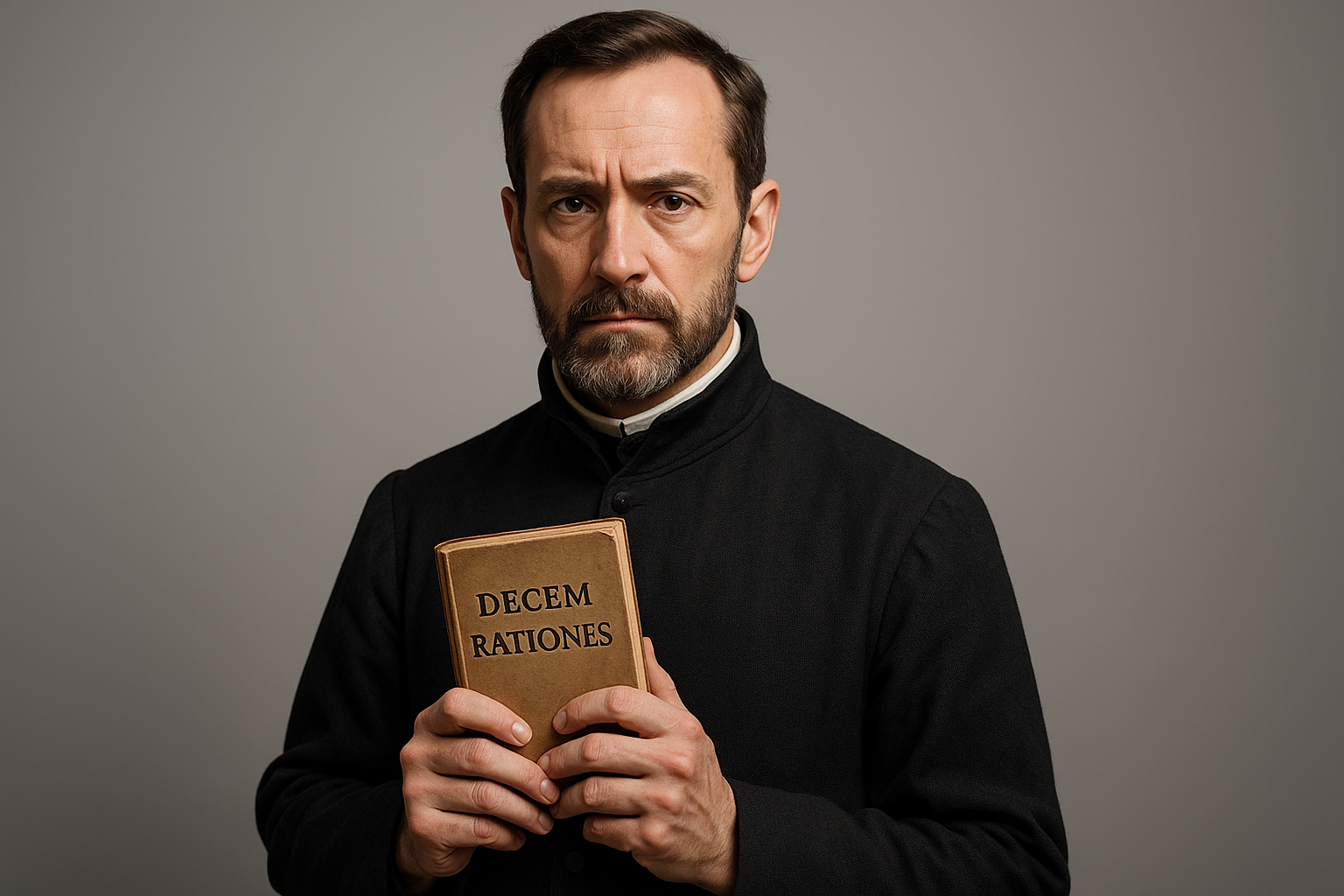
His influence on liturgy, devotion, and apologetics has been lasting. Campion’s articulation of Catholic doctrine, particularly in his *Rationes Decem* (Ten Reasons), provided a powerful intellectual defense for the faith against Protestant arguments. These writings served as a foundational text for future Catholic apologists and were secretly studied by English Catholics for generations. His martyrdom, along with that of many other English and Welsh martyrs, became a central point of devotion, inspiring underground Catholic communities to preserve their faith against seemingly insurmountable odds. He embodies the spirit of intellectual Catholicism—the idea that faith and reason are not opposed but complementary, and that one’s intellect should be used in service of God.
Devotion Today
Though St. Edmund Campion lived and died centuries ago, his spirit continues to inspire devotion among Catholics worldwide, particularly in England. His feast day on December 1 is commemorated, often with special Masses and prayers in parishes and Jesuit communities. As one of the Forty Martyrs of England and Wales, he is celebrated collectively on October 25, a day that honors the multitude of men and women who gave their lives for the Catholic faith during the Reformation.
One of the most significant sites of devotion is the Tyburn Convent in London, near the actual site of the Tyburn Tree, where Campion and hundreds of other martyrs met their end. This Benedictine convent is dedicated to the memory of these martyrs and serves as a place of prayer, pilgrimage, and perpetual adoration. Many Catholics visit to reflect on the immense sacrifices made for the faith.
Churches, schools, and even university chaplaincies bear his name, particularly in the English-speaking world. For instance, Campion Hall at Oxford University is a Permanent Private Hall of the University, run by the Society of Jesus. These institutions carry forward his legacy of intellectual pursuit and faithful witness. Catholic converts often find inspiration in his story, seeing in him a model for following conscience despite great personal cost. Furthermore, his connection to the Society of Jesus makes him a particularly revered figure within the Jesuit order, which continues to uphold his ideals of scholarship, mission, and dedication to Christ’s service.
Reflections for Modern Readers
St. Edmund Campion’s life, though steeped in the history of the 16th century, offers profound and actionable lessons for 21st-century believers facing their own challenges:
- Choose Truth Over Comfort: Campion abandoned a promising, comfortable life for the sake of his conscience and what he discerned as the truth. In a world that often values convenience and personal gain above all else, his story challenges us to examine our own priorities.
Modern Example: This could mean speaking up for ethical practices in a workplace, even if it might risk a promotion, or choosing to live according to one’s faith values even when they are unpopular among friends or in society.
- Courage in Conviction: Campion defended his faith with eloquence and bravery, even under torture and before execution. He never wavered in his belief.
Modern Example: This lesson encourages us to stand firm in our Catholic beliefs when they are questioned or mocked in social media, school, or conversations, not out of aggression but with confidence and charity, just as he engaged in thoughtful apologetics.
- Intellectual Faith: Campion was a brilliant scholar who used his intellect to understand, defend, and articulate his faith. He didn’t just feel his faith; he thought about it deeply.
Modern Example: We are called to engage our minds in our faith, studying Scripture, Church teaching, and theology, so we can better understand and explain our beliefs, as Campion did with his *Rationes Decem*.
- Joy Amidst Adversity: Despite the horrors he faced, Campion maintained a remarkable inner peace and even joy, rooted in his union with Christ.
Modern Example: In our own moments of suffering, disappointment, or persecution (even if much less severe), Campion reminds us that true joy comes from our relationship with God and can transcend external circumstances.
In art and jewelry, St. Edmund Campion is often represented with several symbolic elements:
- The Palm Branch: This is a universal symbol of martyrdom, signifying victory over death through faith. It reminds us of Campion’s ultimate sacrifice for Christ.
- A Book or Scroll: This represents his extraordinary intellectual gifts and his writings, particularly *Rationes Decem*, which served as a powerful defense of Catholicism. It emphasizes his role as a scholar and apologist.
- The Jesuit Emblem (IHS): Often seen on banners or shields, this symbol (the first three letters of Jesus’ name in Greek) signifies his membership in the Society of Jesus and his dedication to the Jesuit mission.
- A Rope or Noose: Sometimes depicted subtly, this directly references his method of execution at Tyburn, a stark reminder of his suffering and martyrdom.
- The Tower of London: Less common in personal jewelry but seen in larger artworks, this iconic fortress symbolizes his imprisonment and torture, places where his faith was severely tested.
Timeline Summary
- 1540: Born in London, England.
- 1553: Admitted to Christ’s Hospital school, London.
- 1557: Enters St. John’s College, Oxford.
- 1564: Ordained an Anglican deacon, demonstrating his initial success within the Elizabethan establishment.
- 1569: Resigns his deaconate, signaling his internal struggle with Protestantism.
- 1571: Flees England to Douai, where he publicly converts to Catholicism.
- 1573: Enters the Society of Jesus (Jesuit order) in Rome, beginning his novitiate.
- 1578: Ordained a Catholic priest in Prague.
- 1580 (June): Returns to England as part of the first Jesuit mission, disguised as a merchant.
- 1580 (July): Publishes *Rationes Decem* (“Ten Reasons”), a bold intellectual defense of the Catholic faith, which becomes known as “Campion’s Brag.”
- 1581 (July): Captured at Lyford Grange after being betrayed. Imprisoned in the Tower of London and subjected to torture.
- 1581 (November): Tried for treason, along with several companions, and found guilty.
- 1581 (December 1): Executed by hanging, drawing, and quartering at Tyburn, London, along with Fathers Ralph Sherwin and Alexander Briant.
- 1970 (October 25): Canonized as one of the Forty Martyrs of England and Wales by Pope Paul VI.
Scripture for Reflection
St. Edmund Campion’s life beautifully illustrates several scriptural themes:
- Matthew 10:32-33: “So everyone who acknowledges me before others, I also will acknowledge before my Father in heaven; but whoever denies me before others, I also will deny before my Father in heaven.”
Connection: Campion’s entire mission and martyrdom were an open acknowledgment of Christ and the Catholic faith, despite the gravest earthly consequences. He refused to deny Christ or his priesthood even under torture and facing death.
- John 15:13: “No one has greater love than this, to lay down one’s life for one’s friends.”
Connection: Campion laid down his life for his Catholic brethren, bringing them the sacraments and spiritual sustenance at immense personal risk, demonstrating the ultimate act of love for his flock and for Christ.
- 1 Peter 3:15: “Always be prepared to make a defense to anyone who asks you for a reason for the hope that is in you; yet do it with gentleness and reverence.”
Connection: As a brilliant scholar and apologist, Campion embodied this verse through his eloquent sermons and especially his *Rationes Decem*, offering a reasoned defense of the Catholic faith with both intellectual rigor and deep spiritual conviction.
Prayers to St. Edmund Campion
Here is a common prayer invoking St. Edmund Campion:
O glorious St. Edmund Campion, you abandoned a path of worldly acclaim to follow the call of Christ, becoming a valiant defender of the Catholic faith in a time of severe persecution. You returned to your homeland, knowing the dangers, to bring the Sacraments and truth to your suffering people. You faced torture and death with unwavering courage, offering your life as a true martyr for love of God and His Church.
We ask for your intercession, that we may have the grace to discern God’s will in our own lives, even when it leads to sacrifice. Strengthen us in fidelity to truth, that we may never compromise our faith for comfort or worldly success. Inspire us with your intellectual courage, to study and understand our faith, and to defend it with both eloquence and charity. Help us to face our trials with your fortitude and peace, always trusting in the mercy and love of Jesus.
St. Edmund Campion, pray for us, that we may be true witnesses to Christ in our own age, unto the glory of God. Amen.