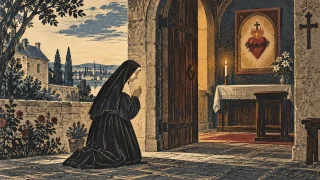
In the vast tapestry of Catholic saints, few figures embody courage, sacrifice, and unwavering faith quite like St. Isaac Jogues. A French Jesuit missionary, his story unfolds amidst the rugged wilderness of 17th-century North America, a land of immense beauty, profound challenges, and cultural clashes. Jogues’ journey from a scholarly priest in France to a tortured captive and ultimately a martyr among indigenous peoples paints a vivid picture of radical self-giving for the sake of the Gospel. This article will delve into his early life and historical context, trace the key milestones of his demanding vocation, explore his profound spiritual legacy, and examine how his heroic witness continues to inspire devotion and offer powerful lessons for modern readers today, culminating in a reflection on his enduring impact and a prayer for his intercession.
Quick Facts
| Category | Detail |
|---|---|
| Birth | January 10, 1607, Orléans, France |
| Death | October 18, 1646, Ossernenon (modern-day Auriesville, New York) |
| Feast Day | October 19 (with St. Jean de Brébeuf and Companions) |
| Patronage | North America, Archdiocese of New York, Captives, Martyrs, Auriesville Shrine |
| Canonized | June 29, 1930, by Pope Pius XI |
Historical Context & Early Life
The 17th century was a dynamic and often tumultuous period in both Europe and the burgeoning colonies of the New World. In France, the Catholic Church was experiencing a vibrant revival, marked by the rise of new religious orders and a fervent missionary spirit. The Society of Jesus, or Jesuits, founded by St. Ignatius of Loyola, was at the forefront of this evangelical zeal, dedicating themselves to education and global missions. It was in this environment that Isaac Jogues was born on January 10, 1607, in Orléans, France, into a devout and well-respected family. From an early age, he displayed a keen intellect and a deep piety, nurtured by his family and the local clergy.
His formative years were characterized by a strong calling to serve God. At the age of seventeen, Isaac entered the Jesuit novitiate in Rouen, France, on October 24, 1624. Jesuit formation was rigorous, emphasizing spiritual discipline, intellectual rigor, and a commitment to apostolic service. Isaac excelled in his studies, particularly in philosophy and theology, and was known for his gentle disposition and profound humility. As he progressed through his formation, stories of Jesuit missionaries laboring in distant lands, particularly in “New France” (present-day Canada and parts of the United States), captivated his imagination. The desire to bring the Gospel to indigenous peoples, to face hardship for Christ, became the burning aspiration of his heart. He was ordained a priest in 1636, and almost immediately, his long-held dream of serving in the missions was realized.
Meanwhile, in North America, the stage was set for a complex interplay of cultures. European powers—France, England, and Holland—were vying for control of lucrative fur trade routes and colonial territories. This expansion brought them into direct contact and often conflict with the diverse indigenous nations of the continent, including the Huron (Wendat), Algonquin, and the powerful Iroquois Confederacy (Mohawk, Oneida, Onondaga, Cayuga, Seneca). These nations had sophisticated social structures, spiritual traditions, and intricate alliances, often marked by cycles of warfare. Jesuit missionaries, like Isaac Jogues, sought to evangelize among these peoples, often learning their languages and adapting to their way of life, but always facing immense dangers and cultural misunderstandings in a land where faith and survival were constantly intertwined.
Calling & Key Milestones
Arrival in New France and Early Missionary Work
In 1636, shortly after his ordination, Father Jogues embarked on a perilous transatlantic voyage to New France. Upon his arrival in Quebec, he quickly joined the existing Jesuit mission, which primarily focused on evangelizing the Huron people in their territory, Huronia, located near Georgian Bay in what is now Ontario, Canada. This journey was arduous, covering hundreds of miles by canoe, portaging through dense forests, and enduring harsh weather conditions. Jogues dedicated himself to learning the Huron language and customs, believing that true evangelization required deep cultural immersion and respect. He spent several years living among the Huron, teaching them about Christianity, celebrating the sacraments, and sharing in their daily lives, which were often marked by scarcity and the constant threat of intertribal warfare.
First Capture and Torture (1642)
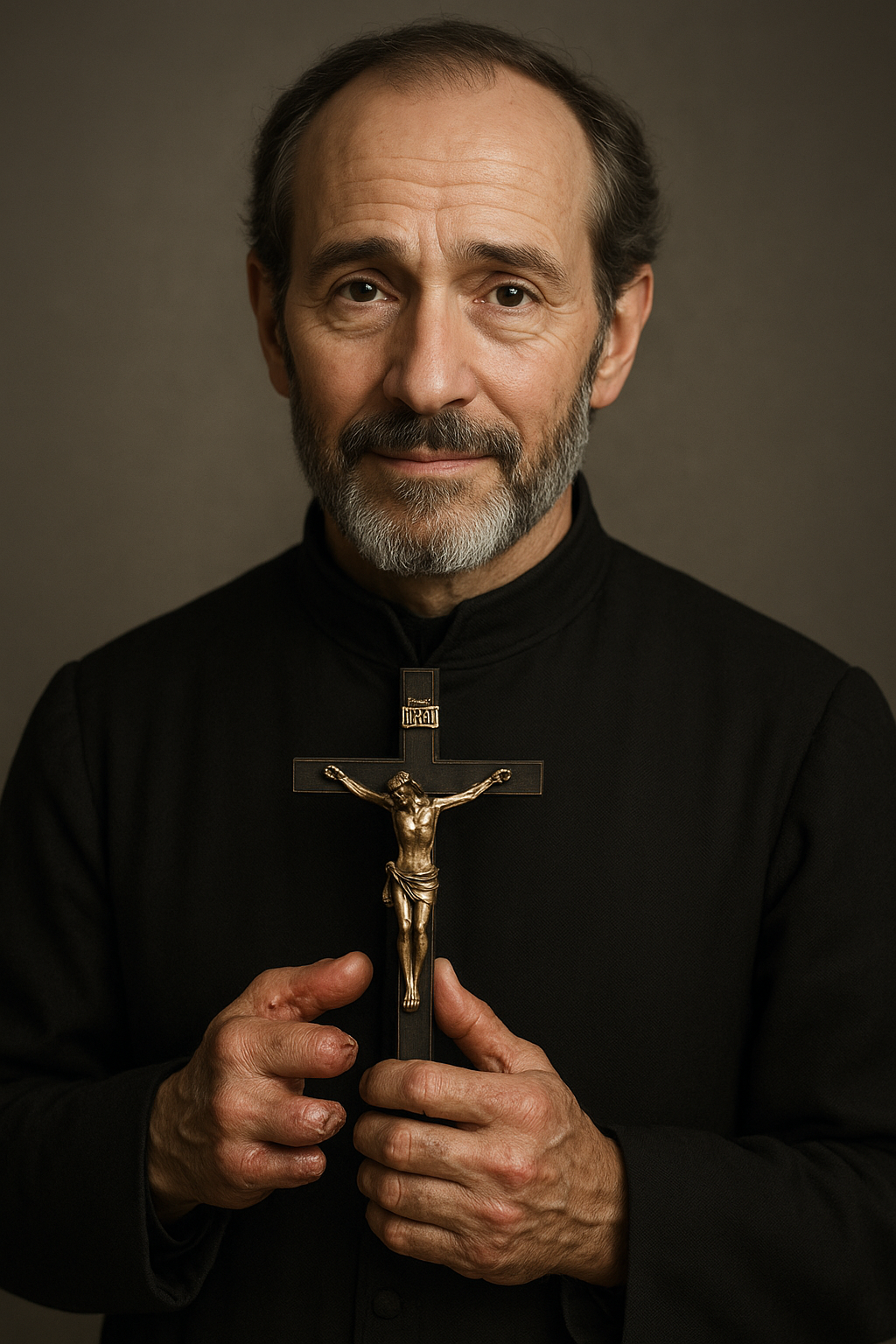
The year 1642 marked a turning point in Father Jogues’ life and mission. While returning from Quebec to Huronia with supplies and new converts, his party was ambushed by a Mohawk war party, part of the Iroquois Confederacy, who were traditional enemies of the Huron and their French allies. What followed was an ordeal of unimaginable brutality. Jogues and his companions, including fellow Frenchmen and Huron converts, were taken captive. The Mohawk warriors subjected their prisoners to horrific tortures as a ritualistic practice and a display of dominance. Jogues endured severe beatings, his fingernails were torn out, and his fingers were chewed and mutilated, leaving him permanently disfigured. Despite the excruciating pain, Jogues maintained his spiritual resolve, offering comfort to his fellow captives and even baptizing some of the dying with drops of morning dew. He considered these wounds sacred, marks of his participation in Christ’s suffering.
Captivity and Escape (1642-1643)
For over a year, Father Jogues remained a captive, experiencing the harsh realities of indigenous life in the Mohawk villages, particularly in Ossernenon (modern-day Auriesville, New York). He continued to minister to his fellow prisoners and, incredibly, even to some of his captors when opportunities arose, always seeking to share the message of Christ’s love and forgiveness. The Dutch traders at Fort Orange (present-day Albany, New York) eventually learned of his captivity and, out of a combination of humanitarian concern and political expediency, offered to ransom him. After much negotiation and a daring escape facilitated by the Dutch, Jogues found himself on a ship bound for Europe, arriving back in France in late 1643. He was greeted as a living martyr, a testament to enduring faith. His physical appearance was shocking, but his spirit was unbroken. Due to the mutilation of his hands, which according to canon law at the time made it difficult to hold the host, he sought a special dispensation from Pope Urban VIII to celebrate Mass, which was granted with the words, “It would be shameful if a martyr of Christ were not allowed to drink the Blood of Christ.”
Return to New France and Diplomatic Mission (1644-1646)
Despite the trauma and the opportunity for a comfortable life in France, Father Jogues felt an irresistible call to return to the missions. His desire to complete the work God had set before him was stronger than any fear. He arrived back in New France in 1644. By 1646, the French sought to establish a lasting peace with the Mohawk. Father Jogues, known for his linguistic skills and understanding of Mohawk customs, was chosen as an envoy. He traveled back to the Mohawk villages, carrying gifts and messages of peace. Though the initial reception seemed hopeful, the fragile peace quickly deteriorated. Some Mohawk believed Jogues and his companions were sorcerers, responsible for disease and crop failure that had recently afflicted their villages, perhaps associating the Christian objects they carried with malevolent magic.
Martyrdom (1646)
The political and spiritual tensions escalated rapidly. On October 18, 1646, Father Isaac Jogues was ambushed and tomahawked to death by a Mohawk warrior. His head was severed and impaled on a palisade, his body thrown into the Mohawk River. Just days later, his companion, Jean de La Lande, met a similar fate. Thus, Father Jogues completed his sacrifice, laying down his life for the Gospel, returning to the very place where he had suffered so much before. He died a martyr, bearing witness to Christ’s love even in the face of hatred and violence, becoming one of the most celebrated figures among the North American Martyrs.
Spiritual Legacy & Theological Themes
St. Isaac Jogues’ life is a profound testament to radical Christian discipleship, embodying several core virtues that align deeply with Scripture and Catholic teaching. Foremost among these is his **unwavering faith** and **courage** in the face of unimaginable suffering. His perseverance, even after brutal torture and escape, to return to the mission field demonstrates a faith rooted not in human strength, but in divine grace. This echoes the words of St. Paul in 2 Corinthians 12:10, “For when I am weak, then I am strong,” highlighting how God’s power is made perfect in weakness.
His **self-sacrifice** and **missionary zeal** are central to his legacy. Jogues understood the call to evangelization as a total commitment, even to the point of martyrdom. He willingly embraced hardship, danger, and eventually death, reflecting Christ’s own self-offering on the Cross. This radical gift of self aligns with the Gospel message of “carrying one’s cross daily” (Luke 9:23) and the greatest love being to lay down one’s life for others (John 15:13). His compassion for his captors, even while suffering, exemplifies Christian **forgiveness** and **love of enemies**, a challenging but core teaching of Jesus.
St. Isaac Jogues’ lasting influence is most keenly felt in the broader spiritual narrative of the North American Martyrs. Together, they represent the ultimate sacrifice for the propagation of the faith, inspiring countless missionaries and laypeople alike to dedicate their lives to spreading the Gospel. Their stories underscore the Catholic understanding of martyrdom as the highest form of witness, a direct imitation of Christ’s passion. Jogues’ willingness to endure pain and death for the salvation of souls also highlights the redemptive power of suffering when united to Christ’s own. His life reminds us that true evangelization is not just about words, but about living witness, often in the most challenging circumstances.
While his direct impact on liturgy or doctrine might be less pronounced than some Church Fathers, his example profoundly shaped devotion, particularly in North America. He stands as a powerful intercessor for those in captivity, those suffering persecution for their faith, and for the continued evangelization of the continent. He also symbolizes the complex and often tragic encounter between European Christianity and indigenous cultures, inviting continued reflection on dialogue, reconciliation, and respectful mission.
Devotion Today
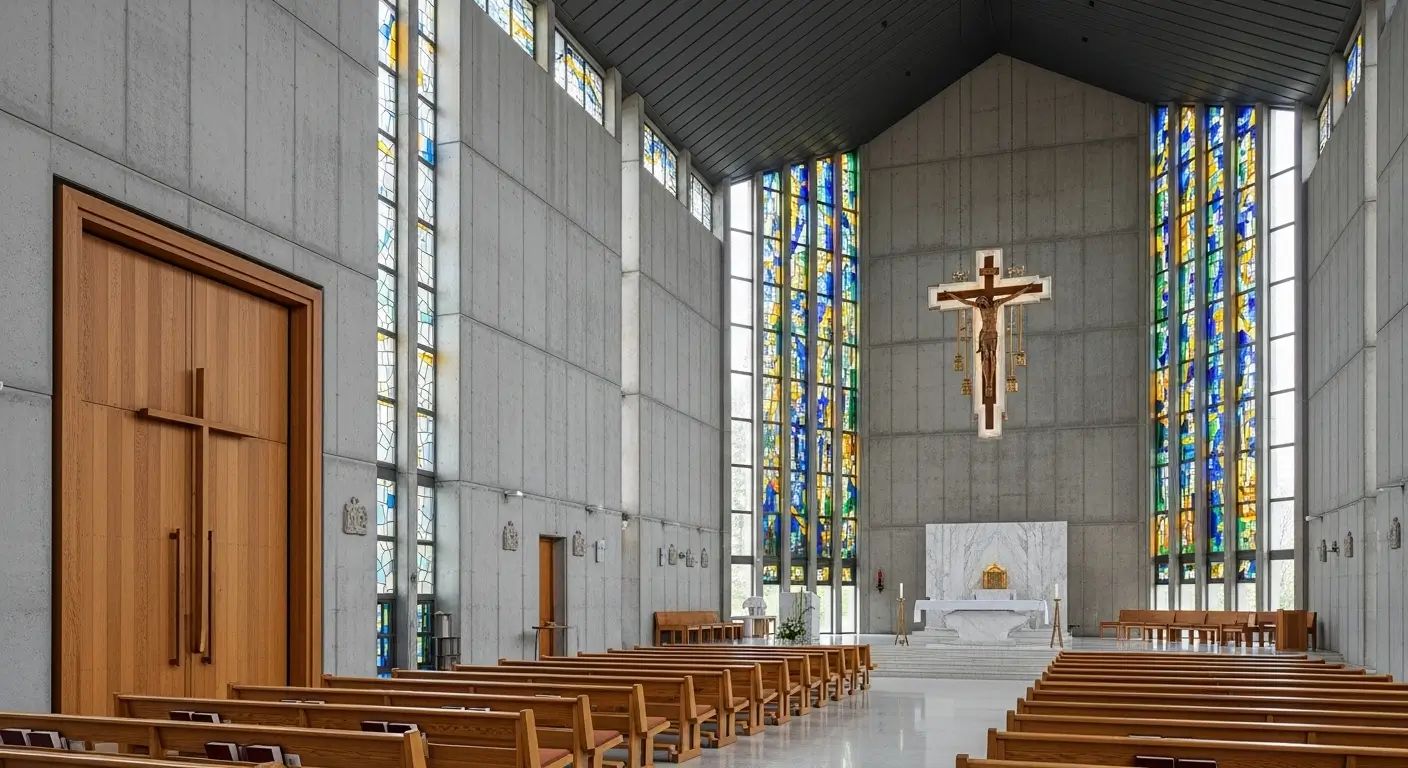
Devotion to St. Isaac Jogues remains strong, particularly in North America, where his martyrdom occurred. The most significant site of pilgrimage and veneration is the Shrine of Our Lady of Martyrs in Auriesville, New York. This sacred ground is believed to be the site of the Mohawk village of Ossernenon, where St. Isaac Jogues and his companions were martyred. The shrine draws thousands of pilgrims annually who come to honor the martyrs, reflect on their sacrifices, and seek their intercession. It features a large coliseum church, chapels, and outdoor stations of the cross, all set within a peaceful, natural landscape.
Another important site is Sainte-Marie among the Hurons, a living history museum and reconstructed Jesuit mission in Midland, Ontario, Canada. While not the direct site of Jogues’ martyrdom, it represents the heart of the Huron mission where he ministered and is a testament to the Jesuit presence in New France. Many Catholic churches, schools, and institutions, especially those administered by the Jesuits, bear his name, ensuring his legacy continues to be taught and celebrated.
The joint feast day of St. Isaac Jogues and his companions, the North American Martyrs, is celebrated on October 19th. This annual observance is a time for Catholics to remember their heroic sacrifices and pray for missionaries, for those facing persecution, and for the Church in North America. Novenas and specific prayers to St. Isaac Jogues are common, particularly by those seeking courage in faith, perseverance in trials, or intercession for captives and prisoners.
Reflections for Modern Readers
St. Isaac Jogues’ life, though lived centuries ago in a vastly different world, offers profound and actionable lessons for contemporary Christians navigating the complexities of the 21st century. His story is a beacon of hope and a challenge to complacency.
- Unwavering Perseverance in Adversity: Jogues faced unimaginable physical and psychological torment, yet he returned to his mission. This teaches us the importance of grit and spiritual resilience. In our own lives, when we encounter setbacks, failures, or personal hardships—whether a challenging job loss, a difficult relationship, or a struggle with illness—Jogues reminds us to draw strength from faith, to persevere not just for our own sake, but for a greater purpose.
- Radical Self-Giving and Service: He literally laid down his life for others. While few of us are called to such extreme sacrifice, his example compels us to consider how we can offer ourselves more fully in service. This might mean volunteering our time, sharing our resources, or simply putting the needs of others before our own comforts. For instance, dedicating time to mentor a young person or caring for an elderly relative without expectation of reward embodies a spirit of self-giving.
- Courageous Witness of Faith: In an increasingly secular world, living out one’s Catholic faith can be challenging, sometimes even inviting ridicule or ostracization. St. Isaac Jogues’ life was a powerful, undeniable testimony to his beliefs, even to his torturers. He inspires us to be bold and articulate about our faith, not through aggressive proselytizing, but through the integrity of our lives, the kindness we show, and the truth we speak, even when it’s unpopular.
- The Power of Forgiveness: Despite enduring horrific cruelty, Jogues never expressed hatred towards his captors and prayed for their salvation. This is perhaps one of the most challenging, yet liberating, lessons. Holding onto grudges only harms us. Jogues calls us to cultivate a spirit of forgiveness, even towards those who have deeply wronged us. This doesn’t mean condoning evil, but releasing ourselves from the burden of bitterness and choosing Christ’s path of mercy.
In art and jewelry, St. Isaac Jogues is commonly depicted with several key symbols that tell his story. He is often shown in a **Jesuit habit or black robe**, signifying his religious order and missionary vocation. His most striking symbol, however, is his **mutilated hands or missing fingers**, a direct visual reference to the brutal torture he endured during his first captivity. This symbol powerfully represents his suffering and unwavering commitment to his mission. Sometimes, he holds a **palm branch**, the traditional symbol of martyrdom, signifying his ultimate sacrifice for the faith. A **crucifix** or **rosary** in his hand further emphasizes his profound devotion to Christ. These representations serve not only as historical reminders but also as spiritual prompts, inviting us to contemplate the depth of his faith and the cost of discipleship.
Timeline Summary
- January 10, 1607: Born in Orléans, France.
- October 24, 1624: Enters the Jesuit novitiate in Rouen, France.
- 1636: Ordained a priest and departs for New France, arriving in Quebec. Begins missionary work among the Huron people.
- August 3, 1642: Captured by a Mohawk war party while returning to Huronia; subjected to severe torture and mutilation of his hands.
- 1642-1643: Lives as a captive in Mohawk villages, continuing to minister to other prisoners.
- November 1643: Escapes with the help of Dutch traders and returns to France.
- June 1644: Receives special dispensation from Pope Urban VIII to celebrate Mass despite his mutilated hands.
- September 1644: Returns to New France, eager to resume his mission.
- May 1646: Sent on a diplomatic mission to the Mohawk, seeking peace.
- October 18, 1646: Martyred by a Mohawk warrior in Ossernenon (Auriesville, New York).
- June 29, 1930: Canonized as a saint by Pope Pius XI, along with seven other North American Martyrs.
Scripture for Reflection
St. Isaac Jogues’ life beautifully illustrates several powerful scriptural themes that can deepen our understanding of his virtues and sacrifices.
Matthew 10:22: “You will be hated by everyone because of me, but the one who stands firm to the end will be saved.”
This passage speaks directly to the experience of St. Isaac Jogues, who faced hatred, persecution, and ultimately death precisely because of his unwavering commitment to Christ. His perseverance through extreme suffering, never abandoning his faith or mission, makes him a powerful embodiment of “standing firm to the end.”
Luke 9:23: “Then he said to them all, ‘If anyone wishes to come after me, he must deny himself and take up his cross daily and follow me.'”
Jogues’ entire missionary life was an act of self-denial and cross-bearing. From leaving his homeland and facing the harsh conditions of the wilderness to enduring torture and choosing to return to danger, he literally took up his cross daily. His life challenges us to consider what “taking up our cross” means in our own daily lives.
John 15:13: “Greater love has no one than this, that someone lay down his life for his friends.”
This verse encapsulates the ultimate sacrifice made by St. Isaac Jogues. He laid down his life for the love of Christ and for the salvation of the indigenous peoples he served, whom he considered his friends. His martyrdom is a testament to this supreme act of love, reflecting Christ’s own self-sacrificial love for humanity.
Prayers to St. Isaac Jogues
Prayer for Courage and Perseverance
O glorious St. Isaac Jogues, who despite brutal tortures and the loss of your sacred limbs, returned courageously to the mission field to preach the Gospel and offer your life for Christ, we implore your intercession. Grant us, we pray, a portion of your heroic faith, your indomitable courage, and your unwavering perseverance in the face of our own trials and difficulties. Help us to deny ourselves, take up our crosses daily, and follow Christ with generous hearts, even when the path is hard. Inspire us to be bold witnesses to the truth, to love our enemies, and to forgive those who wrong us. Amen.
Prayer to St. Isaac Jogues, Patron of Captives
Holy St. Isaac Jogues, you who endured the pain of captivity and the agony of torture for the sake of Christ, we seek your powerful intercession. Look with compassion upon all those who are held captive today: prisoners of war, victims of human trafficking, those unjustly incarcerated, and all who are enslaved by sin or addiction. Protect them, comfort them, and work for their liberation, both spiritual and physical. May your example of fortitude inspire us to pray for and work towards freedom for all. Through your prayers, may the light of Christ shine upon all captives and lead them to true freedom. Amen.