In the vast tapestry of Catholic saints, few shine as brightly or are as profoundly influential as St. John the Apostle and Evangelist. Known as the “Beloved Disciple,” John’s life journey from a Galilean fisherman to an eyewitness of Christ’s glory and a pillar of the early Church offers a compelling testament to faith, love, and divine revelation. This article will delve into his historical backdrop, trace his pivotal role alongside Jesus, explore his profound spiritual legacy through his writings, and consider how his unwavering devotion continues to inspire believers in the modern world.
Quick Facts
| Category | Detail |
|---|---|
| Birth | Circa 6 AD, Bethsaida, Galilee |
| Death | Circa 100 AD, Ephesus (modern-day Turkey) |
| Feast Day | December 27th |
| Patronage | Theologians, evangelists, writers, artists, bookbinders, editors, publishers, booksellers, scholars, friendships, loyalty, those suffering from burns, victims of poison, storms |
| Canonized | By acclamation (one of the original Twelve Apostles) |
Historical Context & Early Life
To understand St. John, we must first picture the world into which he was born. Galilee, a northern region of ancient Israel, was a bustling, diverse land under Roman occupation during the first century AD. While steeped in Jewish tradition and synagogue life, it was also a crossroads of cultures, with Greek influences and Roman infrastructure evident. The Jewish people yearned for a Messiah, a liberator who would restore their sovereignty and fulfill the ancient prophecies.
John hailed from Bethsaida, a fishing village on the Sea of Galilee. He was the son of Zebedee, a relatively prosperous fisherman who owned his own boat and employed hired servants, suggesting a comfortable, albeit hardworking, family background. His mother, Salome, is believed by some traditions to have been a sister of Mary, the mother of Jesus, making John a cousin of Christ. This familial connection, if true, might explain some of the deep intimacy John shared with Jesus. He also had an elder brother, James, who would also become one of the Twelve Apostles. Together, John and James were known for their fiery temperaments, earning them the nickname “Boanerges,” or “Sons of Thunder,” from Jesus Himself (Mark 3:17). This early glimpse into John’s character reveals a passionate, intense young man, whose zeal would later be transformed into an enduring, profound love for his Lord.
Calling & Key Milestones
John’s life took an irreversible turn when he encountered Jesus, forever altering the course of salvation history and his personal destiny.
The Call to Discipleship
John’s first encounter with Jesus was likely as a disciple of John the Baptist. When the Baptist pointed to Jesus and declared, “Behold, the Lamb of God!” (John 1:36), John and Andrew followed Him. Later, while fishing with his brother James and their father Zebedee, Jesus called them directly, saying, “Follow me, and I will make you fishers of men” (Matthew 4:19). Without hesitation, John and James left their nets and their father, immediately joining Jesus’ inner circle. This radical abandonment of their old lives for a new, uncertain path speaks volumes about their early faith and Jesus’ captivating presence.
The Inner Circle and Privileged Witness
Along with his brother James and Peter, John formed an elite triumvirate among the Apostles. These three were granted special access to some of Jesus’ most profound moments, underscoring John’s unique intimacy with the Lord. He witnessed the raising of Jairus’s daughter (Mark 5:37), the Transfiguration on Mount Tabor (Matthew 17:1-8), and Jesus’ agony in the Garden of Gethsemane (Matthew 26:36-46). These experiences provided him with an unparalleled depth of understanding of Jesus’ divine nature and His human suffering, shaping the rich theology found in his later writings.
The Beloved Disciple
It is in John’s own Gospel that he refers to himself as “the disciple whom Jesus loved.” This title is not an act of pride but a reflection of a deeply personal and tender bond. At the Last Supper, John reclined next to Jesus, even leaning his head on the Lord’s breast (John 13:23-25). More profoundly, John was the only Apostle brave enough to remain at the foot of the Cross during Jesus’ crucifixion, witnessing His final moments. There, Jesus entrusted His mother, Mary, into John’s care, saying, “Woman, behold your son!” and to John, “Behold your mother!” (John 19:26-27). This act established a new, sacred bond between Mary and John, and symbolically, between Mary and all believers, through John’s representation.
Post-Resurrection Ministry
After the Resurrection, John continued his close association with Peter. They were among the first to run to the empty tomb (John 20:2-10). Following Pentecost, they were prominent leaders in the nascent Christian community in Jerusalem, performing miracles and boldly preaching the Gospel, even enduring imprisonment for their faith (Acts 3-4). John’s unwavering commitment to Christ, even in the face of persecution, set a powerful example for the early Church.
Exile to Patmos and Visionary Writings
Tradition holds that John eventually moved to Ephesus, a major city in Asia Minor, where he continued his apostolic work. During the reign of the Roman Emperor Domitian, around 95 AD, John was exiled to the island of Patmos, a barren and rocky island, for his steadfast testimony to Jesus. It was there that he received the powerful visions recorded in the Book of Revelation, also known as the Apocalypse. This book, a complex work of prophecy and symbolism, offers a glimpse into heavenly realities, the ongoing spiritual battle, and the ultimate triumph of Christ.
The Elder and Evangelist in Ephesus
After Domitian’s death, John was released from exile and returned to Ephesus. He lived to an advanced age, reputedly the only Apostle to die a natural death. During this period, he is believed to have written his Gospel and the three Epistles of John. His Gospel, distinct from the synoptic Gospels (Matthew, Mark, Luke), offers a deeply theological and philosophical portrait of Jesus, emphasizing His divinity, the nature of God’s love, and the concept of “the Word made flesh.” As the last living Apostle, John served as a crucial bridge between the apostolic age and the early Church Fathers, safeguarding and transmitting the authentic teachings of Christ.
Spiritual Legacy & Theological Themes
St. John’s spiritual legacy is immeasurable, primarily through his profound writings: the Gospel of John, the three Epistles of John, and the Book of Revelation. These texts have shaped Christian theology, devotion, and understanding of God for two millennia. At the core of his message are themes of love, light, truth, and the divine nature of Jesus.
John presents Jesus not just as a great prophet or teacher, but as the eternal “Word” (Logos) who was “with God, and the Word was God” (John 1:1). His Gospel’s soaring prologue elevates our understanding of the Incarnation – the mystery of God becoming human – to breathtaking heights. John’s emphasis on Jesus’ divine identity and His intimate relationship with the Father underpins much of subsequent Christology, the study of Christ. He consistently calls believers to a deeper, personal relationship with Jesus, a relationship built on trust and obedience, much like his own.
The virtue that resonates most powerfully through all of John’s writings is love. He famously states, “God is love” (1 John 4:8) and exhorts believers to “love one another, for love is from God” (1 John 4:7). This love (agape, a self-sacrificial, unconditional love) is not merely an emotion but an active command, a hallmark of Christian discipleship (John 13:34-35). His teachings on love profoundly influenced Christian ethics and the Church’s understanding of charity.
Furthermore, John’s writings illuminate the struggle between “light” and “darkness,” “truth” and “falsehood.” He portrays Jesus as the “light of the world” (John 8:12), calling us to walk in that light, embracing truth and rejecting the deceptions of the world. This ongoing spiritual battle is graphically depicted in Revelation, which, despite its complex symbolism, ultimately offers a message of hope and the final victory of God’s kingdom. His influence extends beyond theology to liturgy, where his Gospel readings are particularly prominent, and to Christian art, where his deep understanding of Jesus’ divinity is often reflected.
Devotion Today
Devotion to St. John the Apostle and Evangelist remains vibrant in the Catholic Church and beyond. His feast day on December 27th is celebrated with solemnity, falling within the octave of Christmas, which symbolically places the “Beloved Disciple” close to the newborn Savior he adored. Numerous churches, cathedrals, and religious orders worldwide bear his name, testament to his enduring spiritual appeal. For instance, St. John Lateran Basilica in Rome, the cathedral of the Pope as Bishop of Rome, is dedicated to both St. John the Baptist and St. John the Evangelist.
While there isn’t a single major pilgrimage site dedicated solely to St. John in the same way as, for example, St. James in Compostela, his historical association with Ephesus makes that city a place of spiritual interest for many. Archaeological sites believed to be connected to his ministry and the home of the Blessed Mother (entrusted to John) near Ephesus attract pilgrims. Many writers, theologians, artists, and publishers claim him as their patron, seeking his intercession for clarity, inspiration, and truth in their work. His profound Gospel and Epistles continue to be subjects of deep study and spiritual reflection for countless individuals and communities, especially during Advent and Lent.
Reflections for Modern Readers
St. John the Apostle offers timeless lessons that resonate deeply with 21st-century believers, encouraging us to cultivate a faith that is both profound and practical.
1. Embrace a Personal Relationship with Christ: John’s intimacy with Jesus, the “Beloved Disciple,” reminds us that Christianity is not just a set of rules but a relationship. In a world often focused on superficial connections, John invites us to lean into Christ’s heart, to seek Him in prayer, Scripture, and the Sacraments, fostering a real, personal friendship with our Savior. For instance, imagine taking time daily, even just five minutes, to speak to Jesus as a trusted friend about your day’s joys and struggles.
2. Live a Life of Transformative Love: John’s enduring message is “God is love.” His transformation from a “Son of Thunder” to an apostle of love shows us that our temperaments can be refined by divine grace. In a society grappling with division and hatred, John challenges us to extend Christ-like love to everyone, especially those who are difficult to love. This could mean actively seeking common ground with someone you disagree with, or performing a small act of kindness for a stranger, mirroring the unconditional love John preached.
3. Be a Witness to Truth: John dedicated his life to proclaiming the truth of Christ’s divinity and saving power. In an age saturated with misinformation and shifting narratives, John’s steadfast witness encourages us to seek and uphold objective truth, rooted in God’s revelation. This can be as simple as fact-checking information before sharing it online, or bravely defending moral principles when they are unpopular, much like John stood firm in his faith despite persecution.
4. Persevere Through Suffering: John endured exile and persecution, yet he continued to write and teach, offering hope through the Book of Revelation. His life reminds us that faith is tested in hardship, and perseverance leads to spiritual growth. When facing personal challenges, St. John encourages us to find strength in Christ, knowing that our ultimate victory is assured. Reflect on how John’s exile on Patmos, a time of isolation, became a period of profound spiritual revelation, showing us that even in trials, God can work wonders.
Symbols of St. John in Art:
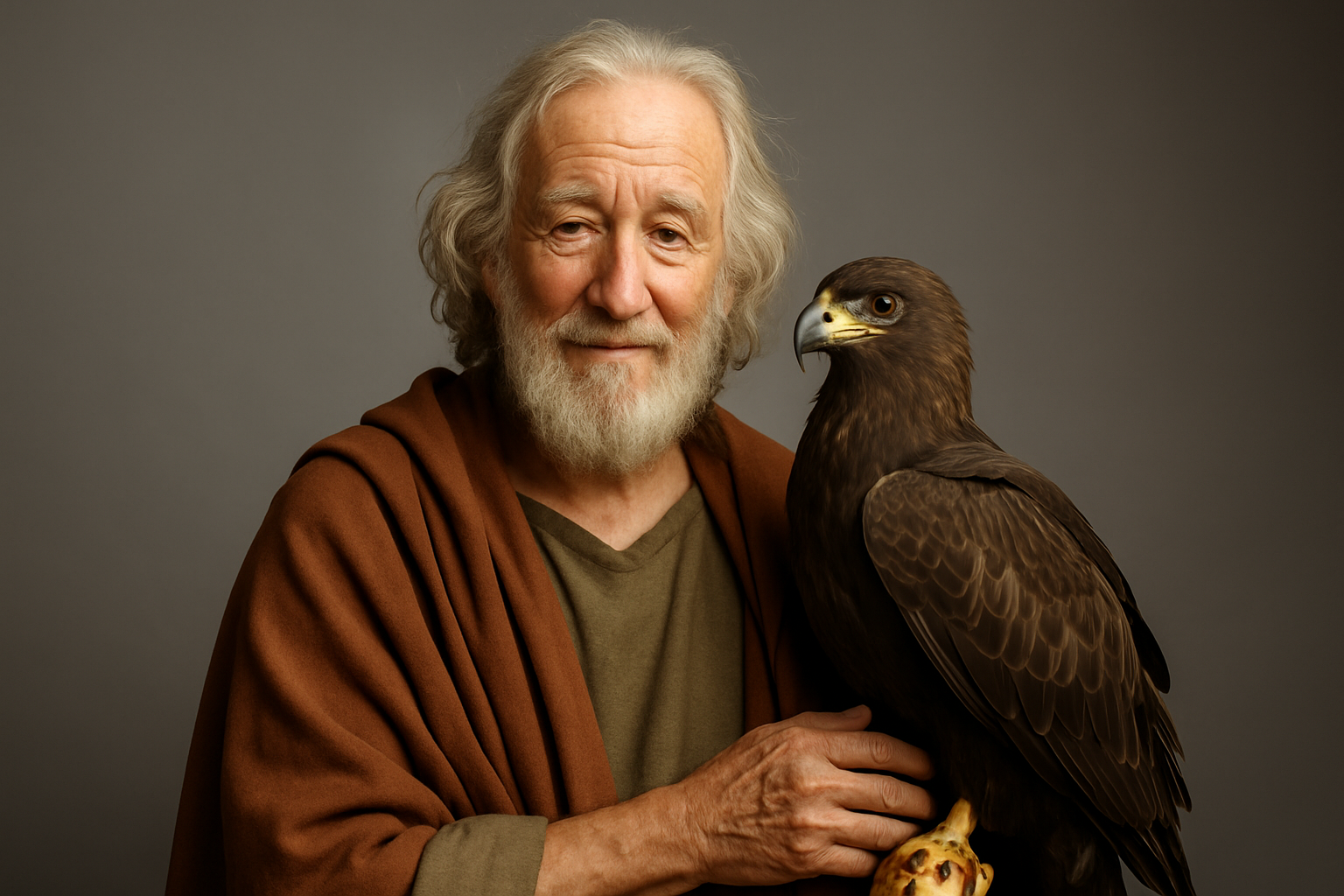
- The Eagle: This is the most common symbol for St. John, representing the soaring, elevated nature of his Gospel, which begins with a profound theological discourse on the Word of God in heaven, unlike the more earthly narratives of the other Gospels. It signifies his contemplative vision and the divine inspiration of his writings.
- Chalice with a Serpent: This symbol refers to a legend where John was challenged to drink a cup of poison. He made the sign of the cross over the cup, and the poison, represented by a serpent, emerged harmlessly, leaving him unharmed. This symbolizes his triumph over evil and his steadfast faith.
- Book or Scroll: Often depicted holding a book or scroll, this represents his role as an Evangelist and author of the Fourth Gospel, three Epistles, and the Book of Revelation. It signifies his profound contribution to Christian Scripture.
- Lamb: Though less common than the eagle, the lamb may accompany John, recalling his first introduction to Jesus by John the Baptist as “the Lamb of God” (John 1:29).
Timeline Summary
- Circa 6 AD: Born in Bethsaida, Galilee, son of Zebedee and Salome, brother of James.
- Circa 27-30 AD: Called by Jesus from his fishing boat on the Sea of Galilee to become an Apostle.
- Circa 30-33 AD: Member of Jesus’ inner circle (Peter, James, John), witnessing pivotal events like the Transfiguration and Gethsemane.
- Circa 33 AD: Only Apostle present at the foot of the Cross, entrusted with the care of Mary, the mother of Jesus.
- Circa 33 AD: Ran to the empty tomb after Mary Magdalene’s report; among the first to see the risen Christ.
- Circa 33-40s AD: Prominent leader in the early Church in Jerusalem alongside Peter, performing miracles and preaching.
- Circa 50s-70s AD: Believed to have moved to Ephesus, becoming a significant figure in the Church in Asia Minor.
- Circa 95 AD: Exiled to the island of Patmos during the reign of Emperor Domitian, where he received the visions recorded in the Book of Revelation.
- Circa 96 AD: Released from exile, returns to Ephesus.
- Circa 90s AD: Writes his Gospel and three Epistles in Ephesus.
- Circa 100 AD: Dies of natural causes in Ephesus, the only Apostle not to suffer martyrdom.
Scripture for Reflection
St. John’s own writings provide the richest source for reflection on his virtues and legacy:
John 1:1-5 (On Truth and Light):
“In the beginning was the Word, and the Word was with God, and the Word was God. He was in the beginning with God. All things came to be through him, and without him nothing came to be. What came to be through him was life, and this life was the light of the human race; the light shines in the darkness, and the darkness has not overcome it.”
This profound passage, the majestic opening of John’s Gospel, perfectly encapsulates his core theological theme: Jesus as the eternal, divine Word, the source of all life and light. It challenges us to embrace Christ as the ultimate truth that dispels spiritual darkness in our lives and in the world.
John 13:34-35 (On Love):
“I give you a new commandment: love one another. As I have loved you, so you also should love one another. By this everyone will know that you are my disciples, if you have love for one another.”
Here, Jesus Himself articulates the “new commandment” that St. John would passionately preach throughout his life and writings. This passage serves as a powerful reminder that Christian identity is fundamentally defined by self-sacrificial love, a love modeled after Christ’s own.
1 John 4:7-8 (On God as Love):
“Beloved, let us love one another, because love is of God; everyone who loves is begotten by God and knows God. Whoever is without love does not know God, for God is love.”
This teaching from John’s First Epistle is a cornerstone of Christian understanding of God. It directly links love to the very nature of God and to our relationship with Him, urging us to manifest divine love in our interactions.
Prayers to St. John the Apostle/Evangelist
A simple prayer seeking the intercession of St. John the Apostle and Evangelist:
O Glorious St. John, Apostle of Christ, you were called by the Lord to be one of His closest companions and the Beloved Disciple. You stood faithfully at the foot of the Cross, receiving Mary as your mother, and boldly proclaimed the truth of the Incarnate Word. Through your Gospel, Epistles, and the Book of Revelation, you revealed the depth of God’s love and the ultimate triumph of Christ.
We implore your powerful intercession: grant us, we pray, a deeper personal relationship with Jesus, like your own. Inflame our hearts with the fire of divine love, that we may love God above all things and our neighbors as ourselves. Enlighten our minds to grasp the profound truths of our faith, and strengthen our resolve to bear witness to Christ in word and deed, even in the face of challenges. Protect us from all spiritual harm and guide us along the path of righteousness, that we may one day share with you in the eternal vision of God.
Amen.