In a world often yearning for connection and understanding, the life of St. John XXIII shines as a beacon of warmth, wisdom, and courageous hope. Born Angelo Giuseppe Roncalli, this humble Italian farmer’s son rose to the highest office in the Catholic Church, not through ambition, but through a profound sense of service and an unshakeable trust in God’s Providence. His papacy, though brief, ignited a transformative movement, famously known as the Second Vatican Council, that reshaped the Church’s engagement with the modern world. This article will delve into his remarkable journey, exploring his early life, significant milestones, enduring spiritual legacy, and how his gentle spirit continues to inspire devotion and reflection for believers today.
Quick Facts
| Fact | Detail |
|---|---|
| Birth | November 25, 1881, Sotto il Monte, Bergamo, Italy |
| Death | June 3, 1963, Vatican City |
| Feast Day | October 11 |
| Patronage | Second Vatican Council, Christian unity, papal delegates, the elderly |
| Canonized | April 27, 2014, by Pope Francis |
Historical Context & Early Life
Angelo Giuseppe Roncalli’s life began in a world vastly different from our own, yet one wrestling with many of the same questions of progress, faith, and human dignity. He was born in 1881 in Sotto il Monte, a small village in northern Italy, into a family of tenant farmers. The late 19th century was a time of significant change across Europe, marked by rapid industrialization, burgeoning political ideologies, and a growing tension between traditional faith and modern scientific thought. Italy itself had only recently unified, and the relationship between the new Italian state and the papacy was still strained, a period often referred to as the “Roman Question.”
His family’s poverty was a defining aspect of his upbringing. Angelo was one of thirteen children, and life on the farm was arduous, demanding hard work and resourcefulness from everyone. This humble background instilled in him a deep sense of humility, practicality, and empathy for the common person, qualities that would later become hallmarks of his papacy. His parents, Giovanni Battista Roncalli and Marianna Mazzola, were devout Catholics who grounded their children in a strong faith, teaching them the importance of prayer, community, and simple virtues. Despite the financial constraints, they recognized Angelo’s intellectual gifts and supported his early education.
From a young age, Angelo displayed an earnest piety and an eagerness to learn. He attended the local primary school and, at just eleven years old, entered the seminary in Bergamo, a testament to his clear calling to the priesthood. His seminary years were a time of intense study, spiritual formation, and the forging of deep friendships. It was here that he began to develop his characteristic openness, his ability to connect with people from all walks of life, and his growing understanding of the Church’s role in a complex, changing world. This formative period, rooted in both the earthiness of his peasant origins and the intellectual rigor of the seminary, laid the foundation for the remarkable journey that would lead him to the Chair of Peter.
Calling & Key Milestones
Angelo Roncalli’s journey was less a straight path to power and more a meandering river, guided by divine Providence through unexpected channels of service and diplomacy. His “calling” unfolded through a series of significant appointments, each preparing him for the monumental task that awaited him.
Early Priesthood and Scholarship
Ordained a priest in 1904, Father Roncalli’s initial years were marked by intellectual pursuits and pastoral work. He served as secretary to Bishop Giacomo Radini Tedeschi of Bergamo, a progressive and influential figure who exposed him to broader Church issues and social concerns. This role allowed him to travel, meet important figures, and gain invaluable administrative experience. Simultaneously, he pursued historical studies, focusing on the life of St. Charles Borromeo, a 16th-century reformer. This scholarly work deepened his understanding of Church history and reform, themes that would later resonate powerfully in his own papacy.
Diplomatic Service
The turning point in Roncalli’s career came in 1925 when he was appointed Apostolic Visitor to Bulgaria, marking the beginning of nearly three decades in the Vatican’s diplomatic corps. This assignment, followed by his role as Apostolic Delegate to Turkey and Greece, placed him in politically sensitive regions often characterized by diverse religious traditions and geopolitical tensions. During World War II, his diplomatic skills and compassionate heart were put to the ultimate test. Stationed in Istanbul, he used his position to save thousands of Jewish lives from the Holocaust by providing false baptismal certificates and facilitating emigration, often working with incredible courage and personal risk. His motto, “He who takes himself seriously does not take God seriously,” reflects his humble yet determined approach to his work. In 1944, he was appointed Nuncio to France, a crucial post in post-war Europe, where he skillfully navigated complex political and ecclesiastical challenges, earning respect from both Church and state leaders.
Patriarch of Venice
After decades of international service, Roncalli’s appointment as Patriarch of Venice and his elevation to Cardinal in 1953 seemed to mark the quiet culmination of a distinguished career. At 71, many expected him to live out his remaining years as a beloved spiritual leader in the picturesque city of canals. In Venice, he was truly “Good Pope John” before he was Pope. He immersed himself in pastoral work, visiting parishes, engaging with the faithful, and demonstrating a simple, accessible piety that endeared him to everyone he met. He was known for his humor, his approachability, and his genuine concern for the spiritual and material well-being of his flock. It was in Venice that he further refined his pastoral heart, preparing him for the global flock he would soon shepherd.
Papal Election and the “Good Pope John”
In 1958, following the death of Pope Pius XII, Cardinal Roncalli, at the advanced age of 76, was unexpectedly elected Pope. He chose the name John, a name not used by a pope for over 500 years, signaling a fresh start. His election was largely seen as a transitional papacy, a placeholder between two longer reigns. However, from the moment he stepped onto the balcony, his warmth, humility, and gentle smile captivated the world. He broke from papal protocol, visiting hospitals, prisons, and orphanages, embodying a pastoral image of the papacy that profoundly resonated with ordinary people. He quickly earned the affectionate title “Good Pope John,” a testament to his authentic love for humanity and his desire to make the Church a more welcoming and understanding presence in the world.
Convening the Second Vatican Council
The most audacious and impactful decision of his pontificate came just three months after his election: his announcement, on January 25, 1959, of his intention to convene an Ecumenical Council. This was a stunning declaration, as councils are rare events in Church history, usually called to address major crises or define doctrine. Pope John XXIII envisioned a council not to condemn errors, but to foster “aggiornamento” – a renewal or “updating” of the Church to better address the challenges of the modern world. He called it a “new Pentecost,” a moment for the Church to open its windows and let in fresh air, to listen to the world, and to rediscover its mission of evangelization and service. Though he would not live to see its conclusion, the Second Vatican Council (1962-1965) remains his most profound and enduring legacy.
Pacem in Terris and Social Teachings
Beyond the Council, Pope John XXIII left an indelible mark through his powerful encyclicals, particularly “Pacem in Terris” (Peace on Earth), published in 1963, just months before his death. This landmark document was addressed not only to Catholics but “to all men of good will,” urging peace based on truth, justice, charity, and freedom. It emphasized human rights, the moral authority of international organizations, and the imperative for nations to resolve conflicts through dialogue rather than warfare. Coming at the height of the Cold War and the Cuban Missile Crisis, its message of universal human dignity and peaceful coexistence resonated globally, making it one of the most significant social encyclicals in Church history.
Ecumenism and Interreligious Dialogue
Pope John XXIII demonstrated an unprecedented openness to other Christian denominations and even other faiths. He famously removed the offensive phrase “perfidious Jews” from the Good Friday liturgy, a significant gesture of reconciliation. He met with leaders of other Christian churches and expressed a genuine desire for Christian unity, setting the stage for much of the ecumenical work that followed Vatican II. His approach was not about converting others, but about finding common ground, fostering mutual respect, and working together for peace and justice. This spirit of dialogue was revolutionary for its time and continues to inspire interreligious efforts today.
Spiritual Legacy & Theological Themes
St. John XXIII’s spiritual legacy is characterized by a profound simplicity and a radical trust in God’s loving Providence, which he embodied in his approach to the papacy and the world. His life exemplified several core virtues that align deeply with Scripture and Catholic teaching.
Firstly, **humility** was a hallmark of his character. From his peasant origins, he never forgot where he came from, often remarking, “I am Joseph, your brother,” recalling the biblical Joseph. This humility prevented him from ever being swept away by the grandeur of his office, allowing him to remain approachable and grounded. Scripture reminds us, “God resists the proud but gives grace to the humble” (James 4:6), a truth that St. John XXIII lived out daily. He demonstrated that true authority comes from service and love, not from ostentation or power.
Secondly, his **pastoral charity** was evident in every aspect of his ministry. He was famously known as “Good Pope John” because of his genuine love for people, his willingness to engage with everyone, from world leaders to prisoners. He believed that the Church should be a mother, tender and loving, rather than a stern judge. This resonates with Christ’s command to “love one another as I have loved you” (John 13:34) and the Good Shepherd’s care for his flock. His frequent visits outside the Vatican walls to hospitals and prisons were unprecedented and spoke volumes about his heart for the marginalized.
Thirdly, St. John XXIII possessed extraordinary **hope and courage**. Against the advice of many, he dared to open the Church to the modern world through the Second Vatican Council. His vision for “aggiornamento,” or “updating,” was not about abandoning tradition but about presenting the perennial truths of faith in a language and manner understandable to contemporary humanity. This hope was rooted in a deep faith that the Holy Spirit would guide the Church, a courage described in 2 Timothy 1:7: “For God did not give us a spirit of timidity, but a spirit of power, of love and of self-discipline.” He believed that the Church, far from being threatened by the modern world, had much to offer it and much to learn from it.
His lasting influence on liturgy, devotion, and doctrine is immense. The Second Vatican Council, his greatest achievement, initiated sweeping changes, leading to liturgical reforms that allowed Mass to be celebrated in local languages, fostering greater lay participation, and redefining the Church’s relationship with other Christian denominations and world religions. This council transformed how Catholics understood themselves and their place in the world, shifting from a defensive posture to one of dialogue and engagement. His encyclicals, particularly “Pacem in Terris,” profoundly shaped the Church’s social doctrine, emphasizing human rights, the pursuit of peace, and global solidarity.
Devotion to St. John XXIII today often centers on his spirit of openness, peace, and simplicity. He remains a powerful symbol of a papacy that is close to the people, a Church that seeks understanding over condemnation, and a faith that embraces the future with confidence and grace. His legacy continues to inspire movements for Christian unity and interreligious dialogue, proving that a humble heart can move mountains and transform the world.
Devotion Today
Devotion to St. John XXIII today is less about specific shrines or dramatic miracles and more about cherishing his spirit and continuing the work he began. While he does not have numerous dedicated pilgrimage sites in the traditional sense, his presence is profoundly felt in several key locations and through ongoing celebrations.
The most significant place of devotion is undoubtedly **St. Peter’s Basilica in Vatican City**. His tomb, located in the crypts beneath the basilica, is a place where pilgrims frequently pause to pray and offer respects. After his beatification in 2000, his body was moved to a glass reliquary in a side chapel within the main basilica, allowing the faithful to venerate his remarkably preserved remains. This visible presence in the heart of Catholic Christendom ensures that visitors from around the globe continue to encounter his legacy directly.
His feast day, **October 11**, commemorates the opening of the Second Vatican Council, a testament to the enduring significance of this event in the Church’s life. On this day, Masses are often offered in his honor, and homilies frequently reflect on his vision for the Church and the ongoing relevance of the Council’s teachings. Many parishes and Catholic institutions dedicated to promoting Christian unity, social justice, or interreligious dialogue also mark this day with special prayers and educational events.
Beyond specific locations, St. John XXIII’s spiritual legacy is celebrated through the ongoing impact of the **Second Vatican Council**. Every Catholic who attends Mass in their native language, experiences greater lay participation in the liturgy, or encounters the Church’s commitment to ecumenism and interfaith dialogue, is, in a sense, participating in his legacy. Scholars and pastoral workers continue to study his encyclicals, especially “Pacem in Terris,” finding in them timeless wisdom for navigating contemporary global challenges related to peace, justice, and human rights.
Furthermore, his image as “Good Pope John” continues to inspire. Many individuals and families keep statues or images of him in their homes, seeing him as a gentle and accessible guide. He is invoked for intercession in times of division, for guidance in promoting peace, and for courage in opening one’s heart to those of different backgrounds. His spirit of openness, dialogue, and compassion remains a powerful and relevant model for all Christians striving to live out the Gospel in a complex world.
Reflections for Modern Readers
St. John XXIII, often called “Good Pope John,” may have lived in a different era, but his life offers profound, actionable lessons for us in the 21st century, demonstrating that a simple heart can effect monumental change.
1. Embrace “Aggiornamento” in Your Own Life: Pope John XXIII’s call for “aggiornamento” (updating) wasn’t just for the Church; it’s a call for personal growth. In a rapidly changing world, are we open to new ideas, new ways of understanding, and new perspectives? Are we willing to re-examine our assumptions and adapt our approach to faith and life, not by abandoning core values, but by finding fresh ways to live them out authentically? For example, instead of rigidly clinging to old routines, perhaps we can update our spiritual practices to include digital retreats or online faith communities, finding new ways to connect with God and others.
2. Practice Radical Charity and Human Connection: John XXIII famously visited prisoners, children in hospitals, and people on the streets, breaking centuries of papal protocol. He saw Christ in every person, regardless of their status or past. In our often-isolated, screen-dominated world, his example reminds us of the profound power of genuine human connection and acts of simple charity. Can we look beyond labels and assumptions to truly see and listen to the people around us? A modern example might be making a conscious effort to engage in conversation with a homeless person, volunteering at a local food bank, or simply putting away our phones to give our full attention to a friend or family member.
3. Seek Peace and Understanding Across Divides: His encyclical “Pacem in Terris” urged peace based on truth, justice, charity, and freedom for all people, transcending national and religious boundaries. In a world fraught with political polarization, cultural clashes, and social media echo chambers, his call for dialogue and mutual respect is more urgent than ever. We can learn to listen to those with whom we disagree, seek common ground, and advocate for justice and human dignity for everyone. This could mean engaging in respectful political discourse, learning about different cultures, or supporting initiatives that build bridges between communities.
4. Trust in God’s Plan, Even When It’s Unexpected: John XXIII was elected Pope at 76, seen as a transitional figure, yet he initiated the most significant event in modern Church history. His life teaches us that God’s plans often unfold in unexpected ways and at unexpected times. We are never too old, too insignificant, or too “ordinary” to be called to great things. This inspires us to trust God’s timing and purpose, even when our own plans are disrupted or when we feel ill-equipped. Perhaps you’re retired and feel your most productive years are behind you; St. John XXIII shows that profound impact can still be made late in life, often through simple acts of faith and courage.
Common symbols and representations of St. John XXIII in art and jewelry often include elements that reflect his papacy and personality:
- The Papal Tiara (sometimes stylized or simplified): While John XXIII famously abandoned much of the traditional papal pomp and circumstance and even reduced the number of jewels on his tiara, it remains a historical symbol of the papacy and his office. In his case, its depiction might symbolize his role as Pope, but also perhaps his humble approach to its power.
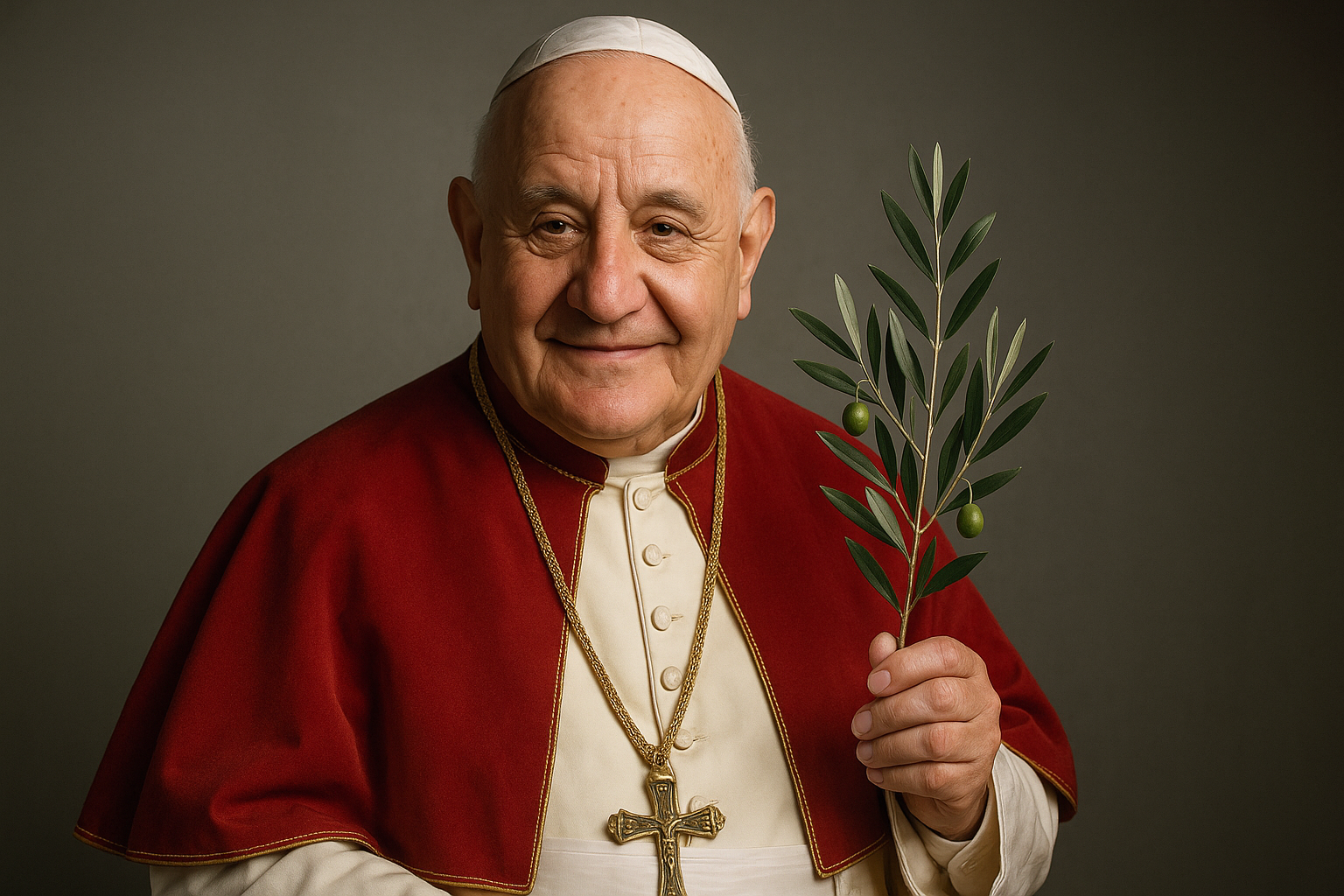
- An Olive Branch or Dove: These are universal symbols of peace, directly referencing his groundbreaking encyclical “Pacem in Terris” (Peace on Earth) and his efforts during the Cold War. They represent his vision for a world built on dialogue and understanding.
- An Open Book: This represents the Second Vatican Council (often simply called Vatican II), which he convened. It symbolizes the Church opening itself to the modern world, the importance of scripture, and his commitment to “aggiornamento” (updating).
- His Smiling, Benevolent Face: Perhaps the most common and beloved representation. His warm, grandfatherly smile and kind eyes are instantly recognizable and convey his affectionate nickname, “Good Pope John,” and his pastoral heart.
- A Simple Crosier or Staff: Unlike the elaborate papal staffs of some predecessors, John XXIII was often depicted with a more simple, pastoral staff, symbolizing his humility and his role as a shepherd to his flock rather than an autocratic ruler.
Timeline Summary
- November 25, 1881: Born Angelo Giuseppe Roncalli in Sotto il Monte, Bergamo, Italy.
- 1904: Ordained a priest.
- 1905–1914: Served as secretary to Bishop Giacomo Radini Tedeschi of Bergamo.
- 1915–1918: Served as a sergeant and chaplain in the Italian army during World War I.
- 1925: Appointed Apostolic Visitor to Bulgaria, marking the beginning of his diplomatic career. Elevated to Archbishop.
- 1935: Appointed Apostolic Delegate to Turkey and Greece. Played a role in saving Jewish lives during WWII.
- 1944: Appointed Nuncio to France.
- 1953: Appointed Patriarch of Venice and created a Cardinal.
- October 28, 1958: Elected Pope, taking the name John XXIII.
- January 25, 1959: Announced his intention to convene the Second Vatican Council.
- October 11, 1962: Opened the Second Vatican Council.
- April 11, 1963: Issued the encyclical “Pacem in Terris” (Peace on Earth).
- June 3, 1963: Died in Vatican City.
- September 3, 2000: Beatified by Pope John Paul II.
- April 27, 2014: Canonized by Pope Francis.
Scripture for Reflection
St. John XXIII’s life was a testament to several profound scriptural virtues, particularly peace, unity, and humble service.
Matthew 5:9: “Blessed are the peacemakers, for they will be called children of God.”
This Beatitude perfectly encapsulates Pope John XXIII’s fervent efforts for peace, culminating in his encyclical “Pacem in Terris.” At a time of intense Cold War tensions and the Cuban Missile Crisis, he tirelessly advocated for dialogue and understanding over conflict, demonstrating how true faith can inspire global efforts for reconciliation and human dignity. He truly embodied the spirit of a peacemaker, acting as a child of God for all humanity.
Philippians 2:3-4: “Do nothing out of selfish ambition or vain conceit. Rather, in humility value others above yourselves, not looking to your own interests but each of you to the interests of the others.”
From his humble origins as a peasant farmer’s son, Angelo Roncalli carried a deep sense of humility throughout his life, even to the Chair of Peter. He consistently valued others, broke papal protocol to visit the sick and imprisoned, and prioritized the pastoral needs of his flock over personal prestige. His ability to connect with people from all walks of life stemmed from this authentic humility, which allowed him to truly serve the interests of others and embrace the universality of the Church’s mission.
John 17:21: “that all of them may be one, Father, just as you are in me and I am in you. May they also be in us so that the world may believe that you have sent me.”
The spirit of ecumenism and Christian unity was a driving force behind St. John XXIII’s papacy, particularly in his decision to convene the Second Vatican Council. He yearned for the unity of all Christians, understanding it as essential for the world to believe in Christ’s message. He opened the Church’s doors to dialogue with other denominations and faiths, embodying Christ’s prayer for unity and laying the groundwork for much of the ecumenical movement that followed.
Prayers to St. John XXIII
Prayer for the Intercession of St. John XXIII
O, St. John XXIII, Pope of goodness and peace, you who always showed a cheerful face, a kind heart, and a genuine love for all people, we ask for your intercession. You opened the windows of the Church, letting in fresh air and inspiring a new spirit of dialogue, unity, and service to the world. Help us to embrace “aggiornamento” in our own lives, to seek peace in our families and communities, and to be courageous in our faith. Guide us to cultivate humility, compassion, and a spirit of joyful hope, just as you did. Amen.
A Shorter Prayer to Good Pope John
Dear St. John XXIII, “Good Pope John,” you taught us to trust in God’s mercy and to look upon all humanity with love and understanding. Pray for us, that we may be instruments of peace, fostering unity among all people and bringing comfort to those in need. Inspire us to live simply, love generously, and always seek to renew our faith in Christ. Amen.