St. Josemaría Escrivá, a Spanish priest who lived in the 20th century, left an indelible mark on the Catholic Church by passionately proclaiming a revolutionary yet ancient truth: holiness isn’t just for priests, monks, or nuns, but for everyone, right in the midst of their daily lives. He taught that ordinary work, family responsibilities, and everyday interactions could be powerful paths to encountering God and living a truly Christian life. This article will explore his remarkable journey, from his early life in troubled Spain to the founding of Opus Dei, examining his profound spiritual legacy and how his message continues to inspire millions around the globe to find God in the ordinary.
Quick Facts
| Category | Detail |
|---|---|
| Birth | January 9, 1902, Barbastro, Spain |
| Death | June 26, 1975, Rome, Italy |
| Feast Day | June 26 |
| Patronage | Ordinary life, work, finding God in daily life, Opus Dei |
| Canonized | October 6, 2002, by Pope John Paul II |
Historical Context & Early Life
Josemaría Escrivá de Balaguer was born into a rapidly changing Spain at the dawn of the 20th century. The country was grappling with significant social and political upheaval, moving from a monarchy to a republic, and eventually descending into a brutal civil war. Anti-clericalism, a strong hostility towards the Church and its clergy, was a significant force, leading to persecution and violence against religious institutions and individuals. In this tense atmosphere, the Catholic Church faced immense challenges, trying to maintain its spiritual influence amidst widespread skepticism and hostility.
Josemaría’s family background was one of modest means but deep faith. His father, José Escrivá, was a merchant who, despite facing financial difficulties that led to the loss of his business and multiple family relocations, instilled in his children a strong sense of honesty, hard work, and trust in divine providence. His mother, Dolores Albás, was a woman of profound piety and gentle strength, who provided a loving and stable home environment. Josemaría was one of six children, though only three, including him, survived into adulthood; he experienced the pain of losing three younger sisters early in life, and later, his older sister, Carmen, became a key supporter of Opus Dei in its early years.
A pivotal moment in his early life occurred when he was about 15 years old. Walking through the snowy streets of Logroño, he saw the bare footprints of a Carmelite friar. This image struck him deeply, prompting a question that would shape his future: if others made such sacrifices for God, what was he doing? This experience sparked within him a profound desire to serve God, though he didn’t yet know how. He felt a divine calling, a prompting from God, but the specific path remained unclear. This inner spiritual restlessness eventually led him to discern a vocation to the priesthood, hoping that through this path, God would reveal His specific will for him. His decision to enter the seminary, first in Logroño and later in Zaragoza, was met with his father’s unwavering support, despite the financial strain it would place on the family.
Calling & Key Milestones
A Young Priest’s Early Ministry
Josemaría was ordained a priest on March 28, 1925. His early priestly ministry in Zaragoza and later in Madrid was characterized by dedicated pastoral work among the poor, the sick, and the marginalized. He served in a parish in the outskirts of Madrid, ministering to the sick in hospitals and teaching catechism to children. This direct contact with suffering and ordinary people deepened his understanding of the human condition and refined his pastoral sensitivity. He experienced firsthand the spiritual needs of a diverse population, confirming his conviction that God was calling him to something beyond traditional parish work.
The Founding of Opus Dei: October 2, 1928
The decisive moment in St. Josemaría’s life, and the birth of what would become his greatest spiritual legacy, occurred on October 2, 1928. While on a spiritual retreat in Madrid, he was reflecting on some notes he had taken when, as he later described it, he “saw” Opus Dei. It wasn’t just an idea or a thought; it was a clear, divine inspiration that revealed the fundamental message God wanted him to spread: the universal call to holiness, especially through the sanctification of professional work and the ordinary circumstances of daily life. This message was truly radical for its time, as holiness was often associated primarily with religious life in monasteries or convents, not with the hustle and bustle of secular professions. He immediately understood that Opus Dei (Latin for “Work of God”) was meant to be a path for ordinary men and women to find God and grow in holiness without leaving their place in the world.
Challenges and Growth Amidst the Spanish Civil War
The early years of Opus Dei were marked by immense difficulty. St. Josemaría began sharing his vision with a handful of university students and young professionals, attracting a small but dedicated group. However, the burgeoning movement faced not only the natural skepticism towards a new spiritual path but also the brutal realities of the Spanish Civil War (1936-1939). During this period of intense religious persecution, St. Josemaría had to go into hiding and eventually flee Madrid to survive. He continued to minister secretly, offering spiritual guidance and celebrating Mass in clandestine locations. This time of severe hardship forged the early members and deepened their resolve, demonstrating the resilience of their spiritual commitment in the face of mortal danger. After the war, he returned to Madrid to continue establishing Opus Dei, which officially began its work with women in 1930.
Expansion and Papal Approval
As the initial core of Opus Dei solidified, St. Josemaría realized that Rome, the heart of the Catholic Church, would be crucial for the full development and recognition of the institution. He moved to Rome in 1946, establishing the first central headquarters of Opus Dei. From there, the Work began its international expansion, first across Europe, then to the Americas, and eventually throughout the world. This period saw the formal recognition of Opus Dei by the Holy See through various legal forms, culminating in its establishment as the first Personal Prelature of the Catholic Church in 1982 by Pope John Paul II. This unique canonical form was a testament to the Holy See’s understanding and affirmation of Opus Dei’s distinctive mission to serve the universal Church by fostering holiness in the midst of the world. St. Josemaría spent his remaining years traveling, meeting with members, and overseeing the spiritual and doctrinal development of Opus Dei until his death in 1975.
Spiritual Legacy & Theological Themes
St. Josemaría Escrivá’s spiritual legacy is characterized by several profound theological themes that resonate deeply with the teachings of the Second Vatican Council (1962-1965) and continue to inspire millions. His core message is centered on the universal call to holiness, a truth he proclaimed decades before the Council made it a cornerstone of modern Catholic teaching.
The Sanctification of Work and Ordinary Life
Perhaps the most defining characteristic of St. Josemaría’s spirituality is the emphasis on sanctifying work. He taught that all honest, ethical work – whether it’s a doctor performing surgery, a homemaker raising children, a student studying, or an engineer designing a bridge – can be a means of encountering God and growing in holiness. It’s not just about doing good work, but about doing it with a supernatural outlook, with love for God and service to others. He encouraged people to perform their professional tasks with excellence, responsibility, and cheerfulness, transforming mundane activities into acts of love and prayer. This idea elevates the dignity of human labor and shows how every moment of our day can be a step closer to God.
Divine Filiation: Children of God
Another central theme is divine filiation, the profound truth that through Baptism, we are adopted children of God. St. Josemaría constantly reminded his followers of this identity, encouraging them to live with the confidence, trust, and loving boldness of children who know they are deeply loved by their Father. This awareness shapes one’s prayer life, fostering a simple, intimate dialogue with God, and influences one’s outlook on life, transforming challenges into opportunities to trust in God’s providence. Living as a child of God means recognizing His loving hand in all circumstances and responding with grateful obedience and joy.
Unity of Life
St. Josemaría championed the “unity of life,” meaning there should be no division between one’s spiritual life and one’s daily life. For him, a truly Christian life isn’t lived in compartments – one for prayer, another for work, another for family. Instead, faith should permeate every aspect of existence. This challenges the common misconception that one has to “leave the world” to be holy. Instead, he taught that it is precisely “in the world” – in the supermarket, at the office, on the sports field – that we are called to live out our Christian vocation. This unity ensures consistency between what one believes and how one acts, fostering genuine integrity.
Freedom and Responsibility
While emphasizing obedience to God and the Church, St. Josemaría also strongly affirmed personal freedom and responsibility. He taught that spiritual growth is not about blindly following rules but about making free and responsible choices informed by faith and love. Each person must discern God’s will for their unique life and act accordingly, striving for personal holiness with complete freedom. This freedom, however, comes with the responsibility to use it for good, to serve God and others, and to contribute positively to society.
His teachings profoundly align with the Second Vatican Council’s emphasis on the universal call to holiness and the role of the laity in the Church and in the world. He was a prophetic voice, preparing the way for the Council’s teachings by showing how ordinary laypeople could be saints, not despite their secular lives, but precisely because of them.
Devotion Today
Devotion to St. Josemaría Escrivá continues to flourish, particularly among members and cooperators of Opus Dei, but also among countless others who find inspiration in his practical, down-to-earth spirituality. His message of sanctifying daily life resonates widely in a world often seeking meaning beyond professional success or material gain.
While there isn’t one specific pilgrimage site like Lourdes or Fatima directly associated with a Marian apparition, many faithful visit the headquarters of Opus Dei in Rome, especially the Prelatic Church of Our Lady of Peace, where St. Josemaría’s remains are venerated. This church serves as a significant spiritual center for those who follow his teachings. Throughout the world, numerous churches, chapels, and centers of Opus Dei feature images and relics of St. Josemaría, providing places for prayer and reflection.
His feast day, June 26th, is celebrated annually with special Masses and prayer services in dioceses and parishes worldwide, often with a particular focus on the themes of work, family, and the call to holiness in ordinary life. Many individuals also participate in novenas (nine days of prayer) in preparation for his feast day or for specific intentions, seeking his intercession for their work, family, or spiritual growth. His writings, particularly “The Way,” “Furrow,” and “The Forge,” continue to be popular spiritual reading, offering concise, practical guidance for daily Christian living. His message encourages ordinary people to see their lives as a direct path to God, fostering a vibrant and active faith in the midst of the world.
Reflections for Modern Readers
St. Josemaría Escrivá’s life and teachings offer timeless wisdom that is remarkably relevant for modern readers navigating the complexities of the 21st century. His emphasis on finding God in the ordinary provides practical guidance for living a deeply spiritual life without retreating from the world.
- Everyday Work as a Path to Holiness: In a culture that often separates “sacred” from “secular,” St. Josemaría reminds us that our daily work, no matter how mundane, can be a profound act of worship. Whether you’re a student studying for an exam, a software developer coding, a parent changing diapers, or a salesperson interacting with customers, you can offer your work to God. This isn’t about grand gestures but about doing your best, with love, and offering the effort and the results to God. For instance, a graphic designer creating an advertisement can see their attention to detail and creativity as an offering, transforming a commercial task into a spiritual exercise.
- Living as Children of God: St. Josemaría continually stressed our divine filiation – our identity as beloved children of God. This truth can transform our worries and anxieties. If you’re facing a difficult decision at work or struggling with personal relationships, remembering that you have a loving Father in Heaven can provide immense peace and confidence. It encourages a trusting, confident approach to prayer, knowing that God listens and cares for us like a good father. When encountering a challenging situation, instead of panicking, a modern Christian can pause, remember they are a child of God, and confidently ask for divine guidance.
- Unity of Life: Integrating Faith and Daily Living: Many people feel a disconnect between their Sunday faith and their weekday lives. St. Josemaría’s teaching on the unity of life calls us to bridge this gap. It means that your faith shouldn’t just be something you practice in church; it should permeate your conversations, your ethical choices at work, your use of social media, and your interactions with family and friends. For example, a young professional choosing honesty over a quick profit, or a teenager using their social media to uplift and encourage rather than gossip, embodies this unity of life.
- Apostolate of Friendship and Witness: St. Josemaría taught that we are called to be apostles in our everyday environments, primarily through friendship and personal witness. This isn’t about preaching but about living a joyful, consistent Christian life that attracts others. By being a good friend, a diligent colleague, a caring neighbor, and living with integrity and cheerfulness, you naturally draw others to Christ. A teacher who patiently guides struggling students or a coach who instills virtues like teamwork and perseverance demonstrates this gentle apostolate through their daily actions.
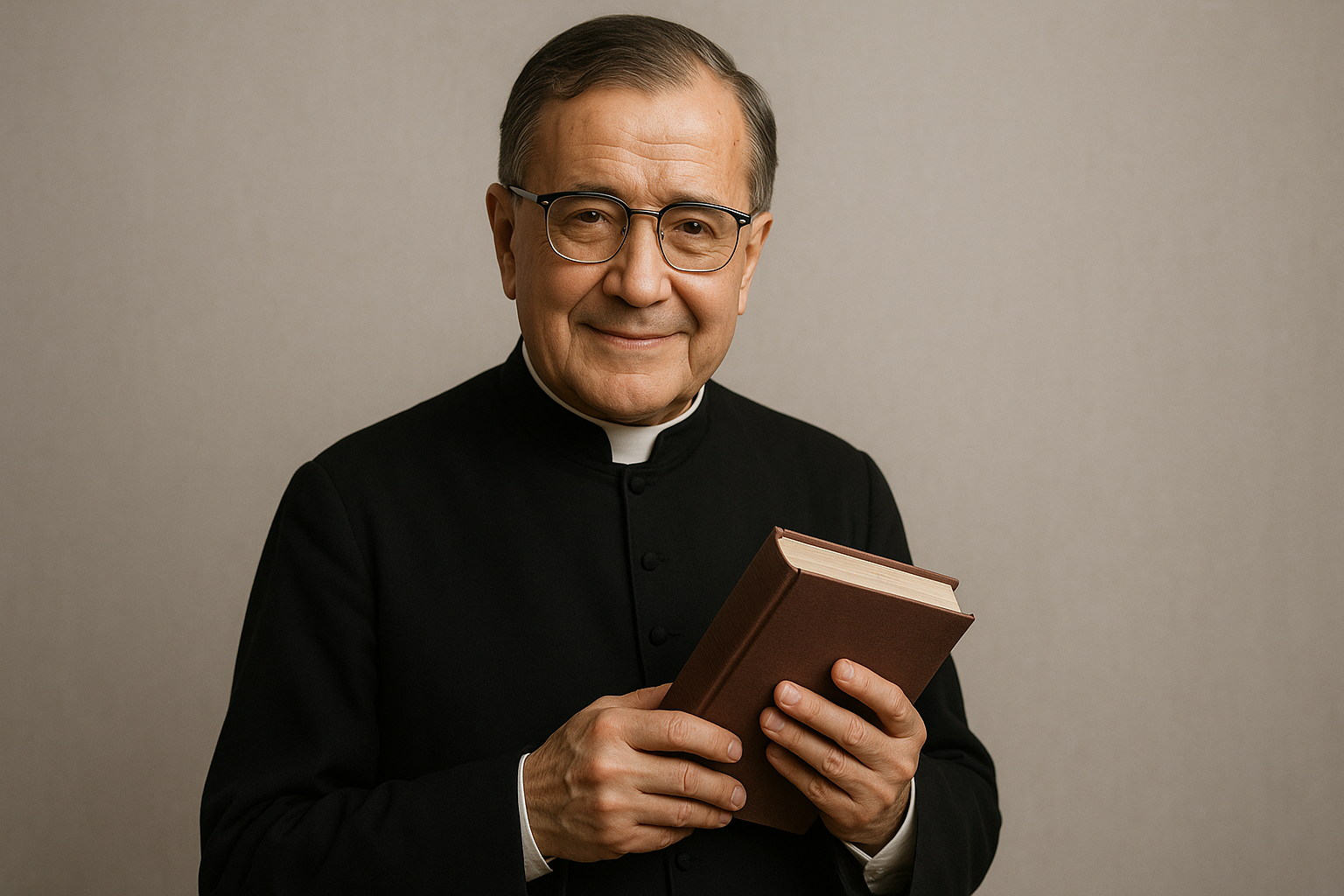
Common symbols and representations of St. Josemaría in art and jewelry often depict him in his priestly vestments, sometimes holding a book (representing his influential writings like “The Way”) or with a strong, focused gaze, conveying his spiritual intensity and commitment. Another common depiction might show him with a cross, perhaps with elements representing daily work, such as a hammer or tools, symbolizing his central message of sanctifying labor. These symbols reinforce his identity as a priest who brought a profound spiritual message to the lay faithful, encouraging them to see God in the everyday.
Timeline Summary
- January 9, 1902: Born in Barbastro, Spain.
- 1915-1918: Experiences a spiritual awakening after seeing the footprints of a Carmelite friar.
- 1920: Enters the seminary in Logroño, later moves to Zaragoza.
- March 28, 1925: Ordained a priest.
- 1925-1928: Serves as a priest in Zaragoza and Madrid, ministering to the poor and sick.
- October 2, 1928: Founds Opus Dei, understanding its mission to sanctify ordinary work.
- 1930: Opus Dei begins its apostolic work with women.
- 1936-1939: Navigates the Spanish Civil War, often in hiding, continuing his priestly ministry clandestinely.
- 1946: Moves to Rome, establishing the central headquarters of Opus Dei.
- 1947: The Holy See grants first approval to Opus Dei.
- 1950: Final approval of Opus Dei by the Holy See.
- 1975: Publishes “Friends of God” and “Christ Is Passing By” posthumously.
- June 26, 1975: Dies in Rome, Italy.
- May 17, 1992: Beatified by Pope John Paul II in Rome.
- October 6, 2002: Canonized by Pope John Paul II in Rome.
Scripture for Reflection
St. Josemaría Escrivá’s life and teachings profoundly echo several biblical passages, particularly those that speak to the sanctification of work and our identity as children of God.
Colossians 3:23-24 (NIV): “Whatever you do, work at it with all your heart, as working for the Lord, not for human masters, since you know that you will receive an inheritance from the Lord as a reward. It is the Lord Christ you are serving.”
This passage beautifully encapsulates St. Josemaría’s core message: that all honest work, when done with diligence and offered to God, becomes a path to holiness and a means of serving Christ directly. It reminds us that our primary audience for our efforts is God Himself, transforming even the most ordinary tasks into acts of profound spiritual significance.
Romans 8:15 (NIV): “The Spirit you received does not make you slaves, so that you live in fear again; rather, the Spirit you received brought about your adoption to sonship. And by him we cry, ‘Abba, Father.'”
St. Josemaría frequently emphasized the concept of divine filiation – our identity as beloved children of God. This verse from St. Paul powerfully affirms this truth, reminding us that through the Holy Spirit, we are not slaves living in fear, but adopted children with the privilege of calling God “Abba,” a term of intimate affection meaning “Daddy.” This fosters a relationship of trusting love and confidence with God, a cornerstone of Escrivá’s spirituality.
Prayers to St. Josemaría Escrivá
Here is a common prayer for the intercession of St. Josemaría Escrivá, often used by those seeking his help in their daily lives and work:
O God, through the mediation of Mary our Mother, you granted countless graces to Saint Josemaría, priest, choosing him as a most faithful instrument to found Opus Dei, a way of sanctification in ordinary work and according to the Christian vocation. Grant that I, too, may learn to turn all the circumstances and events of my life into occasions of loving you and serving the Church, the Pope and all souls, with joy and simplicity, putting Christ at the summit of every human activity. Glorify your servant, and through his intercession, grant me the favor I request… (state your intention). Amen.
Our Father, Hail Mary, Glory Be.