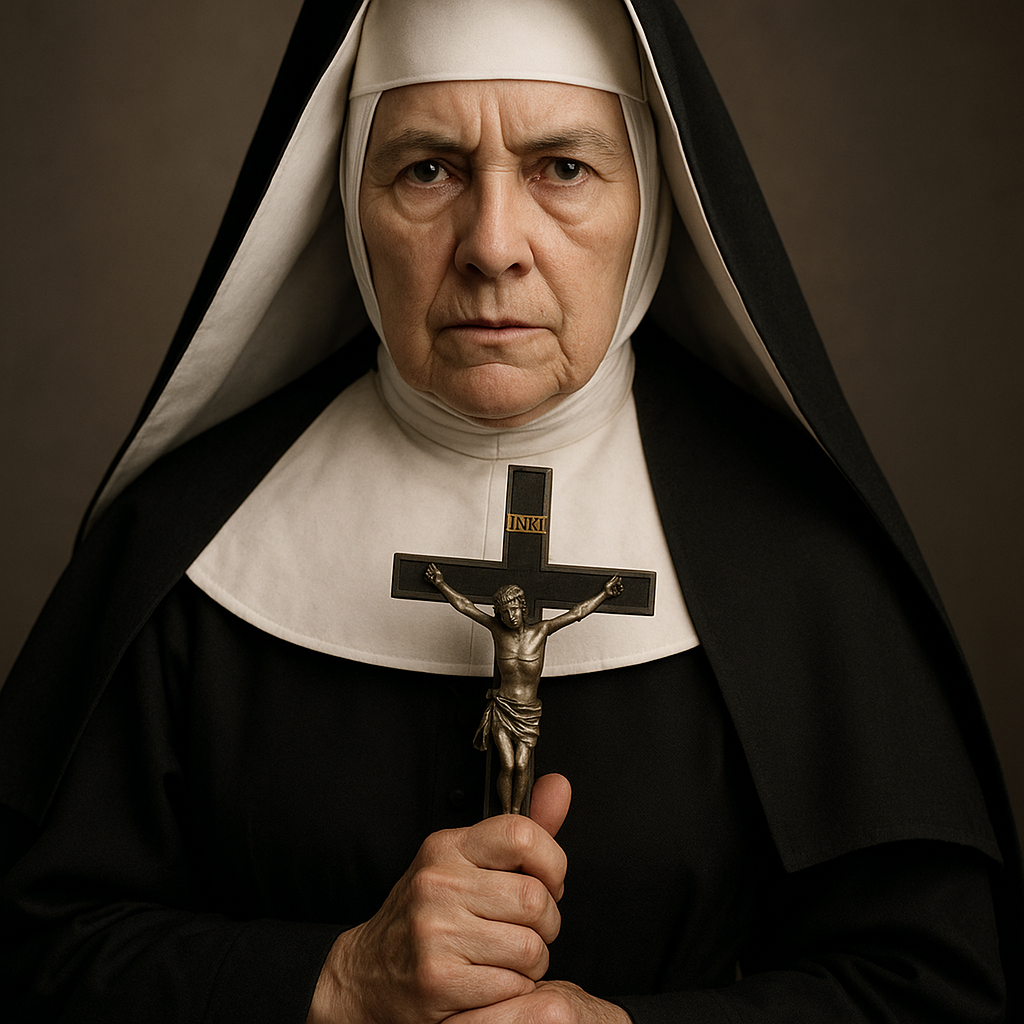
In a world often captivated by wealth and status, the story of St. Katharine Drexel stands as a powerful testament to radical generosity, unwavering faith, and a tireless pursuit of justice. Born into immense privilege in 19th-century Philadelphia, Katharine turned her back on a life of luxury to dedicate her vast inheritance and her very being to serving the most marginalized people in America: Native Americans and African Americans. Her life journey, from society heiress to foundress of a religious order, unfolds as a compelling narrative of how one woman, guided by profound spiritual conviction, ignited a transformative movement that championed education, fought against systemic racism, and left an indelible mark on the Catholic Church and American society. This article explores her remarkable early life, the pivotal moments of her calling, her enduring spiritual legacy, and how her powerful example continues to inspire devotion and action in our modern world.
Quick Facts
| Fact | Detail |
|---|---|
| Birth | November 26, 1858, Philadelphia, Pennsylvania, USA |
| Death | March 3, 1955, Cornwells Heights, Pennsylvania, USA |
| Feast Day | March 3 |
| Patronage | Racial justice, philanthropists, Native Americans, African Americans, social justice, education |
| Canonized | October 1, 2000, by Pope John Paul II |
Historical Context & Early Life
St. Katharine Drexel’s life unfolded against the backdrop of a rapidly changing America in the late 19th and early 20th centuries. This was the Gilded Age, a period marked by unprecedented industrial growth, technological innovation, and the accumulation of vast fortunes, often alongside widespread poverty and social inequality. The nation was still grappling with the aftermath of the Civil War and Reconstruction, and deeply entrenched racial prejudices continued to oppress African Americans, particularly in the Jim Crow South. Simultaneously, Native American communities faced ongoing displacement, cultural suppression, and severe neglect on reservations, often living in dire poverty with little access to education or healthcare.
Katharine Mary Drexel was born into one of Philadelphia’s wealthiest and most prominent families. Her father, Francis Anthony Drexel, was a successful international banker, and her mother, Hannah Langstroth Drexel, came from a distinguished family. Tragically, Katharine’s mother passed away shortly after her birth. Her father later married Emma Bouvier, a woman of deep faith and compassion who became a loving stepmother to Katharine and her two sisters, Elizabeth and Louise. The Drexel household was not merely wealthy; it was a vibrant hub of Catholic faith and active philanthropy. Francis and Emma Drexel instilled in their daughters a profound sense of social responsibility, teaching them that their wealth was a trust from God to be used for the benefit of others.
Every week, their home was open to the poor, sick, and unemployed, providing them with food, clothing, and comfort. The Drexel children witnessed firsthand the suffering of their neighbors and learned early on the importance of direct service. Katharine received a comprehensive education, including private tutors and extensive travel, which broadened her understanding of the world and its diverse peoples. Despite her privileged upbringing, she was exposed to the harsh realities of poverty and injustice from a young age, experiences that would deeply shape her spiritual journey and future vocation. Her family’s example of practical charity, combined with her own growing prayer life, laid the foundation for her extraordinary commitment to social justice and the marginalized.
Calling & Key Milestones
Katharine Drexel’s path to sainthood was paved by a series of profound spiritual insights and courageous decisions that led her from a life of potential ease to one of radical service and sacrifice. Her calling was not a sudden revelation but a gradual unfolding, nurtured by prayer and direct encounters with suffering.
Early Aspirations and Encounters with Poverty
Even as a young woman, Katharine exhibited a deep spiritual longing and an unusual concern for the poor. She spent considerable time volunteering at her family’s charitable initiatives, particularly ministering to sick and struggling families. During a period when her stepmother Emma suffered from a debilitating illness, Katharine devoted herself to her care, an experience that deepened her understanding of human suffering and the dignity of every person. She was struck by the systemic nature of poverty and injustice faced by Native Americans and African Americans, often observing their plight during family travels throughout the American West and South. She began to feel a distinct call to do more than simply donate money; she felt drawn to dedicate her entire life to their upliftment.
The Pivotal Meeting with Pope Leo XIII
A decisive moment in Katharine’s discernment occurred in 1887. While on a trip to Rome with her family, she had a private audience with Pope Leo XIII, who was then 77 years old and a profound advocate for social justice, famously writing the encyclical Rerum Novarum a few years later. Katharine, already deeply concerned about the lack of priests and resources for Native American missions, boldly presented her concerns to the Holy Father, explaining the dire need for more missionaries to serve these communities. To her astonishment, the Pope’s response was not what she expected. He looked at her and said, “Why don’t you become a missionary yourself?” This direct challenge from the Vicar of Christ pierced her heart. It was a clear and undeniable confirmation of the stirrings she had felt for years, urging her to move beyond financial support to personal dedication.
Founding the Sisters of the Blessed Sacrament
After much prayer and spiritual direction, Katharine made the courageous decision to renounce her inheritance and worldly life. In 1889, at the age of 31, she entered the Sisters of Mercy convent in Pittsburgh, beginning a two-year novitiate. Her decision sent shockwaves through society and even caused concern among some family members who feared she was being impulsive. However, Katharine remained resolute. In 1891, with the approval of her spiritual director and the Church, she founded a new religious congregation: the Sisters of the Blessed Sacrament for Indians and Colored People. Her vision for the order was clear: to dedicate their lives to serving Native Americans and African Americans through education, social welfare, and evangelization, all rooted in profound devotion to the Eucharist.
Extensive Missionary Work and Educational Initiatives
As foundress, Mother Katharine Drexel, as she became known, poured her enormous energy, intellectual gifts, and remaining financial resources (administered by a board of trustees, as she had taken a vow of poverty) into her mission. Over the next six decades, she and her Sisters established an astounding network of schools, missions, and charitable institutions across more than 22 states, particularly in the South and Southwest where racial discrimination was most severe. She personally oversaw the construction and operation of 12 high schools, 50 elementary schools, and 12 missions for Native Americans and African Americans. One of her most significant achievements was the founding of Xavier University of Louisiana in New Orleans in 1925, the only historically Black Catholic university in the United States, which continues to thrive today as a beacon of education and opportunity. Mother Katharine’s work was pioneering not only in its scope but also in its explicit challenge to the racial segregation and discrimination prevalent at the time, offering quality education and dignity to those systematically denied it.
A Life of Sacrifice and Perseverance
Mother Katharine’s life was one of tireless labor, constant travel, and immense sacrifice. She faced numerous challenges, including anti-Catholic sentiment, racial prejudice from both outside and within the Church, financial pressures, and the physical demands of managing a growing congregation and its widespread ministries. Despite these obstacles, her trust in Divine Providence remained unshaken. She drew strength from daily Mass, Eucharistic adoration, and personal prayer, which were the bedrock of her spiritual life and the driving force behind her extraordinary perseverance. In 1935, at the age of 77, Mother Katharine suffered a severe heart attack, which largely confined her to the motherhouse for the remaining 20 years of her life. Even in illness, she continued to inspire her Sisters through prayer, correspondence, and her profound example of patience and humility, until her death in 1955.
Spiritual Legacy & Theological Themes
St. Katharine Drexel’s life is a vibrant tapestry woven with deep spiritual insights and concrete action, making her a powerful model for Christians today. Her core virtues were deeply rooted in Scripture and Catholic teaching, and her legacy continues to resonate within the Church and beyond.
Core Virtues Exemplified
Katharine’s life brilliantly demonstrated the cardinal virtues and theological virtues in action. Her charity was not merely almsgiving but a radical self-gift, sacrificing immense wealth and personal comfort for the love of God and neighbor. This aligns perfectly with Christ’s command to love one another (John 13:34) and to serve the “least of these” (Matthew 25:40). Her commitment to justice was unwavering, as she actively challenged systemic racism and inequality, not just through words but through the establishment of institutions designed to uplift and empower. This reflects the prophetic tradition of the Old Testament and the Church’s consistent call for social justice, echoing passages like Micah 6:8: “to do justice and to love kindness, and to walk humbly with your God.”
Self-sacrifice was the hallmark of her vocation. She embraced poverty, chastity, and obedience, surrendering a life of ease for demanding missionary work. Her entire life was an act of kenosis, emptying herself for Christ’s mission, mirroring the self-emptying of Jesus (Philippians 2:7). Katharine also exhibited profound trust in Divine Providence. Despite countless financial challenges, opposition, and setbacks, she firmly believed that God would provide for her mission, often stating, “The patient and trusting soul receives its God-given strength for perseverance and final victory.” This echoes the words of Jesus in Matthew 6:26-34 about trusting God for our daily needs.
Finally, her deep Eucharistic devotion was the wellspring of her strength and mission. The Blessed Sacrament was central to her order’s charism and her personal prayer life. She understood that in the Eucharist, Christ offers himself completely, and it was from this total gift that she drew the grace to make her own total gift of self.
Lasting Influence
St. Katharine Drexel’s influence extends far beyond the schools she founded. She was a pioneer in advocating for racial justice and inter-racial harmony within the Catholic Church and American society at a time when segregation was the norm. Her work challenged prevailing attitudes and demonstrated the Church’s universal mission to all peoples, regardless of race. She championed the cause of education as a means of liberation and evangelization, recognizing that access to quality learning was essential for human flourishing and spiritual growth. This foresight transformed countless lives and established a model for Catholic education’s role in social uplift.
Her legacy also speaks to the powerful role of women in the Church. As a foundress and leader, Mother Katharine demonstrated extraordinary administrative skill, vision, and spiritual depth, proving the immense capacity of women to lead major ecclesial initiatives. She left an enduring mark on Catholic social teaching through her practical application of its principles, showing how faith demands concrete action to transform society. Her life continues to inspire movements for justice, especially within the Church, urging Catholics to confront racism and advocate for marginalized communities with courage and compassion. Her commitment to the Eucharist also reminds us of the centrality of Christ’s presence as the source and summit of all missionary activity.
Devotion Today
Devotion to St. Katharine Drexel continues to flourish, a testament to the enduring impact of her extraordinary life and mission. Her example resonates powerfully with those striving for social justice, educational equity, and radical faith.
The primary spiritual home and center for devotion to St. Katharine Drexel is the National Shrine of St. Katharine Drexel, located at the motherhouse of the Sisters of the Blessed Sacrament in Bensalem, Pennsylvania, just outside Philadelphia. This shrine houses her tomb and a museum detailing her life and work, offering pilgrims a tangible connection to her legacy. Many come to pray for her intercession, seeking guidance in matters of racial justice, education, and discerning their own call to service. The Sisters of the Blessed Sacrament continue her work today, ministering in various capacities to African Americans and Native Americans, and maintaining her spiritual legacy.
Her Feast Day is celebrated annually on March 3rd, the anniversary of her death. On this day, parishes and communities, particularly those with a history of serving African American and Native American Catholics, often hold special Masses and prayer services to honor her memory and reflect on her commitment to justice and charity. Educational institutions, especially Catholic schools and Xavier University of Louisiana, frequently host events and programs to commemorate her life and reinforce her values among their students.
Many individuals and groups also engage in personal devotion, praying a Novena to St. Katharine Drexel for her intercession in specific intentions, particularly concerning racial harmony, educational opportunities, and assistance for those facing discrimination or poverty. Her life story is frequently shared in Catholic educational curricula, serving as an inspiring example of a contemporary American saint who actively lived out the Gospel’s call to love and serve the marginalized. Her canonization in 2000 brought wider recognition to her incredible contributions and solidified her place as an important American saint for our times.
Reflections for Modern Readers
St. Katharine Drexel’s life, though lived over a century ago, offers profound and actionable lessons for people navigating the complexities of the 21st century. Her commitment to radical faith and justice provides a powerful roadmap for modern discipleship.
- Use Your Privilege for Good: Katharine Drexel famously gave up a vast fortune, but her initial lesson is about using whatever resources, talents, or positions of influence you possess for the benefit of others. In today’s world, this could mean advocating for overlooked communities in your workplace, volunteering your professional skills for a cause you believe in, or intentionally directing your financial resources towards ethical and impactful initiatives. For instance, a person with a strong social media presence could use their platform to raise awareness about systemic inequalities, rather than just promoting personal interests.
- Challenge Injustice Courageously: St. Katharine didn’t shy away from confronting the deeply entrenched racism of her era. She built schools and institutions that directly challenged segregation and offered dignity where it was denied. Modern readers are called to identify and speak out against injustices in their own spheres, whether it’s advocating for fair housing, combating prejudice in online spaces, or supporting policies that promote equity. This might look like a student organizing a campus discussion on diversity or an employee speaking up against discriminatory practices in their company.
- Listen for God’s Radical Call: Her pivotal encounter with Pope Leo XIII, where he challenged her to “become a missionary yourself,” reminds us that God’s call might lead us to unexpected, even counter-cultural, paths. For a modern person, this could involve choosing a career dedicated to service over a more lucrative path, making significant lifestyle changes to simplify and give more, or committing to a challenging form of advocacy. Perhaps someone feels called to leave a comfortable job to work for a non-profit dedicated to environmental justice, or a young adult senses a deep pull towards a vocation in religious life or missionary work in a challenging area.
- Persevere Through Obstacles with Faith: St. Katharine faced constant financial strain, prejudice, and logistical hurdles, yet she never gave up. Her unwavering trust in Divine Providence allowed her to persist. In a world full of setbacks, from personal struggles to large-scale social problems, her example teaches us the importance of prayer, resilience, and faith that good will ultimately prevail. When a community project faces unexpected delays or funding issues, remembering Katharine’s perseverance can inspire renewed efforts and a deeper trust in God’s plan.
- Education as Empowerment: Katharine believed deeply in the power of education to transform lives and break cycles of poverty and prejudice. For modern readers, this translates into supporting educational initiatives, mentoring young people, or simply committing to lifelong learning and using that knowledge to uplift others. It’s about recognizing that intellectual and spiritual growth are vital for both individual and societal flourishing. This could involve tutoring struggling students, advocating for better resources in underfunded schools, or even dedicating oneself to learning about different cultures to foster greater understanding and empathy.
Symbols and Representations in Art
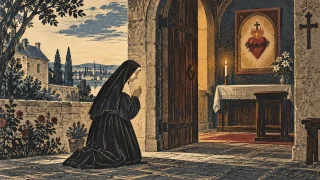
In art and statuary, St. Katharine Drexel is most commonly depicted in the simple black habit of the Sisters of the Blessed Sacrament, often holding a cross or crucifix, symbolizing her deep faith and sacrifice. She is frequently shown surrounded by or interacting with Native American and African American children, or adults, representing her life’s mission and patronage. Sometimes, she holds a book or a school building, signifying her dedication to education as a means of empowerment. These symbols collectively portray her as a woman of profound prayer, radical charity, and unwavering commitment to justice for the marginalized, embodying her role as patroness of racial justice and philanthropists.
Timeline Summary
- 1858: Born Katharine Mary Drexel in Philadelphia, Pennsylvania.
- 1860: Mother Hannah Langstroth Drexel dies.
- 1861: Father Francis Anthony Drexel marries Emma Bouvier, who becomes a loving stepmother.
- 1884: Death of her stepmother Emma, followed by the death of her father Francis in 1885. Katharine inherits a vast fortune.
- 1887: Has a pivotal audience with Pope Leo XIII in Rome, who challenges her to become a missionary herself.
- 1889: Enters the Sisters of Mercy in Pittsburgh to discern her vocation further.
- 1891: Professes her vows and establishes the Sisters of the Blessed Sacrament for Indians and Colored People.
- 1894: Opens the first SBS mission school for Native Americans in Santa Fe, New Mexico.
- 1897: Opens St. Francis de Sales School in Rock Castle, Virginia, her first school for African Americans.
- 1915: Establishes Xavier University in New Orleans, Louisiana, initially a high school and normal school for African Americans, which would later become the only historically Black Catholic university in the U.S.
- 1935: Suffers a severe heart attack, which confines her to the motherhouse for the rest of her life, focusing on prayer and spiritual guidance.
- 1955: Dies at the age of 96 at the motherhouse in Bensalem, Pennsylvania.
- 1988: Beatified by Pope John Paul II.
- 2000: Canonized by Pope John Paul II, becoming the second American-born saint.
Scripture for Reflection
St. Katharine Drexel’s life beautifully illustrates several key scriptural principles, particularly those related to charity, justice, and the use of material blessings for God’s glory.
Matthew 25:31-40 (The Judgment of the Nations): “Then the King will say to those on his right, ‘Come, you who are blessed by my Father; take your inheritance, the kingdom prepared for you since the creation of the world. For I was hungry and you gave me something to eat, I was thirsty and you gave me something to drink, I was a stranger and you invited me in, I needed clothes and you clothed me, I was sick and you looked after me, I was in prison and you came to visit me.’ Then the righteous will answer him, ‘Lord, when did we see you hungry and feed you, or thirsty and give you something to drink? When did we see you a stranger and invite you in, or needing clothes and clothe you? When did we see you sick or in prison and go to visit you?’ The King will reply, ‘Truly I tell you, whatever you did for one of the least of these brothers and sisters of mine, you did for me.'”
Connection: This passage perfectly encapsulates St. Katharine’s entire mission. She saw Christ in the “least of these” — the Native Americans and African Americans who were marginalized and denied basic human dignity. Her tireless work in education, healthcare, and evangelization was a direct response to this Gospel call to serve Christ in the poor and neglected. She truly gave her inheritance and her life to feed, clothe, and care for those whom society had forgotten.
Philippians 2:5-8 (Christ’s Humility and Self-Emptying): “In your relationships with one another, have the same mindset as Christ Jesus: Who, being in very nature God, did not consider equality with God something to be used to his own advantage; rather, he emptied himself by taking the very nature of a servant, being made in human likeness. And being found in appearance as a man, he humbled himself by becoming obedient to death—even death on a cross!”
Connection: St. Katharine Drexel lived a life of radical self-emptying, mirroring Christ’s humility. Born into immense wealth and social standing, she “emptied herself” of these worldly advantages, choosing instead to become a servant to those deemed lowest in society. Her vow of poverty and dedication to arduous missionary work, despite her delicate health, demonstrates a profound obedience to God’s will and a willingness to humble herself for the sake of the Gospel, even enduring the cross of prejudice and constant struggle.
Prayers to St. Katharine Drexel
Prayer for Racial Justice and Harmony
O Holy Trinity, we thank you for the life of Saint Katharine Drexel, who used her inheritance and her life to serve your most marginalized children. Inspired by her example of selfless charity and courage, we ask for her intercession today. Help us, through her prayers, to overcome all forms of racial prejudice and injustice in our hearts and in our world. Grant us the grace to see Christ in every person, to love our neighbors as ourselves, and to work tirelessly for a society where all are treated with dignity, respect, and equal opportunity. May we, like Saint Katharine, be instruments of your peace and justice, spreading your love and truth to all corners of the earth. We ask this through Christ our Lord. Amen.
Aspiration to St. Katharine Drexel
Saint Katharine Drexel, who gave up wealth and privilege to serve the poor and neglected, inspire us to use our own gifts and resources for the glory of God and the good of all people. Pray for us, that we may have your courage to challenge injustice, your compassion for the suffering, and your unwavering faith in God’s providence. Amen.