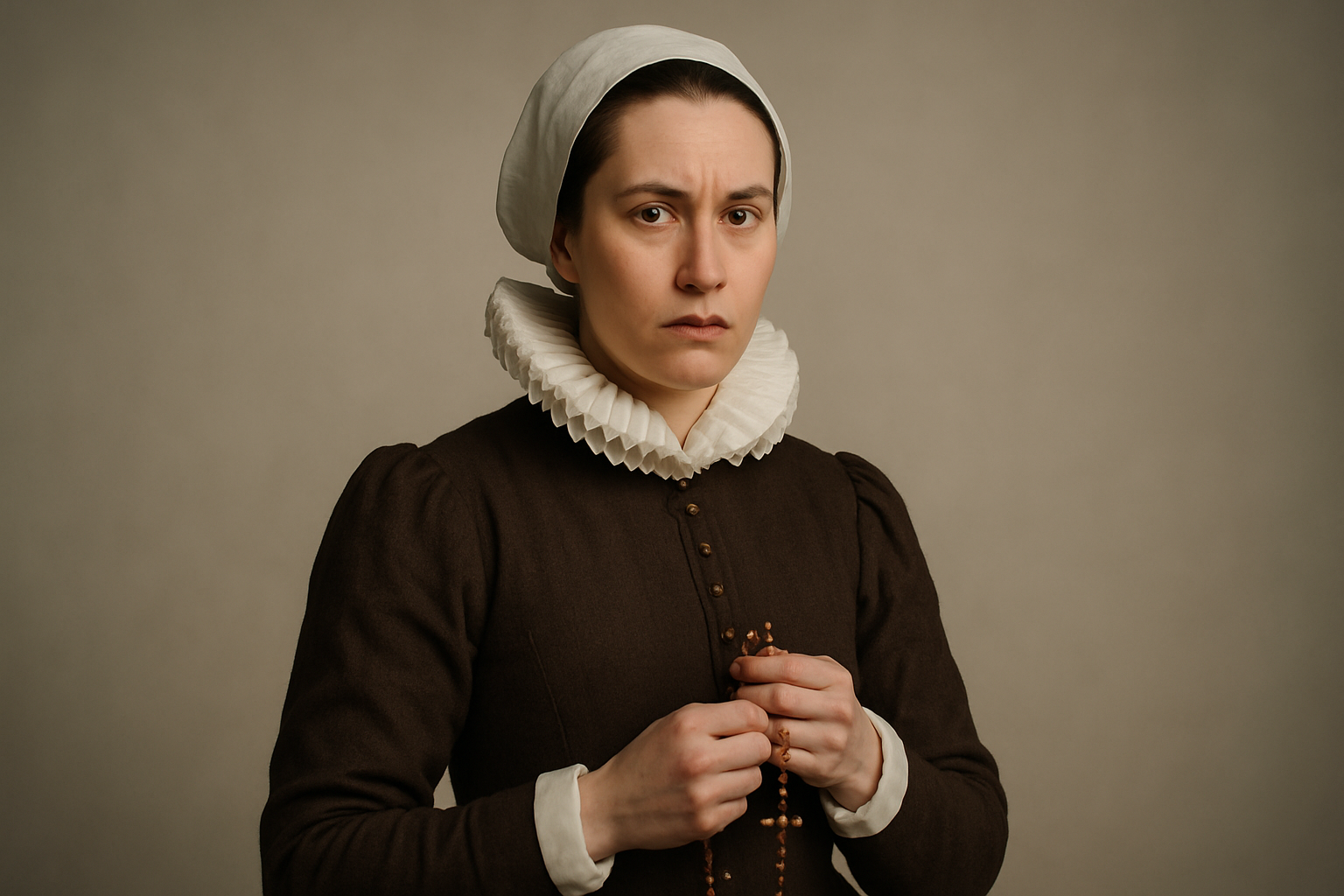
In the bustling, often dangerous world of Elizabethan England, where religious loyalties could mean the difference between life and death, lived a remarkable woman named Margaret Clitherow. Known as the “Pearl of York,” St. Margaret Clitherow was a devoted wife, mother, and a brave martyr whose unwavering faith continues to inspire Catholics today. Her story is one of extraordinary courage in the face of intense persecution, a testament to the power of conviction, and a profound example of fidelity to the Eucharist and the priesthood. This article will explore her early life amidst religious turmoil, the pivotal choices that led to her martyrdom, her enduring spiritual legacy, and how her heroic witness resonates with believers in our modern age.
Quick Facts
| Category | Detail |
|---|---|
| Birth | Circa 1553, York, England |
| Death | March 25, 1586, York, England |
| Feast Day | March 25 (Universal Church); October 25 (England) |
| Patronage | Converts, Martyrs, Businesswomen, Hospitality, The Archdiocese of Westminster Catholic Women’s League |
| Canonized | October 25, 1970, by Pope Paul VI |
Historical Context & Early Life
To truly understand St. Margaret Clitherow, one must first grasp the turbulent religious landscape of 16th-century England. The reign of Queen Elizabeth I (1558-1603) marked a period of intense religious upheaval following the English Reformation. Henry VIII’s break from Rome decades earlier had set England on a path away from Catholicism, a trajectory solidified under Elizabeth. The Act of Supremacy (1559) declared the monarch the supreme governor of the Church of England, and the Act of Uniformity (1559) mandated attendance at Anglican services and the use of the Book of Common Prayer. For those who clung to the Catholic faith, known as “recusants” (meaning those who refused to attend Anglican services), life became increasingly perilous. Penal laws grew harsher, imposing fines, imprisonment, and eventually, execution for priests and those who harbored them.
It was into this fraught environment that Margaret Middleton was born around 1553 in York, a city with a strong Catholic heritage, though one increasingly under pressure to conform. Her father, Thomas Middleton, was a prosperous wax-chandler (a maker of candles, often for churches) and a sheriff of York, holding a respectable position within the city’s Protestant establishment. Her mother, Jane, came from a family of merchants. Margaret grew up in a comfortable middle-class household, receiving a good education typical for a girl of her standing. She was raised within the newly established Church of England, attending its services and seemingly adhering to its doctrines.
In 1571, at the age of 18, Margaret married John Clitherow, a wealthy butcher and chamberlain of York. John was a Protestant, though he was known to be tolerant and open-minded, even sympathetic to his wife’s eventual religious choices. Their marriage appears to have been a happy one, and together they had three children: Henry, William, and Anne. Her early life was relatively unremarkable, a testament to how ordinary individuals could be called to extraordinary holiness when faced with profound moral choices.
Calling & Key Milestones
Conversion to Catholicism
The precise moment of Margaret’s conversion to Catholicism is not definitively recorded, but it is believed to have occurred around 1574, approximately three years after her marriage. This was not a decision taken lightly. To become a Catholic in Elizabethan England was an act of profound defiance against the state, risking not only one’s own safety but also that of one’s family. Her conversion was likely a gradual process, influenced by observation, prayer, and perhaps quiet conversations with remaining Catholic sympathizers or priests. It wasn’t just a change of church attendance; it was a profound spiritual awakening, a deep embrace of the ancient faith she came to believe was the true path to God.
Once converted, Margaret’s faith was not merely intellectual; it was deeply devotional and practical. She became known for her intense prayer life, her fervent devotion to the Eucharist, and her passionate commitment to the Catholic priesthood, which she saw as essential for receiving the sacraments. Her husband, John, while remaining a Protestant, reportedly respected her convictions and did not interfere with her religious practices, a rare and generous stance in those times.
Harboring Priests and “Mass Houses”
With her conversion came a burning desire to live out her faith fully and to provide for the spiritual needs of other persecuted Catholics. A critical aspect of Catholic life in England at this time was the clandestine ministry of “seminary priests” trained abroad and secretly sent back to England to minister to the faithful. These priests risked horrific torture and execution if caught. Margaret Clitherow, with immense courage, transformed her home into a “mass house” – a secret place where priests could hide, say Mass, and administer sacraments. She meticulously prepared a hiding place in her house, a small room or cubbyhole in the attic, accessible through a clever mechanism. She also took on the dangerous role of arranging for priests to travel safely between safe houses.
Her home became a vital hub for the Catholic underground in York. She not only sheltered priests but also brought Catholic neighbors and friends together for secret Masses, baptisms, and other sacraments. This was an incredibly dangerous undertaking, as neighbors, servants, or even family members could easily report such activities to the authorities, earning a reward for themselves and bringing down severe penalties on Margaret and her household.
Arrests and Imprisonment
Margaret’s commitment to the faith did not go unnoticed, nor did it proceed without consequence. Her recusancy and her reputation as a fervent Catholic led to multiple arrests and imprisonments over the years. She spent significant time in York Castle and other prisons, enduring harsh conditions. During these periods, she was separated from her family and children, a great sorrow for her, but she never wavered in her resolve. Each release only strengthened her determination to serve God and His Church.
Her bold actions, however, had ripple effects. Her young son, Henry, was sent abroad to the English College at Reims (a seminary for English Catholics) at her encouragement, where he later became a priest himself. This act further demonstrated her unwavering commitment to the Catholic priesthood, even at the cost of separation from her child.
The Final Arrest and Trial
In March 1586, Margaret’s clandestine activities were finally discovered. A young Flemish boy, who had been employed in her household, was interrogated and, under duress, revealed the location of the secret Mass house in Margaret’s home. On March 10, her house was raided. Though the priest present managed to escape, sacred vestments, altar stones, and other liturgical items were found, undeniable evidence of illegal Catholic worship.
Margaret was arrested and brought before the magistrates. She was charged with harbouring priests and attending Mass, grave offenses under Elizabethan law. At her trial, she was offered the chance to plead either “guilty” or “not guilty.” However, Margaret Clitherow refused to enter a plea. Her refusal was not out of defiance for defiance’s sake, but a deliberate and strategic decision. If she pleaded, she would be tried by a jury, which would include her neighbors, some of whom might be hesitant to condemn her. But if she was found guilty, the normal penalty for her crime was hanging. More importantly, a trial would also mean that her children, servants, and other Catholics who had attended Mass in her home would be compelled to testify under oath, and potentially face torture to reveal more information. Margaret knew that if they testified, they would either have to commit perjury by denying the truth or condemn themselves and others to persecution. To protect them from this impossible choice, and to prevent her family from being implicated, she chose to “stand mute” – to refuse to plead at all.
Under English law at the time, refusing to plead to a felony charge carried a terrible penalty: peine forte et dure, or pressing to death. This was a barbaric form of torture designed to force a plea from the accused. Margaret was well aware of this consequence, yet she steadfastly refused to speak, effectively choosing a horrific death to shield those she loved and to preserve the secrecy of the Catholic underground.
Martyrdom by Pressing
On March 25, 1586, Good Friday, Margaret Clitherow was led to the Toll Booth on Ouse Bridge in York, the site of public executions. She was stripped and a large sharp stone was placed under her back. Then, a door from her own house was laid upon her, and heavy weights, some say up to 700 or 800 pounds, were piled onto the door. She endured this agonizing torture for approximately fifteen minutes, praying and reportedly uttering “Jesus, Jesus, Jesus, have mercy on me!” She died a slow, crushing death, suffocating under the immense pressure. Her hands were reportedly tied to posts to prevent her from easing the pressure on herself. She was 33 years old. Her death was a brutal public spectacle, intended to intimidate other Catholics, but instead, it became a powerful witness to unwavering faith and courage.
Spiritual Legacy & Theological Themes
St. Margaret Clitherow’s life and martyrdom exemplify several profound spiritual virtues and theological themes, making her a powerful model for all Catholics.
Fidelity to the Eucharist and Priesthood
Perhaps the most striking aspect of Margaret’s legacy is her absolute fidelity to the Eucharist and the Catholic priesthood. In an age when these were outlawed, she risked everything to receive the Body and Blood of Christ and to ensure others could too. She literally gave her life to protect the “Sacred Species” (the consecrated bread and wine) and the priests who confected it. This commitment underscores the Catholic belief in the Real Presence of Christ in the Eucharist and the indispensable role of the ordained priesthood in making that sacrament available. Her actions are a powerful affirmation of the centrality of the Mass and the Eucharist in Catholic life, a theme that resonates deeply even today.
Courage and Steadfastness in Faith
Margaret Clitherow displayed extraordinary courage. She converted knowing the dangers, harbored priests despite the severe penalties, and ultimately chose a gruesome death to protect others and her conscience. Her steadfastness in faith, her refusal to compromise her beliefs even under mortal threat, speaks to a profound trust in God’s providence and an unshakeable conviction in the truth of the Catholic Church. Her resolve reminds us of the Beatitude, “Blessed are those who are persecuted for righteousness’ sake, for theirs is the kingdom of heaven” (Matthew 5:10).
Hospitality and Love for Neighbor
Her willingness to open her home to persecuted priests and to facilitate secret Masses for her community demonstrates a radical form of Christian hospitality and love for neighbor. In providing shelter, food, and spiritual comfort, she embodied the Gospel call to welcome the stranger and care for those in need, especially those suffering for their faith. Her home became a sanctuary, a beacon of hope in a time of darkness for English Catholics.
The Strength of the Laity
Margaret Clitherow was a laywoman, a wife, and a mother. Her heroism underscores the vital role of the laity in the Church. Her sanctity was not achieved through monastic vows or clerical ordination, but through living out her Christian vocation in the ordinary circumstances of family life, albeit in extraordinary times. She demonstrates that holiness is attainable and indeed demanded of all baptized persons, regardless of their state in life. She shows that one doesn’t need to be a priest or nun to make a profound difference and achieve sainthood.
Devotion Today
St. Margaret Clitherow remains a revered figure in the Catholic Church, particularly in England. Her devotion is strongest in York, where her memory is cherished. The “Shrine of St. Margaret Clitherow” is located at her historic house on the Shambles, one of York’s most famous streets. Pilgrims can visit this house, now a place of prayer and reflection, to see the very rooms where she lived and perhaps the hiding place for priests. While the exact location of her martyrdom on Ouse Bridge is marked, it is her former home that serves as the primary shrine.
Her feast day on March 25th (or October 25th in England) is observed with special Masses and prayer services, especially in the dioceses of England and Wales. She is frequently invoked as a patroness of converts, martyrs, businesswomen, and those who offer hospitality. Many churches and schools in England and beyond are dedicated to her. Her life also inspires various Catholic women’s leagues and groups, reminding them of the power of faith and action within their communities.
Reflections for Modern Readers
St. Margaret Clitherow’s story, though set centuries ago, offers timeless lessons for contemporary Catholics facing different, but no less challenging, circumstances.
1. Upholding Conscience and Moral Conviction: In a world that often demands conformity, St. Margaret reminds us of the importance of an informed conscience and the courage to stand by our deepest moral convictions, even when it is unpopular or costly. For example, a young person today might face pressure from friends to engage in activities they know are morally wrong. St. Margaret’s example encourages them to listen to their conscience and gracefully, yet firmly, say no.
2. The Radical Call to Hospitality: Her willingness to open her home and risk her life for others is a powerful call to radical hospitality. In our modern context, this might not involve hiding priests, but it could mean welcoming refugees, offering a meal to a lonely neighbor, or creating a safe space for those marginalized in society. Imagine a family opening their home to someone struggling with homelessness, not just with shelter but with genuine care and respect, mirroring Margaret’s generous spirit.
3. Fidelity to the Eucharist: Her ultimate sacrifice stemmed from her profound love for the Eucharist. This reminds us to cherish the Mass and the Real Presence of Christ, to participate actively, and to defend its sacredness. In a busy world, it’s easy to treat Mass as a routine. Margaret’s story challenges us to approach the Eucharist with renewed awe and gratitude, remembering the immense privilege we have in receiving Christ’s Body and Blood.
4. The Power of Ordinary Lives for Extraordinary Holiness: Margaret was a wife and mother, a layperson, not a religious sister or priest. Her story powerfully illustrates that holiness is for everyone, found in faithfully living out our daily vocations, whatever they may be. A parent tirelessly caring for their children, a teacher dedicated to their students, or a worker striving for integrity in their job are all living out their call to holiness in the spirit of St. Margaret.
5. Bearing Witness to Truth: St. Margaret Clitherow’s life was a testament to the truth she believed in. She refused to deny her faith, even to save her life. Modern Catholics may not face martyrdom, but we are called to bear witness to the truth of the Gospel in our words and actions, defending faith and reason in public discourse, and living lives that reflect Christ’s teachings. This could mean speaking up for justice, defending the unborn, or simply living authentically as a Catholic in a secularized society.
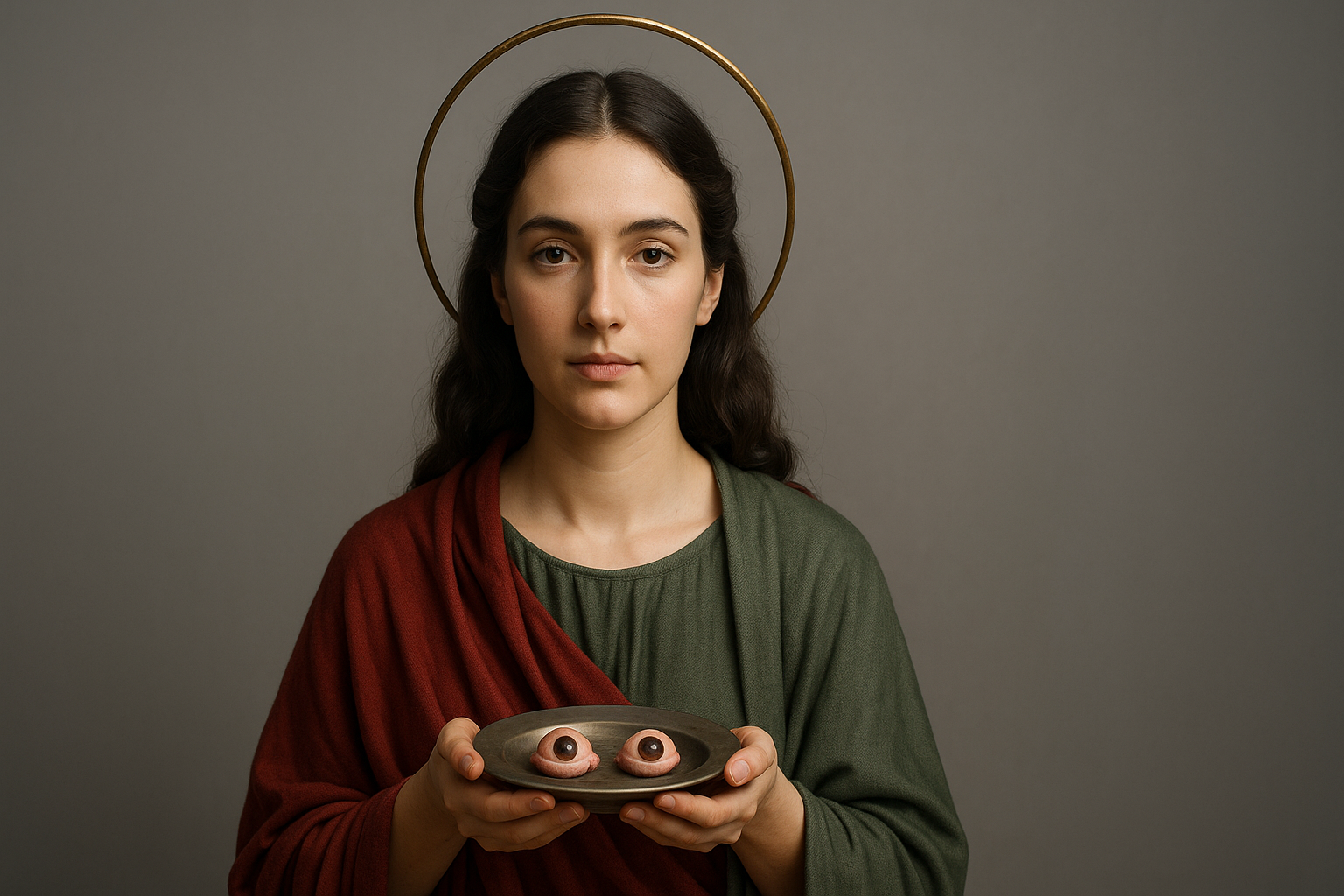
In art and jewelry, St. Margaret Clitherow is often depicted with symbols that tell her story. Common representations include a book, symbolizing her faith and the scriptures she cherished, or a chalice and host, representing her devotion to the Eucharist and the priests she harbored. Sometimes, she is shown with a pressing stone, or under a door, a stark reminder of her brutal martyrdom. These symbols serve as visual cues to her heroic witness and the core virtues she embodied.
Timeline Summary
- Circa 1553: Born Margaret Middleton in York, England, into a prosperous Protestant family.
- 1558: Elizabeth I ascends to the throne, ushering in a period of severe persecution for English Catholics.
- 1571: Marries John Clitherow, a Protestant butcher and chamberlain of York; they have three children.
- Circa 1574: Converts to Catholicism, a courageous and dangerous decision in Elizabethan England.
- 1570s-1580s: Becomes a fervent recusant, repeatedly arrested and imprisoned for her faith. Transforms her home into a secret “mass house” to shelter persecuted priests and enable clandestine Masses.
- 1586 (March 10): Her home is raided, and liturgical items are discovered. She is arrested.
- 1586 (March): Refuses to plead “guilty” or “not guilty” at her trial, a deliberate choice to prevent her family and associates from being forced to testify and incriminate themselves.
- 1586 (March 25): On Good Friday, she is martyred by being pressed to death on Ouse Bridge, York.
- 1929: Declared Venerable by Pope Pius XI.
- 1970 (October 25): Canonized by Pope Paul VI as one of the Forty Martyrs of England and Wales.
Scripture for Reflection
St. Margaret Clitherow’s unwavering faith and ultimate sacrifice beautifully resonate with several passages from Scripture:
Matthew 5:10-12 (NABRE): “Blessed are those who are persecuted for righteousness’ sake, for theirs is the kingdom of heaven. Blessed are you when people insult you, persecute you and falsely say all kinds of evil against you because of me. Rejoice and be glad, because great is your reward in heaven, for in the same way they persecuted the prophets who were before you.”
Margaret truly lived these words, enduring persecution and finally martyrdom for her righteousness, which she understood as fidelity to the Catholic faith. Her steadfastness assures us of her heavenly reward.
John 15:13 (NABRE): “No one has greater love than this, to lay down one’s life for one’s friends.”
Margaret Clitherow laid down her life not only for her faith but also, in a very real sense, for her friends and family. By refusing to plead, she shielded them from torture and implication, demonstrating a profound, self-sacrificial love that mirrors Christ’s ultimate act of love on the cross.
Hebrews 11:1 (NABRE): “Faith is the realization of what is hoped for and evidence of things not seen.”
Margaret’s entire life as a Catholic recusant was an act of faith. She held firm to the “things not seen” – the spiritual realities of the sacraments, the truth of the Church, and the promise of eternal life – even when faced with the harsh, visible reality of persecution and death. Her life is a powerful testament to the substance of faith.
Prayers to St. Margaret Clitherow
Prayer to St. Margaret Clitherow
O glorious St. Margaret Clitherow, “Pearl of York,” who in a time of great persecution, fearlessly defended your Catholic faith and opened your home and heart to the Sacred Eucharist and its priests, we implore your intercession. You, who chose a martyr’s death rather than betray your conscience or endanger others, inspire us with your courage and fidelity. Help us to cherish the Holy Sacrifice of the Mass and the priesthood as you did, and to be steadfast in our convictions, even when faced with adversity. May your example of unwavering faith, radical hospitality, and self-sacrificing love guide us in our daily lives. Amen.
Another Prayer to St. Margaret Clitherow
Holy Martyr, St. Margaret Clitherow, true and loyal wife, devoted mother, and faithful Catholic, you showed immense bravery in enduring persecution and a cruel death rather than deny your Lord. Intercede for us, we pray, that we may be granted the grace of an unwavering faith in Jesus Christ, especially in the Blessed Sacrament. Protect all families who seek to nurture faith in their homes, and bless those who suffer for their beliefs. Help us to be generous in hospitality and courageous in upholding the truth. Through your powerful prayers, may we one day share in the eternal banquet of heaven. Amen.