In the vibrant tapestry of the Gospels, a remarkable woman often stands out not for dramatic sermons or miraculous healings, but for her bustling energy and deep, unwavering faith: St. Martha of Bethany. More than just a hostess concerned with household chores, Martha emerges as a powerful figure who models the dignity of service, the struggle to balance the active and contemplative life, and a profound declaration of faith in Jesus Christ as the Son of God. This article will delve into her historical context, explore the key moments that shaped her spiritual journey, uncover her lasting legacy in Catholic tradition, and offer reflections that resonate with believers navigating the demands of the modern world.
Quick Facts
| Category | Detail |
|---|---|
| Birth | 1st Century AD, Bethany (near Jerusalem) |
| Death | 1st Century AD (Traditional accounts place her death in Gaul, modern-day France) |
| Feast Day | July 29 |
| Patronage | Housewives, homemakers, cooks, servants, hotel keepers, domestic workers, waitstaff, laundry workers, single women, impossible causes |
| Canonized | Pre-Congregation (Venerated since the earliest centuries of the Church) |
Historical Context & Early Life
St. Martha lived in a pivotal era, the first century AD, when Roman rule held sway over Judea, yet Jewish religious and cultural life remained vibrant and central to the people. Bethany, her hometown, was a small village located just two miles east of Jerusalem, on the eastern slope of the Mount of Olives. This proximity to the bustling religious and political center meant that residents of Bethany would have been deeply familiar with the ebb and flow of pilgrims, scholars, and Roman officials.
In this society, family was the cornerstone. Martha belonged to a close-knit household, sharing her home with her sister, Mary, and her brother, Lazarus. The Gospels paint a picture of a household that was not only economically stable enough to host guests but also spiritually open and deeply devoted to Jesus. It’s clear that their home in Bethany served as a cherished haven for Jesus and his disciples during his ministry, especially when he visited Jerusalem. This consistent welcome speaks volumes about the hospitality and generosity of Martha and her siblings.
For women in this historical period, their primary sphere of influence was often the home. Managing a household, preparing food, and ensuring guests were comfortable were significant responsibilities and markers of a woman’s competence and standing. Martha, in her diligence, embodied these cultural expectations. Her formative experiences would have revolved around learning these domestic arts, but more profoundly, they would have been shaped by the unique privilege of regularly hosting and interacting with Jesus, the Son of God. This constant exposure to His teachings, His presence, and His love undoubtedly laid the groundwork for the profound faith she would later demonstrate.
Calling & Key Milestones
While Martha did not receive a traditional “calling” in the sense of entering a religious order or embarking on missionary journeys, her life’s vocation was expressed through her profound hospitality, her active service, and her deep personal relationship with Jesus. Her key milestones reveal a woman whose faith grew through both diligent action and profound personal revelation.
The Busy Hostess: Serving Jesus
The most famous account involving Martha comes from Luke’s Gospel (Luke 10:38-42). Jesus and his disciples arrived at her home, and Martha, ever the diligent host, immediately set about the work of serving. Her sister, Mary, however, chose to sit at Jesus’ feet, listening to his teachings. Feeling overwhelmed and perhaps a little resentful, Martha approached Jesus with a plea: “Lord, do you not care that my sister has left me to do all the serving alone? Tell her to help me.”
Jesus’ gentle response is often misunderstood, but it is central to Martha’s legacy: “Martha, Martha, you are anxious and worried about many things. There is need of only one thing. Mary has chosen the better part, and it will not be taken from her.” This exchange doesn’t condemn Martha’s service but rather highlights the importance of spiritual focus. It teaches us that while practical work is necessary and good, it should not overshadow the essential need to nurture our souls through prayer, contemplation, and listening to God’s word. Martha’s initial focus was on the “many things,” while Jesus reminded her of the “one thing” that truly matters: communion with Him.
A Woman of Profound Faith: The Raising of Lazarus
Perhaps the most powerful testament to Martha’s faith is found in John’s Gospel (John 11). When her brother Lazarus fell ill, Martha and Mary sent word to Jesus. By the time Jesus arrived in Bethany, Lazarus had been dead for four days. This was a moment of deep grief and despair for the sisters. Martha, upon hearing of Jesus’ approach, immediately went out to meet him, expressing her sorrow and a touch of reproach: “Lord, if you had been here, my brother would not have died.”
Yet, even in her grief, her faith shone brightly. She declared, “But even now I know that whatever you ask of God, God will give you.” Jesus then challenged her, “Your brother will rise.” Martha’s response was not just hope in a future resurrection, but an astounding confession of faith in Jesus’ present power: “Yes, Lord. I have come to believe that you are the Christ, the Son of God, the one who is coming into the world.” This declaration is one of the most profound affirmations of Jesus’ divinity in the entire New Testament, echoing Peter’s confession in Matthew’s Gospel. It reveals Martha not just as a busy hostess, but as a theologian in her own right, grasping the very core of Jesus’ identity and mission. Her faith was rewarded spectacularly when Jesus called Lazarus forth from the tomb, demonstrating His power over death itself.
Witness to Resurrection and Early Church Traditions
Following the raising of Lazarus, Martha and her siblings are mentioned again, hosting Jesus for a supper in Bethany shortly before his Passion (John 12:1-8). Here, Mary anoints Jesus’ feet with expensive perfume, while Martha, true to form, “served.” This reiterates her constant dedication to active service, now clearly understood within the context of her deep faith and understanding of who Jesus was.
While the Gospels conclude her story there, ancient traditions offer further insights into St. Martha’s life after Pentecost. Legend holds that Martha, Mary, and Lazarus, along with other early Christians, were persecuted in Judea and set adrift in a boat without sails or oars. Miraculously, they landed in Provence, a region in southern France. There, Martha is said to have courageously confronted a fearsome dragon-like beast called the “Tarasque,” which terrorized the local people. She tamed the beast with prayer and holy water, leading it back to the town where the villagers killed it. This legend, though not biblical, underscores her reputation as a woman of strength, action, and faith, capable of overcoming great obstacles through God’s power. It highlights the early Church’s understanding of her as a forceful evangelizer and protector.
Spiritual Legacy & Theological Themes
St. Martha’s story offers rich spiritual lessons and embodies several key theological themes that remain relevant for Catholics today.
One of her primary virtues is hospitality. In a world where travel was difficult and lodging scarce, offering a safe and welcoming home was an act of profound charity and an essential part of community life. Martha’s home was a haven for Jesus, a place where he could rest and teach. This aligns directly with Scripture’s call to “practice hospitality” (Romans 12:13) and to “not neglect to show hospitality to strangers, for thereby some have entertained angels unawares” (Hebrews 13:2).
She also exemplifies the dignity of service. While often contrasted with Mary’s contemplation, Martha’s active work is never condemned by Jesus, only prioritized. Catholic teaching consistently upholds the value of selfless service, recognizing it as a fundamental expression of Christian love. St. Martha reminds us that serving others, whether in the home, the workplace, or the community, is a holy endeavor when done with love for God and neighbor.
The famous “Martha and Mary” passage (Luke 10) introduces a crucial theological theme: the balance between the active life (vita activa) and the contemplative life (vita contemplativa). Mary chose the “better part” of listening to Jesus, emphasizing the primacy of prayer and relationship with God. However, Martha’s active service is not dismissed as unimportant. Rather, it suggests that both are essential, but contemplation must inform and animate our action. A truly balanced spiritual life integrates both, ensuring that our work flows from a deep well of prayer and communion with Christ. Martha’s journey shows her growing from anxiety about service to profound faith, suggesting a progressive integration of active love with contemplative understanding.
Most profoundly, Martha’s declaration, “I have come to believe that you are the Christ, the Son of God,” solidifies her legacy as a woman of unwavering faith in Jesus’ divinity and resurrection power. This confession is a bedrock of Catholic teaching, affirming Jesus’ true identity and the promise of eternal life. She teaches us to cling to faith even in the darkest moments of grief and doubt, trusting in Christ’s ultimate victory over death.
Her lasting influence is evident in devotion. She is a beloved patron saint for those in domestic service, recognizing the sacredness of daily tasks. Artists often depict her with symbols of her work or her triumph over the Tarasque, solidifying her image as a practical, strong, and faithful woman.
Devotion Today
Devotion to St. Martha remains strong throughout the Catholic world, particularly among those who identify with her diligent spirit and practical faith.
The most significant center of devotion to St. Martha is the town of Tarascon in Provence, France. It is here that, according to tradition, St. Martha established herself after arriving from Judea and where she performed the legendary feat of taming the Tarasque monster. Her tomb is venerated in the Collegiate Church of St. Martha (Collégiale Sainte-Marthe), built over a crypt that is believed to contain her relics. The church itself dates back to the 12th century, with later additions, and stands as a testament to centuries of pilgrims visiting her shrine.
Pilgrimages to Tarascon are a long-standing tradition, particularly around her Feast Day on July 29th. Celebrations often include special Masses, processions, and reenactments of the Tarasque legend, highlighting Martha’s courage and faith. Many domestic workers, cooks, and homemakers feel a special connection to her and seek her intercession in their daily tasks and struggles.
Beyond Tarascon, St. Martha is honored in countless parishes and homes worldwide. Many parishes are dedicated in her name, and her image can be found in churches globally. Devotions often focus on her specific patronages, with prayers offered for strength in household duties, for hospitality, and for perseverance in faith, especially when faced with overwhelming tasks or seemingly impossible challenges. Some even invoke her for help in “impossible causes,” drawing parallels with her experience of witnessing Lazarus raised from the dead.
Reflections for Modern Readers
St. Martha’s life, though lived millennia ago, offers profound and practical lessons for believers navigating the complexities of the 21st century. Her story challenges us to examine our own priorities and actions, urging us toward a more integrated and faithful life.
- Balancing Work and Prayer: The Active and Contemplative Life: In our fast-paced world, it’s easy to get caught up in the “many things”—emails, deadlines, social media, household chores. Martha’s initial distraction reminds us that while these tasks are often necessary, they must not overshadow the “one thing” necessary: a deep, intentional relationship with God. We can apply this by setting aside dedicated time for prayer each day, even amidst a busy schedule. Perhaps it’s 15 minutes of silent reflection before starting work, or a Rosary walked during a lunch break, ensuring our active lives are nourished by contemplation.
- Faith in the Face of Grief and Doubt: Martha’s experience with Lazarus’s death teaches us about holding onto hope even when circumstances seem hopeless. We all face moments of profound loss, illness, or crisis where God’s presence feels distant. Martha’s brave confession, “I have come to believe that you are the Christ, the Son of God,” spoken amidst her tears, is a powerful example. In our own moments of doubt, we can emulate Martha by consciously reaffirming our creed, even if our feelings don’t align, trusting that God’s power transcends our understanding and present suffering.
- Dignity in Daily Service: Martha reminds us that all work, especially that which serves others, can be a pathway to holiness. Whether you are a parent managing a household, a teacher in a classroom, a healthcare worker, or someone serving in hospitality, recognize the sacredness of your daily tasks. Perform them with diligence, love, and the intention of serving God through others. A simple act like preparing a meal for your family or keeping your home tidy becomes a prayer when offered with a cheerful and grateful heart.
- Practicing Authentic Hospitality: In an increasingly isolated world, Martha’s open home is a powerful witness. Hospitality isn’t just about lavish entertaining; it’s about making space for others, physically and emotionally. This can mean inviting a new neighbor for coffee, offering a listening ear to a struggling friend, or creating a welcoming atmosphere in your own home where everyone feels valued. It’s about opening our hearts and our doors, however humble, to those around us, recognizing Christ in them.
Common Symbols and Their Meanings:
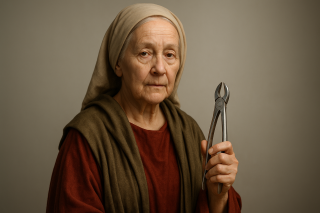
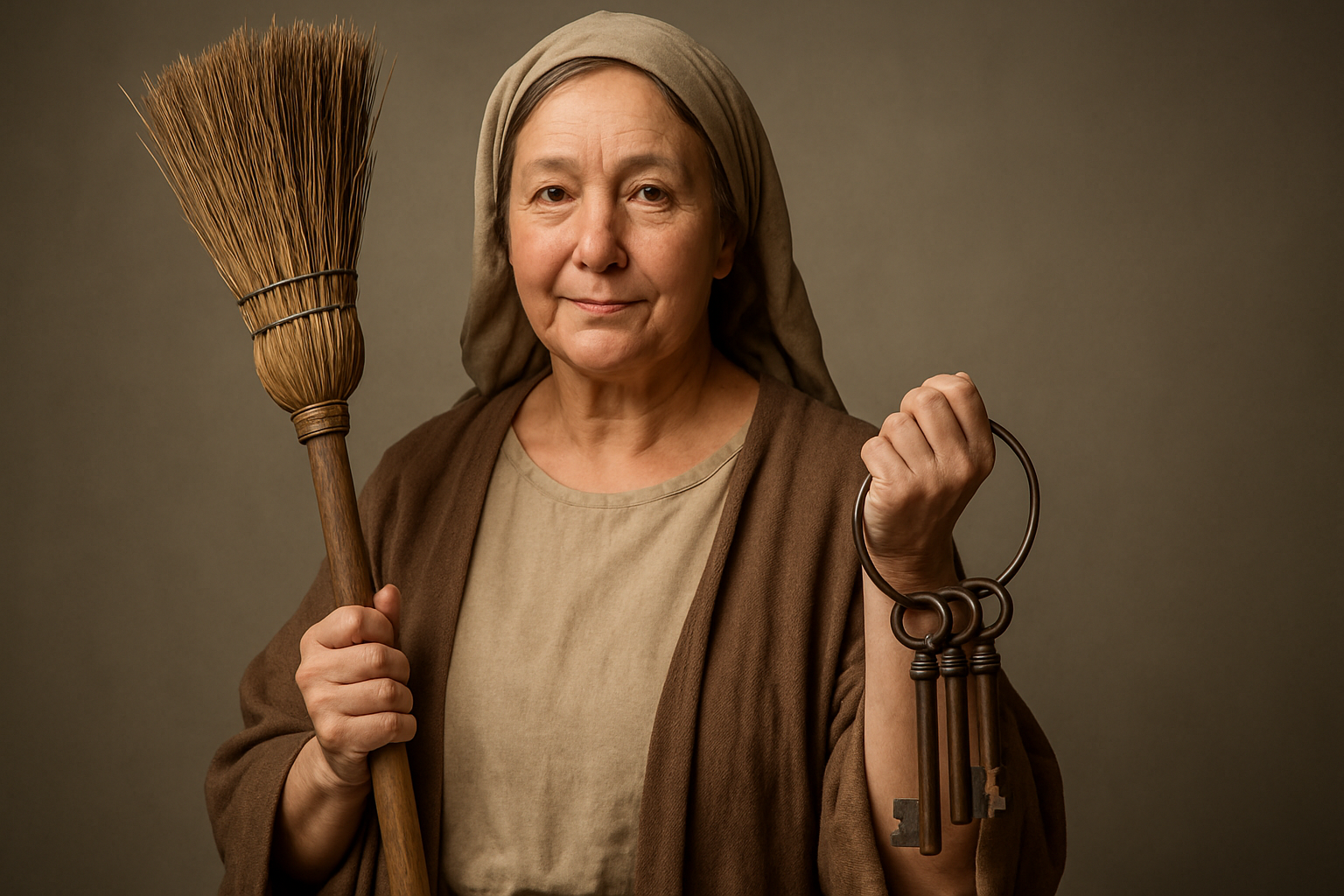
- Broom or Ladle: These are perhaps the most common symbols associated with St. Martha. The broom represents her diligence in household chores and her practical approach to service. The ladle symbolizes her role as a cook and hostess, highlighting her dedication to feeding and caring for Jesus and his disciples. Together, they signify the dignity and holiness of domestic work and service.
- Keys: Keys often appear with St. Martha, symbolizing her role as mistress of the household. They represent her authority and responsibility in managing the home, reinforcing her patronage over homemakers and hotel keepers.
- Dragon (or Tarasque): This symbol is specific to the medieval legend of St. Martha taming the Tarasque monster in Provence, France. The dragon represents evil, chaos, and danger. Martha’s triumph over it signifies her strength, courage, and the power of faith and prayer to overcome spiritual and physical threats. It portrays her as a powerful intercessor against evil.
- Water Jug or Sprinkler: Associated with the Tarasque legend, where she used holy water to subdue the beast. This symbolizes the purifying and protective power of prayer and sacramentals.
Timeline Summary
- 1st Century AD: Martha is born in Bethany, a village near Jerusalem, living with her sister Mary and brother Lazarus.
- Early 30s AD: Martha’s home in Bethany becomes a frequent refuge for Jesus and his disciples during his public ministry.
- Circa 33 AD (Luke 10): Jesus visits Martha’s home; she is anxious about serving while Mary listens to Jesus, leading to Jesus’ teaching about the “better part.”
- Circa 33 AD (John 11): Lazarus falls ill and dies. Martha goes to meet Jesus, declaring her profound faith in Him as the Christ, the Son of God, and witnesses Lazarus’s resurrection.
- Circa 33 AD (John 12): Martha hosts another supper for Jesus in Bethany, where Mary anoints Jesus’ feet, and Martha serves.
- Post-Pentecost (Traditional Accounts): According to tradition, Martha, Mary, and Lazarus, among other Christians, are exiled from Judea and travel by boat to Provence, France.
- Post-Pentecost (Traditional Accounts): Martha evangelizes in Provence and bravely tames the fearsome Tarasque monster.
- 1st Century AD: St. Martha dies and is buried in Tarascon, France (traditional site of her tomb).
- Medieval Period to Present: Devotion to St. Martha grows, with her tomb in Tarascon becoming a pilgrimage site. She is recognized as a patron of homemakers and those in service roles.
Scripture for Reflection
St. Martha’s life is directly illuminated by key passages in the Gospels, particularly those from Luke and John. These passages offer rich material for reflection on her virtues and the lessons she imparts.
Luke 10:38-42 (NRSVCE)
Now as they went on their way, he entered a certain village, where a woman named Martha welcomed him into her home. She had a sister named Mary, who sat at the Lord’s feet and listened to what he was saying. But Martha was distracted by her many tasks; so she came to him and asked, “Lord, do you not care that my sister has left me to do all the serving alone? Tell her then to help me.” But the Lord answered her, “Martha, Martha, you are worried and distracted by many things; there is need of only one thing. Mary has chosen the better part, which will not be taken away from her.”
Reflection: This passage highlights the tension between the active life of service and the contemplative life of listening to God’s word. Martha’s bustling nature is evident, but Jesus gently reminds her and us of the primacy of spiritual nourishment. It’s a call to prioritize our relationship with God amidst our daily duties, ensuring our actions flow from a place of prayer and communion.
John 11:21-27 (NRSVCE)
Martha said to Jesus, “Lord, if you had been here, my brother would not have died. But even now I know that whatever you ask of God, God will give you.” Jesus said to her, “Your brother will rise again.” Martha said to him, “I know that he will rise again in the resurrection on the last day.” Jesus said to her, “I am the resurrection and the life. Those who believe in me, even though they die, will live, and everyone who lives and believes in me will never die. Do you believe this?” She said to him, “Yes, Lord, I believe that you are the Christ, the Son of God, the one who is coming into the world.”
Reflection: This profound exchange reveals Martha’s deep faith, even amidst immense grief. Her declaration of belief in Jesus as the Christ, the Son of God, and the Resurrection and the Life, is a cornerstone of Christian faith. It teaches us to hold onto hope and proclaim our belief in Jesus’ power over death, even when faced with overwhelming loss and the limits of human understanding.
Prayers to St. Martha
Here are some popular prayers to St. Martha, invoking her intercession for her specific patronages and virtues.
A General Prayer to St. Martha
O glorious St. Martha, you were privileged to receive Our Lord Jesus Christ into your home in Bethany. You served Him with such loving care and devotion, providing for His earthly needs. You stood at the feet of Jesus and declared your profound faith in Him as the Christ, the Son of God, and the Resurrection and the Life. Your heart was filled with both active service and deep contemplation.
Look upon us, we pray, with compassion. Grant us, by your intercession, the grace to serve Christ faithfully in our daily lives, especially in our homes and workplaces. Help us to find balance between our many tasks and the “one thing necessary” — to listen to the word of God and to grow in our relationship with Him. Strengthen our faith, especially in moments of doubt, sorrow, and perceived impossibilities, that we may always trust in God’s power and love.
Inspire us with your hospitality, your diligence, and your unwavering belief in the face of despair. Through your prayers, may we grow in charity, patience, and unwavering trust in Our Lord Jesus Christ, who lives and reigns forever and ever. Amen.
Prayer for Domestic Duties and Service
Dear St. Martha, patron saint of homemakers and all who serve, we come before you asking for your heavenly intercession. You were known for your diligent service and hospitality, welcoming Jesus into your home and caring for His needs. Guide us as we go about our daily tasks, whether in our homes, our jobs, or our communities. Help us to perform our duties with love, patience, and a joyful heart, transforming mundane chores into acts of worship and service to God.
Teach us to balance our work with prayer, never losing sight of the “better part” which Mary chose. Help us to find grace in our daily routines and to see the face of Christ in those we serve. Protect our homes and families, and inspire us to create environments of peace, love, and faith. Through your powerful intercession, may we always strive to honor God in all that we do. Amen.