St. Mary Magdalene stands as one of the most compelling and significant figures in the Gospels, a woman whose profound encounter with Jesus transformed her life and cemented her place in salvation history. Often misunderstood or conflated with other biblical women throughout the centuries, her true story reveals a disciple of unwavering faith, a steadfast presence at the foot of the Cross, and the first witness to the Resurrection—earning her the title “Apostle to the Apostles.” This article will explore her historical context, key life events, spiritual legacy, contemporary devotion, and the timeless lessons her life offers modern believers, providing a definitive resource on this remarkable saint.
Quick Facts
| Attribute | Detail |
|---|---|
| Birth | Likely in Magdala, Galilee, early 1st century AD |
| Death | Traditional accounts vary; possibly Ephesus or Southern Gaul, mid-1st century AD |
| Feast Day | July 22 (elevated to a Feast in 2016) |
| Patronage | Penitent sinners, women, pharmacists, contemplative life, hair stylists, difficult children, those tempted |
| Canonized | Revered from the earliest days of Christianity; not formally canonized through a process as a biblical figure |
Historical Context & Early Life
To understand St. Mary Magdalene, we must first glimpse the world she inhabited—first-century Galilee, a vibrant yet politically volatile region under Roman occupation. This was a land rich in Jewish tradition, where synagogues were centers of religious and community life, and the expectation of a Messiah was palpable. The town of Magdala, located on the western shore of the Sea of Galilee, was a prosperous fishing village and a hub for trade, known for its salted fish and perhaps its dyes. It was from this town that Mary derived her epithet, “Magdalene,” indicating her origin rather than her marital status.
In Jewish society of the time, women generally held a subordinate position to men, though they played crucial roles within the family and household. Public roles for women were limited, and their testimony was often considered less reliable in legal matters. This cultural backdrop makes Mary Magdalene’s prominence in the Gospels even more striking. While the Gospels provide limited details about her family background or early formative experiences, Luke’s Gospel tells us that Jesus had cast “seven demons” out of her (Luke 8:2). This phrase, in its ancient context, likely signified a profound and severe affliction—not necessarily moral depravity, but perhaps a grave illness, mental distress, or spiritual oppression. Whatever its exact nature, this liberation by Jesus marked the turning point in her life, setting her on a path of radical discipleship and unwavering loyalty.
Calling & Key Milestones
Mary Magdalene’s life story is one of profound transformation and singular devotion, marked by several key moments that solidify her place in Christian history.
Healing and Discipleship
Her journey with Christ began with a miraculous healing. Luke’s Gospel identifies Mary Magdalene as one of the women who traveled with Jesus and the twelve Apostles, ministering to them out of their own means. This detail is significant, as it shows her not just as a follower, but as an active and contributing member of Jesus’ inner circle. She joined other women like Joanna, the wife of Chuza, Herod’s steward, and Susanna, who also supported Jesus’ ministry financially and practically. This intimate connection reveals a level of trust and inclusion that was remarkable for women of that era, challenging societal norms and demonstrating Jesus’ inclusive approach to discipleship.
Witness at the Crucifixion
While many of Jesus’ male disciples fled in fear during his Passion, Mary Magdalene remained steadfast. She is explicitly mentioned in all four Gospels as being present at the foot of the Cross, enduring the agony of her Lord. Her presence there, alongside Mary, the Mother of Jesus, and John, the Beloved Disciple, speaks volumes about her courage, loyalty, and profound love for Christ. She did not abandon him in his darkest hour but stood as a silent, grieving witness to his suffering and death. This act of unwavering faithfulness sets her apart and highlights her profound commitment.
Presence at the Burial
Following Jesus’ death, Mary Magdalene was also present at his burial. Mark’s Gospel states that “Mary Magdalene and Mary the mother of Joses saw where he was laid” (Mark 15:47). This detail is crucial, as it allowed her to know the exact location of the tomb, a fact that would become pivotal on Easter morning. Her presence signifies her continued dedication, even in death, to ensure proper respect for her Lord’s body, following Jewish burial customs.
First Witness to the Resurrection: “Apostle to the Apostles”
The most defining moment in Mary Magdalene’s life, and arguably in the history of Christianity, is her encounter with the Risen Christ. Early on Easter morning, she went to the tomb to anoint Jesus’ body with spices, a traditional act of devotion. Finding the tomb empty, she was distraught. John’s Gospel gives us the most vivid account: she encounters two angels and then, mistaking him for the gardener, speaks to Jesus himself. When he calls her by name, “Mary,” she recognizes him and cries out, “Rabboni!” (which means Teacher). Jesus then instructs her, “Go to my brothers and tell them, ‘I am ascending to my Father and your Father, to my God and your God'” (John 20:17).
With this command, Mary Magdalene became the first person to proclaim the news of the Resurrection to the Apostles. She delivered the message, “I have seen the Lord!” (John 20:18). Because of this unique and vital role, early Church writers like Hippolytus and St. Thomas Aquinas referred to her as the “Apostle to the Apostles” (Apostola Apostolorum). Her testimony, a woman’s testimony, was foundational to the nascent Christian community, despite the cultural skepticism towards women’s witness. This demonstrates Jesus’ radical affirmation of her authority and mission.
Later Traditions
While scriptural accounts end with her role in the Resurrection, vibrant traditions about Mary Magdalene’s later life developed. One prominent tradition, especially strong in France, asserts that she, Lazarus, and Martha sailed to Southern Gaul (modern-day Provence) after the Ascension. There, she is said to have lived as a hermit for many years in a cave known as Sainte-Baume, dedicating herself to prayer and penance, and evangelizing the local population. Her relics are venerated in the Basilica of Saint-Maximin-la-Sainte-Baume. Another tradition suggests she may have traveled with St. John to Ephesus. Regardless of the historical certainty of these traditions, they reflect the profound impact she had on early Christian imagination and devotion, inspiring stories of evangelization and contemplative life.
Spiritual Legacy & Theological Themes
St. Mary Magdalene’s spiritual legacy is rich and multifaceted, offering profound insights into Christian discipleship, love, and redemption. Her life exemplifies several core virtues that align deeply with Scripture and Catholic teaching.
Unwavering Faith and Perseverance: From her initial healing to her presence at the Crucifixion and her vigil at the tomb, Mary Magdalene demonstrated an extraordinary and unwavering faith in Jesus. Even in moments of profound despair, her hope and love persisted, leading her to seek him even after death. This perseverance is a cornerstone of Christian discipleship, reminding us to remain faithful even when the path is dark or understanding is elusive. Her loyalty reflects the call of Revelation 2:10: “Be faithful until death, and I will give you the crown of life.”
Profound Love for Christ: Mary Magdalene’s story is fundamentally one of deep, abiding love for Jesus. Her devotion is palpable in her actions—her financial support, her presence at his most vulnerable moments, and her desperate search for his body. This intense love is the wellspring of her courage and fidelity, serving as a model for all believers. Her love mirrors the greatest commandment: “You shall love the Lord your God with all your heart, and with all your soul, and with all your mind, and with all your strength” (Mark 12:30).
Embracing Forgiveness and New Life: Though the Catholic Church has clarified that Mary Magdalene is distinct from the unnamed “sinful woman” who anointed Jesus’ feet (Luke 7:36-50), the historical conflation of the two figures for centuries has woven a powerful theme of penitence and profound forgiveness into her popular image. Regardless of her past, her transformation from being afflicted by “seven demons” to becoming a beloved disciple underscores the transformative power of God’s grace and forgiveness. She embodies the radical new life offered through Christ, a life where past sins or sufferings do not define one’s future or capacity for holiness. This theme resonates with passages like 2 Corinthians 5:17, “So whoever is in Christ is a new creation: the old things have passed away; behold, new things have come.”
The Dignity and Mission of Women: As the “Apostle to the Apostles,” Mary Magdalene’s role challenges traditional patriarchal structures and highlights the integral and unique contributions of women in the Church. Jesus entrusted her with the most pivotal message of Christianity—the Resurrection—and sent her to proclaim it to the very leaders of his nascent Church. This demonstrates his affirmation of women’s dignity, spiritual capacity, and their essential role in evangelization, foreshadowing the vital ministry of countless holy women throughout Church history.
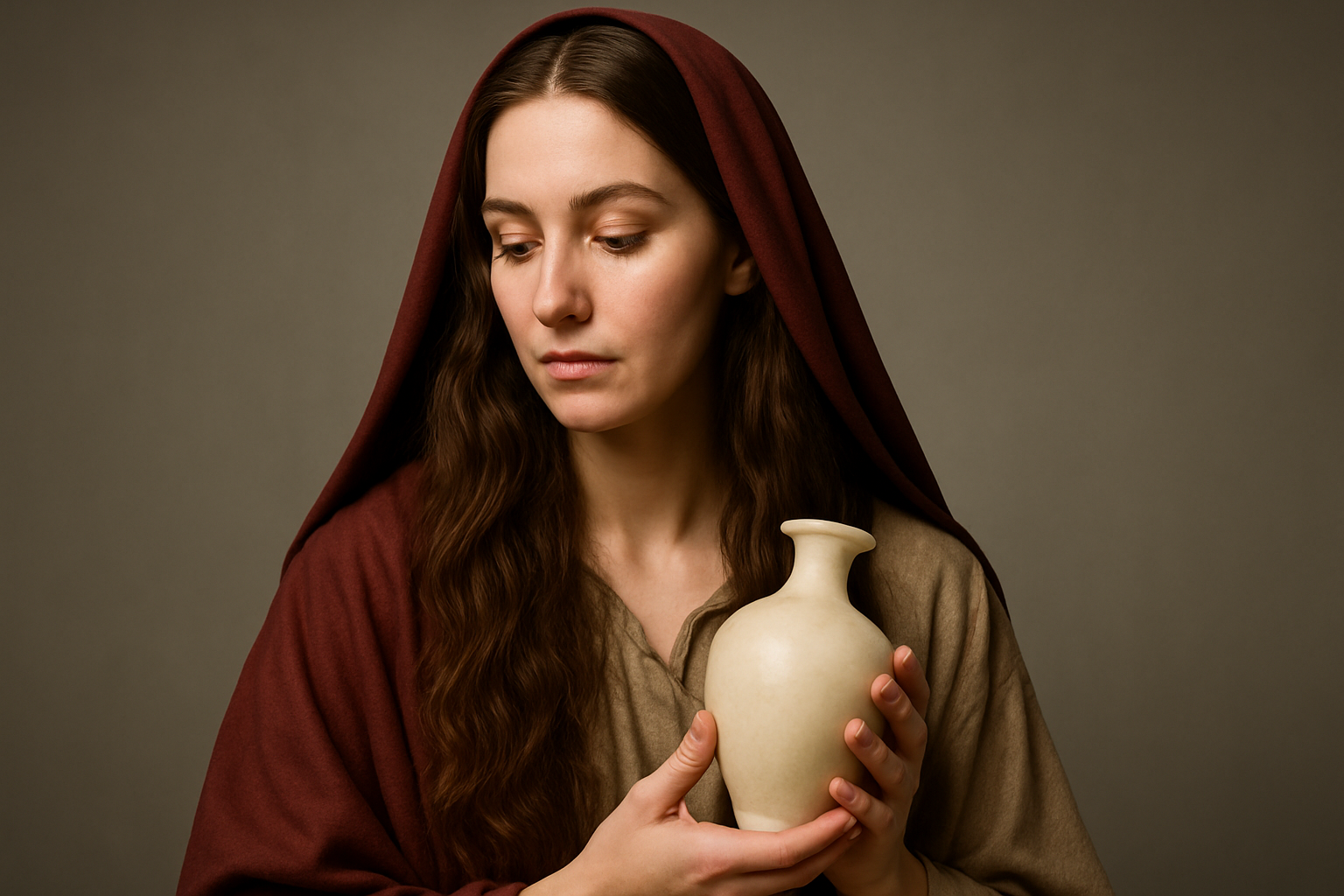
Her lasting influence is evident in art, where she is frequently depicted with an alabaster jar of ointment (symbolizing her anointing of Jesus or her intention to anoint his body), sometimes with long, unbound hair (often associated with repentance and humility). Her image has inspired countless works of literature, music, and devotional practices. In liturgy, her feast day on July 22nd was elevated by Pope Francis in 2016 from a memorial to a Feast, recognizing her unique and crucial role as the first witness to the Resurrection and the bearer of this good news, thereby underscoring her apostolic significance.
Devotion Today
Devotion to St. Mary Magdalene remains vibrant and continues to grow, reflecting a renewed appreciation for her significant role in salvation history and her powerful witness to Christ’s Resurrection. Her feast day on July 22nd is celebrated with particular solemnity, especially since its elevation to a Feast in the Roman Calendar.
Pilgrimages associated with St. Mary Magdalene draw the faithful from around the world. The most famous site is the Basilica of Saint-Maximin-la-Sainte-Baume in Provence, France, where her relics are traditionally venerated. Pilgrims can also visit the cave of Sainte-Baume, a remote grotto where she is believed to have spent years in contemplative solitude and penance. These sites offer a tangible connection to her traditional life after the Resurrection, inspiring introspection and devotion. Other shrines and churches dedicated to her can be found globally, from Italy to the United States, reflecting her universal appeal.
Many religious orders, communities, and lay associations have taken St. Mary Magdalene as their patroness. These groups often focus on ministries of mercy, contemplative prayer, or evangelization, embodying her spirit of profound love for Christ, unwavering faithfulness, and zealous proclamation of the Good News. Her name is also invoked for those struggling with temptation, seeking forgiveness, or striving for a deeper contemplative life.
Annual celebrations on her feast day often include special Masses, processions, and prayer services, encouraging reflection on her unique witness and her title as the “Apostle to the Apostles.” In recent years, there has been a significant movement to understand Mary Magdalene more accurately, disentangling her from historical misidentifications and celebrating her true scriptural role as a courageous, faithful, and foundational disciple.
Reflections for Modern Readers
St. Mary Magdalene’s life, though lived two millennia ago, offers enduring lessons and actionable takeaways that resonate deeply with modern challenges and aspirations.
-
Perseverance in Faith Amidst Despair: Mary Magdalene teaches us the power of holding onto hope and love, even when circumstances seem utterly bleak. At the foot of the Cross, and then at the empty tomb, she stayed. In our own lives, when we face loss, grief, or moments where God feels distant, her example calls us to remain steadfast, to continue seeking Christ, and to trust that even in the darkness, resurrection awaits. A modern example might be someone who continues to pray and serve others despite personal tragedies or prolonged struggles with illness, holding onto faith that God is present.
-
Embracing Forgiveness and New Beginnings: Whatever her past, Mary Magdalene was utterly transformed by Jesus’ love. Her story reminds us that our past mistakes or afflictions do not define our potential for holiness or our capacity to serve God. Every day is an opportunity for a new beginning, for grace to heal and transform us. This lesson is especially relevant in a world quick to label and condemn; St. Mary Magdalene invites us to embrace God’s limitless mercy and allow ourselves to be renewed. Think of a person who has overcome addiction or a difficult past, and now dedicates their life to helping others, embodying radical transformation.
-
The Courage to Witness to Truth: As the “Apostle to the Apostles,” Mary Magdalene was entrusted with the most important message in history. She overcame the cultural barriers of her time to proclaim what she had seen and heard. For us, this means having the courage to speak our truth, to share our faith, and to stand up for what is right, even when it’s unpopular or challenging. It’s about being an authentic witness to Christ in our daily lives, whether through our words or our actions, just like a young person who bravely defends a bullied classmate or shares their faith with friends who hold different beliefs.
-
The Power of Personal Encounter with Christ: Mary Magdalene’s recognition of Jesus when he called her by name highlights the deeply personal nature of our relationship with God. It wasn’t a general revelation but an intimate, individual call that brought her clarity and joy. This inspires us to seek our own personal encounters with Christ—in prayer, in the sacraments, in Scripture, and in service to others—and to recognize His voice speaking directly to our hearts. A busy parent who carves out time each day for quiet prayer, finding solace and direction in a personal connection with God, exemplifies this.
In art and jewelry, St. Mary Magdalene is commonly depicted with several symbols, each carrying deep meaning:
- The Alabaster Jar or Ointment Jar: This is her most recognizable symbol. It refers to the anointing woman in the Gospels (often conflated with her), but also to her intention to anoint Jesus’ body after his death. It symbolizes her devotion, love, and care for Jesus, as well as anointing for healing and burial.
- Long, Unbound Hair: Often depicted with her hair flowing loose, this image, largely due to her historical association with the penitent sinner, signifies repentance, humility, and the shedding of worldly vanities in favor of spiritual devotion. It also points to her later traditional life as a hermit.
- A Skull or Crucifix: In traditions depicting her as a hermit in Sainte-Baume, she is often shown with a skull, symbolizing penance, contemplation on mortality, and detachment from worldly things. A crucifix highlights her unwavering presence at Jesus’ death.
Timeline Summary
- Early 1st Century AD: Born in Magdala, a fishing town on the Sea of Galilee.
- Circa 30-33 AD: Encounter with Jesus; he casts out “seven demons” from her, leading to her profound conversion and becoming a dedicated disciple.
- Circa 30-33 AD: Travels with Jesus and the Apostles, supporting his ministry financially and practically.
- Circa 33 AD: Witnesses Jesus’ crucifixion, standing steadfastly at the foot of the Cross alongside other holy women and St. John.
- Circa 33 AD: Observes Jesus’ burial, knowing the location of his tomb.
- Circa 33 AD (Easter Morning): Is the first to discover the empty tomb, encounters the Risen Christ, and is commissioned by him to announce his Resurrection to the Apostles (“Apostle to the Apostles”).
- Mid-1st Century AD (Traditional): According to tradition, she evangelizes in Southern Gaul (Provence, France) and lives as a hermit in Sainte-Baume.
- Mid-1st Century AD (Traditional): Her death, either in Ephesus or Provence, is marked by a life of deep prayer and evangelization.
Scripture for Reflection
St. Mary Magdalene’s life is deeply rooted in the Gospels, and several passages illuminate her key virtues and life’s work. Reflecting on these can deepen our understanding of her spiritual journey.
Luke 8:1-3 – The Call to Discipleship and Service:
“Soon afterward he went on through cities and villages, proclaiming and bringing the good news of the kingdom of God. And the twelve were with him, and also some women who had been healed of evil spirits and infirmities: Mary, called Magdalene, from whom seven demons had gone out, and Joanna, the wife of Chuza, Herod’s household manager, and Susanna, and many others, who provided for them out of their resources.”
This passage introduces Mary Magdalene and highlights her miraculous healing, which led to her immediate and dedicated service to Jesus. It emphasizes her role not just as a follower, but as an active supporter of his ministry, offering her resources and time. It shows her foundational commitment stemming from a profound experience of God’s mercy.
John 20:11-18 – The First Witness to the Resurrection:
“But Mary stood weeping outside the tomb, and as she wept she stooped to look into the tomb. And she saw two angels in white, sitting where the body of Jesus had lain, one at the head and one at the feet. They said to her, ‘Woman, why are you weeping?’ She said to them, ‘They have taken away my Lord, and I do not know where they have laid him.’ Having said this, she turned around and saw Jesus standing, but she did not know that it was Jesus. Jesus said to her, ‘Woman, why are you weeping? Whom are you seeking?’ Supposing him to be the gardener, she said to him, ‘Sir, if you have carried him away, tell me where you have laid him, and I will take him away.’ Jesus said to her, ‘Mary.’ She turned and said to him in Aramaic, ‘Rabboni!’ (which means Teacher). Jesus said to her, ‘Do not cling to me, for I have not yet ascended to the Father; but go to my brothers and say to them, ‘I am ascending to my Father and your Father, to my God and your God.” Mary Magdalene went and announced to the disciples, ‘I have seen the Lord!’ and that he had said these things to her.”
This is the definitive passage detailing Mary Magdalene’s most crucial role. It beautifully portrays her deep love and grief, her initial misunderstanding, and the moment of profound recognition when Jesus calls her name. It culminates in her commission to be the first herald of the Resurrection, a role that solidifies her title as the “Apostle to the Apostles.” This passage underscores her personal encounter with the Risen Lord and her courage in proclaiming the Good News.
Prayers to St. Mary Magdalene
Here are a couple of prayers often recited in devotion to St. Mary Magdalene, reflecting on her virtues and seeking her intercession:
Prayer to St. Mary Magdalene for Faith and Love
O glorious St. Mary Magdalene,
you were privileged to be the first to witness the Resurrection of our Lord,
and to announce the joyful news to the Apostles.
We pray for your intercession, that we may have your unwavering faith,
your steadfast love for Christ, and your courage to proclaim His truth.
Help us to overcome our past failings, to embrace God’s mercy,
and to persevere in our devotion, even in moments of despair.
Inspire us to seek Jesus with all our hearts,
to remain faithful at the foot of His Cross,
and to experience the transformative power of His Resurrection in our own lives.
Amen.
Novena Prayer to St. Mary Magdalene (Day 1 Example)
O glorious St. Mary Magdalene,
model of conversion and faith,
you who were touched by the healing grace of Jesus Christ,
and delivered from the darkness of seven demons.
We thank God for the grace He bestowed upon you,
making you a vessel of His mercy and a fervent disciple.
Intercede for us, we pray, that we too may be truly converted to the Lord,
acknowledging our sins and receiving His boundless forgiveness.
Grant us a deep and abiding love for Jesus, our Divine Healer and Redeemer.
(Here, mention your specific intention)
St. Mary Magdalene, pray for us.
Amen.